


Definition
A swag platform is the system a company runs its branded merchandise on: product selection, artwork, production, storage, ordering, delivery and reporting, all in one place. It is the layer underneath the storefront, not the storefront itself. Where a shop takes orders, a platform decides what can be ordered, what it costs, who pays, where it is made and how it gets to a doorstep in Lisbon or São Paulo.
Definition
The word platform matters. A supplier sells you 500 hoodies. A platform gives you software plus a production and logistics network behind it, so merch becomes an operation you manage rather than a purchase you repeat. Take a scale-up with offices in three countries. Before: HR emails a local printer for onboarding kits, marketing uses a different agency for event stock, sales buys client gifts on a card, and nobody knows the total spend or where the leftover tees ended up. After: one catalog with approved products, one set of brand assets, one warehouse view, one invoice, and a dashboard that shows what was shipped, to whom and at what cost.
How a swag platform works
Think of it in three layers. The front layer is what people touch: a swag store for self-serve orders, gifting links where a recipient picks their own item and size, and a bulk order flow for events. The middle layer is the control system: brand assets and locked artwork, an approved product catalog with live pricing, mockups that show your logo on the real product before anything is made, budgets and credits, permissions, approval flows, and integrations into HR software, SSO, Slack and finance tools. The back layer is the physical machine: a production network with the decoration methods you need, warehousing, kitting, customs paperwork, carriers and returns.
The layers only pay off together. A storefront with no supply chain behind it just moves the coordination work somewhere else, since someone still has to source, decorate and ship. A supplier with no software gives you good pricing and a mailbox full of quotes. The platform model exists because merch has the same problem as payroll or travel: the individual purchases are small, the coordination cost is not.
The trade-offs are worth naming. A platform earns its keep when volume is spread across teams, countries and moments, so consolidating spend is the point. If your entire program is one annual print run of 300 identical shirts to one address, a local printer will beat a platform on price and you should use one. Platforms also need governance. Someone owns the catalog, retires dead products, sets who can spend what, and reviews the data each quarter. Without that, you get a tidy interface wrapped around the same mess.
Swag platforms in branded merch
- Consolidating a fragmented program. Five teams, four suppliers, no shared catalog. Moving to a platform puts every product, price and brand rule in one system, which cuts rogue spend and stops the seventh version of the logo from reaching a printer.
- Automating onboarding and milestone gifts. Connect the platform to your HR system so a new hire gets an invite and credit on day one, and a five-year anniversary triggers a gift without anyone remembering. This is how employee swag stops being a monthly chore.
- Running global campaigns without a global team. Launch the same kit in the US, Europe and APAC, produced and shipped regionally, with local duties and delivery handled per market. Pair regional stock with print on demand for the long tail and you cover both speed and waste.
A swag platform is a single system that runs a company's branded merchandise end to end, from product choice and artwork through production, warehousing, ordering and global delivery.
5 tips to elevate your Swag platform strategy
| Tip | Steps |
|---|---|
| Score it on the full chain | Ask who produces, who stores, who ships and who takes the return. Software alone is not a platform. |
| Test the mockups | Upload your real logo and check how it renders on a dark hoodie, an embroidered cap and a metal bottle before you commit. |
| Check the integrations you actually use | HR system, SSO and finance export matter more than a long list of connectors nobody switches on. |
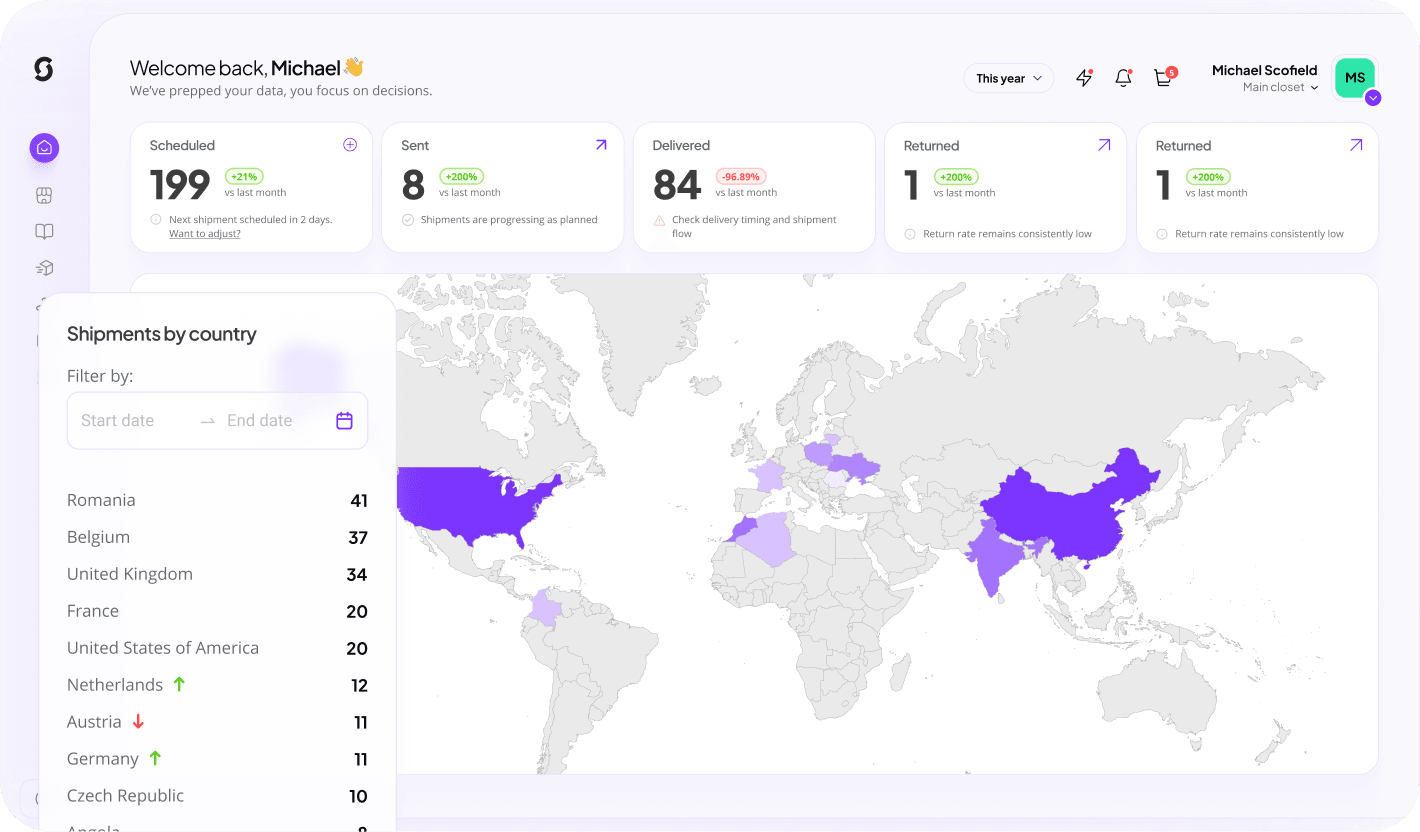
| Demand the data | Spend per team, per country and per product, plus stock levels and delivery times, should be visible without asking anyone. |
| Start with one use case | Launch onboarding first, prove the flow, then add events, client gifting and the public store. |
Key Terminologies
Frequently Asked Questions
What is the difference between a swag platform and a swag store?
A swag store is the shop people order from. A swag platform is the whole system around it, including the catalog, artwork control, budgets, production, warehousing, shipping and reporting. Most platforms can run several stores at once.
Is a swag platform the same as a merch supplier?
No. A supplier sells and produces goods you order. A platform gives you the software to run a program plus a production and logistics network behind it, so ordering, funding, stock and delivery are managed in one system.
How much does a swag platform cost?
Pricing usually combines the cost of the products themselves with either a subscription for the software or a margin built into the item price. Ask which model applies and what storage, kitting and shipping cost separately.
Do you need a big team to run a swag platform?
No. One owner is typically enough, because ordering, sizing and shipping are handled by the people receiving the items. The owner curates the catalog, sets budgets and reviews the data.
Can a swag platform handle global shipping and customs?
Yes, and that is one of the main reasons companies adopt one. Regional production and warehousing keep duties, delivery times and returns manageable, so a kit for a new hire in Singapore does not travel from Europe.