


Definition
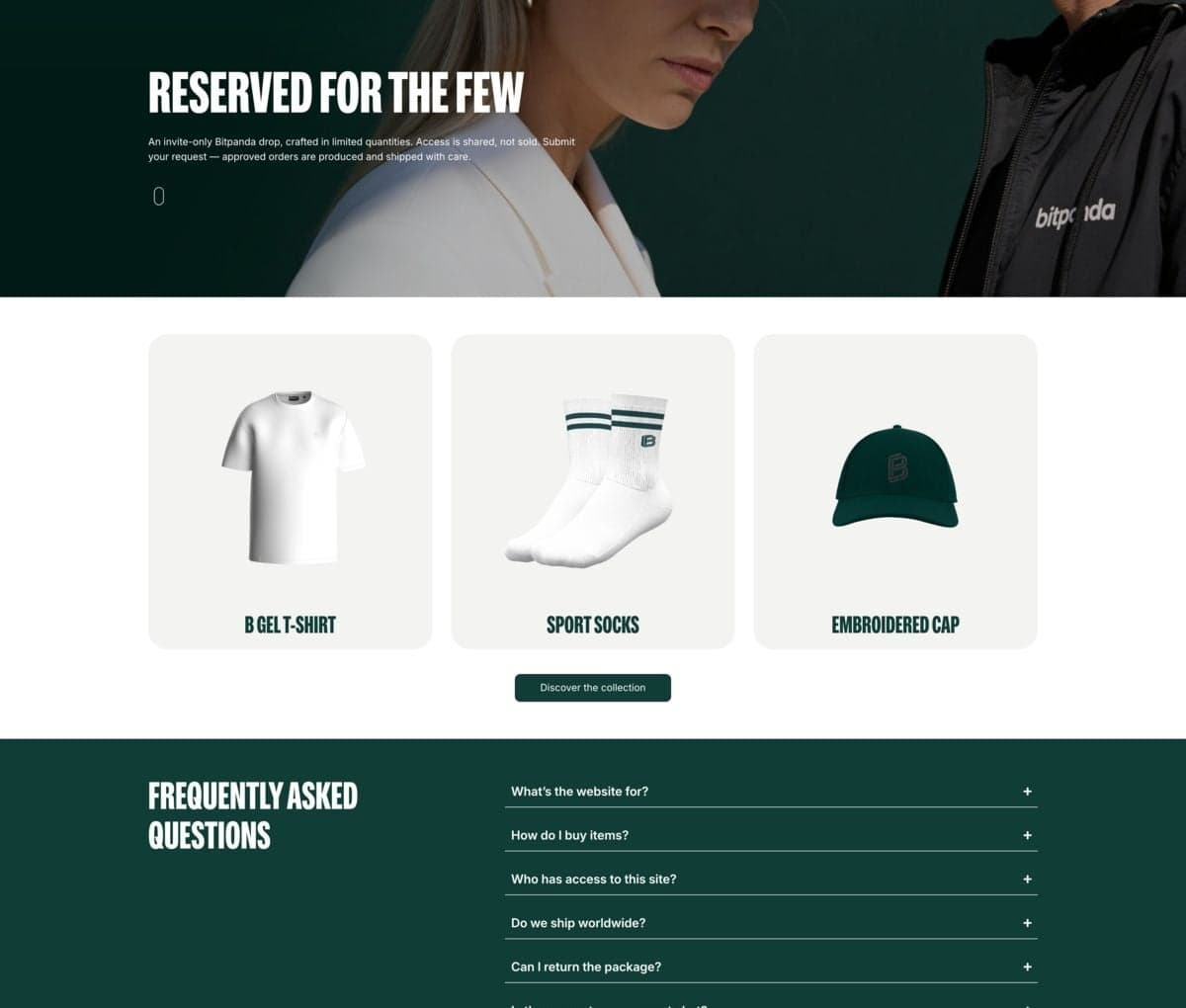
A swag store is an online shop where a company's branded merchandise sits in one catalog and people order from it themselves. Employees, customers, partners or fans pick a size, enter an address and check out using credit, a team budget or a card. The company controls the catalog, the branding and the rules. Nobody has to answer another message asking where the hoodies are.
Definition
A swag store moves merch from a one-off project to a running service. Instead of a bulk order, a storage closet and a colleague who packs boxes on Friday afternoons, you get a permanent storefront with production or stock behind it. A 400-person software company might run a store with twelve items: hoodies, tees, caps, a bottle, a notebook. New hires receive 75 euros of credit in their welcome email and order their own size to their own address. Sales reps send client gifts against a team budget. Sizing, shipping, customs and returns all happen inside the store.
How a swag store works
Two fulfillment models sit behind almost every store. Stocked inventory means you produce a run up front, hold it in a warehouse, and the store ships from that pool. Unit costs drop, delivery is fast, and you carry the risk of guessing sizes and demand. On-demand production means each item is decorated after the order lands. Nothing is held, nothing goes to waste, and you pay a higher price per piece with a longer wait. Most mature stores mix the two: stock the core items that always move, produce the long tail on demand.
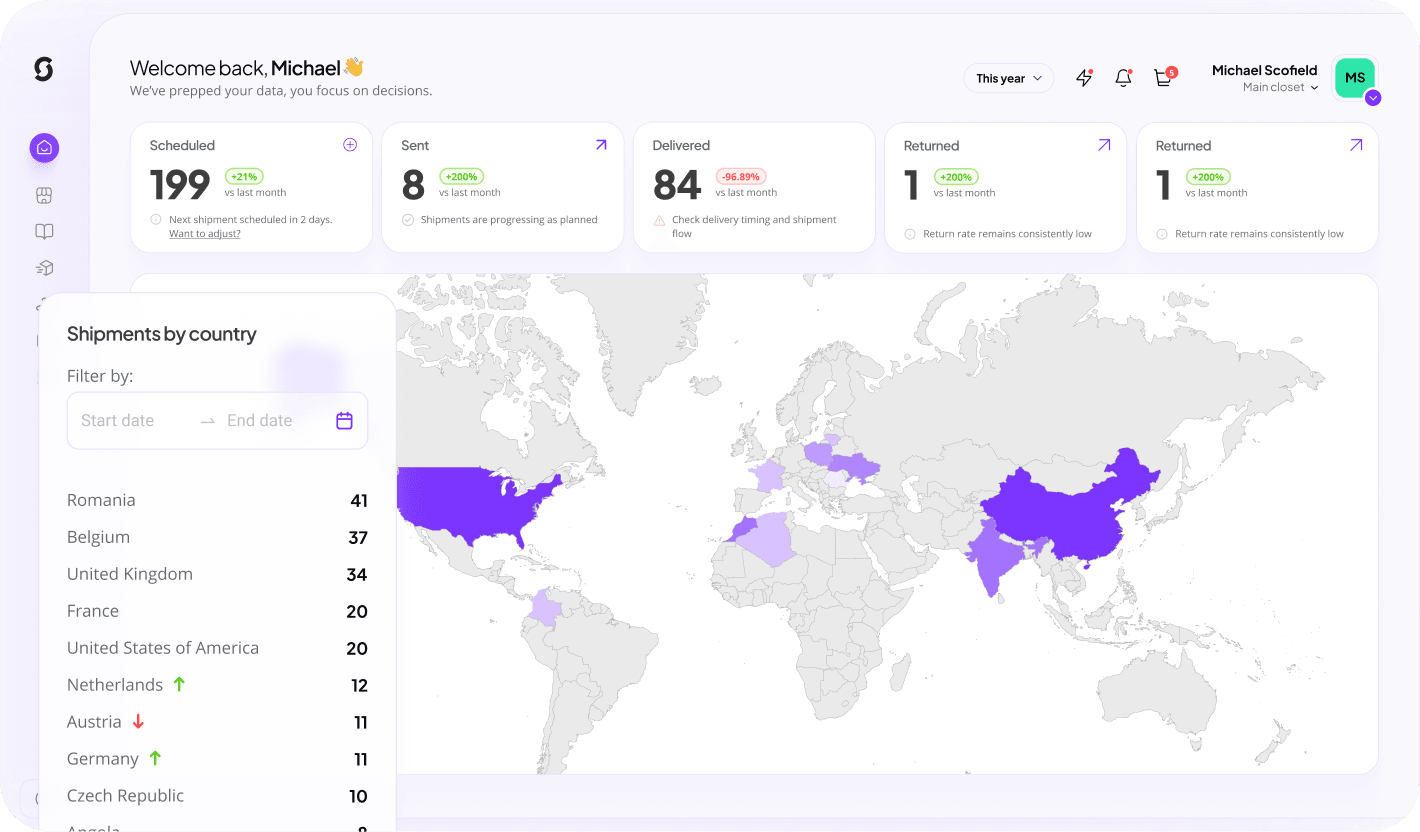
Money and access make up the other half. A store can run on credits, where the company loads a wallet per person or per team, on budgets tied to a department, on approval flows for anything above a threshold, or on plain card checkout when fans and customers are buying. Permissions decide who sees what. New hires see the onboarding kit, the field team sees event stock, the executive group sees the premium range. Connecting the store to your HR system means a new joiner gets an invite and credit automatically on day one, without anyone opening a spreadsheet.
The trade-offs are real and worth naming. A store with 60 products looks generous and performs badly, because choice slows people down and splits your volume across too many minimums. Single-item shipping costs more per unit than a pallet, so a store is not the cheapest way to move 2,000 identical tees to one address. And a store only stays useful if someone refreshes it. Retire the items nobody orders, add seasonal pieces, and check the reorder points before the busy quarter, not during it.
Swag stores in branded merch
- Employee and onboarding stores. Every new hire gets credit and picks their own kit in their own size, shipped to their home address. Remote teams get the same experience as head office, and you stop shipping mediums to people who wear XL. This is the most common use of employee swag at scale.
- Customer, partner and sales gifting stores. Give the revenue team a curated catalog with a budget cap so they can send a gift without a purchase order. Recipients choose their own item and size through a claim link, which lifts redemption and cuts waste compared to blind shipping.
- Event and community stores. Open a store around a conference, a launch or a fan campaign, take orders inside a window, then produce exactly what was ordered. Pair it with print on demand and a store becomes the low-risk way to run limited drops without inventory.
A swag store is a branded online shop that holds a company's merchandise in a single catalog, so employees, customers or fans can order items themselves instead of going through a manual request.
5 tips to elevate your Swag store strategy
| Tip | Steps |
|---|---|
| Start with a tight catalog | Launch with 8 to 12 products. Add more only when the data says people want them. |
| Fund it before you open it | Decide who pays, per person, per team or per order, and load credit before the first invite goes out. |
| Connect it to HR | Trigger the onboarding invite and credit from your HR system so nothing depends on a manual list. |
| Watch size curves, not totals | Reorder points should follow the sizes that sell out, not the average across the run. |
| Refresh quarterly | Retire dead items, rotate seasonal pieces, and keep one hero product people actually want. |
Key Terminologies
Frequently Asked Questions
What is the difference between a swag store and a company store?
They describe the same thing. Company store is the older term, usually employee-facing, while swag store is used more broadly for employee, customer and community shops.
Does a swag store need inventory?
No. A store can run entirely on demand, with each item produced after the order. Holding stock lowers the unit price and speeds up delivery, so most companies stock their core items and produce the rest on demand.
Who pays for items in a swag store?
It depends on the setup. Companies typically fund credit per employee or per team, cap spend with a budget, or let customers and fans pay by card. A single store can run all three at once.
How long does it take to launch a swag store?
A store can be live in days once the products, artwork and funding model are decided. The slow part is the first production run, which takes one to four weeks depending on the decoration method.
Can a swag store ship internationally?
Yes. Stores ship worldwide, usually from regional warehouses or regional production, which keeps duties and delivery times sane. Check which items are available per region before you promise a global catalog.