


A hoodie that gets worn every weekend, a water bottle that lives on a desk, a tote bag that shows up in airport photos. Merchandise has always been more than “stuff.” It is a portable expression of identity, and when it is done well it turns customers, members, and employees into visible advocates.
As brands expand across borders, that simple idea runs into hard realities: shipping lanes, customs rules, local sizing norms, tax structures, factory lead times, and cultural differences in what feels premium. This is where a global merchandise partner becomes less of a vendor and more of an operating advantage.
Why merchandise still earns a seat at the strategy table
Merch works because it sits at the intersection of emotion and utility. People rarely keep giveaways that feel disposable. They keep items that are useful, comfortable, and aesthetically consistent with what the brand claims to stand for.
A strong merchandise program can support several goals at once:
- Brand visibility
- Community building
- Event momentum
- Employee pride
- Revenue with healthy margins
The best part is that merchandise keeps working after the moment of purchase. A well made tee can create hundreds of brand impressions without feeling like an ad, because it is chosen, not forced.
What a global merchandise partner actually does
A global merchandise partner is built to take the operational weight off your team while protecting brand integrity across markets. Not every partner covers the full stack, but the top tier ones are able to orchestrate the pieces and be accountable for outcomes.
At a practical level, that typically includes:
- Product development: turning brand direction into materials, silhouettes, trims, and packaging that feel right in hand
- Sourcing and manufacturing: selecting factories, negotiating cost, managing timelines, and validating ethical standards
- Quality control: inspections, lab testing where needed, and consistency across production runs
- Global logistics: freight, customs documentation, duties, regional warehousing, and last mile delivery options
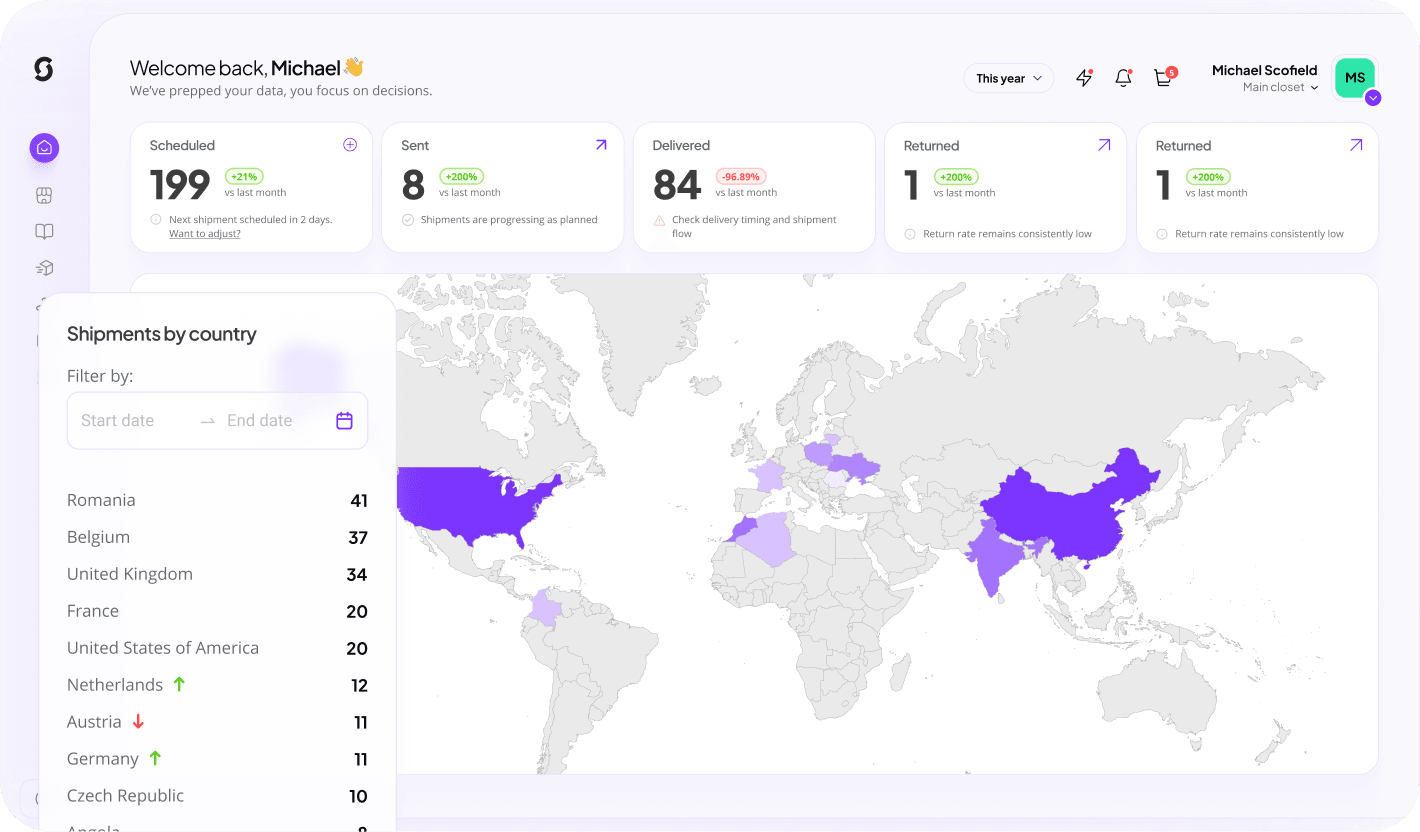
- Storefront operations: ecommerce setup, payments, fraud screening, customer service, returns, and replacement workflows
The differentiator is repeatability. Great partners do not “hero” every launch. They build a system that produces reliable results season after season, even when demand spikes or a component goes out of stock.
The global layer: where complexity becomes opportunity
Cross border merchandising is not just domestic merchandising with extra shipping. The constraints are different, and so are the chances to make smart moves.
Fit and sizing are an immediate example. A “unisex” size run that works in the US may frustrate customers elsewhere, and returns can erase profit quickly. Packaging is another. Some markets expect minimal packaging; others equate premium with an unboxing moment. Even a simple detail like product labeling can create compliance risk if it lacks required fiber content, country of origin language, or safety marks.
A capable global partner earns their keep by reducing these risks while opening new options:
- localized fulfillment to cut delivery time and landed cost
- region specific assortments that reflect climate and taste
- currency and tax handling that keeps checkout clean
- inventory positioning that limits cross border returns
In short, global merchandise stops being an operational burden and becomes a controllable growth channel.
A useful way to compare partner capabilities
When teams evaluate partners, conversations often get stuck on unit cost. Cost matters, yet landed cost, rework, and the time your team spends fixing problems matter more. A simple comparison table can keep the focus on what drives performance.
| Capability area | What “basic” often looks like | What “global ready” looks like | Why it matters |
|---|---|---|---|
| Product development | Catalog picks with logo placement | Custom silhouettes, materials, packaging | Differentiation and perceived value |
| Compliance | Reactive, case by case | Proactive labeling and testing workflows | Fewer delays and fewer refunds |
| Logistics | Ship from one country | Multi region routing and fulfillment | Lower landed cost, faster delivery |
| Inventory planning | “Print more when low” | Forecasting with safety stock logic | Fewer stockouts, less dead stock |
| Customer experience | Email only support | Returns portals, replacements, SLAs | Higher repeat purchase, less churn |
This is not about buying the most complex solution. It is about choosing the level of infrastructure that matches your ambitions.
Choosing the right partner without getting trapped in buzzwords
A strong evaluation process looks at execution, not promises. You want to know what the partner can deliver repeatedly, and what they do when something goes wrong.
Start by clarifying your own non negotiables: brand standards, margin targets, sustainability expectations, and service levels. Then pressure test the partner’s operating habits.
A few signals tend to correlate with high quality partnerships:
- Clear sampling discipline: documented fit process, color standards, and sign off checkpoints
- Factory transparency: visibility into where goods are made and how audits are handled
- Operational honesty: realistic lead times, clear constraints, and early escalation when risks appear
- Service rigor: defined response times for customer issues and shipping exceptions
Watch for vagueness. If a partner cannot explain how they manage production calendars, defects, or customs paperwork, you will end up managing it for them.
A practical operating model that scales
Merchandise programs often fail at the handoff points: design to production, production to logistics, logistics to customer experience. A global partner can reduce friction by creating a repeatable cadence that your team can plug into.
A simple seasonal rhythm looks like this:
- Line plan and creative direction
- Sampling and wear testing
- Costing and margin review
- Production booking and QA plan
- Freight planning and regional allocation
- Launch, customer support, and returns analysis
This cadence should not feel heavy. It should feel like a checklist that protects speed. When the workflow is stable, you can take more creative swings because the basics are covered.
Quality, compliance, and risk: the unglamorous work that protects the brand
Merchandise is physical. Customers notice fabric weight, stitching, shrinkage, print cracking, and color drift. They also notice when a package arrives battered or late, and they rarely blame the shipping carrier. They blame the brand.
Quality control needs to be designed, not improvised. That usually means defining acceptable tolerances, setting inspection points (pre production, during production, final), and building a clear policy for rework or rejection.
Compliance is equally serious. Regulations vary by product and market: children’s items, cosmetics, electronics, food contact materials, even plush toys can trigger testing or labeling rules. A partner with mature compliance workflows will treat this as standard operating procedure, not as an emergency task after goods are already on the water.
Data, forecasting, and sustainability that feels real
Great merchandise programs are creative, but they are also analytical. Forecasting is where a global partner can either save you money or quietly drain it. The goal is not perfect prediction; it is reducing avoidable waste and protecting availability.
Better forecasting tends to rely on a few inputs: past sell through, audience size, launch calendar, price points, and channel mix (events vs ecommerce vs internal). With global fulfillment, allocation becomes a strategic choice. If you stock everything in one place, you may pay more in shipping and lose customers to long delivery times. If you stock too widely, you risk leftovers that cannot be moved efficiently.
Sustainability decisions also land differently when you operate globally. The most credible programs focus on measurable moves: material choices, packaging reductions, durability, and end of life options where feasible. A partner can help by offering verified material documentation, realistic options for recycled content, and packaging systems that meet protection needs without unnecessary bulk.
What great partnership looks like in practice
When the relationship is working, you feel it in the speed of decisions and the calmness of launches. Your team spends time on brand direction and assortment, not on chasing tracking numbers or arguing over defective units.
You also get better at learning. Returns reasons become input for pattern adjustments. Customer support tickets become insights for product pages and sizing guides. Freight performance becomes a map for where to hold inventory next season. The program starts to behave like a product line, not a side project.
That is the point: merchandise becomes a durable capability that supports campaigns, community, and revenue without exhausting the people running it.
Questions to ask on your first call
Go into the first conversation with a short list that forces clarity. The answers matter less than how specific and consistent they are.
- Where do you manufacture most often, and why: look for factory selection criteria, not brand name dropping
- How do you prevent color drift across reorders: ask about lab dips, Pantone matching, and approval steps
- What happens when a batch fails inspection: you want to hear a clear rework or replacement policy
- How do duties and taxes show up at checkout: confirm whether customers see surprise charges on delivery
- What service levels do you commit to: response times, replacement timelines, and escalation paths
If the partner can answer these cleanly, you are likely speaking with a team that has built real operating muscle. If they cannot, keep looking. A global merchandise program rewards precision, and the right partner brings that precision while still leaving room for bold creative choices.