
Recycled custom backpacks exist and they are a sensible option, but recycled material on its own is not the whole story. The single most important eco decision with a backpack is durability: a well-made bag that gets carried for years beats a superficially "sustainable" one that breaks and is quickly replaced. Choose recycled PET fabrics where they fit, back them with durable construction and real laptop protection, and never overclaim.
Sustainability is a live differentiator in this category, and plenty of suppliers lead with "100% recycled polyester" as the headline. That is a fine ingredient, but it is only one part of a good spec. The biggest failure in eco merch is a recycled bag that breaks, never gets used, or looks cheap enough that no one wants to carry it. That bag is worse on every measure, including the environmental one. This guide covers the recycled materials worth knowing, why durability is the real story, and how to talk about it without greenwashing. Browse the range on the custom backpacks page or in the catalog.
Durability is the real sustainability story
The most sustainable backpack is the one people actually carry, for a long time. A bag with a structured outer fabric, a padded laptop compartment, solid zippers and well-stitched straps does its job for years of commutes, travel and customer visits. A cheap backpack that frays, sheds its coating or fails at the zipper gets binned and replaced, which undoes any benefit from the recycled fabric it started with. So the durability checklist and the sustainability checklist are mostly the same list.
This is why the zipper quality, the strap stitching and the outer-fabric choice covered in our buyer's guide matter here too. A durable, carried backpack is the credible sustainability win. A recycled-fabric bag that lives in a drawer is not.
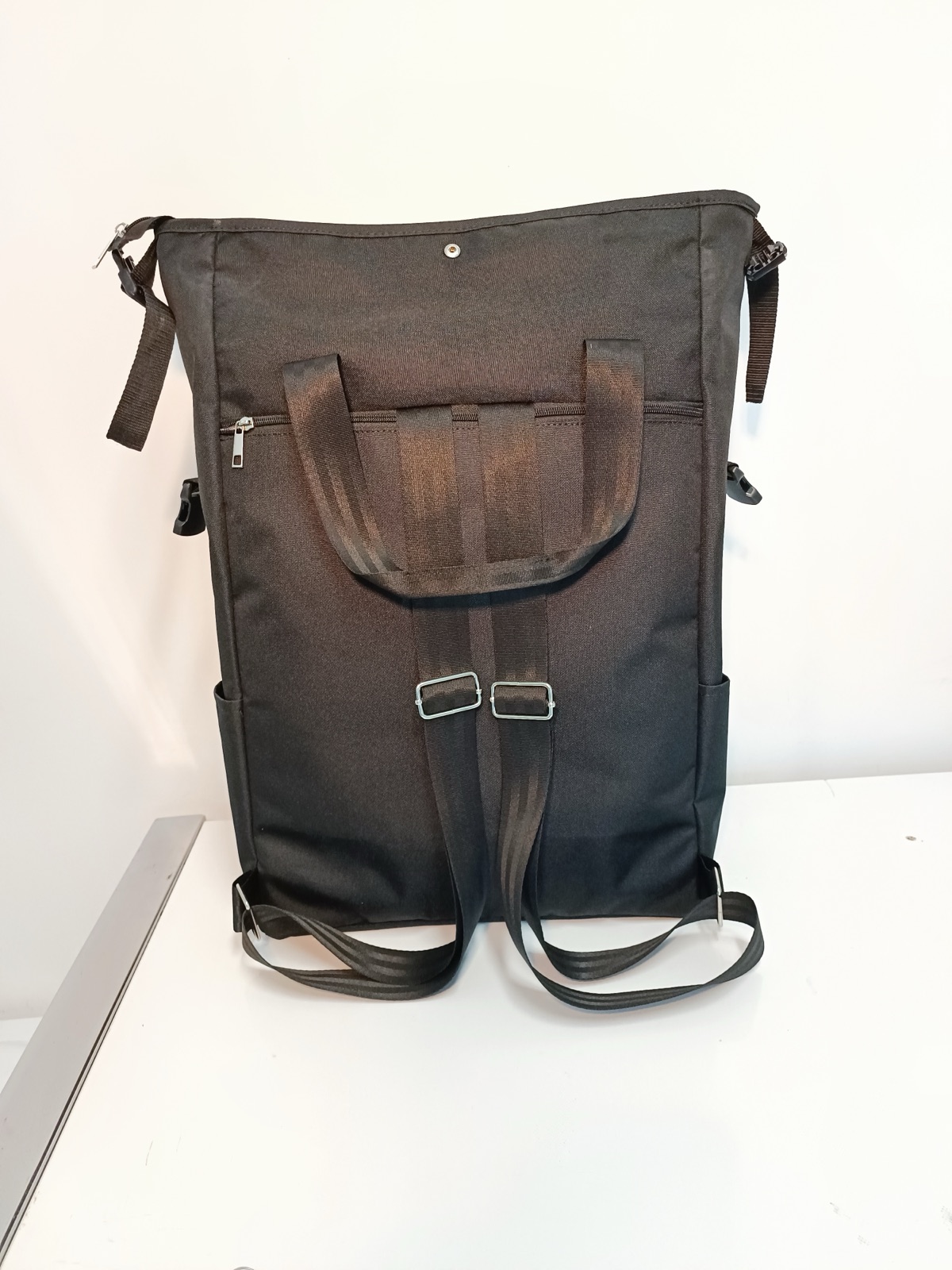
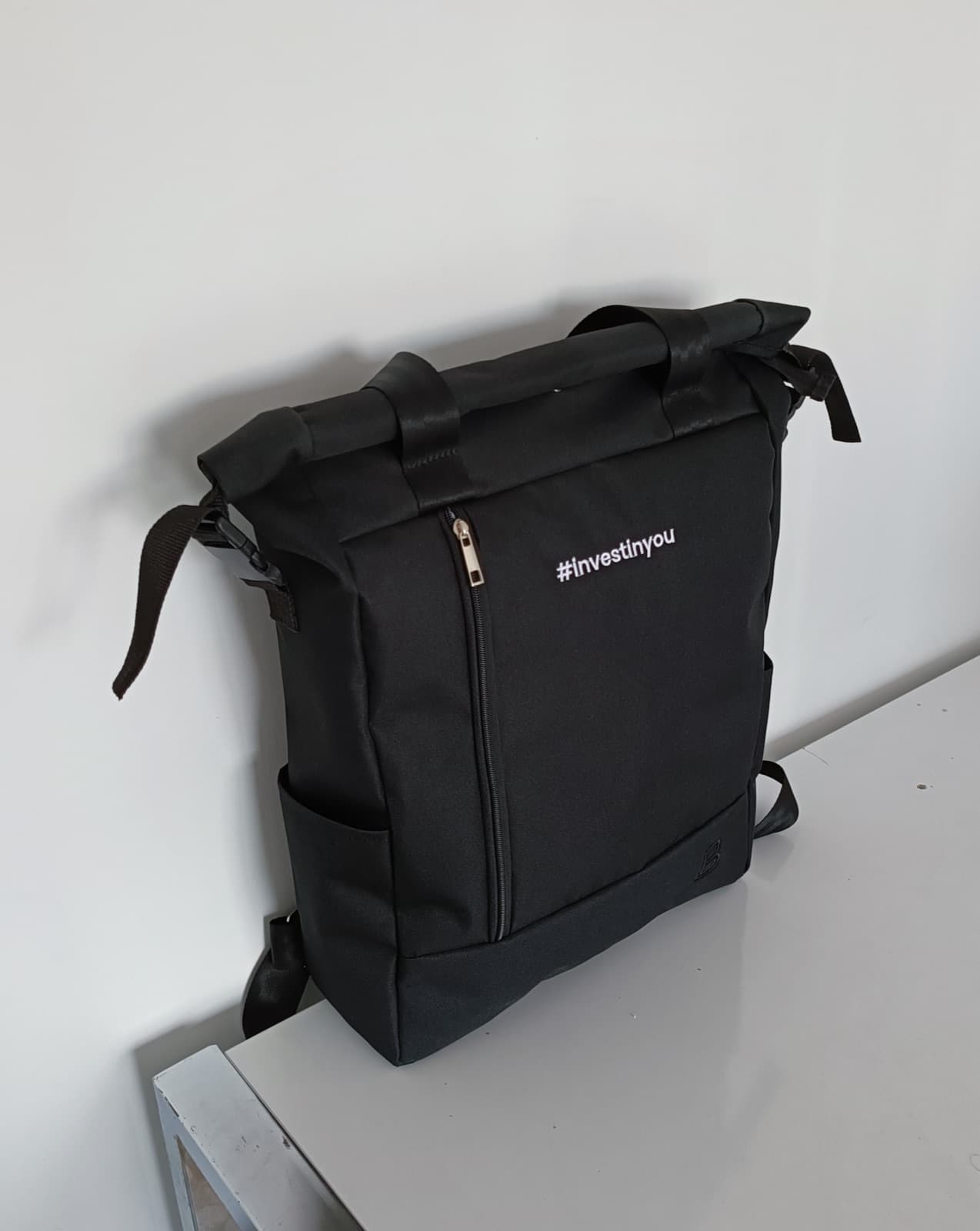
A custom branded backpack that gets carried every day. Durability and real use are what make a bag a credible sustainable choice.
The eco materials worth knowing
Several materials give you a genuine sustainability angle without sacrificing the durability that makes a backpack worth carrying.
| Material | Why it stands out | Best for |
|---|---|---|
| Recycled PET (rPET) | Made from post-consumer plastic bottles, with a durable technical feel | Most recycled backpack builds, from classic to laptop models |
| Recycled nylon | Strong, abrasion-resistant and water-resistant | Travel and roll-top bags that need to take a beating |
| Recycled or coated technical fabrics | Hold shape, resist water and wear while using recycled content | Premium bags where structure and an eco story both matter |
Recycled PET is the workhorse of the category, made from post-consumer bottles and available across most models. Recycled nylon suits travel and roll-top bags that need to resist abrasion and water. The point is to treat recycled content as one line in the spec alongside construction, protection and finish, not as the headline that excuses everything else. Where a supplier can name the material, the recycled content and any certification, that specificity is what makes the claim credible.
How to talk about it without overclaiming
The fastest way to lose credibility is to exaggerate the sustainability story. Do not dress up a standard bag as a planet-saver. Be specific about the material, point to durability and long-term use as the real lever, and only make claims you can back.
- Lead with durability and daily use, the real reason a backpack lasts and stays out of landfill.
- Name the material honestly: recycled PET, recycled nylon, the recycled content and any certification.
- State the bottle-count equivalence or certification where you have it, and skip the vague "eco" claims where you don't.
- Keep the construction premium, solid zippers, padded straps, real laptop protection, so the bag stays in service.
- Order well, store and ship efficiently rather than over-producing. See distribution.
For more on running an efficient, low-waste backpack order, read how it works for forecasting and storing stock instead of over-ordering. Designing the bag itself? Preview recycled options in your colours with the free backpack mockup generator.
Sustainable backpacks: questions answered
Are recycled custom backpacks any good?
Yes, when they are built well. Recycled PET and recycled nylon perform close to virgin fabrics and give a genuine eco angle. The catch is that recycled material does not fix poor construction. A recycled bag still needs durable stitching, solid zippers, real laptop protection and a design people want to carry. Get the construction right and a recycled backpack is both credible and long-lasting.
What are recycled backpacks made from?
Most recycled backpacks use recycled PET, a fabric made from post-consumer plastic bottles, or recycled nylon for tougher travel and roll-top bags. Coated and technical recycled fabrics are also available for premium bags that need to hold their shape and resist water. The recycled content varies by model, so ask for the specific material and percentage rather than a generic "eco" label.
Is a recycled backpack actually more sustainable?
It can be, but the biggest lever is durability, not the fabric alone. A well-made recycled bag that gets carried for years is genuinely more sustainable. A cheap recycled bag that breaks and is replaced quickly is not, because the replacement undoes the saving. Choose recycled materials, then back them with quality construction and long-term use so the bag stays in service.
How do I avoid greenwashing with branded backpacks?
Be specific and honest. Name the material, the recycled content and any certification, and state the bottle-count equivalence where you have it. Lead with durability and daily use as the real environmental benefit. Avoid vague "eco-friendly" claims you cannot back. If the bag is a standard model, say so and let its quality and longevity speak rather than overclaiming a sustainability story.
Do recycled backpacks cost more?
Recycled materials can carry a small premium, but the bigger cost drivers are the model, the laptop protection, the decoration and the quantity. Ordering in volume and starting from a ready-made recycled model keeps the unit price sensible. Because a durable recycled bag lasts for years, the value per use is usually better than a cheaper bag that needs replacing.
Can I get a recycled backpack with my logo?
Yes. Recycled models take the same decoration as standard bags: clean external embroidery, custom zippers, woven labels or a branded lining. Keep the external branding restrained so the bag stays wearable and gets carried, which is what makes it a sustainable choice in practice. You can preview your logo on a recycled model with the free backpack mockup generator before ordering.
Keep reading: custom backpacks
Design a durable recycled backpack in 30 seconds
Pick a recycled model, drop in your logo, choose clean embroidery, and preview a real mockup before you order.
Get free designs