

Definition
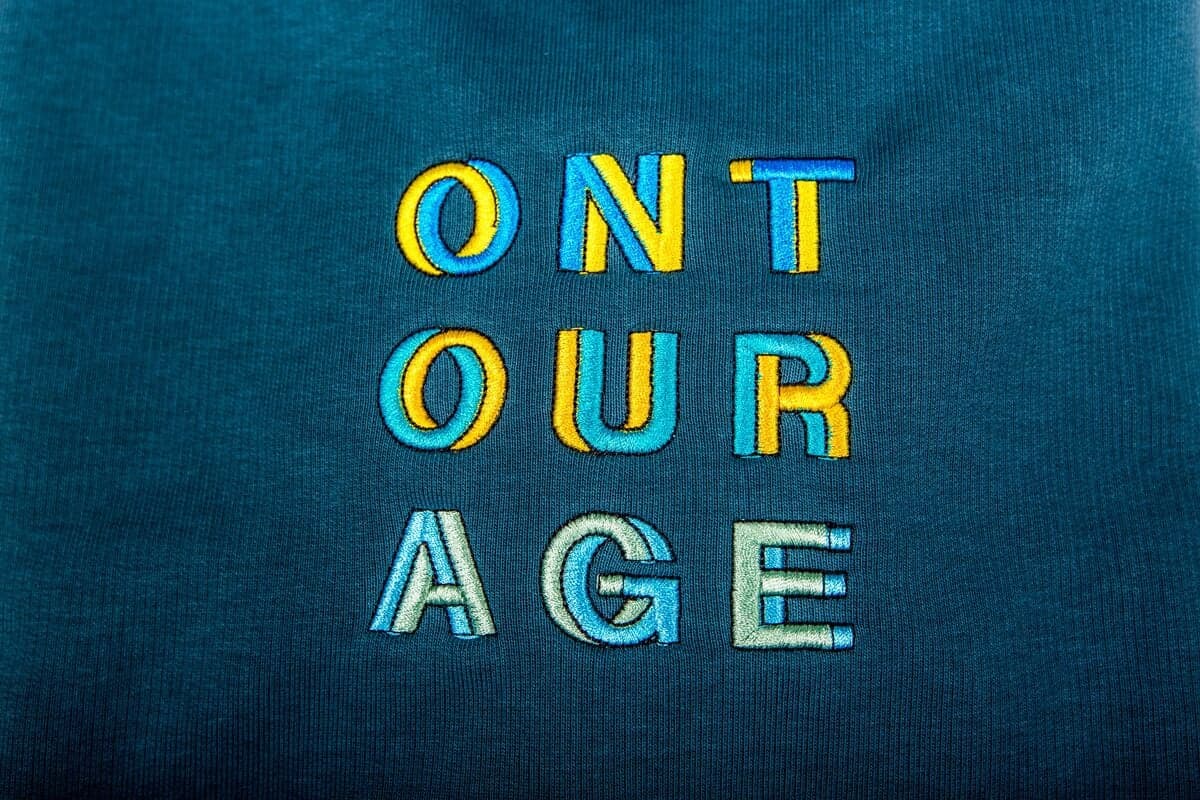
Puff print is a screen printing technique that makes the design rise off the fabric for a raised, three-dimensional effect. A foaming agent in the ink expands under heat, turning a flat logo into a tactile, padded one. It is the go-to method when you want a print people notice and touch.
Definition
Puff print uses plastisol ink mixed with a chemical blowing agent. When the printed garment hits the dryer, the agent reacts to heat and the ink puffs up, lifting the design a few millimeters above the surface. A common example is a heavyweight hoodie with a chunky, raised brand wordmark across the chest that you can feel with your fingers.
How puff print works
The process starts like standard screen printing. The design is burned onto a screen and ink is pushed through onto the fabric. The difference is in the ink. A puff additive or ready-mixed puff ink carries the blowing agent that does the work later.
Curing is where the effect happens. As the print passes through the dryer at cure temperature, the blowing agent releases gas and the ink rises. The amount of lift depends on the additive ratio, the cure heat, and the ink deposit, so printers tune these to get a soft, even puff rather than a cracked or uneven one. Bold, simple shapes work best because fine lines and small text can lose definition as the ink expands.
The trade-offs are worth knowing. Puff print is harder to control than a flat print, so tight registration with multiple colors is tricky. It also adds thickness and a slightly spongy hand. For branded merch that is usually a feature, not a flaw, because the texture signals quality and effort. It is a retail-grade look that lifts a basic garment.
Puff print in branded merch
- Premium hoodies and heavyweight tees. Puff print gives streetwear-style merch a tactile, high-end finish that feels worth keeping and wearing.
- Standout brand wordmarks. A raised logo across the chest reads as deliberate and elevated, which suits drops where the merch is the message.
- Limited-edition or anniversary runs. When you want a special item that stands apart from everyday swag, the 3D texture makes it memorable.
Puff print is a screen printing effect where heat-activated ink expands to create a raised, 3D texture on the garment.
5 tips to elevate your Puff print strategy
| Tip | Steps |
|---|---|
| Keep artwork bold | Use thick strokes and simple shapes so the design holds up as it puffs. |
| Avoid fine detail | Drop tiny text and hairline elements, since they blur when the ink rises. |
| Limit colors | Stick to one or two colors to keep registration clean on the raised print. |
| Choose sturdy fabric | Puff print sits best on cotton-rich, heavier garments like hoodies. |
| Order a sample | Approve a physical proof, because puff height varies with the cure setup. |
Key Terminologies
Frequently Asked Questions
Does puff print last as long as normal screen printing?
Yes, a well-cured puff print is durable and washes well. The raised texture can flatten slightly over time, but the design stays intact with cold washing and low-heat drying.
Can any design be puff printed?
Bold, simple designs work best. Fine lines, small text, and tightly registered multicolor art can lose definition as the ink expands, so simplify the artwork first.
What garments suit puff print?
Heavier cotton or cotton-blend garments like hoodies and premium tees hold the texture best. Thin or stretchy fabrics make the raised print prone to cracking.
Is puff print more expensive than flat printing?
It usually costs a little more because of the special ink and tighter process control. For premium or limited merch the upgraded look often justifies the difference.
How high does puff print rise?
Typically one to three millimeters, depending on the ink deposit, additive ratio, and cure heat. Printers can tune the lift, so request a sample to set expectations.