
Strong custom beanies design examples share one thing: they pick a direction and commit. A subtle beanie with a small embroidered logo in a wearable colour reads premium for employees, customers and partners. A bold knitted pattern or oversized mark works for ski trips, festivals and outdoor activations. The mistake is the middle, too branded to feel fashionable, not bold enough to feel intentional. Below are real beanies and the design rule behind each.
This is a showcase, not a mood board. Every design here is a real branded beanie, and for each one we explain why it works so you can copy the thinking, not just the look. If you would rather see your own logo on a beanie right now, preview it in the free beanie mockup generator and read on for the choices that make a beanie get worn instead of stored.
The two directions that work
A corporate beanie can be genuinely premium. The difference between a beanie people keep wearing and one that ends up in a drawer is design, and good design moves in one of two directions. The first is deliberately bold: loud colours, oversized branding, patterns, a pom-pom. This is the right call for ski trips, festivals, outdoor activations and playful brands. The second is subtle and premium: restrained branding, wearable colours, a beanie that looks like something the recipient would have bought themselves. This is the right call for employees, customers, partners and anything meant for long-term wear.
The failure mode sits between the two. A beanie that is too branded to feel fashionable but not bold enough to feel intentional pleases no one. Pick a lane first, then design into it. Everything below is an example of one direction done with conviction.
Mobile Vikings: the brand-pattern beanie
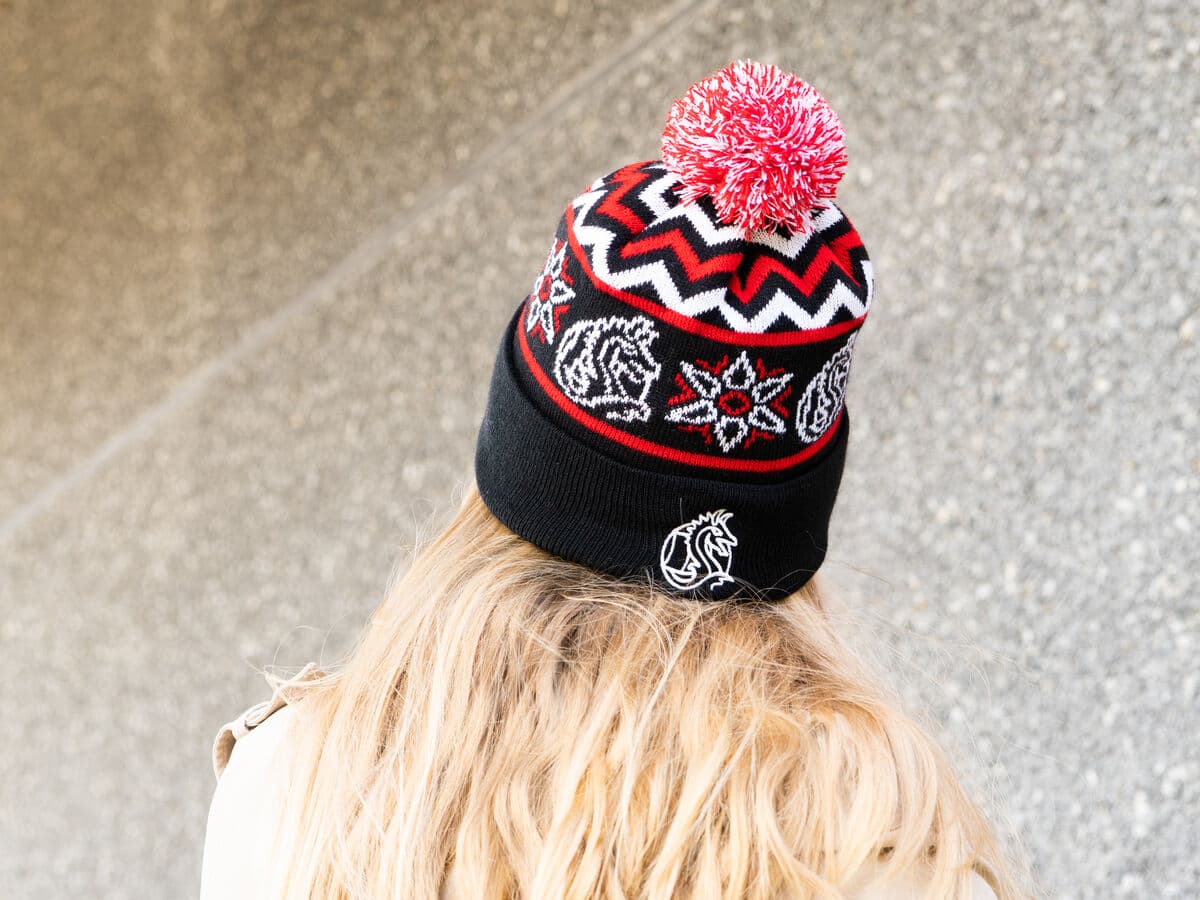
Mobile Vikings ran a knitted beanie built around a Viking-inspired pattern tied directly to the brand identity. The branding is not a logo slapped on a blank cap; the pattern is the brand. That is why it works. When the design carries the brand through colour and motif rather than a printed mark, the beanie reads as a product, not a giveaway, and people choose to wear it. It also tied to a moment, sent as part of a customer-service follow-up in winter, which is exactly when a beanie solves a real problem.
Why it works: the brand lives in the knit itself. A distinctive pattern in the right season turns a winter hat into a recognisable brand object. For the full story behind this kind of activation, see the complete custom beanies guide.
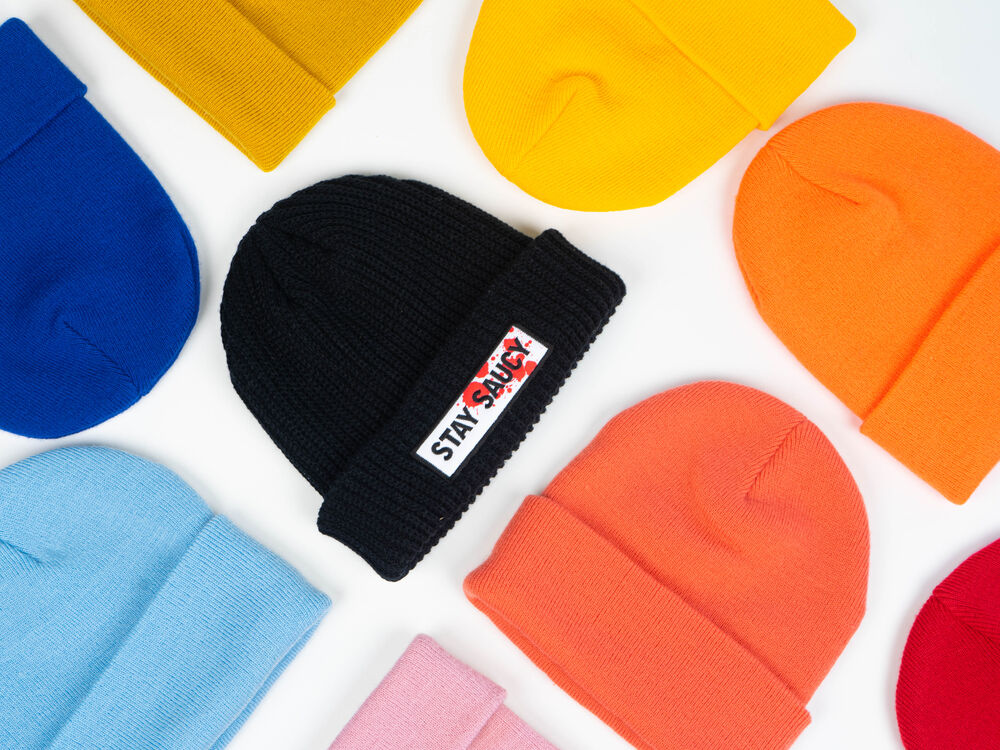
A cuffed knit beanie with a clean, restrained logo, the template for any employee, customer or partner gift.
The quiet embroidered beanie
Most corporate beanies should be quiet. A single embroidered logo, kept small, on a navy, black, grey or muted-tone body is the most reliable design there is. It survives changing taste, suits almost every head, and looks closer to retail than to promo. Brands like Bavet and Cryns lean on this restraint: the colour is wearable, the mark is subtle, and the beanie gets pulled on every cold morning. The visibility you want comes from frequency, not from logo size. A beanie worn all winter beats a louder one worn once.
Why it works: restraint reads as quality. Keep the logo small and the colour wearable, and the recipient treats it as their own hat rather than your advertising.
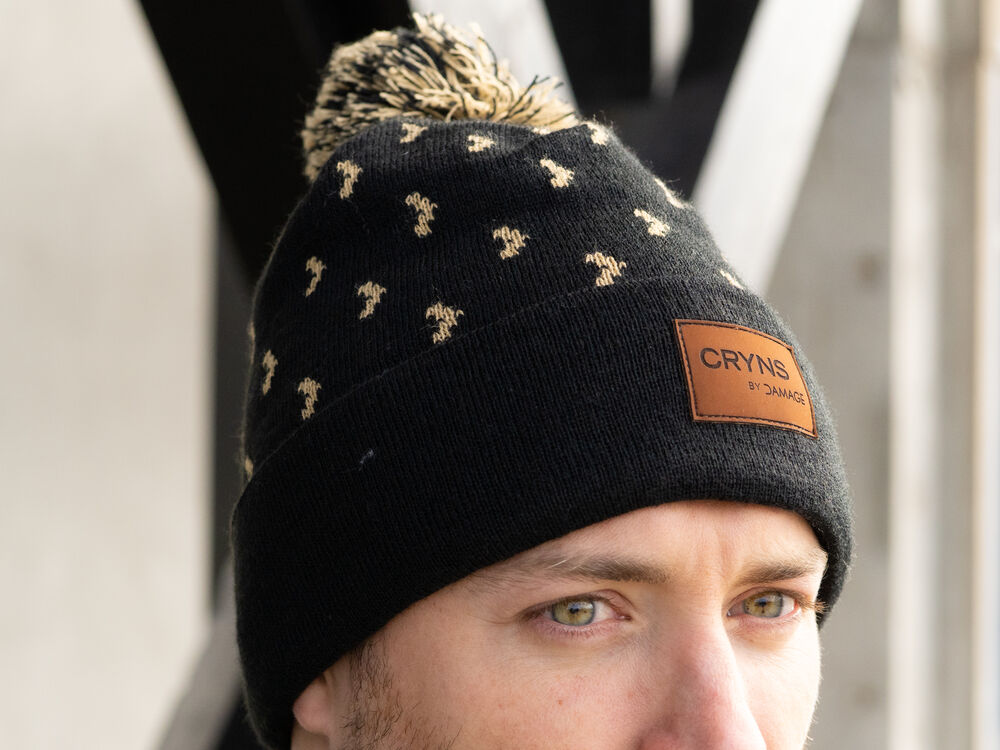
Wearable colour, small mark. The quiet beanie is the safest design for long-term wear.
The bold event beanie
When the job is a ski trip, a festival or an outdoor activation, do the opposite and commit hard. Loud colour, a pom-pom, a big knitted motif, a playful lockup. Here the beanie is meant to be seen and photographed, so subtlety is the wrong instinct. The one rule that still applies: one strong idea, not five. A single bold colour with a clear mark beats a crowded design every time. Brands with personality, think the energy of a Jagermeister winter activation, earn the right to go big because the loudness matches who they are.
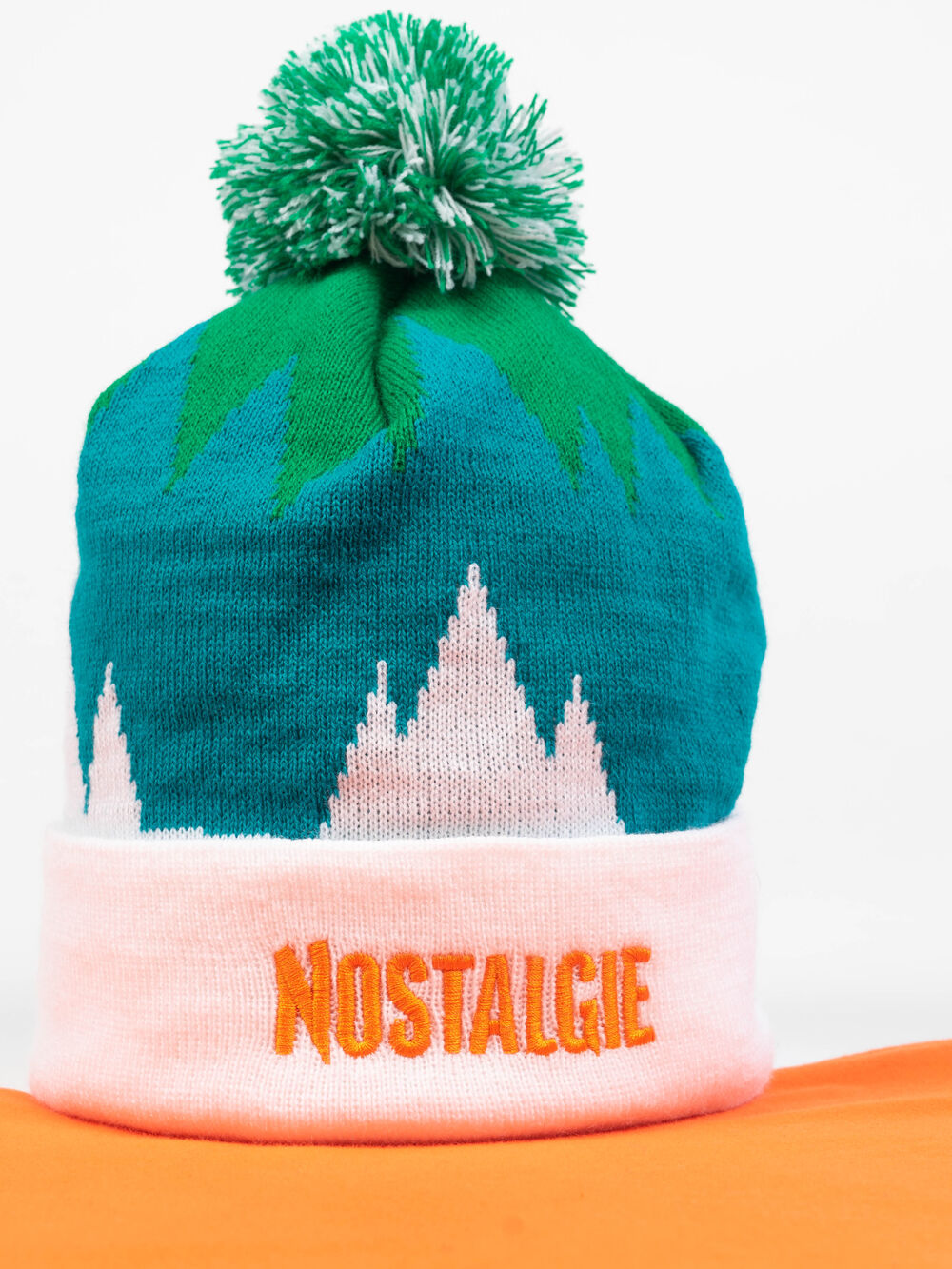
The bold event beanie: strong colour and visible branding for ski trips, festivals and outdoor activations.
Embroidery, woven label or knit
The decoration method shapes the design more than the colour does. The rule: choose a method that preserves the logo's shape. The classic mistake is knitting a detailed logo into the ribbed section, because the ribs stretch when the beanie is worn and distort the mark. For a crisp logo, use embroidery, a woven label or an embroidered patch. Save knitting-in for patterns and simple shapes built for the knit, like the Mobile Vikings motif.
| Method | Best for | Watch out |
|---|---|---|
| Embroidery | Crisp logos, premium feel, most corporate beanies | Very fine detail can crowd; keep the mark simple |
| Woven label | A clean, retail-style tab on the cuff | Small surface, so keep type legible |
| Embroidered patch | A fashion-led look with more presence | Adds cost; pick placement deliberately |
| Knitted-in | Brand patterns and bold simple shapes | Distorts detailed logos when the rib stretches |
For the full side-by-side, read the complete custom beanies guide, and to see any of these on your own logo, open the mockup generator.
Presentation: where perceived value is made
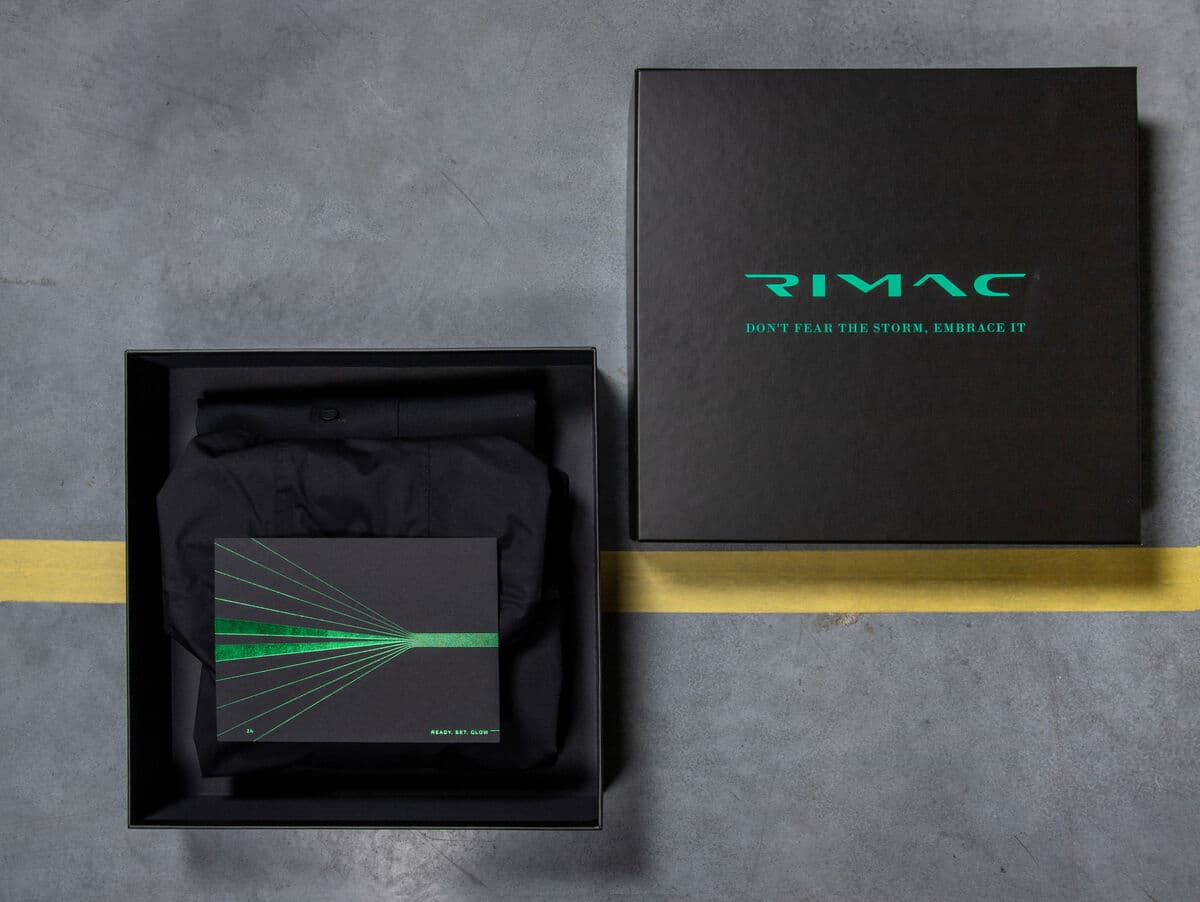
The same beanie can feel basic or premium depending on how it arrives. Presentation is part of the design. A beanie in a polybag reads as promo. The same beanie paired with a scarf and socks, set on a custom hanger, slipped into a branded paper sleeve, packed in a winter box, or sent with a personalised card reads as a gift. Twilio sent a full winter set, a knitted beanie with a scarf, gloves and a personalised card, to selected key accounts, and the complete set lifted perceived value far above any single object. If the beanie is the gift, design the unboxing, not just the hat.
Subtle pattern
Restrained logo, wearable colour, premium presentation. The beanie people keep.
Bold pattern
Strong colour, visible branding, one clear idea. The beanie that gets photographed.
Five rules behind every beanie that works
- Pick a direction. Bold or subtle. The middle pleases no one.
- Keep the logo small. A beanie has little visible surface. Oversized branding looks cheap; a small, well-placed mark looks premium.
- Protect the logo's shape. Embroider, weave or patch crisp logos. Knit in only patterns and simple shapes.
- Commit to one colour story. Loud and playful, or classic navy, black and grey. Do not pair a conservative beanie with an aggressive logo.
- Design the presentation. A sleeve, a card or a winter set turns a hat into a gift.
Want the full process from artwork to delivery? Read the complete custom beanies guide, then explore the wider catalog.
MOQ, price and lead time
The numbers that shape what is possible for your design.
| Factor | What to expect |
|---|---|
| Minimum order | From around 10 pieces for standard beanies, accessible for small teams, exec groups and events |
| Fully custom-knitted | From around 100 pieces, with more design, setup and knitting prep |
| Price drivers | Model, quantity, material, decoration method, ready-made vs knitted from scratch, packaging and any set items |
| Material | Acrylic for almost every case, merino for genuinely premium, cotton where a setting demands it |
Unit price falls significantly with scale. For the full breakdown see the complete custom beanies guide, browse the full range of custom beanies, or see how production runs in how it works. One timing rule overrides the rest: distribute in October or November so recipients wear the beanie all winter, never in summer.
About this article
Keep reading: custom beanies
Get free designs on your beanie
Create your account and see your logo on a real beanie in your colours with live pricing. Made in Europe, embroidery that holds its shape, live in 30 seconds.
Get free designs