
A good sales kickoff theme is one idea you can say in a single sentence, drawn from the year's sales strategy, that looks distinct on a slide and on a shirt and still makes sense in every region. The best sales kickoff themes serve the message, not the other way round. Below are 25, with matching swag.
A theme is the thread through the whole event: the name on the opening slide, the look of the stage, the language of the keynotes and the thing people wear in the group photo. These sales kickoff theme ideas are grouped by what you want to say to the team, because that is the right place to start.
Each one comes with a plain-language concept and the swag that fits it. We describe genres and ideas rather than named films or brands, so you can make any of them your own.
What's in this guide
- What a sales kickoff theme does
- How to choose a sales kickoff theme
- A quick test for any theme
- Growth and ambition themes
- Competition and games themes
- Culture and values themes
- Reset and transformation themes
- Place and story themes
- Theme type and merch approach
- Make the merch outlive the theme
- Mistakes to avoid
- From theme to pack
- FAQ
What a sales kickoff theme does
A sales kickoff theme is a single organising idea for the event. It gives the agenda a spine, gives designers a brief and gives attendees a shorthand they can repeat in the corridor and on the first call of the quarter.
What it does not do is replace strategy. A theme does not tell reps what to sell or how. It makes the message you already have easier to remember. If you are still deciding that message, start with the goals in our guide on how to plan a sales kickoff, then come back here.
How to choose a sales kickoff theme
Before you fall for a theme, run it through four checks. These are the same four we would use on any of the 25 below.
- It comes from the year's strategy. Ask what the one thing is that sales must do differently this year. If you cannot answer that, the theme is premature.
- You can say it in one sentence. "This year we rebuild around the customer" works. If it needs a paragraph to explain, it is a campaign, not a theme.
- It works visually. A theme should suggest a colour, a shape or a texture. Words alone do not print well. A simple test: could a designer sketch it in ten minutes?
- It survives translation. Puns, idioms and local sports references rarely cross regions. Ask someone in each region to explain the theme back to you in their own words before you commit.
Timing matters too. The theme has to be settled before design starts. If you order merchandise through Sunday, design begins about 8 weeks before the kickoff, so we suggest picking the theme 10 to 12 weeks out. The full timeline sits in our sales kickoff swag guide. For product-level detail with minimum quantities and lead times, see SKO merch, gifts and team packs: 25 ideas for your 2027 sales kickoff.
A quick test for any theme: message strength versus visual strength
When you have a shortlist, score each theme from 1 to 5 on two things. Message strength: how clearly it carries this year's strategy. Visual strength: how easily it turns into a colour, a shape or a pattern. Then read the result.
| Weak visual | Strong visual | |
|---|---|---|
| Strong message | Plain but true. It works. Keep the message and add one visual hook, such as a colour or an icon, so the merchandise has something to carry. | Keeper. Run it. Theme-specific merchandise is safe here because people will want to wear it. |
| Weak message | Nothing. Drop it. Choose another theme, or skip the theme and use a strong brand-forward design. | Costume. It looks great and says nothing. Fun on the day, forgotten by the first pipeline review. Attach a real message or avoid it. |
Any theme that scores under 3 on either axis needs more work before it reaches a designer.
Growth and ambition themes
Use these when the year's story is about getting bigger, faster or bolder. They are the safest group visually, because ambition is easy to draw.
1. Summit: one big climb
Frame the annual target as a mountain, with a base camp for each quarter. It works best when there is a single headline number everyone can see.
Swag that fits: jackets, backpacks, bottles.
2. The Stretch: a target slightly too big
Set a goal just beyond comfortable and say so out loud. The visual is simple: a line, a gap and the number that closes it.
Swag that fits: tees with the target number, caps, notebooks.
3. Launch Pad: a new product or market
Built for a launch year. Countdown graphics, ignition colours and an agenda that builds toward a single moment.
Swag that fits: hoodies, caps, tech accessories.
4. Compounding: small habits, big year
Make the theme about the unglamorous work: calls made, follow-ups sent, notes written. The visual is a stack, a staircase or a growing set of lines.
Swag that fits: notebooks, bottles, socks.
5. Blueprint: built to scale
For a team growing fast. Technical drawing lines, grid paper and a feeling that the structure is deliberate, not accidental.
Swag that fits: tees, totes, hoodies.
Competition and games themes
Sales teams like to win, so these lean into it. Keep them from turning cheesy by keeping the rules real: tie every game to a skill or behaviour you want to see more of.
6. Heist: the crew and the plan
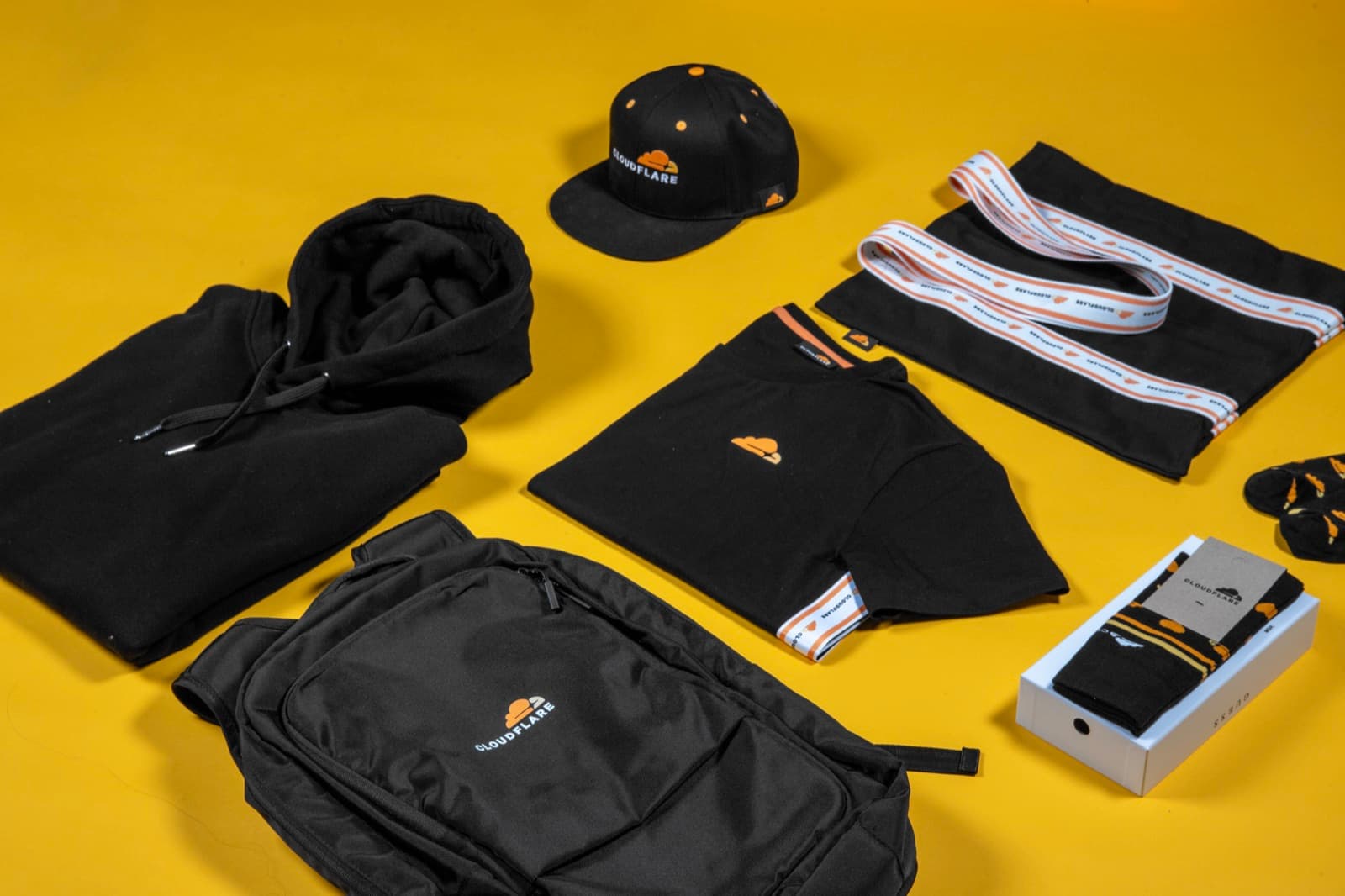
A crew with roles, a plan and one target. Give each person a role that matches the real team (the planner, the closer, the specialist) and run the agenda like a briefing. Think black with one sharp accent colour.
Swag that fits: black tees, caps, tech accessories.
7. Tournament: regions in a bracket
Regions or segments compete across two days, with points for real selling skills such as discovery and negotiation. It gives the event structure and a natural finale.
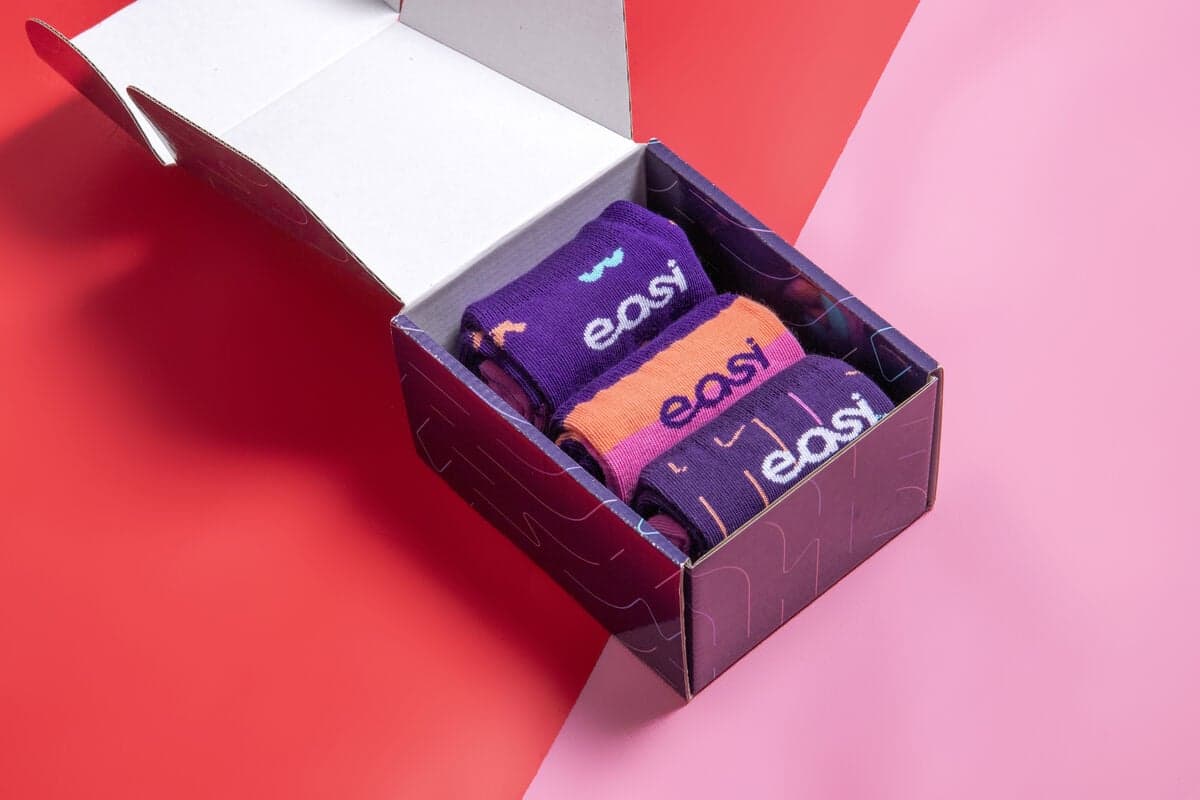
Swag that fits: team-colour tees, socks, caps.
8. Pit Stop: speed and precision
Borrow from motorsport: a crew that moves as one. A good fit when the focus is process, handoffs and response time. Chequered graphics are easy to overdo, so use them as an accent.
Swag that fits: jackets, caps, tees.
9. Escape Room: solve it together
Teams work through clues that are secretly the year's hardest selling problems: a stalled renewal, a tricky objection, a missing champion. Clue and cipher graphics make good pattern work.
Swag that fits: notebooks, tech accessories, hoodies.
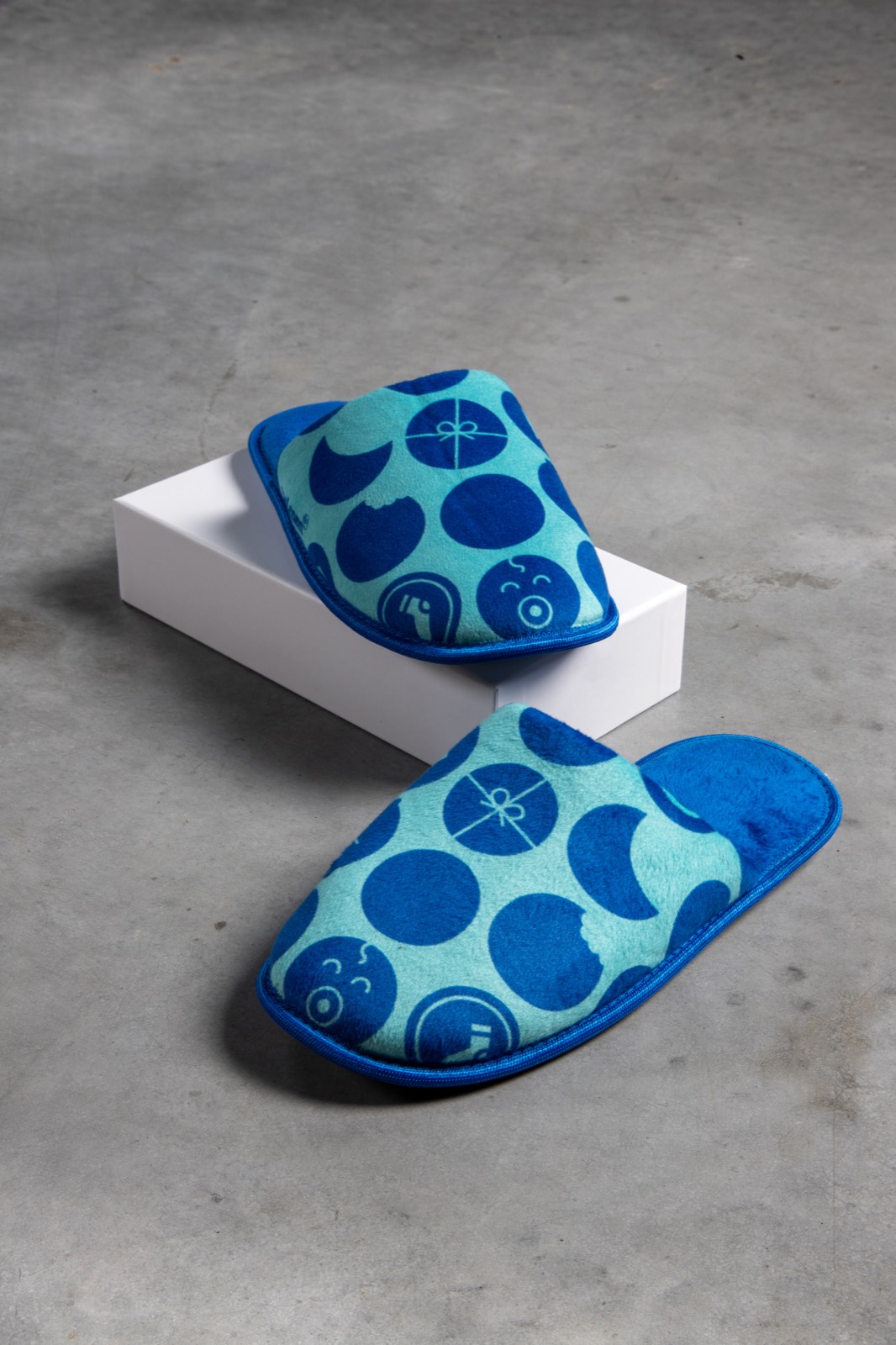
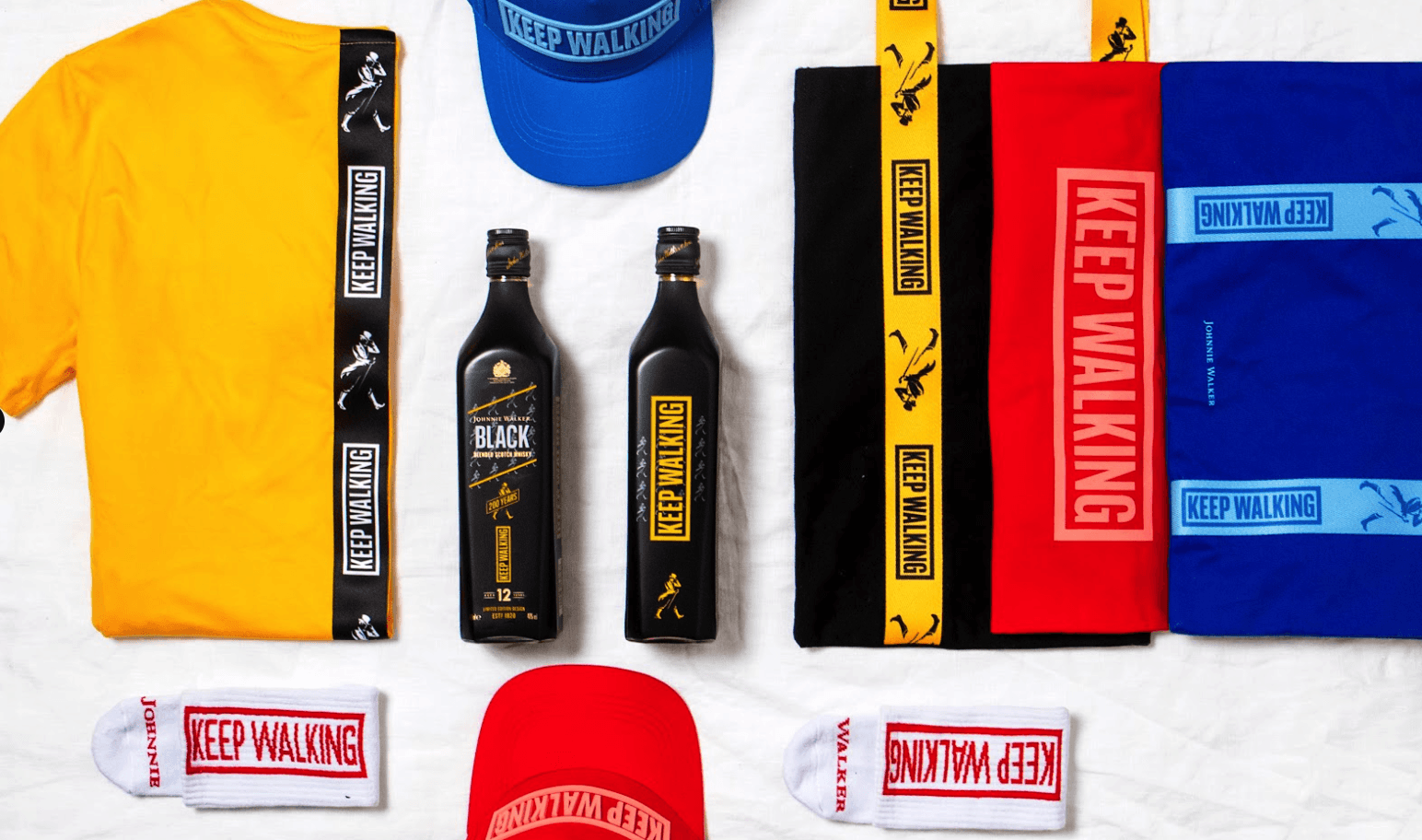
Bold graphics make an unusual item memorable: a large dot pattern on a simple slipper. Loud themes suit items people will notice and talk about.
10. Treasure Hunt: find the untapped
Point the team at accounts and product features that nobody has mined yet. A map, marked locations and a sense of discovery. Especially good in an expansion year.
Swag that fits: totes, notebooks, caps.
Culture and values themes
These are quieter. They work when the message is about how the team behaves rather than what it hits. The risk is vagueness, so tie each one to a visible behaviour.
11. Open Door: transparency
Share the wins, the losses and the numbers. Windows, doors and clear lines carry the look. Pair it with an agenda slot where leadership answers questions unfiltered.
Swag that fits: hoodies, notebooks, travel mugs.
12. Missing Piece: one team, many functions
Sales, customer success, product and support each get one piece of a shared graphic. The whole picture only appears when people stand together, which makes a strong group photo.
Swag that fits: tees or totes with one piece each, matching socks.
13. Front Row: the customer on stage
Put customers at the centre, with their real words (and their permission) and sessions built around their problems. Seats, curtains and spotlights give you the visuals.
Swag that fits: notebooks, totes, tees.
14. Small Wins: a recognition culture
Celebrate the unglamorous progress that adds up: the first reply, the second meeting, the clean handoff. Warm colours and a steady rhythm of recognition during the event.
Swag that fits: travel mugs, notebooks, socks.
15. Many Hands: designed by the team
Run an internal contest for artwork or slogans, then print the winner. People wear what they helped make, and the theme arrives with its own story.
Swag that fits: tees, totes, hoodies.
Reset and transformation themes
For years when something changed: strategy, structure, product or fortunes. Be honest about the change. People already know. A theme that pretends otherwise loses the room.
16. Fresh Start: a blank page
New year, new territories, new quotas. Lots of white space, one bright colour and an agenda that begins from zero.
Swag that fits: notebooks, white or light tees, bottles.
17. Day One: a new organisation
For a merger, a rebrand or a new leadership team. Treat the kickoff as the first official day, with the new name, colours and shared mission everywhere.
Swag that fits: hoodies, totes, caps in the new identity.
18. Back to Basics: the fundamentals
Strip the year down to discovery, qualification and follow-up. Plain, workshop-style visuals. Credible when the numbers say the basics slipped.
Swag that fits: notebooks, tees, travel mugs.
19. The Pivot: a new direction
A new segment, product or pricing model. Arrows, turning points and a before and after. Say clearly what stays the same, as well as what changes.
Swag that fits: tech accessories, hoodies, caps.
20. Comeback Season: after a hard year
The honest answer is the best one. Use an underdog tone and lower-key production, and avoid slogans that sound like blame.
Swag that fits: caps, jackets, socks.
Place and story themes
These borrow from where you are or where you came from. They are the easiest to make look good, because the place or the story supplies the visuals.
21. Postcard: the host city
Use the venue city as the theme: its colours, streets and food. Open each session with a local detail. Stamps, labels and hand-drawn maps carry the look.
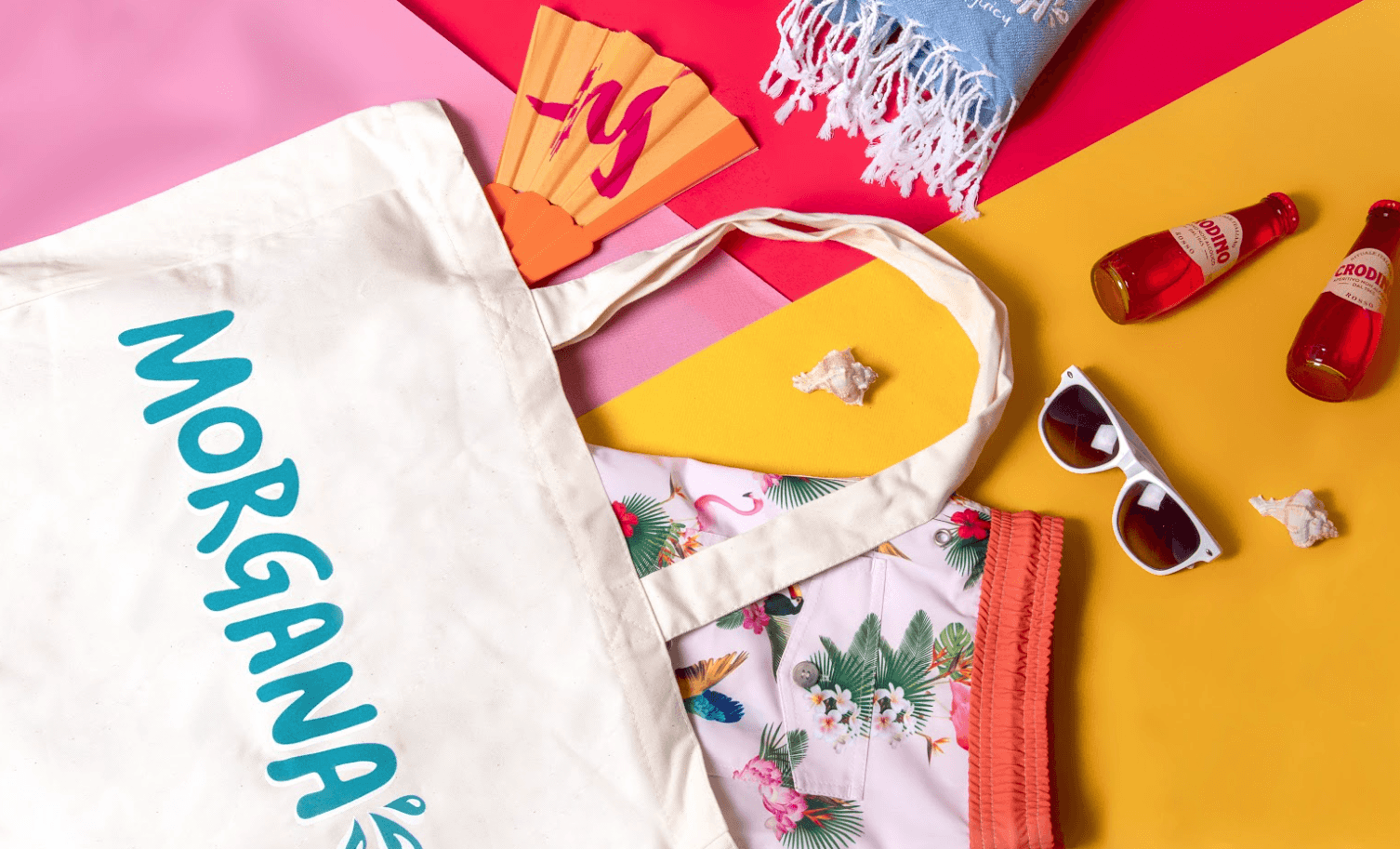
Swag that fits: totes, caps, socks with a local-inspired pattern.
22. Road Trip: the year as a route
Quarters become stops on a journey. It suits distributed teams, because each region can own a stop.
Swag that fits: backpacks, bottles, travel mugs.
23. Festival: stages, not rooms
Run the kickoff like a festival: stages instead of rooms, a line-up instead of an agenda and a closing set. Poster-style typography does a lot of the work.
Swag that fits: tour-style tees, totes, caps.
24. Time Capsule: open it next year
Collect predictions, goals and photos on day one, seal them, and open them at next year's kickoff. Quietly powerful, and it gives next year's event a ready-made opening.
Swag that fits: notebooks, tech accessories, date-stamped tees.
25. Origin Story: where we started
Tell where the company and the team came from: the first customer, the first office, the early mistakes. Good for founder-led companies and for onboarding a large new cohort.
Swag that fits: hoodies, caps, notebooks with the founding year.
Theme type and merch approach
The theme group tells you a lot about how loud the merchandise should be, and how long it should live. This is the short version.
| Theme group | Loud or subtle | Theme-specific or evergreen | Merch approach |
|---|---|---|---|
| Growth and ambition | Medium to loud | Evergreen item, theme accent | Put the target or the symbol on a sleeve or back of a jacket or hoodie people would wear anyway. |
| Competition and games | Loud | Theme-specific, short life | Team colours and bold graphics suit a day-one handout. Add one plain logo item alongside. |
| Culture and values | Subtle | Evergreen | A quiet mark on items used daily: notebooks, mugs, bottles, socks. |
| Reset and transformation | Subtle to medium | Evergreen, led by the brand | Lead with the new brand or name. Keep the theme as a small tag. |
| Place and story | Loud graphic, neutral item | Theme-specific, collectible | A place or story pattern on totes, caps and socks that people keep as souvenirs. |
A rule of thumb: the louder the theme, the shorter its useful life. The more often an item gets used, the quieter its mark should be.
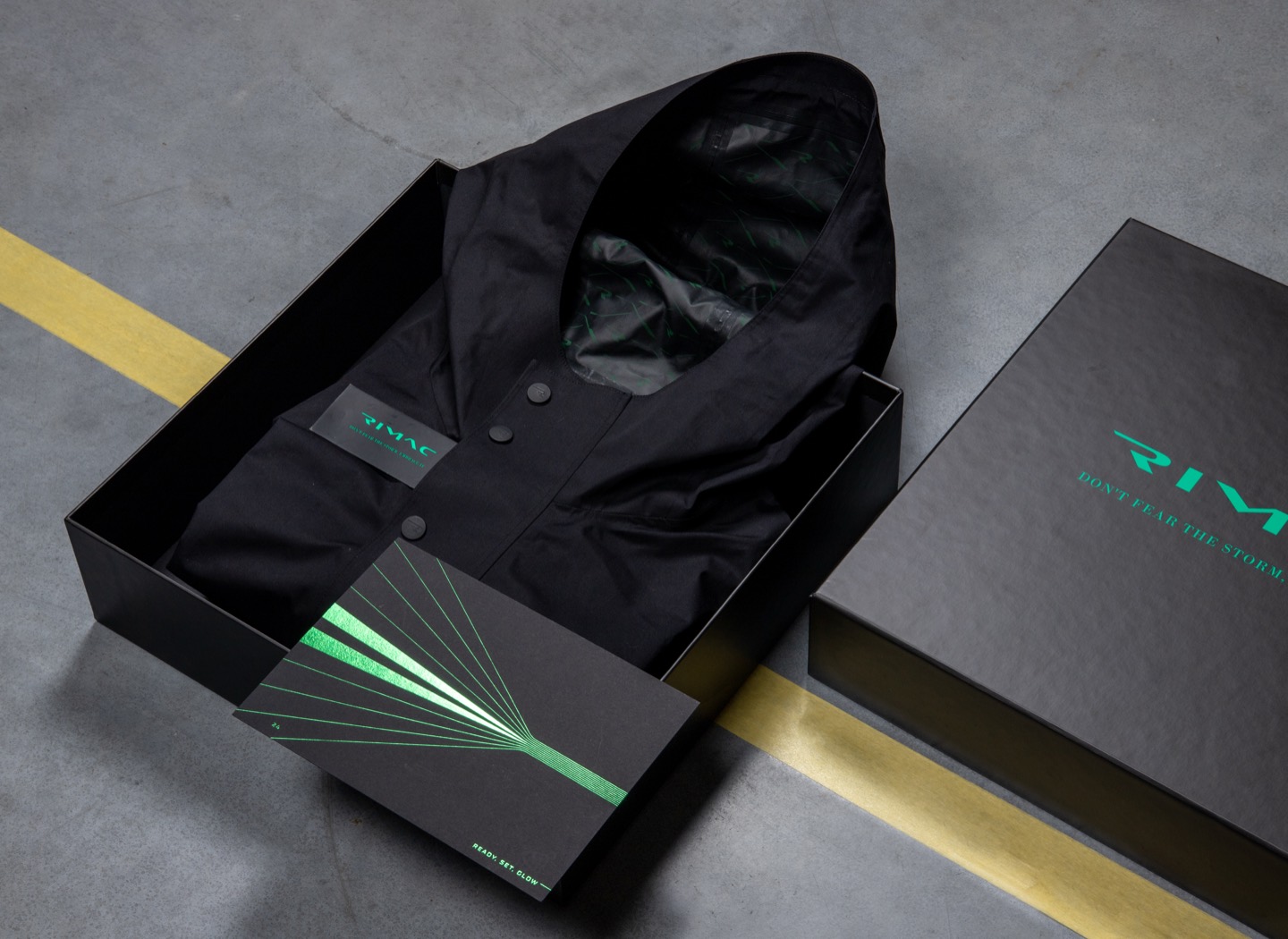
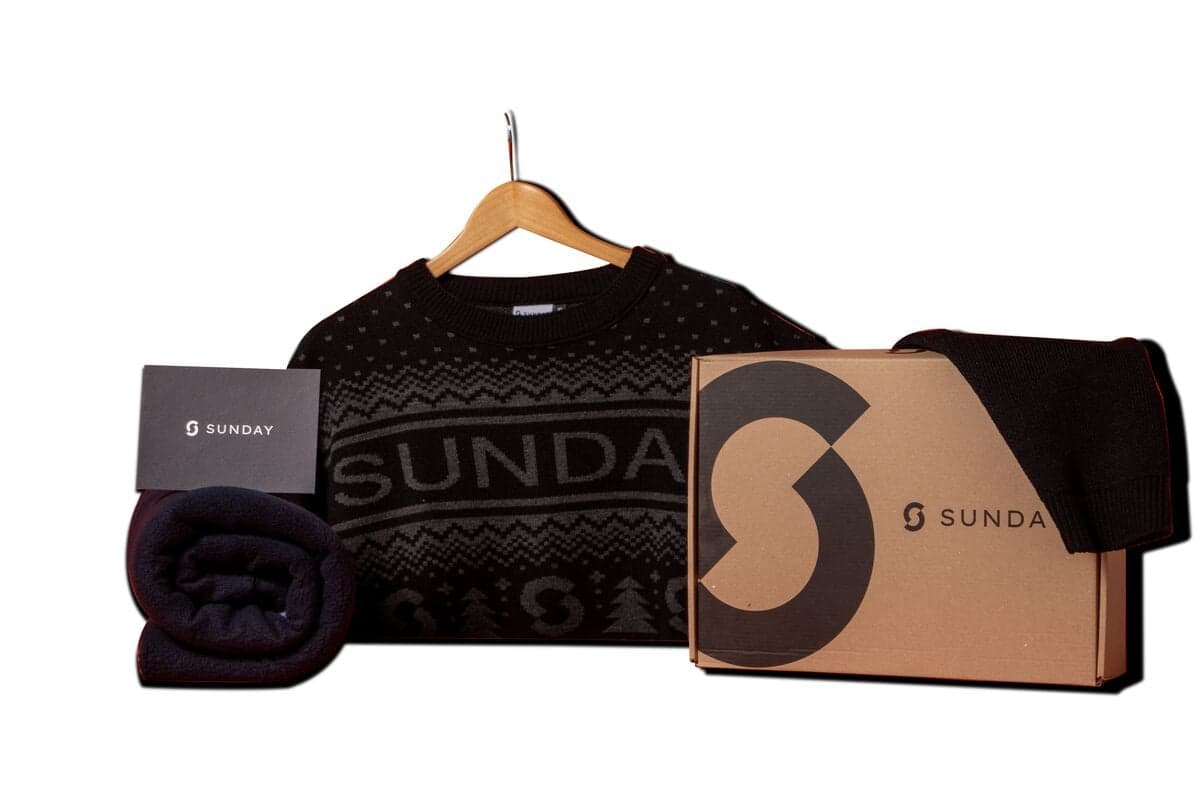
A restrained, tone-on-tone palette: a folded black hooded jacket in a black box with a thin green line pattern on the card. Quiet colours suit a premium or minimal theme.
Make the merch outlive the theme
The theme ends on the last day. The merchandise stays in wardrobes for years. In Sunday's view, the best themed swag is designed for day 2 of the event and for the months after it.
- Use a small theme tag on a brand-forward item. A sleeve print, a neck label or an inside print carries the theme without dating the item. Our guide to sales team outfits covers wearable pieces in more depth.
- Choose items people already use. Hoodies, jackets, bottles and totes earn their place in daily life. An item that only makes sense with the theme does not.
- Apply the day 2 test. Would someone put this on for the second morning, in the room? If not, it will not be worn in March either.
- Pick colours that fit real wardrobes. Neutral bases with one theme colour travel further than a full neon.
- Date it quietly. A year in small type turns an item into a keepsake instead of old stock.
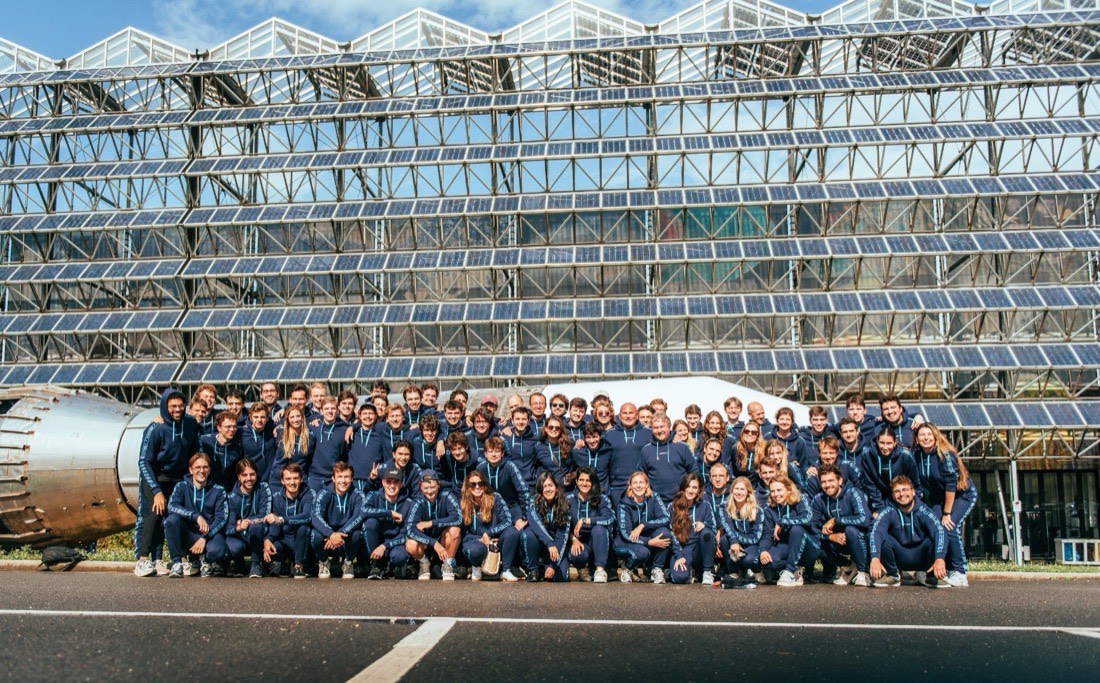
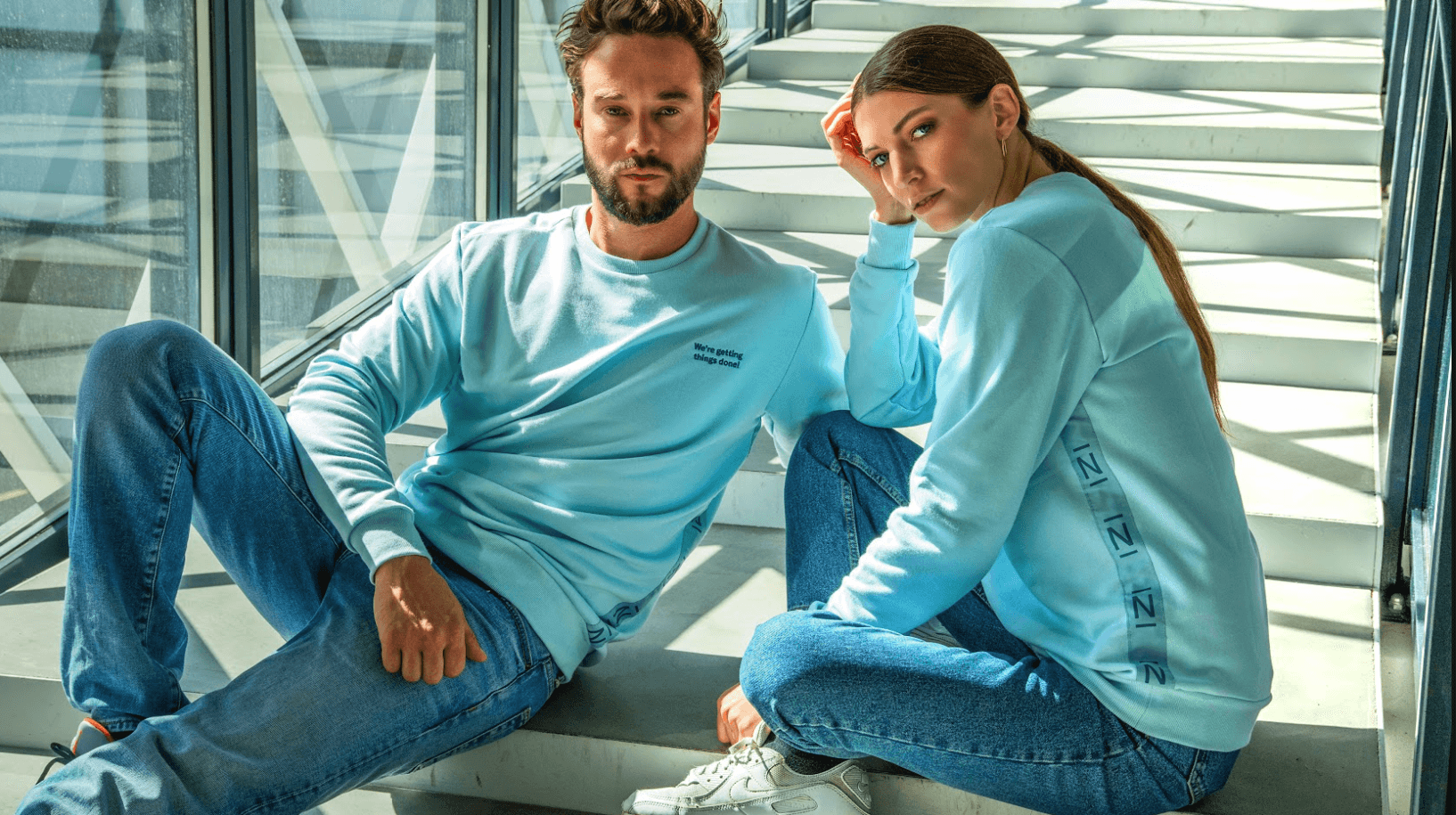
Matching items turn a group photo into proof the theme landed: a whole team in the same navy tracksuits.
For more on how event merchandise works beyond the day itself, see our guide to event merchandise.
Mistakes to avoid
- A theme with no strategy behind it. It looks good in the deck and disappears by the first quarterly review.
- Merch that is too literal. A mountain on every item, or a pun in large letters. Use a colour, a mark or a pattern that suggests the idea instead of shouting it.
- Ignoring sizing. Themed apparel often has a distinctive cut or style, and a wrong size means an unworn item. Free size selection, where each attendee picks their own size from one link, removes the guesswork.
- Choosing the theme too late. Past the 8-week mark you are rushing the design or settling for a premade mockup with a logo.
- Theming everything. If every slide, snack and item carries the theme, nothing stands out. Pick two or three places for it to show up.
From theme to pack
Sunday handles the merch layer of a sales kickoff. Pick a pack (EUR 25, EUR 50 or EUR 75 per person), choose a premade mockup with your logo or a custom design built around your theme, and we deliver to the venue or hotel. Designers create the artwork, and you review and approve it. The minimum order is 10 pieces per product, which is worth remembering if you split a theme such as Missing Piece across several variants.
For what to give and when to order, read sales kickoff swag: what to give, what it costs and when to order. For specific items, see 12 sales kickoff swag ideas your team will actually keep. For the wider event, see how to plan a sales kickoff. You can also browse the full catalog of 500+ products. If you give out merchandise as boxed kits, swag boxes versus swag stores explains the trade-offs.
About this article
Keep reading
Give your theme something to wear
Pick a pack, finalise the design around your theme and have it delivered to the venue, with free size selection.
Build your SKO pack