


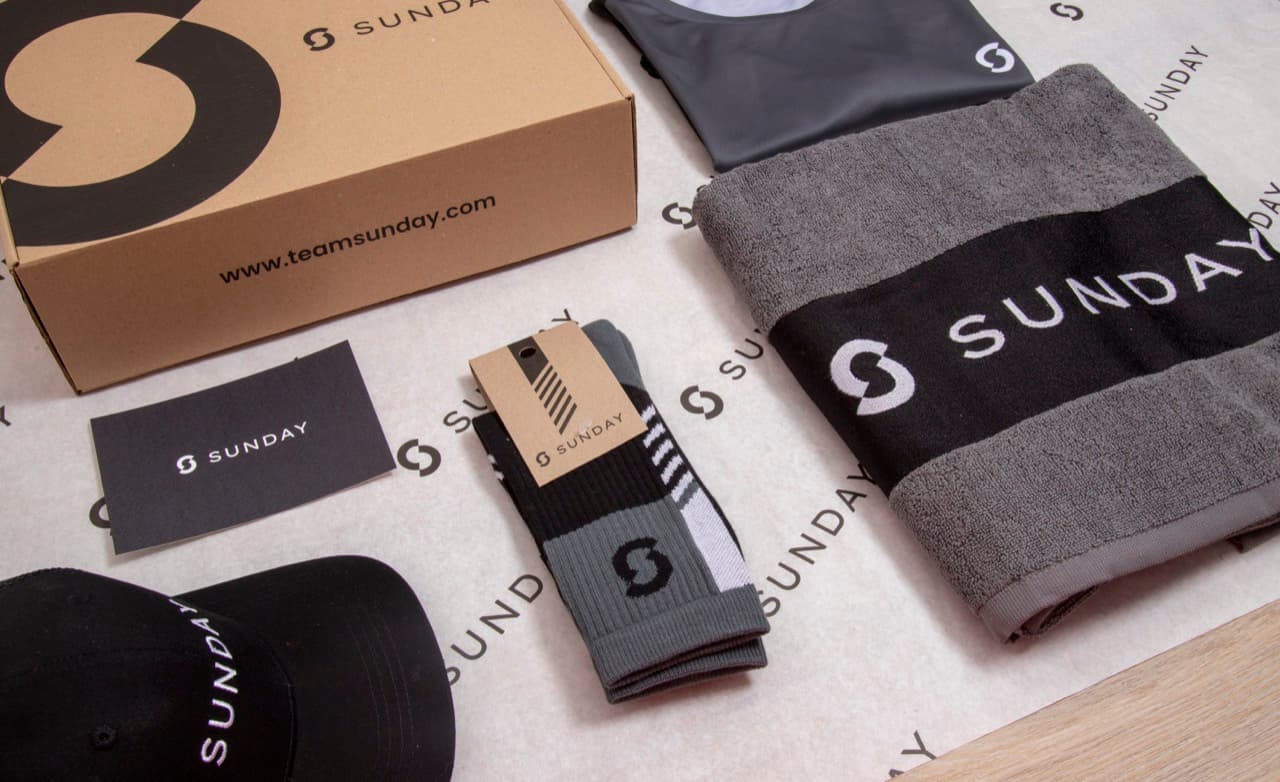
A sales kickoff (SKO) is an annual or semi-annual meeting where a sales organisation aligns on strategy, targets, product and culture for the coming period. It is usually held at the start of the fiscal year, runs from one to three days, and brings reps, managers and often marketing, product and customer success into one room.
Planning one is mostly a sequencing problem: decide the goal, fix the date, protect the budget, and give every long-lead item (venue, travel, merchandise) enough runway.
What's in this guide
- What is a sales kickoff?
- The first three decisions to make
- A sample two-day sales kickoff agenda
- The 12-week planning countdown
- A sales kickoff budget worksheet
- Where swag fits in the plan
- Pre-event, on-site and post-event checklists
- Virtual and hybrid sales kickoffs
- Common sales kickoff planning mistakes
- How to judge whether the SKO worked
What is a sales kickoff?
A sales kickoff, shortened to SKO and sometimes written "sales kick off", is the meeting that starts the sales year. Leadership explains where the company is heading, sets targets, introduces product and positioning changes, and gives the team time to practise and to get to know each other. It is as much a reset of attention as a transfer of information.
Who attends. Account executives, sales development reps, sales managers and sales leadership are the core. Many companies add customer success, marketing, product, sales operations, recent hires and sometimes partners. The test for the guest list is simple: every person should have something to take away or something to contribute.
When it is held. Most companies hold it at the start of the fiscal year or shortly before, so the plan lands before the targets start counting. Some also run a smaller mid-year session, which is why you see it described as annual or semi-annual. It lasts one to three days. Two days is a workable shape for most teams: room for content, practice and an evening together, without a week away from customers.
Formats. In person, hybrid (a main venue plus remote participants) or fully virtual, covered in the virtual and hybrid section. It is not a long team meeting and it is not a quarterly review:
| Meeting | Main purpose | Who attends | Rhythm |
|---|---|---|---|
| Sales kickoff | Align on strategy, targets, product and culture for the period ahead | The whole sales organisation, plus guests from other teams | Once or twice a year, one to three days |
| Quarterly business review | Review results against plan and adjust (here, the internal sales review, not a customer QBR) | Sales leaders and managers | Every quarter, hours to a day |
| Regular team meeting | Pipeline, deals, blockers and next steps | One team | Weekly, usually under an hour |
The first three decisions to make
Before a venue is shortlisted or a theme is chosen, settle these three. Every later choice gets easier once they are written down.
1. The goal
Write one sentence: "By the end of the SKO, every rep should be able to…" Then keep it to two or three outcomes at most. Typical candidates are explaining the new positioning, knowing their own number and plan, and having practised the new motion. Any session that does not serve one of them is a candidate to cut.
2. The format and the city
Choose in person, hybrid or virtual by asking how much of the goal depends on being together. Culture, practice and recognition work best in a room. Pure information transfer does not need one.
For the city, look at where most attendees travel from, flight connections, hotel capacity with proper meeting space, and the time of year. A practical extra: pick a venue that can receive and store a delivery, because your merchandise will arrive before you do.
3. The budget owner
Name one person who holds the total, approves the trade-offs and decides what gets cut first when costs move. Without that person, every line has a separate owner and nobody owns the sum.
A sample two-day sales kickoff agenda
There is no standard sales kickoff agenda, so treat this as a starting shape. It front-loads strategy while energy is high, puts practice in the middle, and ends with recognition and commitments so people leave with something to do.
| Time | Session | Purpose |
|---|---|---|
| Day 1 | ||
| 08:30 | Arrival and welcome desk | Check-in, name badges, merchandise handed out, informal mixing |
| 09:15 | Opening: last year and the year ahead | One shared picture of results, direction and the theme |
| 10:15 | Strategy and targets | What the company is betting on and what that means for sales |
| 11:30 | Product and positioning | What is new, who it is for, how to talk about it |
| 12:30 | Lunch | Break, and cross-team conversations |
| 13:30 | Customer story | A real win told by the people who delivered it |
| 14:30 | Skills workshop, round one | Practice in small groups on the new motion |
| 16:30 | Team planning | Each team drafts its first-quarter plan |
| 19:00 | Dinner or team event | Relationships, which are half the reason to meet in person |
| Day 2 | ||
| 09:00 | Recap and questions | Fix confusion from day one before it spreads |
| 09:30 | Competitive and objection practice | Role-play against the questions reps actually get |
| 11:30 | Skills workshop, round two | Repeat with feedback from managers and peers |
| 13:30 | Leadership Q&A | Open questions, answered in front of everyone |
| 14:45 | Recognition | Name last year's top contributors and what they did |
| 15:45 | Commitments and next steps | Each person leaves with three actions for the first 30 days |
| 16:30 | Close | Group photo, travel logistics |
Compressing to one day
Keep the opening, strategy and targets, one practice block, recognition and commitments. Move product detail into recordings people watch beforehand, and shorten the evening. A one-day SKO works when the content is ruthless, not when the two-day agenda is squeezed.
Adapting the format
| Format | What changes | What to protect |
|---|---|---|
| One day, in person | Fewer sessions, pre-recorded product content | Practice time and the evening together |
| Hybrid | Remote people get their own host, chat and breakout rooms | Equal access to questions, recognition and a physical kit |
| Virtual | Shorter sessions spread across several days | Interaction, small-group practice and a human moment each day |
The 12-week planning countdown
Twelve weeks is a comfortable runway. Shorter is possible, but the long-lead items lose their buffer first. Weeks are counted back from the first day of the event.
| Weeks before | Milestone | Owner |
|---|---|---|
| 12 | Agree the goal, format and budget owner. Write the one-sentence goal. | SKO lead, sales leadership |
| 11 | Fix the dates. Build the attendee list, including remote attendees. Shortlist cities and venues. | SKO lead, sales operations |
| 10 | Sign the venue and hotel block. Draft the agenda outline and choose a theme direction. | SKO lead, events support |
| 9 | Confirm keynote and content owners. Set the swag budget per person and choose a pack. | SKO lead, marketing, finance |
| 8 | Merch starts. Pick the pack, send the logo and theme, designers begin. This is Sunday's lead time for SKO merch. | SKO lead, marketing |
| 7 | Registration and travel booking open. The size selection link goes to attendees while the design is finalised. Briefs go to content owners. | Sales operations, SKO lead |
| 6 | Merch design approved (about two weeks after the start). Sizes close and production begins. | Marketing, SKO lead |
| 5 | Full agenda drafted. Home addresses confirmed for remote attendees. First content drafts due. | Content owners, sales operations |
| 4 | First content run-through. Chase unbooked travel. | SKO lead, content owners |
| 3 | Final headcount to venue and caterer. Run of show written. AV and streaming tested for hybrid. Delivery address, date and receiving contact confirmed. | SKO lead, venue contact |
| 2 | Delivery window. Merch reaches the venue or hotel, or ships to homes. Someone is named to sign for it. Key sessions rehearsed. | SKO lead, venue contact |
| 1 | Count and check the delivery. Travel details and dress code sent. Final rehearsal. On-site kit packed. | SKO lead, content owners |
| Event | Run the plan. Keep a short issues log. | Everyone |
| After | Feedback survey within days. Share recordings and slides. Hold a debrief. | SKO lead, sales operations |
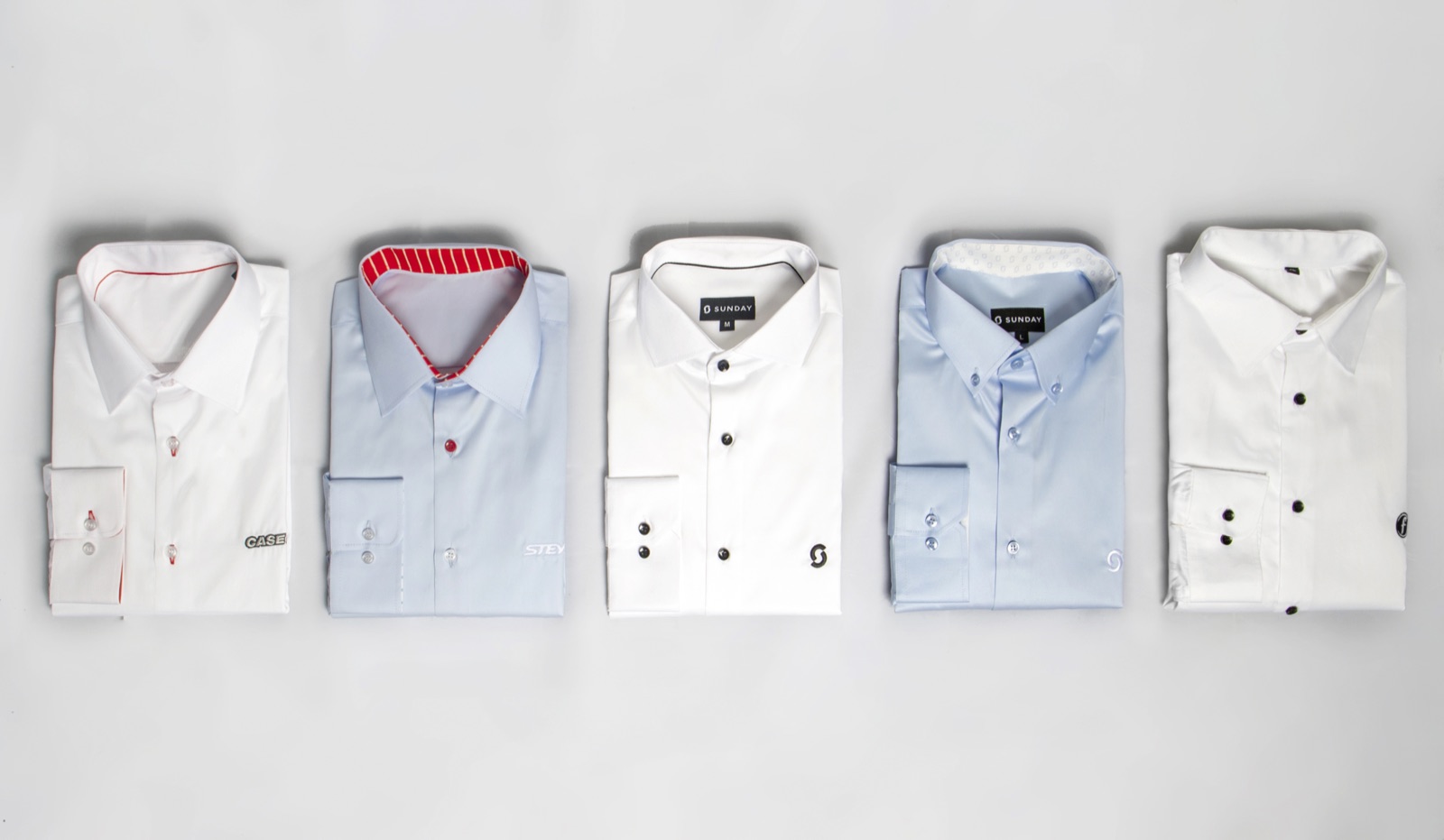
Sized and sorted before anyone arrives: five folded shirts in a row, which is what a planned handout looks like.
A sales kickoff budget worksheet
The honest answer to "what does a sales kickoff cost?" is that it depends on headcount, city, format and how long it runs. Use this worksheet to build your own number.
| Category | What it covers | How to decide the amount |
|---|---|---|
| Venue | Meeting rooms, breakout rooms, hire days, set-up time | Get two or three quotes for the same dates. Decide how many days you need the main room, not just the days people are present. |
| Travel and accommodation | Flights, trains, hotel nights, ground transport | Multiply attendees by average nights and by your travel policy. Usually the largest line, so settle it first. |
| Content and speakers | External speakers, trainers, facilitators, production of videos and slides | Decide which sessions need an outsider and which are better delivered by your own leaders. |
| Food and drink | Lunches, coffee breaks, dinner, evening event | Count the meals, then ask the venue what is included in the room price before booking separately. |
| Production and AV | Sound, screens, lighting, streaming for remote attendees, signage | Check what the venue provides. Hybrid adds cameras, a producer and a tested connection. |
| Swag | Merchandise for every attendee, design, delivery | Attendees multiplied by a per-person pack. Sunday's three packs are EUR 25, EUR 50 and EUR 75 per person. |
| Contingency | Price changes, extra attendees, late fixes | Agree a fixed share of the total up front, and decide who can release it. |
Work through the table in two passes. First the fixed, early costs: venue, travel and accommodation. Then the flexible ones, which you trim if the total is too high. Ask the budget owner to rank them by what hurts least to cut.
The swag line in numbers. Sunday's packs are priced per person, so the sum is simple. For 100 attendees, the EUR 25 pack is EUR 2,500, the EUR 50 pack is EUR 5,000 and the EUR 75 pack is EUR 7,500. That is arithmetic on the tiers, not a quote, and it leaves out delivery. The minimum order is 10 pieces per product.
As illustrative guidance only, and not Sunday's fixed pack contents: a smaller per-person budget tends to suit one or two well-chosen items, and a larger one leaves room for a premium anchor item such as a hoodie plus extras. The sales kickoff swag guide goes through what each budget level can realistically cover. For product-level detail with minimum quantities, lead times and ready-made packs, see SKO merch, gifts and team packs: 25 ideas for your 2027 sales kickoff.
Where swag fits in the plan
Merchandise is a small share of the SKO budget and the most visible one afterwards. It has three jobs: a welcome moment on arrival, something that carries the theme through the event, and something people keep and use afterwards. It also has a long lead time, which is why it is a row at week 8 and not week 2.
Sunday is a merch partner, not an event planner, so we stay in our lane. The merch decisions are: which pack, premade mockups with the company logo or a fully custom design around the theme, whether to hand it out pre-packed per person or in bulk, and where it is delivered (to the venue or hotel). An optional free size selection page, branded in your logo and colours, lets each attendee pick their own size from one link, and the sizes go straight into the order. No spreadsheet, no chasing replies.
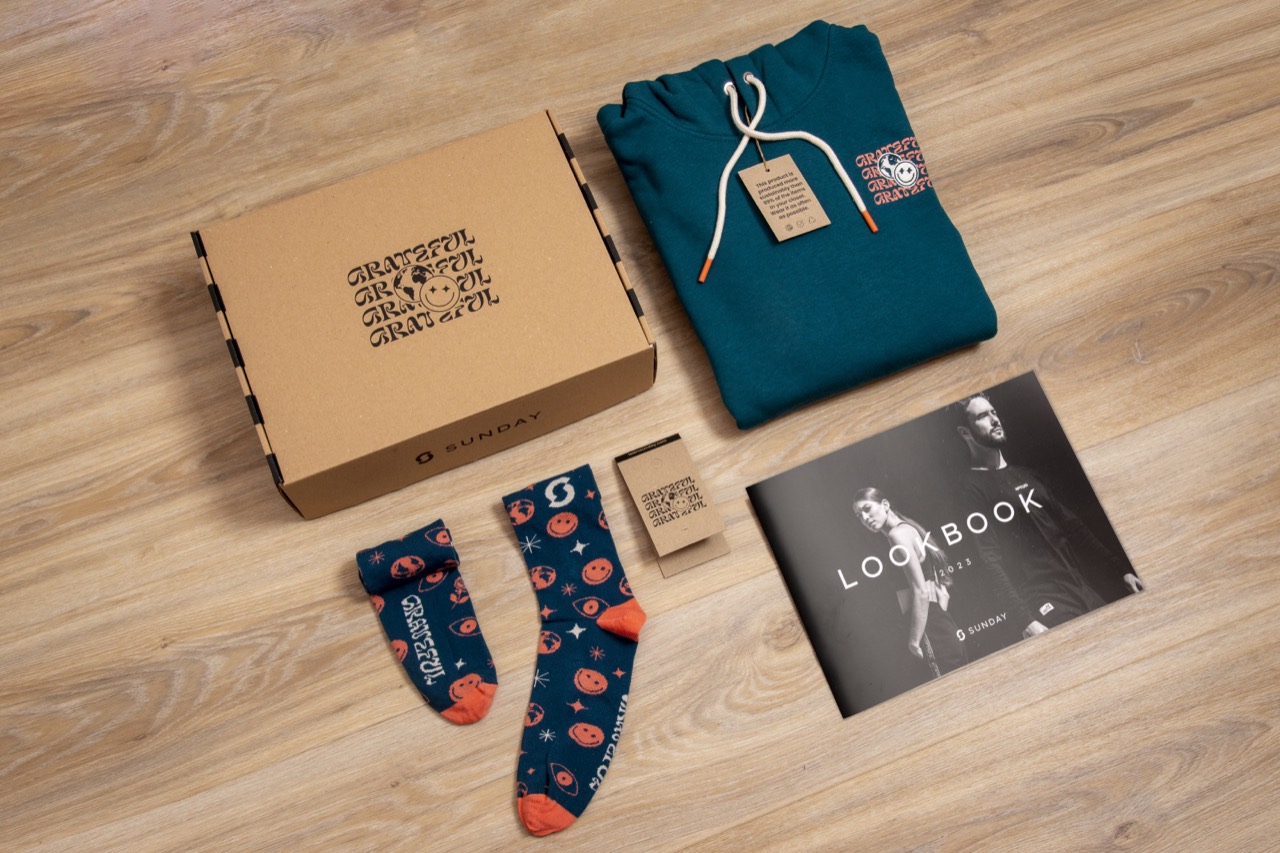
A welcome kit laid out per person: box, hoodie, socks and a printed booklet. It works best when it is ready before the doors open.
If you are still choosing what to give, start with 12 sales kickoff swag ideas. In Sunday's view, wearables such as hoodies are the best starting point, and water bottles and tote bags round out a set. If you are choosing a theme, sales kickoff themes shows 25 and the swag that fits each. For the broader picture, see event merchandise and sales team outfits, and for a kit that handles new hires joining around the SKO, see new hire welcome kits.
Pre-event, on-site and post-event checklists
Pre-event
- The one-sentence goal is written down and shared with every session owner.
- Venue, hotel block and dates are confirmed in writing, with the venue's delivery and storage rules.
- Attendees have travel details, dress guidance, dietary and accessibility options, and the agenda.
- Merchandise sizes are collected and the delivery address and receiving contact are confirmed.
- AV, slides and streaming have been tested on the actual equipment, with a backup plan.
On-site
- Arrive a day early. Walk the rooms and check the screens.
- Count the delivery against the order and set up the welcome desk before the first arrivals.
- Collect feedback in the room, not by email later: a short form or a quick poll at the end of each day.
Post-event
- Send a thank-you, plus the recordings and slides, within a few days.
- Send a feedback survey while memories are fresh, and share what you learned from it.
- Follow up on the commitments people made on the last session, at 30 days.
- Hold a debrief with the planning team and write down what to change next year.
Virtual and hybrid sales kickoffs
A virtual sales kickoff can work well, but it is not an in-person SKO on a screen. Attention runs out faster, and the hallway conversations disappear unless you design them in.
Running it
- Spread it out. Several shorter days beat one long one. Keep live sessions short and give people real breaks away from the screen.
- Make it interactive. Use polls, small-group practice in breakout rooms and live questions. Pre-record the content that does not need an audience.
- Add producers. Someone runs the stream, someone moderates chat, and speakers focus on speaking.
Time zones
If attendees span regions, pick two or three time blocks so that no group is always at the awkward end, and rotate who gets the early or late slot. Record every live session and publish the recordings the same day. For a hybrid event, decide up front that remote attendees are full participants, and give them the same access to questions, recognition and awards.
Swag for people who are not in the room
A parcel arriving before the event is the simplest way to give remote attendees a physical part of it. The same pack the in-person team receives can be sent to home addresses, and the free size selection page works the same way: one link, each person picks a size. Collect the home address in the same step, and make sure the parcel arrives before the first session, not after.
Weighing a one-off box against an ongoing programme? See swag boxes vs swag stores.

Swag for people who cannot be in the room: a branded page, reached by one link, where each recipient redeems their gift.
Common sales kickoff planning mistakes
- No stated goal. Without one, the agenda becomes a list of whatever each team wants to say.
- All broadcast, no practice. Reps learn by doing. If they only listen, the SKO has little effect on behaviour afterwards.
- Booking long-lead items last. Venues and merchandise sell out of time before they sell out of space.
- Guessing sizes. It leads to a pile of the wrong sizes and a long email chain. Let attendees choose.
- A theme with nothing behind it. The slogan fades by lunch if no strategy supports it.
- No follow-up. If nothing happens in the 30 days after, people conclude the SKO was a show.
How to judge whether the SKO worked
There is no universal number that proves a sales kickoff paid back, and anyone quoting one is guessing. Revenue lags by months and is shaped by many other things. Judge it on what you can actually observe, and agree the questions before the event, not after.
| Question | What to look at |
|---|---|
| Did we hit the outcomes we set? | The one-sentence goal from week 12. Can people do what it said? Test it in a short call or quiz a few weeks later. |
| Did attendees find it useful? | A short survey at the end of each day and again after a few weeks. Ask what to keep, what to cut and what they will do differently. |
| Is the new plan being used? | Is the new positioning heard in calls? Are first-quarter plans in the CRM? Do managers coach to the new motion? |
| Did the merch land? | Is it worn on day two and in the weeks after? Do people post photos? Do other teams ask for it? |
Treat the answers as evidence, not proof. They are enough to improve next year's event, which is the real use of measuring.
To build the merch layer, see the catalog and how it works. For a view on gifts more broadly, corporate gifts for employees is a good next read.
About this article
Keep reading
Build your SKO pack
Pick one of three packs at EUR 25, EUR 50 or EUR 75 per person, finalise the design and have it delivered to your venue or hotel. Start 8 weeks before the event.
Build your SKO pack