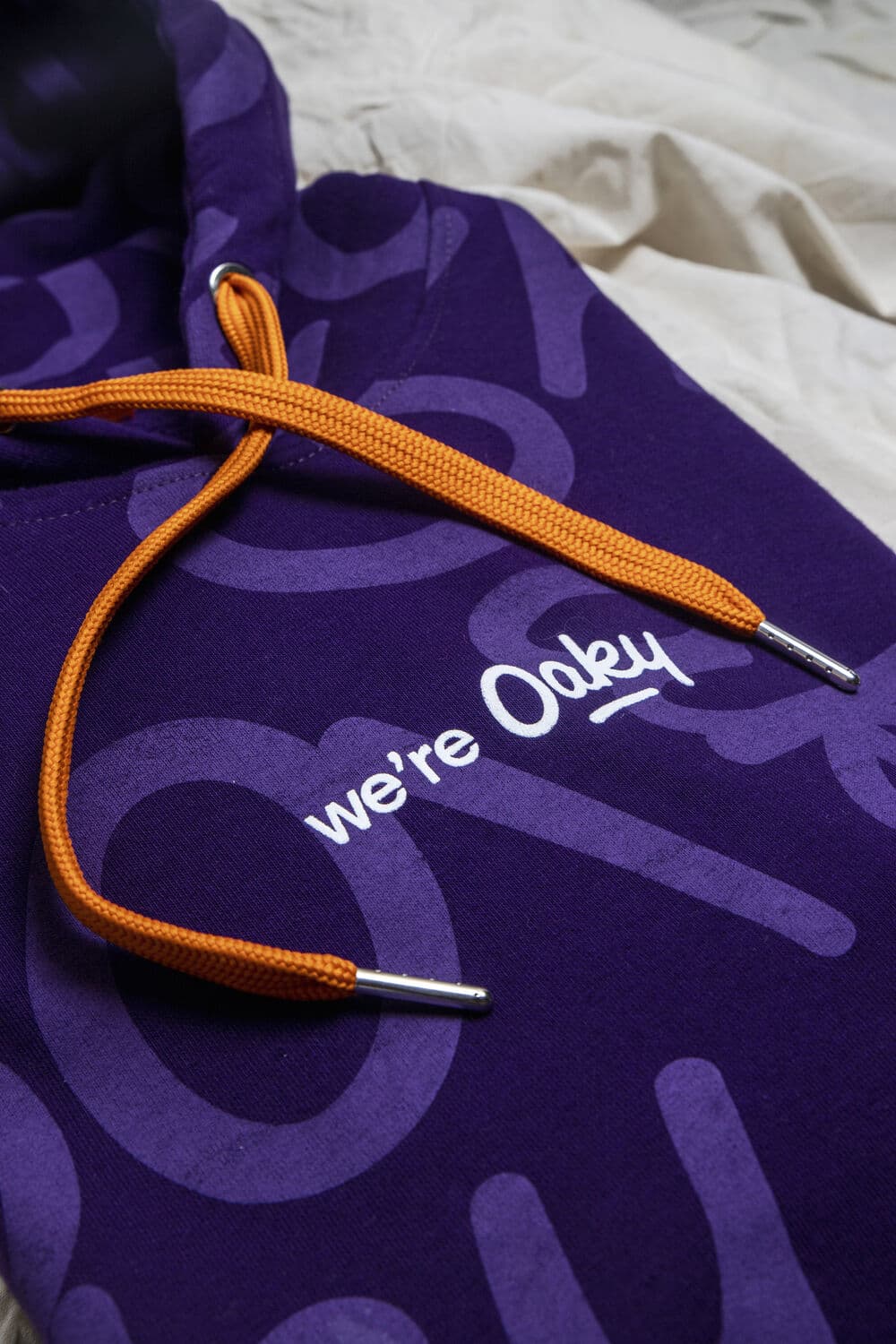





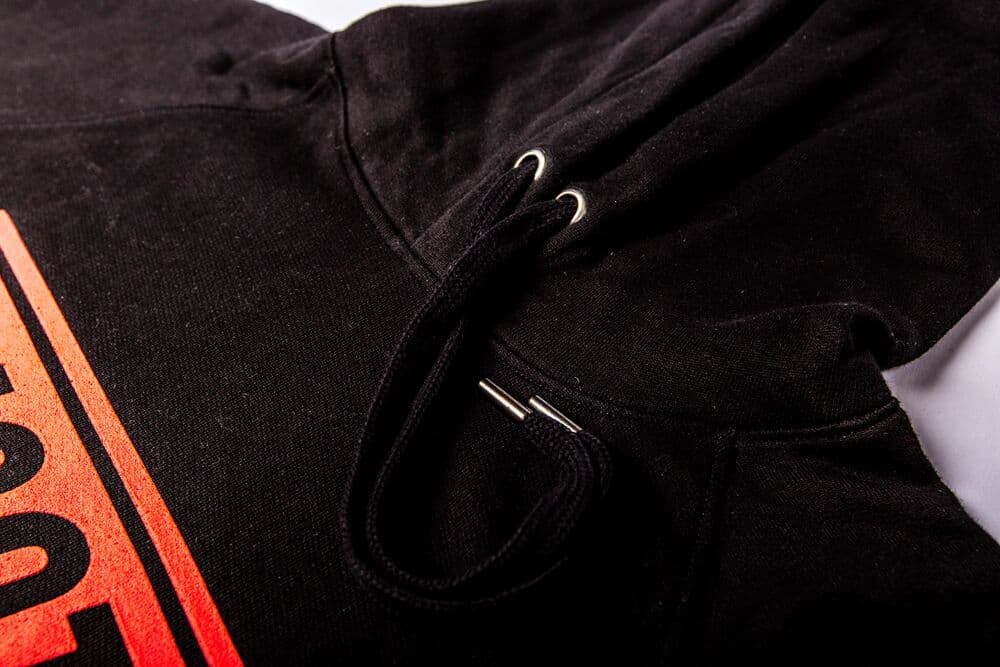
GSM stands for grams per square metre. It is the weight of one square metre of fabric, and it is the standard way to compare how light or heavy a garment is. A higher GSM means a denser, thicker fabric: a lightweight t-shirt sits around 150 GSM, a classic tee around 180, a heavyweight tee 240 and up, and most hoodies 280 to 350. GSM tells you about thickness and feel, not automatically about quality.
For branded apparel, GSM is the single number that predicts whether a garment feels like a giveaway or like something people keep. This guide explains what the ranges mean and shows the actual GSM spread across the apparel in Sunday's live catalogue, about 120 products.
What's in this guide
- What GSM measures
- GSM ranges by garment
- GSM across Sunday's catalogue
- Does higher GSM mean better quality?
- GSM to oz conversion
- How to choose a GSM
- Frequently asked questions
What GSM measures
Cut a 1 x 1 metre square of fabric and weigh it. If it weighs 180 grams, the fabric is 180 GSM. Manufacturers measure it on the finished fabric before the garment is sewn, so GSM describes the cloth, not the weight of the whole t-shirt.
Two fabrics with the same GSM can still feel different. Yarn type, knit structure and finishing all change the hand. A 180 GSM ring-spun cotton tee feels smoother and softer than a 180 GSM carded cotton tee, because the yarn is finer and more tightly twisted. GSM is the starting point, not the full story.
Note that paper uses the same unit. A notebook with 70 GSM paper refers to the weight of a sheet, not a fabric.
GSM ranges by garment
| Garment | Light | Mid / standard | Heavy |
|---|---|---|---|
| T-shirt | 140 to 160 GSM: summery, slightly sheer in white | 170 to 200 GSM: the everyday tee | 220 to 300+ GSM: structured, boxy, premium streetwear |
| Polo | 140 to 160 GSM: technical polyester sports polos | 180 to 220 GSM: cotton piqué | 220 to 240+ GSM: heavy piqué, holds a collar |
| Sweatshirt / hoodie | 240 to 270 GSM: light loopback, layering | 280 to 300 GSM: the standard brushed fleece | 320 to 400+ GSM: thick, warm, premium |
| Tote bag | 140 to 160 GSM: thin, foldable giveaway | 200 to 270 GSM: sturdy everyday tote | 280 GSM+ canvas or felt: keeps its shape |
GSM across Sunday's live catalogue
We pulled the GSM of every catalogue-visible apparel product that lists one. Here is what the range actually looks like when you are choosing merch, not fashion:
| Product type | Products with a GSM | Lightest | Heaviest | Most common |
|---|---|---|---|---|
| T-shirts | 20 | 150 GSM | 300 GSM | 180 GSM (12 of 20) |
| Hoodies and sweatshirts | 33 | 280 GSM | 350 GSM | 280 GSM (23 of 33) |
| Polos | 12 | 140 GSM | 240 GSM | Sports 140 to 145; cotton 185 to 240 |
| Tote bags | 14 | 140 GSM | 420 GSM | Median 270 GSM |
Some concrete examples from the range:
- The Robbie, an organic cotton tee at 180 GSM. The weight most people mean when they say "a good t-shirt".
- The Bas, a 240 GSM oversized cotton tee. Noticeably heavier and more structured.
- The Forge, a 300 GSM heavyweight tee. The boxy look of premium streetwear.
- The Alan, a 280 GSM organic cotton blend hoodie, the standard weight.
- The Parker, a 350 GSM 100% organic cotton hoodie, the heaviest hoodie in the range.
- Tote bags from a thin 140 GSM canvas tote to a 300 GSM premium tote and a 420 GSM felt tote.
On price, as a rough guide before decoration: t-shirts in the range run from about €9 to €28 per unit, hoodies from about €29 to €52, and tote bags from about €2.50 to €26, depending on weight, material and quantity. Moving up one weight class on a t-shirt usually adds only a euro or two. On a hoodie, going from 280 to 350 GSM typically adds around €8 to €17 per piece. On totes, a heavy bag can cost three times a thin one, because thin totes are commodity items and heavy ones are not.
Does higher GSM mean better quality?
Not automatically. A higher GSM means more fabric, which usually means more durability, more opacity and a more structured drape. But a heavy fabric made from short, coarse fibres can still pill, shrink and lose its shape. And a heavy t-shirt in a hot summer is not better, it is just hotter.
What GSM does reliably predict is perceived value. In a 258-person study of a branded merchandise programme run with Sapience and VUB, 67% of recipients wore their sweater more than twice. Weighty, comfortable garments are the ones that end up in rotation, and a garment in rotation is the only kind that keeps showing your logo.
GSM to oz conversion
US suppliers quote fabric weight in ounces per square yard (oz/yd²). To convert, multiply GSM by 0.0295, or divide oz by 0.0339.
| GSM | oz/yd² | Typical garment |
|---|---|---|
| 150 | 4.4 oz | Light t-shirt |
| 180 | 5.3 oz | Standard t-shirt |
| 240 | 7.1 oz | Heavyweight t-shirt, heavy polo |
| 280 | 8.3 oz | Standard hoodie |
| 350 | 10.3 oz | Heavy hoodie |
For more ranges by fabric type, see the fabric weight chart.
How to choose a GSM for branded apparel
- Event tees and volume giveaways: 160 to 180 GSM. Light enough to keep costs down, heavy enough not to feel cheap.
- Team tees people wear weekly: 180 to 240 GSM. The sweet spot for durability and comfort.
- Premium drops and collections: 240 to 300 GSM tees, 300 to 350 GSM hoodies. This is where branded apparel starts to look like a fashion label.
- Outdoor and summer events: lighter cotton or technical polyester at 140 to 160 GSM, which breathes and dries fast.
- Decoration matters too: heavy fabrics take embroidery and puff print well; very light fabrics can pucker under dense stitching. See puff print vs 3D puff embroidery and hoodie printing vs embroidery.
Every product in the Sunday catalogue lists its GSM and material on the product page. Compare styles in custom hoodies, custom polos and custom tote bags, or browse the full catalog.
Frequently asked questions
What does GSM mean in fabric?
GSM means grams per square metre. It is the weight of one square metre of fabric and the standard measure of how light or heavy a fabric is. A higher GSM means a denser, thicker fabric. A standard t-shirt is around 180 GSM and a standard hoodie around 280 GSM.
What is a good GSM for a t-shirt?
180 GSM is the everyday standard and the most common weight in Sunday's t-shirt range, where 12 of 20 tees sit at 180. Choose 150 to 160 for light summer tees and 220 to 300 for heavyweight, structured tees. Below about 150 GSM, white tees start to look sheer.
What GSM is a good hoodie?
280 to 300 GSM is the standard for a comfortable brushed-fleece hoodie. Premium hoodies sit at 320 to 400 GSM. In Sunday's catalogue, hoodies and sweatshirts range from 280 to 350 GSM, with most at 280.
Is higher GSM better?
Higher GSM means thicker, more opaque and usually more durable fabric, and it reads as more premium. It does not guarantee quality: fibre and yarn quality matter as much. It is also not always better for the use case, since heavy fabrics are warmer and cost more.
How do I convert GSM to oz?
Multiply GSM by 0.0295 to get ounces per square yard. For example, 180 GSM is about 5.3 oz/yd², and 280 GSM is about 8.3 oz/yd². To go the other way, divide ounces by 0.0339.
About this article
Feel the difference before you order
Create a free account and compare t-shirts, hoodies and totes by weight, material and price, with your logo already on them.
Get free designs