For custom hoodies, embroidery is the default. It is tactile, premium and lasts the life of the garment, which is why we recommend it for almost every company logo. Choose print when your artwork is full colour, photographic, or a large graphic that thread cannot reproduce. Embroidery wins on durability and feel; print wins on detail, colour and big designs. Many of the best company hoodies use both.
On a hoodie, the decoration is not a finishing touch. It is the first thing a new hire feels when they pull it out of the box and the thing that decides whether the garment reads as apparel or as giveaway swag. A custom hoodie is the premium version of a t-shirt, so the method you choose has to match that. This guide compares printing and embroidery on every factor that matters, then tells you exactly when each one wins.
The quick answer
If you are decorating a logo or a wordmark, embroider it. Thread sits on a hoodie the way it should: raised, durable, and felt as much as seen. If you are reproducing a full-colour illustration, a photo, a gradient or a large back graphic, print it, because embroidery cannot hold that level of detail. Everything below is the reasoning behind those two rules, plus the costs and minimums that change the maths.
Hoodies are worth getting right. Sweaters and hoodies are among the most-worn swag there is: in a 258-person study of a branded merchandise programme, 67% of sweaters were worn more than twice and only 10% were never worn.
Embroidery, in detail
Embroidery stitches your design into the fabric with thread. On a heavyweight hoodie it produces a raised, textured logo that reads as quality before anyone gets close enough to read the brand. It is the most premium-looking option in the category, and the reason we default to it.
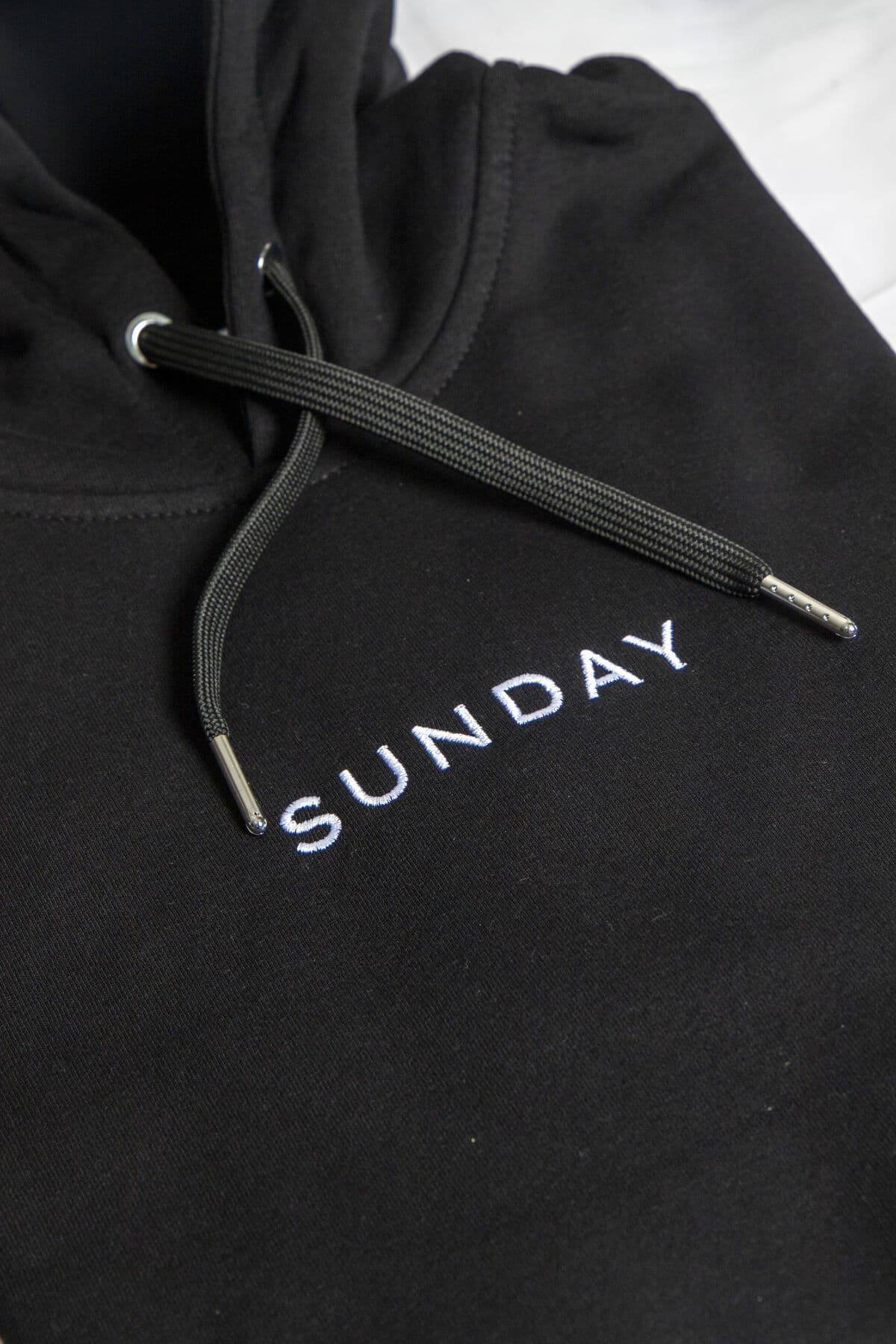
Embroidery up close. On a hoodie this is the detail people feel before they read the logo.
Where embroidery wins
- Durability. Stitched thread outlasts the garment. It does not crack, peel or fade through hundreds of washes the way a poor print can.
- Premium feel. It is tactile and three-dimensional. A small embroidered chest logo is the safest premium move there is.
- Tonal options. Same-colour thread on the same-colour body gives a tone-on-tone logo that is felt more than seen, the most fashion-led look in the category.
- Consistency. Once digitised, your logo stitches identically on every unit, so a kit of 200 hoodies looks like one family.
Where embroidery struggles
Thread cannot reproduce photographs, fine gradients or very small text. Highly detailed or full-colour artwork gets muddy. Large embroidered areas also add cost and weight, so embroidery is best kept to logos and compact marks rather than covering a chest or back. For those jobs, print is the tool.
Printing, in detail
Printing applies your design to the surface of the fabric, most often through screen printing for volume or direct-to-garment for full-colour detail. It is the right method whenever the artwork carries colour, gradients or scale that thread cannot.
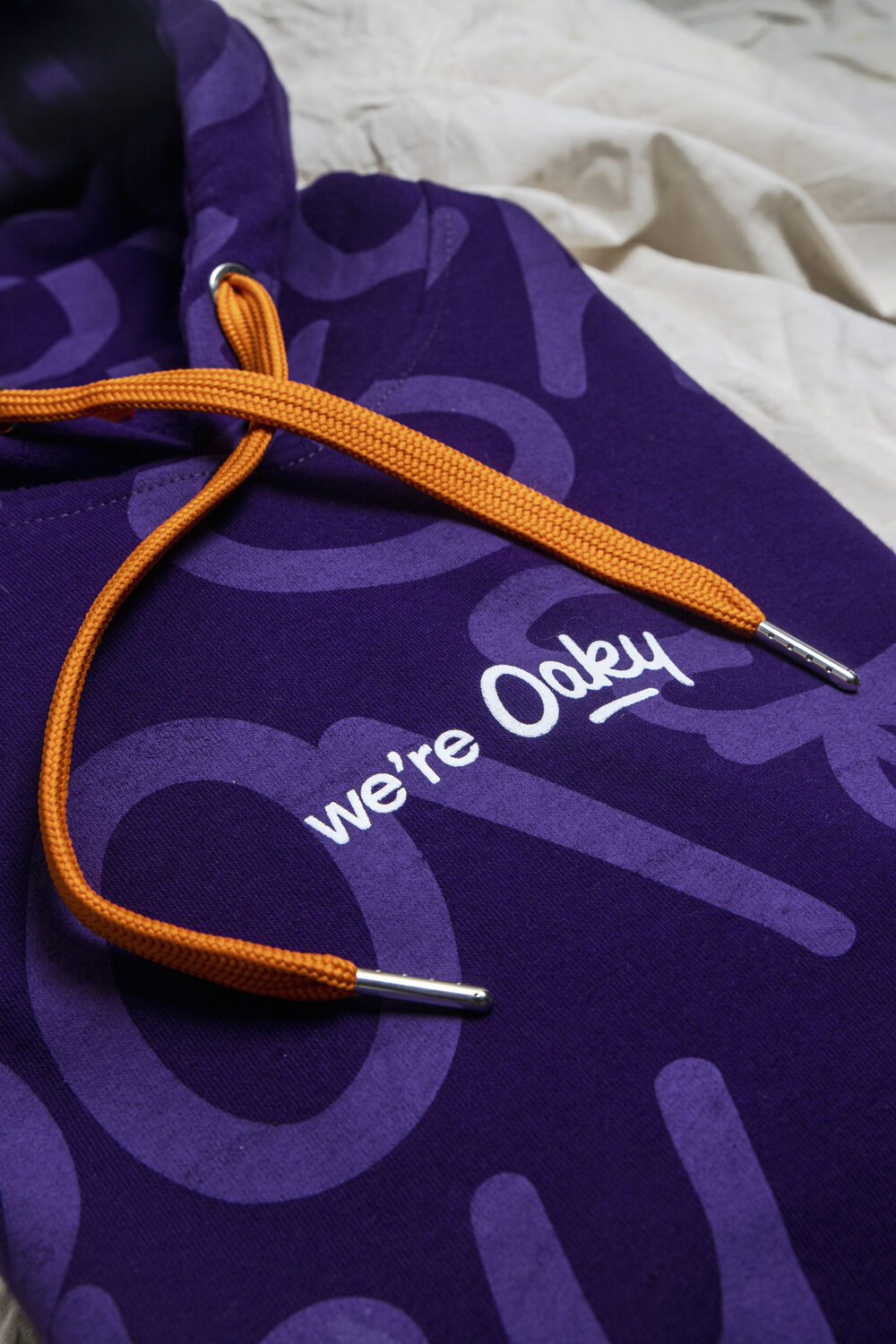
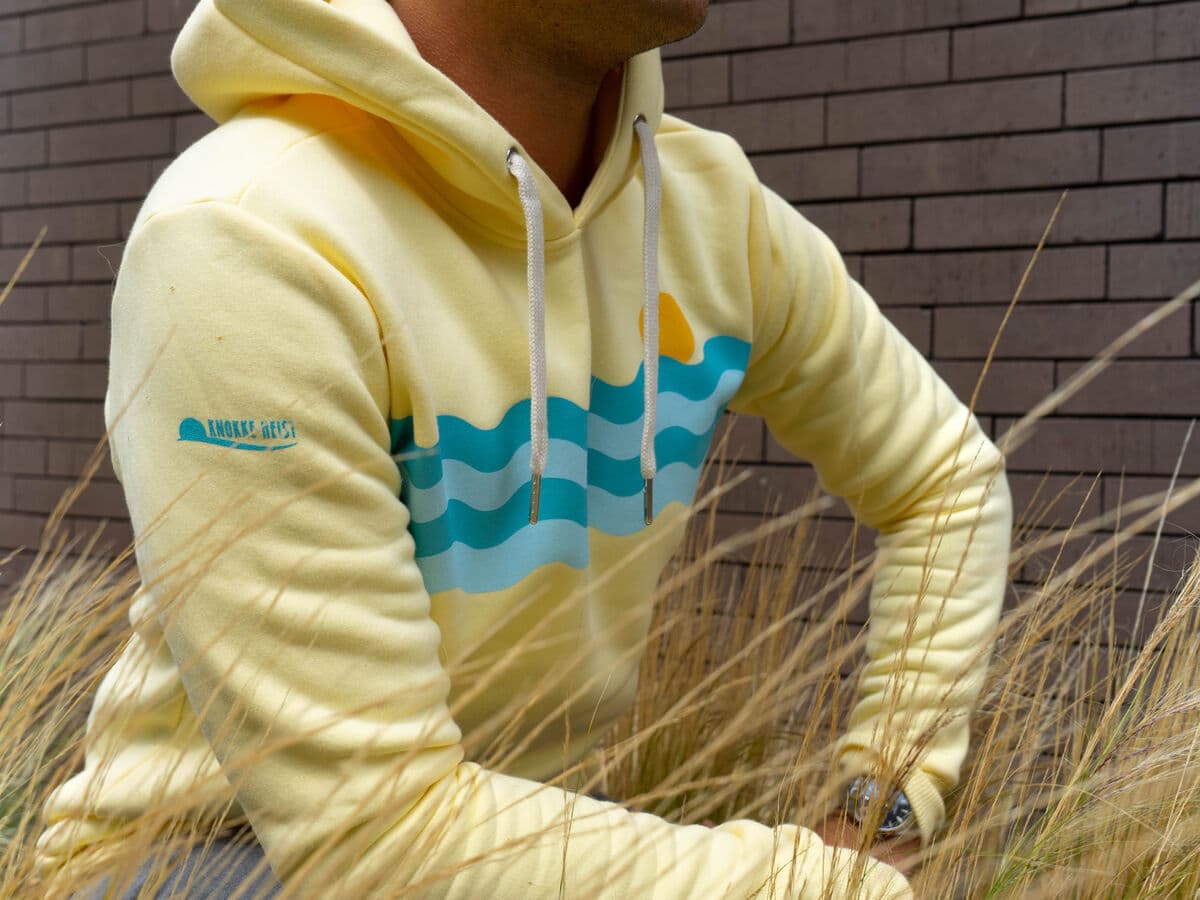
A printed hoodie. Print reproduces colour and detail embroidery cannot, ideal for bold graphics and campaign drops.
Where printing wins
- Full colour and detail. Print reproduces photographs, gradients and intricate illustration cleanly.
- Scale. Large front or back graphics work in print and would be impractical in thread.
- Lighter hand. A good print adds almost no weight, so it sits flat on the fabric.
- Cost at volume. For big runs of a simple one or two-colour graphic, screen printing is economical per unit.
Where printing struggles
A cheap print is the fastest way to make a hoodie look like promo swag. Low-quality prints crack and peel after washing, and a full-front print on a thin body shouts giveaway. Print only earns its place on a quality, heavyweight blank. Match the method to a good hoodie first, then decorate.
Printing vs embroidery, side by side
| Factor | Embroidery | Printing |
|---|---|---|
| Best for | Logos, wordmarks, compact marks | Full-colour, photographic, large graphics |
| Durability | Outlasts the garment | Good if high quality; cheap prints crack |
| Look and feel | Raised, tactile, premium | Flat, detailed, colour-accurate |
| Colour and detail | Limited; no gradients or photos | Unlimited colour and detail |
| Size of design | Best small to medium | Scales to full front or back |
| Added weight | Slight, on the stitched area | Minimal |
| Premium signal | Highest in the category | High on a good blank, low on a thin one |
You do not always have to choose. Combining an embroidered chest logo with a small printed inner-neck detail, or a stitched mark with a printed back graphic, adds depth without noise. Mixed decoration, including woven and embroidered labels, is one of our favourite directions for a finished, considered hoodie.
Cost, MOQ and lead time
Decoration interacts with how the hoodie is made. Sunday offers two routes, and the minimums sit on the route, not the method.
Ready-to-wear
Start from a stock hoodie, then print or embroider it. MOQ is roughly 10 to 25 pieces depending on the style. The fast, low-risk route for most teams.
Full custom
Built from a roll of fabric with full creative control over panels, colour and decoration. MOQ around 100 pieces across sizes.
On cost, the rule of thumb is simple. Embroidery is priced by stitch count, so a compact logo is inexpensive and a large dense design costs more. Print is priced by colours and size, so a one or two-colour graphic is cheap at volume and a full-colour, full-coverage print costs more. Browse the full range in the catalog, or see how it works to start a quote.
How to choose for your hoodie
Run your artwork through three questions.
- Is it a logo or a graphic? Logo or wordmark, embroider. Illustration, photo or large graphic, print.
- How important is feel? If the hoodie is a flagship, a gift or a welcome-kit hero, embroidery's tactile quality is worth it.
- How many colours? One or two flat colours suit either method. Many colours or gradients mean print.
Still unsure? See both. The free hoodie mockup generator renders your logo on a hoodie in your brand colours, and every hoodie on the Sunday platform loads with 3 to 12 ready-made designs in your branding across different decoration techniques, so you can compare printed and embroidered versions side by side before you order.
Hoodie printing vs embroidery: questions answered
Is embroidery or printing better for hoodies?
For company hoodies, embroidery is better in most cases. It is tactile, reads premium and lasts the life of the garment, which suits a logo or wordmark perfectly. Printing is better when your artwork is full colour, photographic or a large graphic that thread cannot reproduce cleanly. Many of the best hoodies combine both methods.
Does embroidery last longer than print on a hoodie?
Yes. Stitched thread outlasts the garment and does not crack, peel or fade through hundreds of washes. A high-quality print also lasts well, but a cheap print is the first thing to crack. On durability alone, embroidery is the safer choice for a hoodie you want people to keep wearing for years.
When should I print instead of embroider?
Print when the artwork carries colour or scale embroidery cannot hold: full-colour illustrations, photographs, gradients, fine detail, or large front and back graphics for events and campaigns. Keep the body weight high so the print sits on a premium hoodie rather than a thin promo blank.
Can you combine printing and embroidery on one hoodie?
Yes, and it often looks best. A common premium combination is an embroidered chest logo with a small printed inner-neck detail, or a stitched mark paired with a larger printed back graphic. Mixing techniques, including woven and embroidered labels, adds depth and a finished feel without making the hoodie look busy.
What is the minimum order for custom hoodies?
It depends on the route, not the decoration. Ready-to-wear hoodies, printed or embroidered from a stock blank, start at roughly 10 to 25 pieces by style. Full custom hoodies built from a roll of fabric start at around 100 pieces across sizes. Both routes support embroidery, print or a combination.
Which is cheaper, printing or embroidery?
It depends on the design. Embroidery is priced by stitch count, so a small logo is inexpensive while a large dense design costs more. Print is priced by colours and coverage, so a one or two-colour graphic is cheap at volume while full-colour coverage costs more. For a standard logo, both land in a similar range.
Keep reading: custom hoodies
See your logo printed and embroidered
Create a free account and get hoodie designs rendered both ways in your colours, with build specs and live pricing, in about a minute.
Get free designs