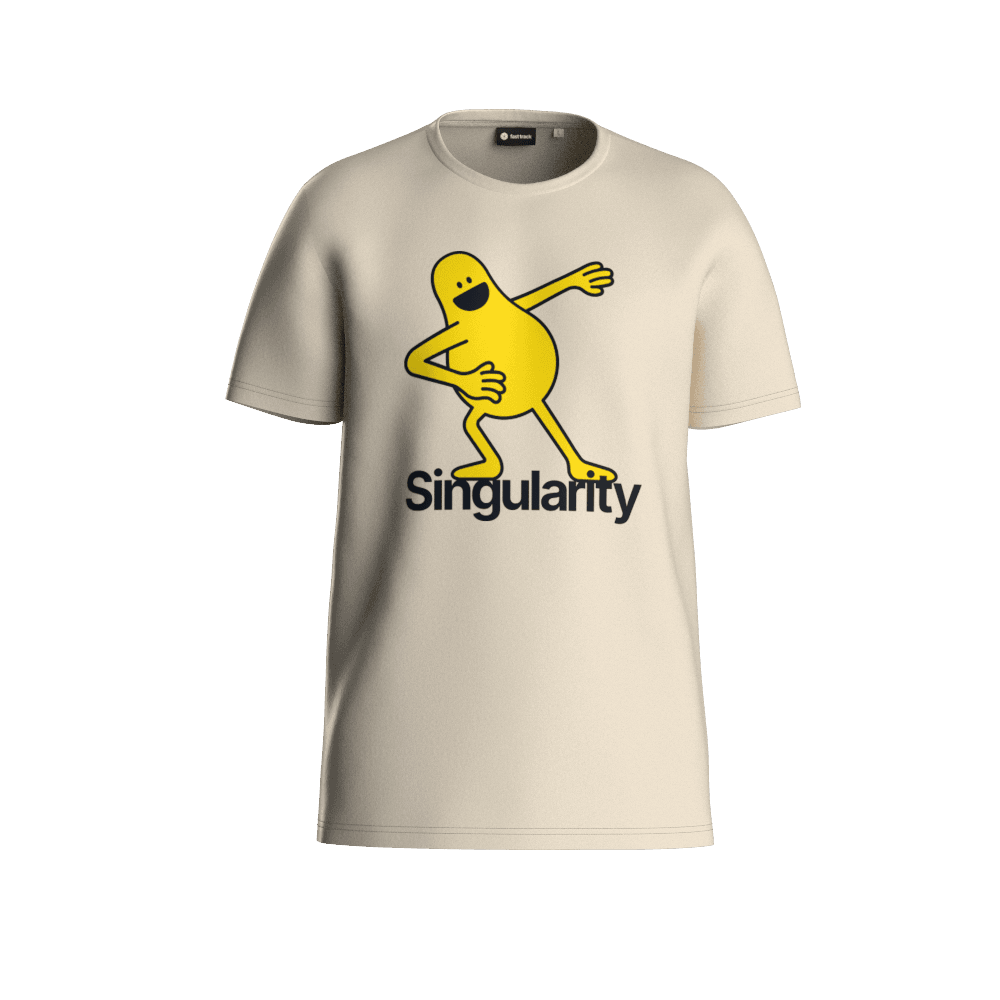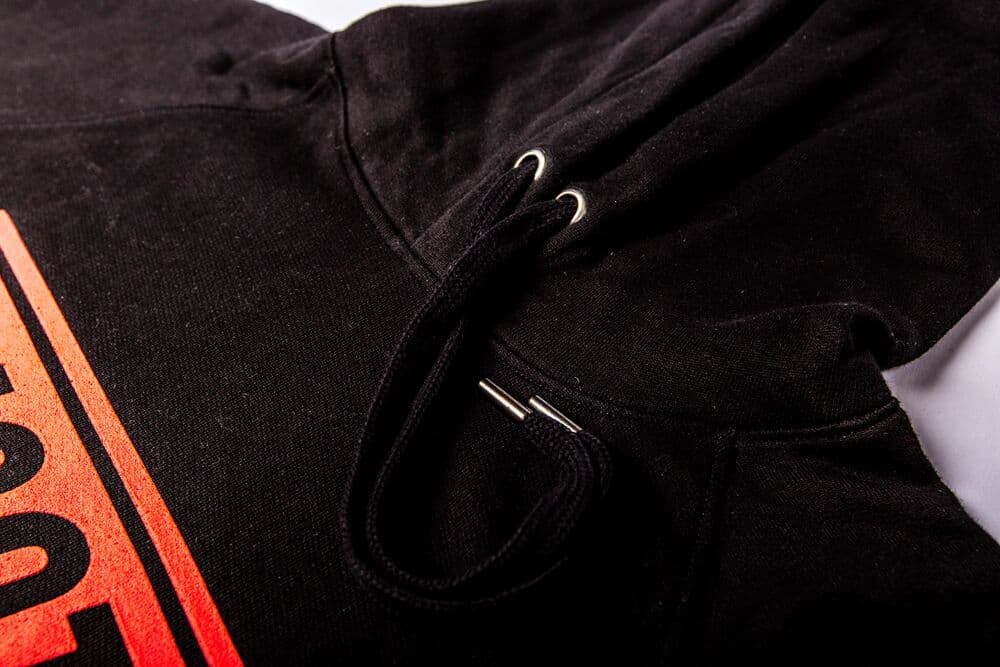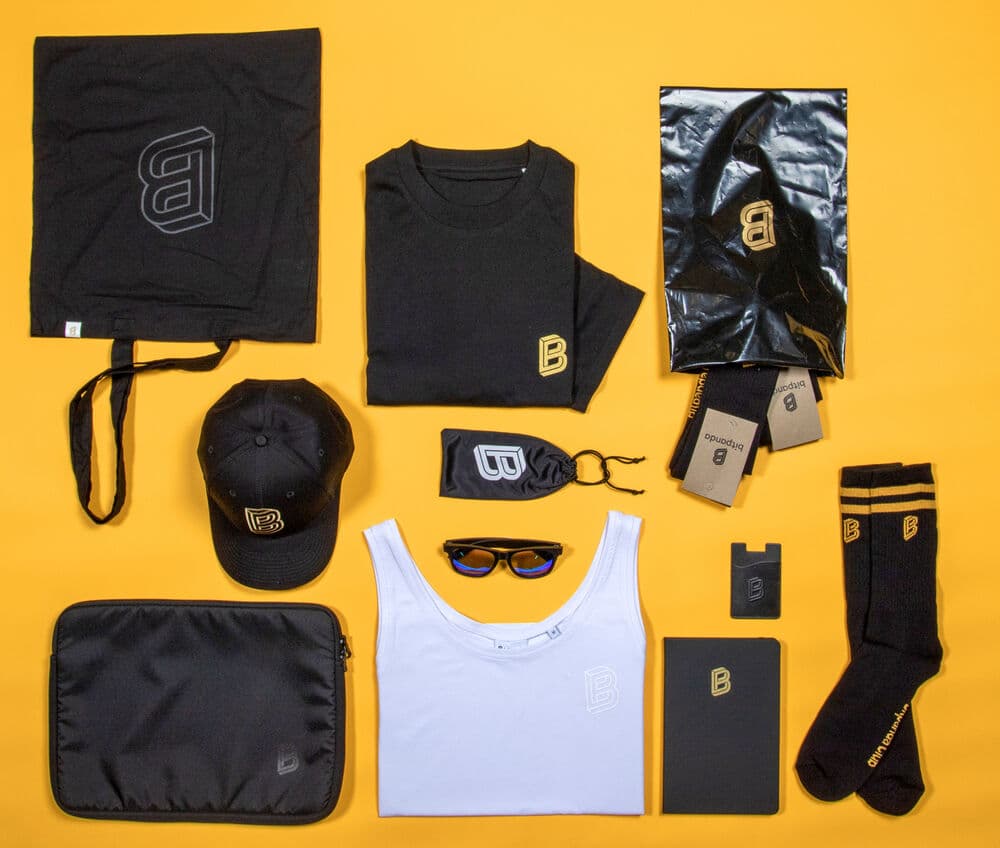
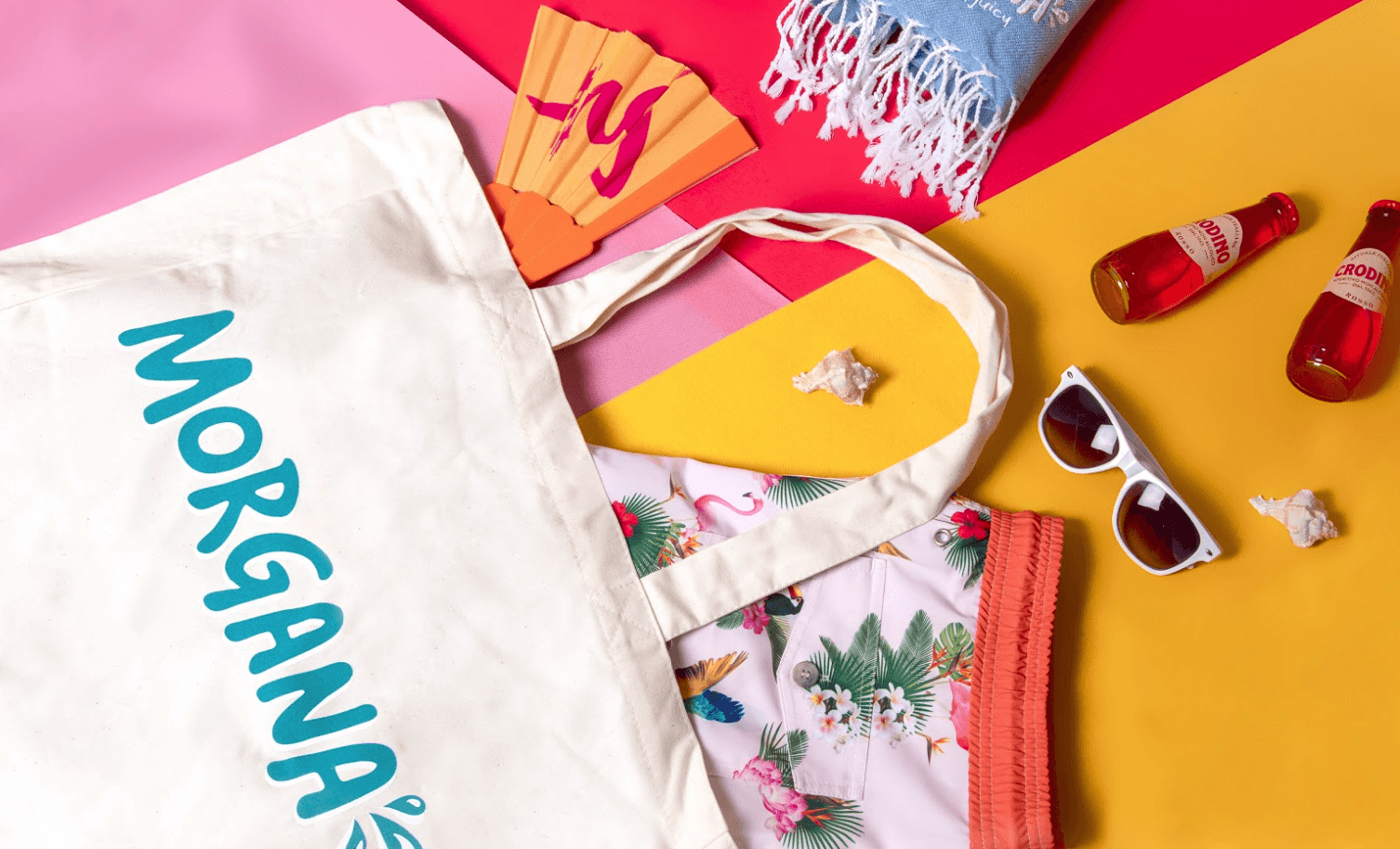

DTF, DTG and screen printing are the three main ways to print a design on a garment. Screen printing pushes ink through a mesh stencil, one screen per colour, and gives the most durable, colour-accurate result at volume. DTG (direct-to-garment) sprays ink straight into the fabric like an inkjet, ideal for one-off full-colour prints on cotton. DTF (direct-to-film) prints the design onto a film and heat-presses it onto the garment, which works on almost any fabric, light or dark. For company merch, the deciding factors are order size and how many colours your logo has.
Most comparisons stop at "DTF for small runs, screen printing for big ones". The useful question is where exactly the line sits. Based on Sunday's decoration pricing, this guide shows roughly where it falls.
What's in this guide
- DTF vs DTG vs screen printing, compared
- How each method works
- Where DTF stops being cheaper
- Which to choose
- Frequently asked questions
DTF vs DTG vs screen printing, compared
| DTF | DTG | Screen printing | |
|---|---|---|---|
| How it works | Print on film, add adhesive, heat-press | Inkjet directly into the fabric | Ink pushed through a mesh, one screen per colour |
| Best order size | 5 to a few hundred | 1 to a few dozen | From a few hundred up |
| Colours | Unlimited, CMYK plus white | Unlimited, CMYK | Priced per colour; usually 1 to 4 |
| Exact brand colour | Close, not exact | Close, not exact | Pantone matched |
| Fabrics | Cotton, polyester, blends, light and dark | Best on 100% cotton, light colours | Cotton and blends; polyester with special inks |
| Feel | Thin, smooth film on top | Softest; ink sits in the fibres | Depends on ink; plastisol sits on top |
| Durability | Good; can crack if over-stretched | Fades fastest of the three | Most durable |
| Set-up cost | None | None | Screens per colour, spread over the run |
How each method works
Screen printing
A fine mesh is stretched on a frame and coated so ink only passes through your design. One screen is made per colour. Ink is pulled across the screen with a squeegee and cured with heat. Because each colour is mixed and printed separately, screen printing can match your brand colour exactly; at Sunday every screen print is matched to Pantone C. The cost sits mostly in the screens, so unit price drops fast as quantity rises. More detail in our screen printing glossary entry.
DTG (direct-to-garment)
A specialised inkjet printer sprays water-based ink directly into the fabric. There are no screens, so every garment can carry a different design and full-colour photos print well. DTG works best on light-coloured, 100% cotton garments; on dark garments it needs a pre-treatment and a white underbase, and on polyester the colours look weak. It is the go-to method for print-on-demand. For company merch it is mainly used inside all-over digital print, where whole fabric panels are printed before the garment is sewn.
DTF (direct-to-film)
The design is printed in full colour, including a white layer, onto a PET film. An adhesive powder is applied and cured, and the transfer is heat-pressed onto the garment. Because the white is built into the transfer, DTF prints vividly on dark fabrics, and because it is a transfer, it bonds to cotton, polyester and blends alike. DTF prints in CMYK, so it reproduces gradients and photos but can only approximate a Pantone colour. See CMYK vs RGB for why.
Where DTF stops being cheaper than screen printing
As a guide for a chest logo in European production, on top of the garment:
- DTF, small logo (about 6.5 x 6.5 cm): roughly €2 to €3.50 per unit from 25 pieces upwards. Below 10 pieces it costs considerably more per unit, but it is the only option at that size.
- Screen print, one colour: roughly €2 to €7 per unit, at the high end for runs of around 25 pieces and close to the bottom of the range from a few hundred upwards.
- Screen print, four colours: roughly €2 to €10 per unit, with the steepest prices at small runs.
Three conclusions follow.
- For a one-colour logo, the crossover is around 250 to 500 pieces. Below that, DTF is cheaper. Around 500 they are level. From about 1,000, screen printing wins, and it keeps getting cheaper while DTF flattens out.
- For a multi-colour logo, DTF stays cheaper far longer. A four-colour screen print is still more expensive than DTF at around 1,000 pieces. Colour count moves the line much more than quantity does.
- Below 25 pieces, DTF is the only option. Screen printing in Europe starts at 25 pieces for one colour and 50 for four. DTF starts at 5, which makes it the method for samples, small teams and new-hire top-ups.
Two more things to know. Very large runs can be screen printed in Turkey from 300 pieces, where a one-colour print drops under €1 per unit. And bigger designs change the maths: a large DTF transfer costs noticeably more than a chest logo, so large back prints tip towards screen printing sooner.
Which to choose
- Exact brand colour matters most? Screen printing, matched to Pantone. Worth it from a few hundred pieces even if DTF is marginally cheaper, because the colour is right.
- Small order, any colour count? DTF. From 5 pieces, no set-up, works on dark hoodies and polyester sportswear.
- Photo, gradient or many colours? DTF for most order sizes. Screen printing struggles with gradients and gets expensive per colour.
- Large run, simple logo? Screen printing. From around 1,000 pieces it is the cheapest and most durable option.
- Premium feel on hoodies and outerwear? Consider embroidery instead. See hoodie printing vs embroidery.
On Sunday you do not have to decide upfront. Every product shows its available decoration methods with live pricing per quantity, and automatic templates put your logo on the product in your colours. Start from custom hoodies, custom tote bags or the full catalog.
Frequently asked questions
What is the difference between DTF and DTG?
DTG prints ink directly into the fabric with an inkjet printer and works best on light, 100% cotton garments. DTF prints the design on a film, adds adhesive and heat-presses it onto the garment, so it works on cotton, polyester and blends, light or dark. DTG feels softer; DTF is more versatile.
Is DTF better than screen printing?
For small orders and multi-colour designs, yes: DTF has no set-up cost, starts from 5 pieces and prints unlimited colours. For larger runs of a simple logo, screen printing is cheaper, more durable and can match Pantone exactly. For a one-colour logo, screen printing typically becomes the cheaper option somewhere between 500 and 1,000 pieces.
How long does DTF printing last?
A properly pressed DTF transfer lasts many dozens of washes without cracking. Wash inside out at 30 to 40 degrees and avoid ironing directly on the print. It is less durable than screen printing over the long term, but more durable than DTG on most fabrics.
Can DTF print on polyester?
Yes. Because DTF is a heat-applied transfer with its own adhesive layer, it bonds to polyester, cotton and blends. That makes it a good choice for sportswear, softshells and mixed collections where DTG would not perform.
What is the minimum order for screen printing?
For European production on Sunday, screen printing starts at 25 pieces for one to three colours, 50 for four and five colours, and 100 for six colours or more. Production in Turkey starts at 300 pieces with lower unit prices for large runs.
About this article
See the price of every method for your order
Create a free account and get designs in your branding with live pricing for DTF, screen printing and embroidery at every quantity.
Get free designs