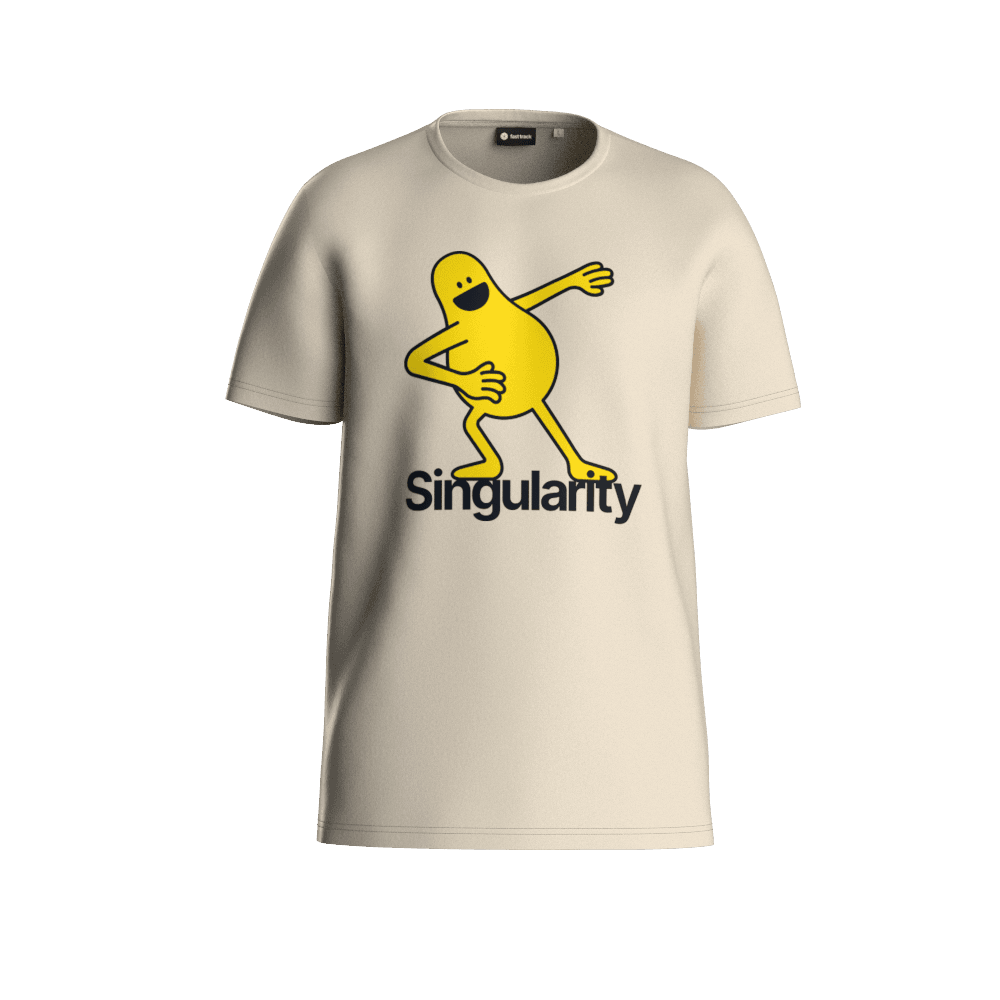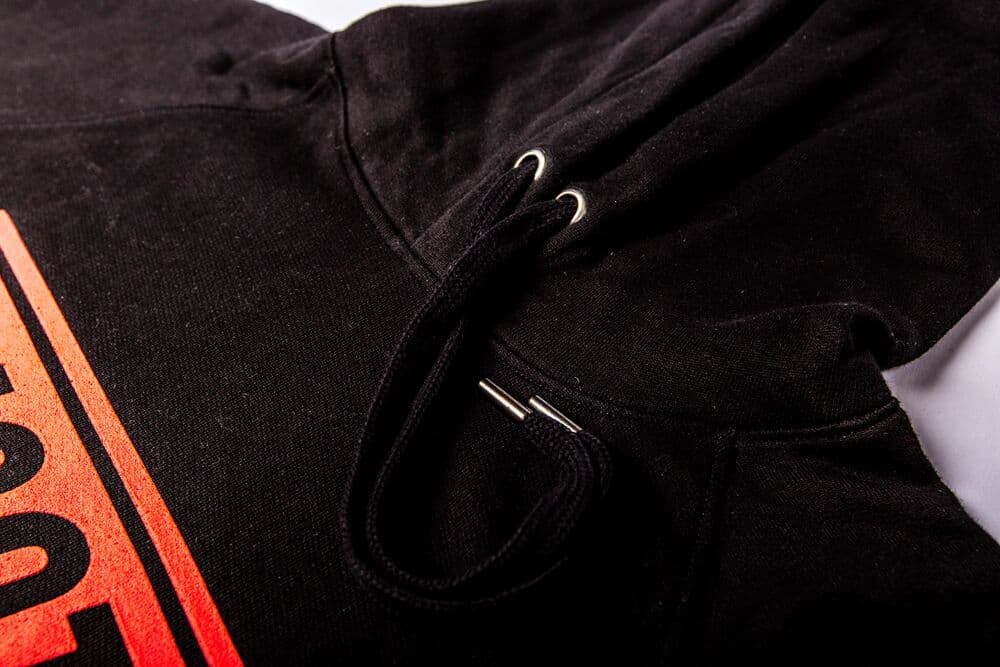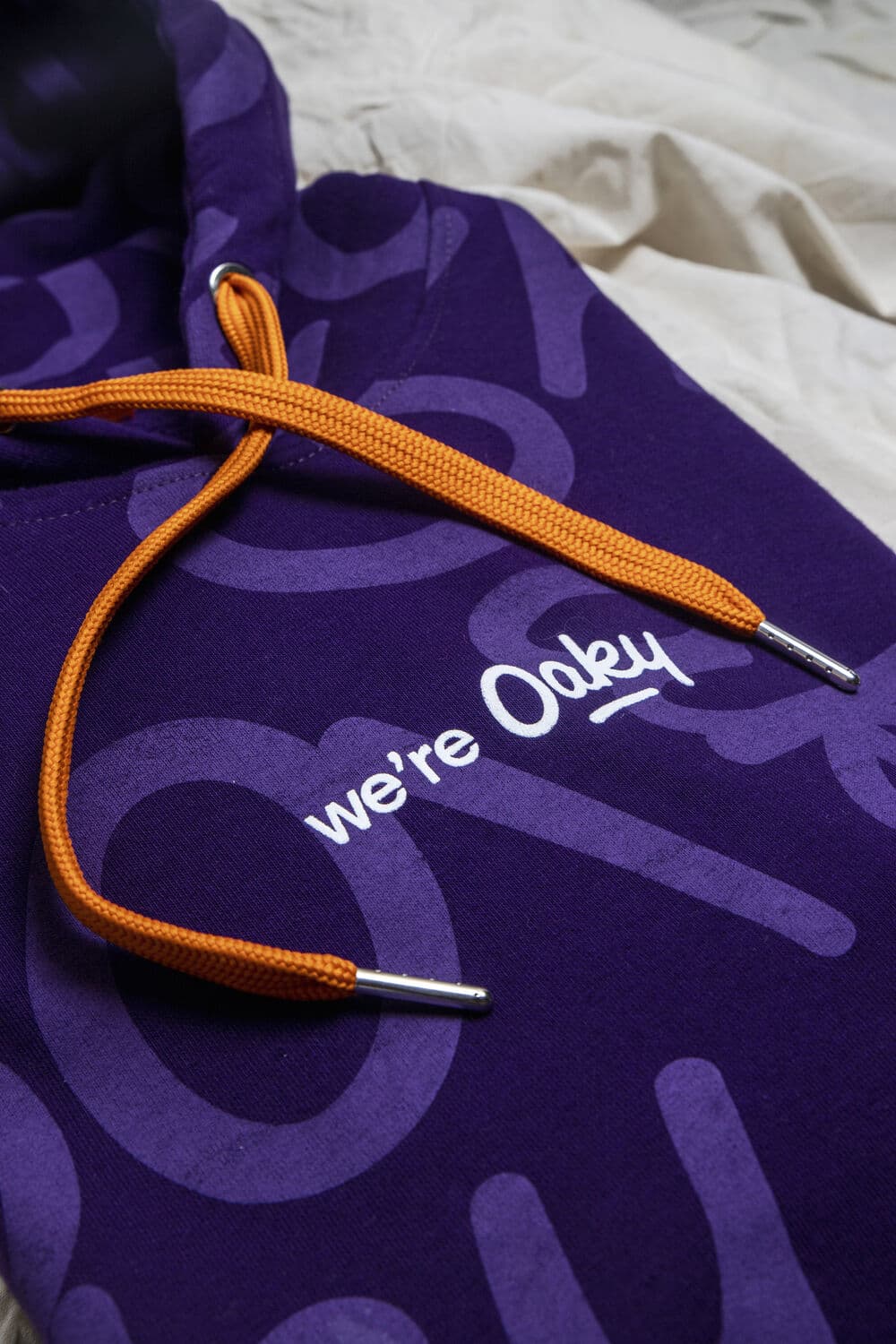

Puff print and 3D puff embroidery both give a logo height, but they are different techniques. Puff print is a screen print made with an ink additive that expands when it is cured, leaving a soft, raised, rubbery surface. 3D puff embroidery stitches satin thread over a block of foam, so the logo stands proud of the fabric with a hard, sculpted edge. Puff print suits large, playful graphics on tees and hoodies. 3D puff embroidery suits compact logos on caps and outerwear.
Both techniques are a way of saying "this is not a giveaway". Height makes people touch a logo, and a logo people touch is a logo they remember. The question is whether that height should be soft and printed or firm and stitched.
What's in this guide
- Puff print vs 3D puff embroidery, compared
- How puff print works
- How 3D puff embroidery works
- What each costs
- Which garments suit which
- Artwork rules for raised logos
- Frequently asked questions
Puff print vs 3D puff embroidery, compared
| Puff print | 3D puff embroidery | |
|---|---|---|
| Made with | Screen-print ink plus a puff additive | Satin-stitch thread over a foam underlay |
| Height | Low to medium, soft dome | Medium to high, crisp edges |
| Feel | Soft, rubbery, slightly matte | Firm, textured, sheen of thread |
| Design size | Scales to large chest and back graphics | Best on compact logos, up to about 8 cm wide |
| Detail | Bold shapes; fine detail spreads | Bold shapes; thin lines and small text do not work |
| Best on | Cotton and cotton-poly tees, hoodies, sweaters | Caps, beanies, jackets, thick knits |
| Durability | Good; can soften with very hot washing | Excellent; outlasts the garment |
| Reads as | Streetwear, retro, playful | Varsity, sporty, premium |
How puff print works
Puff print is a screen-printing technique. A special additive is mixed into plastisol or screen-print ink. The design is printed through a mesh screen like any other screen print, then the garment goes through a heat dryer. The heat makes the additive expand, and the ink rises into a raised, slightly spongy layer.
Because it is a screen print, everything that applies to screen printing applies here: each colour needs its own screen, pricing is set by colour count, and colours are matched to Pantone. Sunday matches puff print to Pantone C, so the raised logo lands in your brand colour rather than the nearest stock ink. Puff print works best on cotton and cotton-polyester blends, which absorb heat evenly during the cure.
How 3D puff embroidery works
3D puff embroidery starts with a sheet of foam laid on the fabric where the logo goes. The embroidery machine then stitches dense satin stitches over the foam. The needle perforates the foam along the edges of the design, the excess is torn away, and what is left is a solid, raised logo with foam inside and thread outside.
The result is the classic raised cap logo. It holds its shape for the life of the product because the structure is stitched, not cured. The limitation is geometry: satin stitches need room to wrap around the foam, so narrow strokes, small text and fine detail do not work. Thread colours are chosen from a colour card rather than mixed to Pantone, so pick the closest thread match to your brand colour.
What puff print and 3D puff embroidery cost
Both are priced per unit and per placement, on top of the garment, and both get much cheaper as quantities rise. As a guide for European production:
- Puff print, one colour: roughly €1 to €7 per unit, at the high end for runs of around 25 pieces and well under €2 from about 1,000 pieces. Each extra colour adds a little, mostly at small quantities.
- 3D puff embroidery, logo up to about 8 cm: roughly €2.50 to €7.50 per unit, again highest at small quantities.
The point most buyers miss: from around 100 pieces, 3D puff embroidery costs the same per unit as flat embroidery of the same size. Below that there is a small premium for the foam set-up. If you are already embroidering a cap logo at 100 or more, adding height is effectively free.
Puff print gets cheaper faster than embroidery as quantities rise, because a screen print's cost sits mostly in the screens. At around 1,000 pieces a one-colour puff print costs less than half of a 3D embroidered logo. For high-volume event tees, that gap matters. For a 50-cap team order it does not.
Minimums in Europe start at around 25 pieces for both techniques. For larger runs, Sunday also produces puff print in Turkey from 300 pieces, at lower unit prices.
Which garments suit which
Choose 3D puff embroidery for
- Caps. The front panel of a structured cap is the natural home of 3D embroidery. It is stiff enough to support the foam and small enough to suit a compact logo.
- Beanies and thick knits. A raised logo sits well on a cuffed beanie. See custom beanies for styles.
- Jackets and bodywarmers. A chest logo with depth reads premium on outerwear, where a print can look flat.
Choose puff print for
- Large graphics on tees and hoodies. A chest-wide wordmark or a back graphic in puff ink is a strong streetwear look that embroidery cannot reach at that size.
- Retro and varsity-inspired drops. Puff print is a signature of 80s and 90s sportswear, which is why it keeps coming back.
- High volumes. Event and festival runs where unit cost decides the method.
Unsure? A rule of thumb that rarely fails: if the logo fits in a matchbox, stitch it; if it fills a hand, print it. For a deeper comparison of flat techniques on hoodies, read hoodie printing vs embroidery.
Artwork rules for raised logos
- Go bold. Minimum stroke width of about 2 mm for 3D embroidery and about 1.5 mm for puff print. Anything thinner collapses or fills in.
- Avoid small text. Letters under roughly 1 cm high lose their counters. Keep taglines flat and raise only the main mark.
- Simplify. Drop gradients, shadows and outlines. Height does the job an outline was doing on screen.
- Mix techniques. Raise the icon, keep the wordmark flat. It is a common premium cap treatment and keeps fine type readable.
- Supply vector files. Both screens and embroidery files are built from vector paths, and clean paths mean clean edges.
For other ways to add texture, compare embossing vs debossing for leather and paper, or a silicone 3D transfer for performance fabrics.
Frequently asked questions
What is the difference between puff print and puff embroidery?
Puff print is a screen print using ink with an additive that expands when heated, giving a soft raised surface. Puff embroidery, also called 3D puff embroidery, stitches satin thread over a foam base, giving a firm, sculpted logo. Puff print suits large graphics on tees and hoodies; puff embroidery suits compact logos on caps and outerwear.
How long does puff print last?
A well-cured puff print lasts many washes. Wash the garment inside out at 30 to 40 degrees and avoid tumble drying on high heat, because heat can soften the raised ink. On cotton and cotton-polyester blends, puff print holds up well for everyday wear.
Is 3D puff embroidery more expensive than flat embroidery?
Only at small quantities. Below about 100 pieces there is a small premium for the foam set-up. From around 100 pieces, 3D puff embroidery costs the same per unit as flat embroidery of the same size, so adding height to a cap logo is effectively free.
What is the minimum order for puff print?
For European production on Sunday, puff print starts at around 25 pieces. A one-colour puff print typically costs roughly €1 to €7 per unit, at the high end for the smallest runs and well under €2 from about 1,000 pieces. Larger runs can also be produced in Turkey from 300 pieces.
Can you do 3D puff embroidery on a t-shirt?
It is possible but rarely a good idea. A light t-shirt fabric cannot support the weight of foam and dense stitching, so the logo pulls and puckers. On t-shirts, use puff print for a raised look. Keep 3D puff embroidery for caps, beanies, sweatshirts and jackets.
About this article
See your logo raised on a cap
Create a free account and get cap, hoodie and beanie designs in your branding, with live pricing for puff print and 3D embroidery.
Get free designs