
Embossing raises a design above the surface of a material. Debossing presses it below the surface. Both use a metal die, heat and pressure instead of ink, so the logo is formed out of the product itself. Debossing is the more common choice for branded merchandise because it survives daily handling better and reads as quietly premium.
The difference is one direction of pressure, and it changes how the product feels in the hand. A raised logo catches light and the fingertip. A recessed logo sits flush with the surface and wears more slowly. Neither uses colour unless you add it, which is exactly why both work so well on leather, PU and good paper.
What's in this guide
- Embossing vs debossing, compared
- How each process works
- Which materials take them
- What it costs
- How to choose
- Artwork rules that save a reprint
- Frequently asked questions
Embossing vs debossing, compared
| Embossing | Debossing | |
|---|---|---|
| Direction | Raised above the surface | Pressed into the surface |
| Look | Catches light, casts a small shadow | Sits flush, reads as a stamp or seal |
| Feel | You touch the logo first | You feel the edge of the logo |
| Durability | Raised edges can flatten with heavy use | Holds its shape on daily-use items |
| Best on | Paper, card, packaging, thick leather | Leather, PU, notebook covers, small leather goods |
| Colour | Blind (no colour) by default | Blind by default, can be colour-filled |
| Reads as | Celebratory, editorial | Understated, crafted |
How each process works
Both techniques start the same way. Your logo is turned into a metal die, usually brass or magnesium. The die is heated and pressed into the material under high pressure for a set dwell time. The material takes the shape of the die and keeps it.
Embossing
True embossing needs two parts: a male die on one side and a female counter-die on the other. The material is squeezed between them so the logo pushes up and out of the surface. On paper and card the back of the sheet shows a mirror-image dent. On thick leather the back stays mostly hidden because the material absorbs the shape.
Debossing
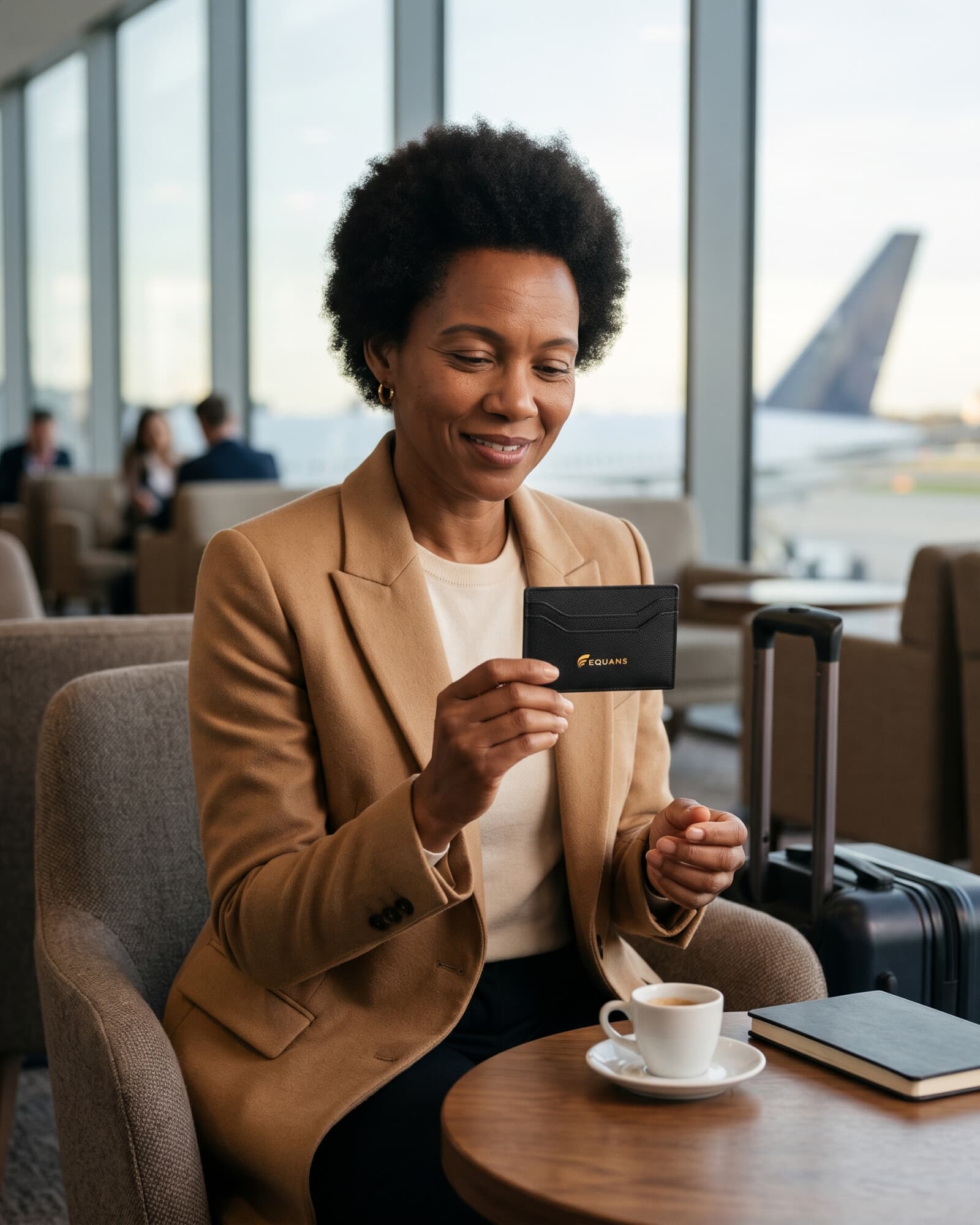
Debossing only needs the one die. It presses down and leaves a recessed impression. Because there is no counter-die, set-up is simpler, which is one reason debossing is the default on notebook covers, card holders and leather tags. The impression can stay blind, or be filled with foil or ink for a coloured logo with depth.
Which materials take embossing and debossing
Pressure decoration only works on materials that hold a shape once the die lifts. That rules out most fabrics and plastics, and rules in a short list that happens to cover the premium end of most catalogues.
- Genuine leather. The classic. Full-grain leather takes a deep, crisp deboss that ages with the product.
- PU leather. Takes debossing well and at lower cost. Most branded notebook covers and card holders are PU.
- Paper and card. Embossing shines here: business cards, gift boxes, sleeves and certificates.
- Cork and some woods. Debossing works, with softer edges than on leather.
In Sunday's live catalogue three products are specifically set up for debossed branding: the full-grain Leather Toiletry Pouch (The Atlas), the slim PU Leather Card Holder and the made-to-order Leather Travel Bag. Debossing is also available on PU notebook covers across the stationery range. Browse the catalog to see which items list it as a decoration option.
What embossing and debossing cost
Pressure decoration is priced per unit, sometimes with a small one-off die or set-up charge. Unit cost falls sharply with quantity because the die is the expensive part and it gets reused.
- Simple logo: roughly €1 to €6 per unit on top of the product, at the high end for small runs of around 50 pieces and close to €1 from a few hundred pieces upwards.
- Complex logo with fine detail: typically four to five times the cost of a clean wordmark at the same quantity, because the press runs slower.
- Minimums: standard embossing and debossing start at around 50 pieces.
The practical takeaway: the biggest saving comes from moving from small runs to a few hundred pieces, so if you are close to a quantity tier, round up. And simplifying the logo saves more than switching technique.
How to choose
Most of the time the product decides for you. Use these three questions for the rest.
- Will it be handled daily? Card holders, notebooks, wallets and pouches get gripped, pocketed and rubbed. Choose debossing, because a recessed logo has no edge to wear down.
- Is it paper or packaging? Gift boxes, sleeves and cards are where embossing earns its keep. A raised logo on a box lid is the first thing a recipient touches when they open it.
- Do you want colour? Debossing can be foil- or ink-filled. Embossing is almost always left blind. If the logo has to read from a distance, a filled deboss is the safer bet.
For client gifts specifically, blind debossing is hard to beat. The bigger the logo, the less the product gets used, and a tone-on-tone deboss is about as small and quiet as a logo can get while still being unmistakably there.
Artwork rules that save a reprint
- Supply vector artwork. The die is cut from your file, so it needs clean paths. A PNG will be redrawn, and redrawn logos drift.
- Keep lines thick enough. Hairlines and tiny counters fill in. As a rule, nothing thinner than about 0.5 mm, and open up small letters like e and a.
- Avoid gradients and shading. Pressure gives you one depth. A gradient becomes a flat shape.
- Size to the panel. On a card holder, a logo of 2 to 3 cm wide reads best. On a notebook cover, 4 to 6 cm.
- Check the material colour. Blind debossing on black leather is subtle. On tan or natural leather the impression darkens slightly and reads more clearly.
If your logo has colour that matters, read our guide to Pantone colours before you brief a filled deboss, because the fill is matched to a spot colour, not to your screen.
Frequently asked questions
What is the difference between embossing and debossing?
Embossing raises a design above the surface of a material using a die and a counter-die. Debossing presses the design into the surface with a single die, leaving a recessed impression. Both use heat and pressure rather than ink, and both are most common on leather, PU, paper and card.
Which is better for a logo, embossing or debossing?
For products people handle every day, such as notebooks, card holders and leather goods, debossing is usually better because a recessed logo does not wear down. Embossing works best on paper and packaging, where a raised logo adds a tactile first impression when the box or card is opened.
How much does debossing cost?
For a simple logo, debossing typically adds roughly €1 to €6 per unit, at the high end for small runs and close to €1 from a few hundred pieces upwards, sometimes with a small one-off set-up charge. Complex logos with fine detail cost several times more per unit because the press runs slower.
Can you deboss fabric or a t-shirt?
Not in a way that lasts. Fabric relaxes after pressing and washing, so the impression fades. For a tactile logo on apparel, use embroidery, 3D puff embroidery or a silicone transfer instead. Debossing is for materials that hold a shape, like leather, PU, paper and cork.
Is blind debossing the same as debossing?
Blind debossing is debossing with no colour, so only the shape of the logo shows. It is the most refined and lowest-cost version. A deboss can also be filled with foil or ink, which adds colour inside the recessed area and makes the logo readable from further away.
About this article
See your logo debossed before you order
Create a free account and get ready-made designs on notebooks, card holders and leather goods in your branding, with live pricing per quantity.
Get free designs