
Sales kickoff swag is the branded merchandise a company gives attendees at its annual sales kickoff (SKO), usually apparel plus a few useful extras. Give something people will wear or use all year, in the right size, delivered to the venue on time. Budget EUR 25, 50 or 75 per person and order 8 weeks ahead.
Quick facts
- Sunday offers three tailored SKO packs at EUR 25, EUR 50 and EUR 75 per person.
- Start 8 weeks before the SKO: about 2 weeks to finalise the design, about 6 weeks for production and delivery.
- The minimum order is 10 pieces per product.
- Choose premade mockups with your logo, or a custom design around your SKO theme that Sunday's designers create and you approve.
- Delivery goes to the venue or hotel, pre-packed per person or in bulk for your team to hand out.
- An optional free size selection page, in your logo and colours, gives every attendee one link to pick their own size.
- The catalog has 500+ products (hoodies, bottles, bags, tech and more), all ready for a logo.
What's in this guide
What is sales kickoff swag?
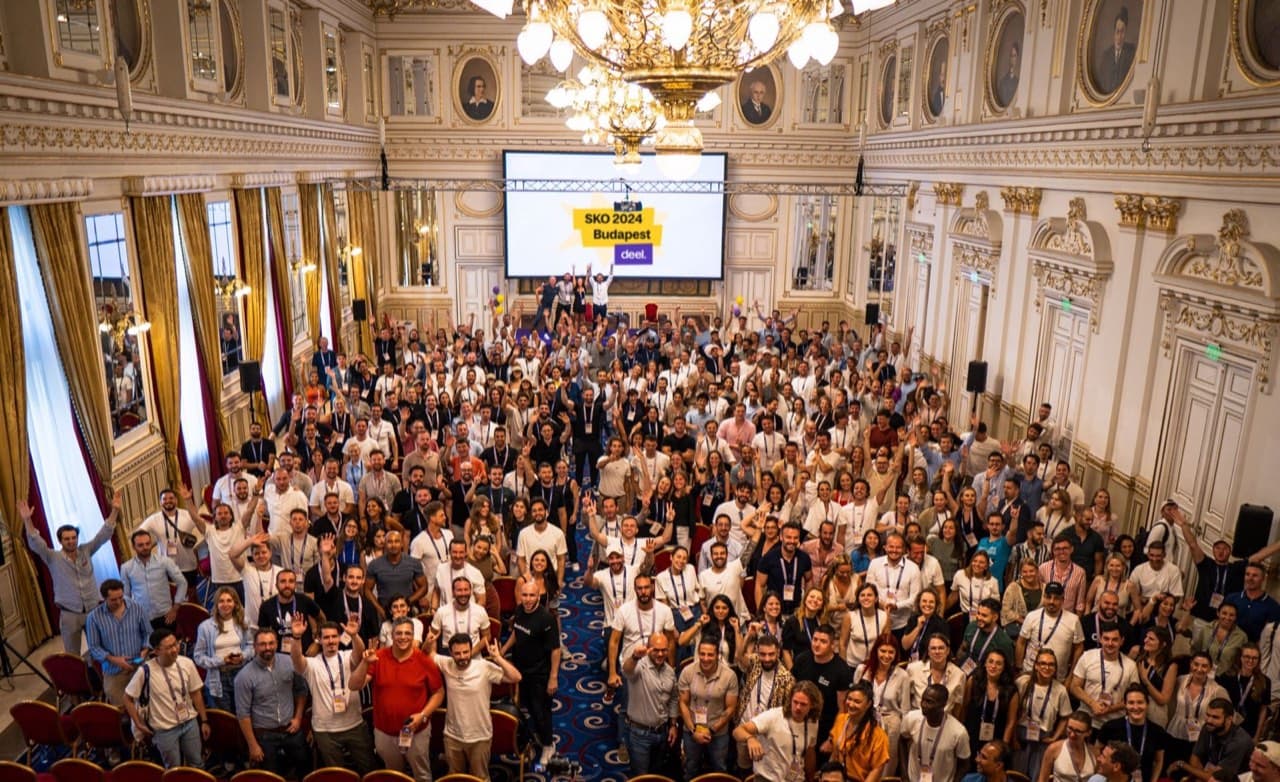
A sales kickoff is the yearly (sometimes twice-yearly) meeting where a sales organisation lines up on strategy, targets, product and team. Sales kickoff swag, also called SKO swag or SKO merch, is the branded merchandise attendees receive there. If you are still shaping the event itself, start with how to plan a sales kickoff and come back for the merchandise layer.
You will also see it described as sales kickoff gifts or gifts for the sales team. The labels overlap, but the job is specific. SKO swag is given to a whole group at one moment, at one event, so it has to work for everyone: different sizes, different tastes, different travel situations. That is what makes it different from a one-off thank-you gift or an incentive for a single quarter.
In practice it is a small set of items, often a wearable plus one or two useful extras, delivered to the venue and handed out on arrival or placed in rooms. The rest of this guide covers what to put in it, what it should cost and when to order. For the wider category, our guides to event merchandise and event merchandise ideas cover other event types.
What swag is for at an SKO
A kickoff produces a lot of energy for two or three days. Most of it fades by the second week. Good swag does three jobs that help that energy last, and it is worth being clear which ones you are paying for.
- Energy that outlasts the event. A hoodie someone wears in March still carries a small piece of the kickoff. A lanyard in a drawer does not.
- Shared identity for the year. When a whole team owns the same item, the group photo, the video call and the airport lounge all quietly signal one team. This is the same logic behind sales team outfits.
- Recognition. Being handed something well made says the company thought about you. Being handed something cheap says the opposite, and people notice.
What to give: apparel first
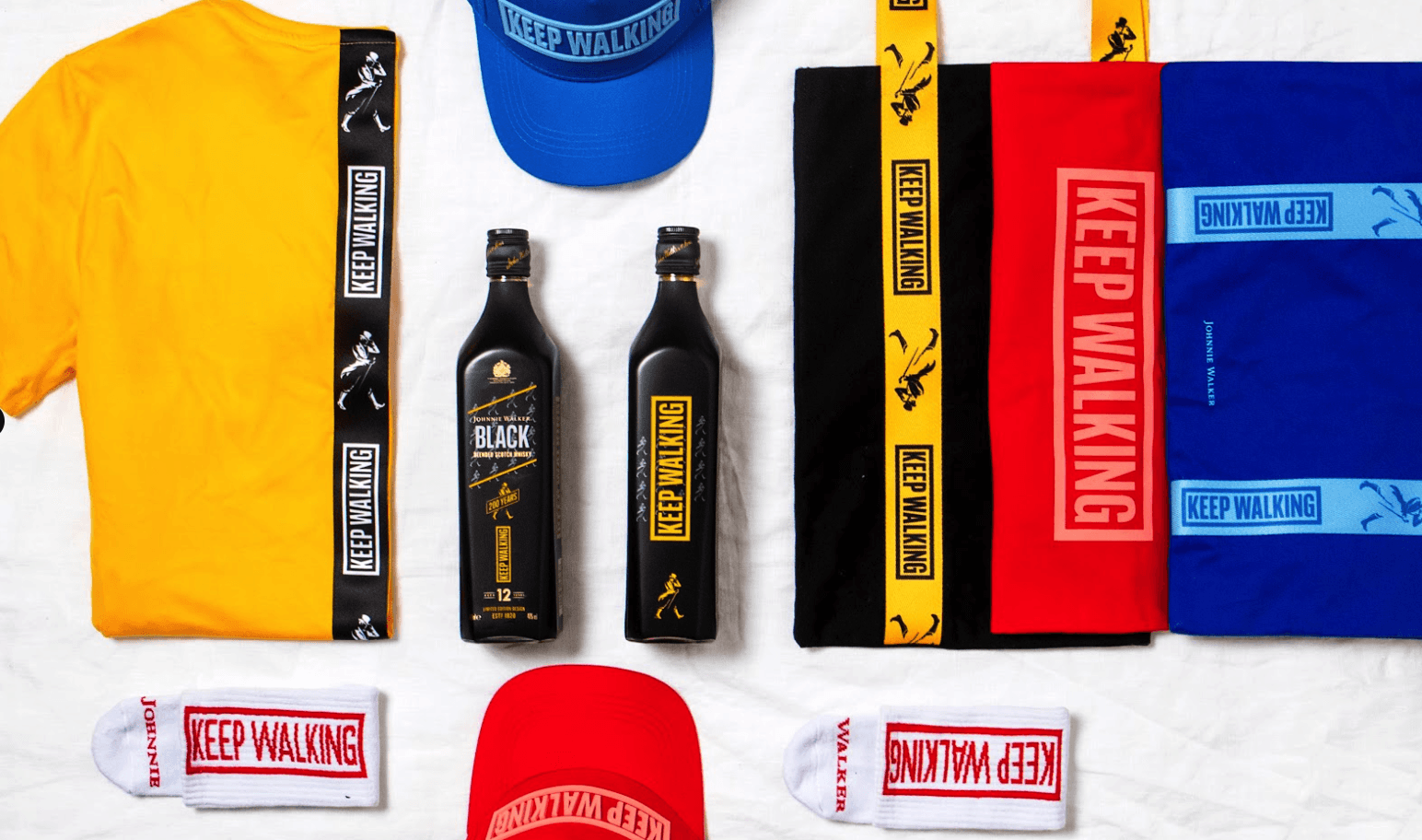
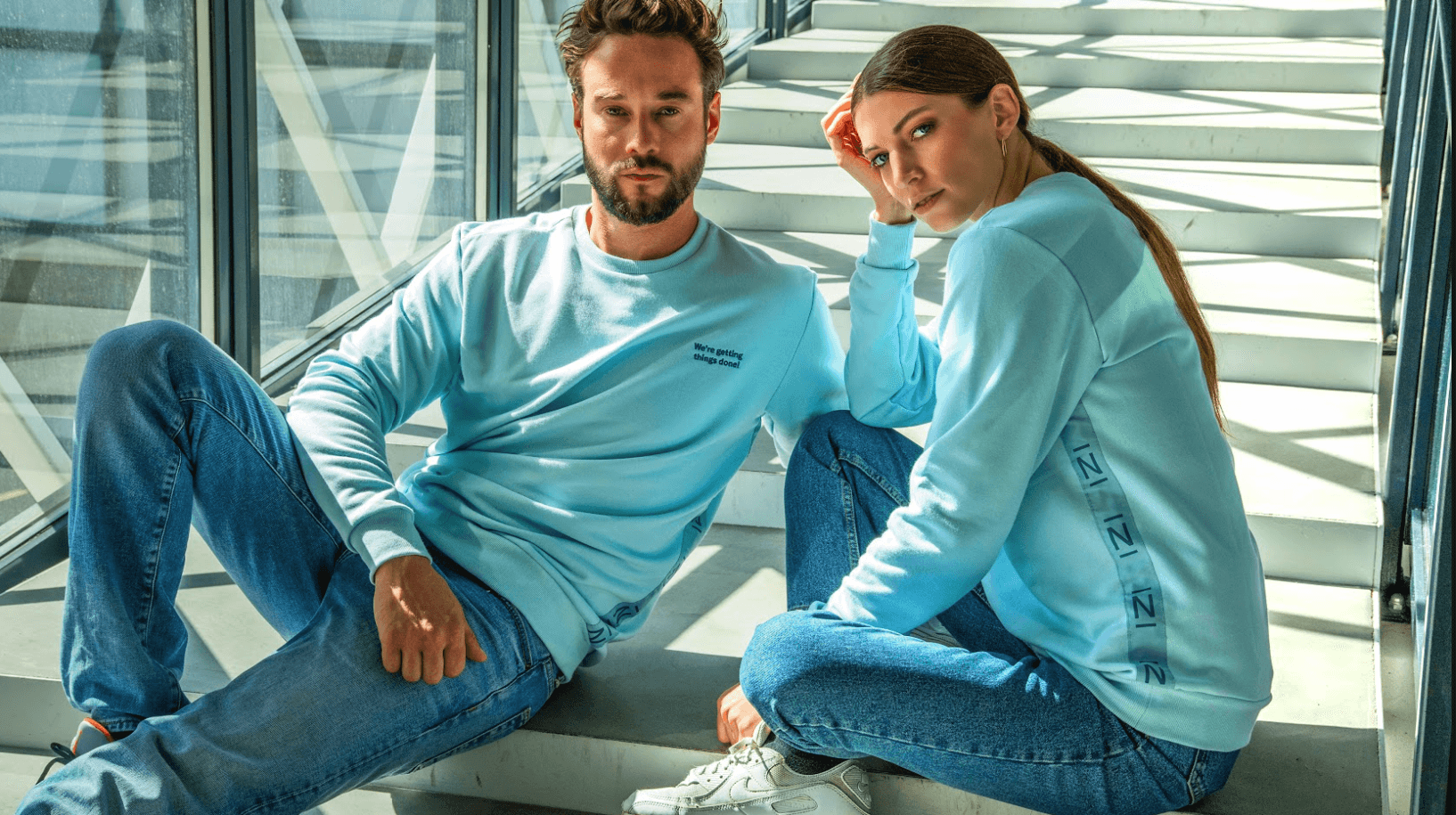
Our view, and it is an opinion rather than a law: for a sales kickoff, wearables beat gadgets. People wear a good hoodie or tee for years, in public, on camera and in front of customers. A gadget tends to be used for a week, then loses to whatever the person already owns. Tech accessories are fine as a supporting item. They rarely make the main event.
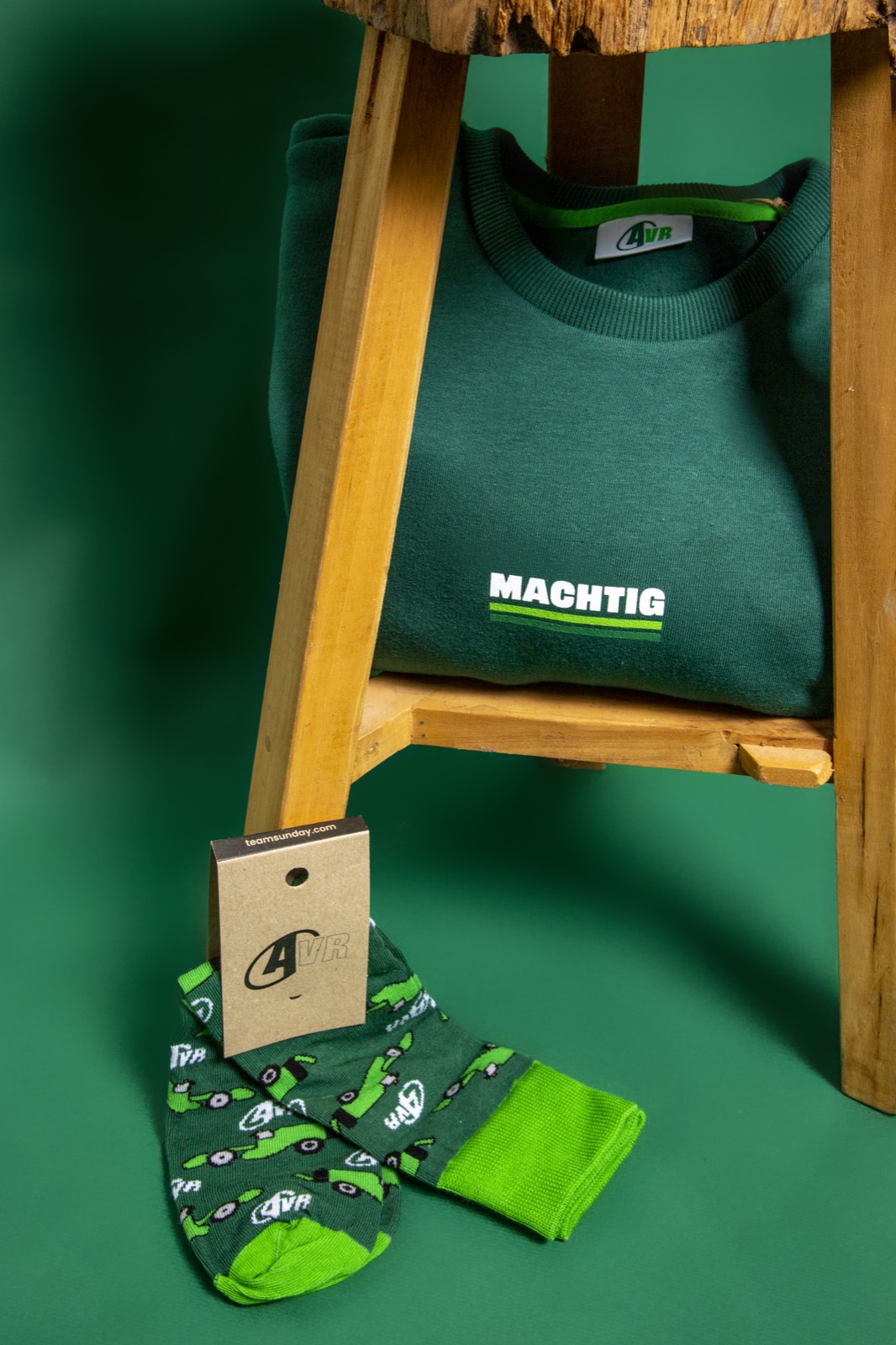
Apparel is the item people keep wearing after the event.
That does not mean every pack should be only clothing. A good SKO set usually mixes one wearable people choose to put on, one thing they use at a desk or on the road, and optionally one small extra. The table below shows the main item types and who each one suits.
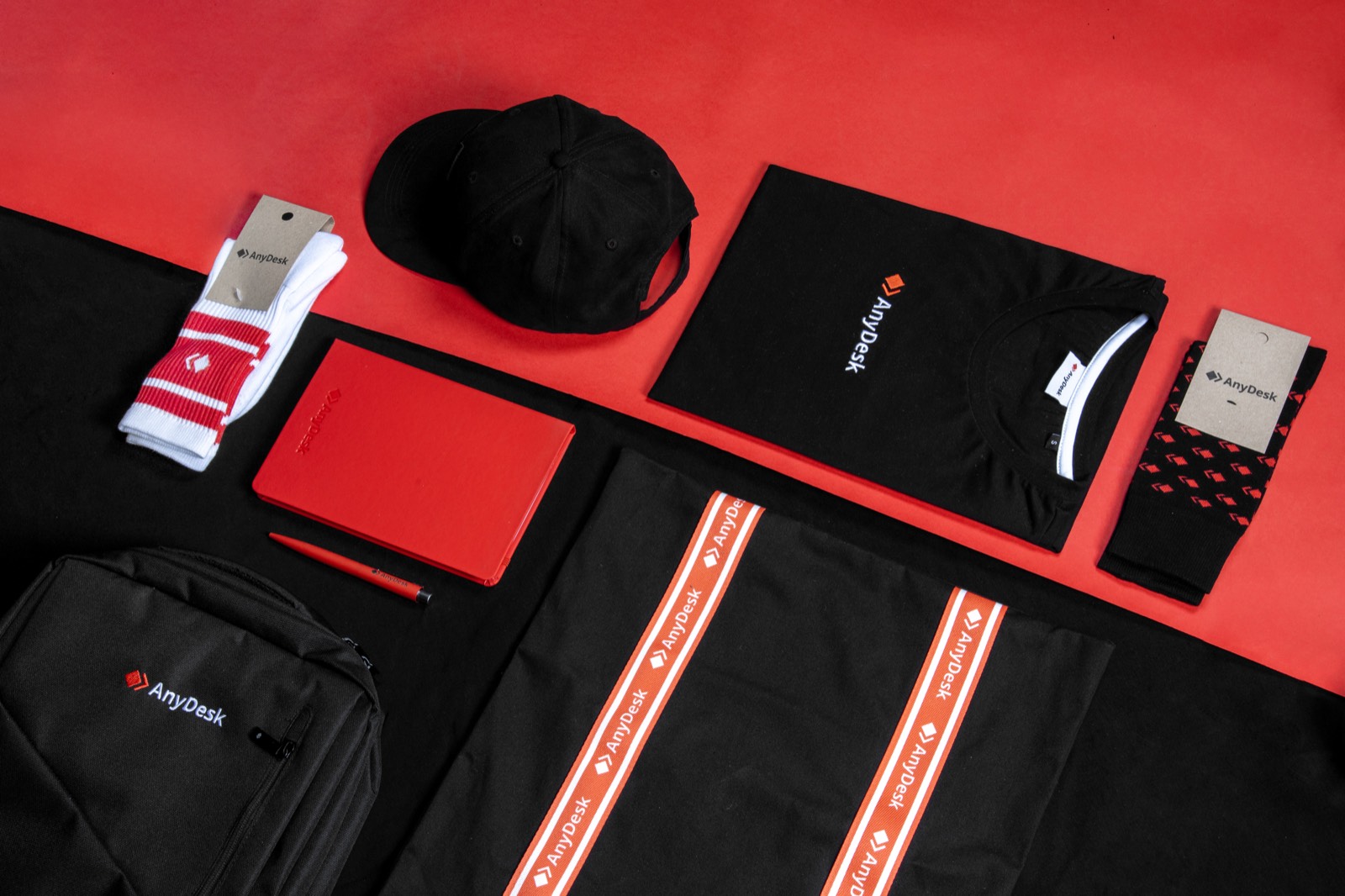
A full set seen together: cap, tee, notebook, socks and backpack in one colour palette.
| Item type | Best for | Watch out for |
|---|---|---|
| Premium tee | Everyone, as the base item. Easy to wear day to day. | Needs sizes. A cheap blank shows immediately. |
| Hoodie or sweatshirt | The hero item for teams that want something kept for years. | Needs sizes. Heavier to carry and ship. |
| Polo shirt | Customer-facing teams and field sales. | Fit varies more than a tee. Offer a size page. |
| Cap or beanie | One-size items, so no sizing risk. | Not everyone wears hats. Pair with another item. |
| Jacket | Sales leaders, top performers or a whole team that wants a premium layer. | Highest sizing risk and the heaviest to ship. |
| Bottle or travel mug | Daily use at the desk, in the car or on flights. | Check airport liquids rules for items packed in carry-on. |
| Notebook and pen | Taking notes during sessions, which is the point of the event. | Easy to overlook as a throwaway. Choose a decent one. |
| Tote bag | Carrying everything else home. Light and flat to pack. | Low perceived value on its own. |
| Backpack | Travelling teams and people who commute. | Bulky. Confirm it fits in the luggage people already have. |
| Socks | A fun, low-risk extra that adds personality. | Still needs a rough size range. Works best as an add-on. |
| Tech accessories | A practical extra for people on the road. | Rarely the main event. Avoid anything that needs setup. |
Not sure which item looks right with your logo? The free hoodie mockup generator and polo mockup generator show your logo on the product, and there are matching tools for water bottles and tote bags. You can also browse product pages for custom hoodies, custom water bottles and custom backpacks, or the full catalog of 500+ products.
For more specific ideas, with a practical note on each, see 12 sales kickoff swag ideas your team will actually keep. If you are choosing between a pack handed out at the event and an ongoing shop, swag boxes vs swag stores explains the difference.
How much to spend per person
Sunday's SKO packs come in three tiers: EUR 25, EUR 50 and EUR 75 per person. The per-person price multiplies by headcount, so a 120-person kickoff at EUR 50 is a very different cheque from a 40-person one at EUR 75. Start from what you can afford in total, then divide.
The pack contents for each tier are tailored to the customer, not fixed. The table below is illustrative guidance on how we would think about each level. It is not a list of what is inside a Sunday pack, and your actual selection depends on items, quantities and decoration.
| Per person | Illustrative approach | Suits |
|---|---|---|
| EUR 25 | Illustrative: one well-chosen wearable or a short set of simple, useful items. Prioritise one thing people will keep over several they will not. | Large kickoffs, tight budgets, teams that also get gifts elsewhere in the year. |
| EUR 50 | Illustrative: a premium wearable plus one or two useful extras, so people leave with a small set rather than a single piece. | Most mid-sized kickoffs. A sensible default when you want it to feel considered. |
| EUR 75 | Illustrative: a heavier or more premium hero item plus several extras, packed as a kit people open together. | Smaller teams, leadership groups, or a kickoff where swag is part of the recognition story. |
Three rules of thumb, all Sunday's view rather than hard data:
- One hero item beats five throwaways. If the budget is tight, spend it on a single item people will keep, not a spread of small things.
- Mind the minimum. Each product has a minimum order of 10 pieces. For very small groups, fewer product types often work better than many.
- Decide by audience. Top performers or leaders can get a bigger budget than the general attendee set. You do not have to spend evenly.
If you are comparing against a general per-gift budget, our guide to corporate gifts under 50 looks at bulk gifting at the lower end. For a leader or top performer, see the jacket and hoodie options above.
When to order: the 8-week plan
The simplest timing rule: start 8 weeks before the SKO. Sunday's process splits that into about 2 weeks to finalise the design and about 6 weeks for production and delivery. That leaves little slack, so if you can start earlier, do.
The two blocks are fixed. The steps inside them are our suggested sequencing and not a service guarantee, so adapt them to your own approvals.
| Week before SKO | What happens | Your job |
|---|---|---|
| 8 | Project starts. Design phase begins. | Confirm budget tier, expected headcount, items and theme direction. Share your logo. |
| 7 | Design in progress. | Review the premade mockups or the custom concept. Send the size selection link to attendees (suggested). |
| 6 | Design approved. Production starts. | Approve the design. Close the size link and confirm final quantities (suggested). |
| 5 | Production. | Plan how and when you will hand items out. Brief the team running registration. |
| 4 | Production. | Tell attendees what to expect, without spoiling the reveal. |
| 3 | Production and shipping. | Confirm your venue or hotel can receive and store boxes. |
| 2 | Delivery in progress. | Confirm the delivery address, receiving contact and arrival window with the venue (suggested). |
| 1 | Delivery arrives. | Count and check what arrived. Stage items for hand-out (suggested). |
| 0 | SKO. | Hand out on arrival or place in rooms. Take the group photo. |
Late joiners, headcount changes and last-minute invitees are the usual reasons plans slip. Build a small buffer into your quantities, and remember the minimum of 10 pieces per product when you add extras at the last minute.
If you are working backward from a larger plan, the full countdown sits in how to plan a sales kickoff, with the merch milestone marked at 8 weeks.
Delivery, sizes and remote attendees
This is the part most teams underestimate. Great items fail on the day if the boxes are in the wrong place, the sizes are wrong or half the room is not in the room.
Delivery to the venue or hotel
Sunday delivers to the venue or hotel. Tell the venue early that a delivery is coming, who will sign for it and where it can be stored. Hotels and conference centres often have rules about receiving windows and storage space, so ask in advance rather than the week before.
Pre-packed or in bulk
You can have items pre-packed per person or delivered in bulk, with items per product for your team to hand out. Pre-packed is faster at the welcome desk and neater for room drops, but it commits you to one size per person up front. Bulk gives flexibility to swap sizes on the day, at the cost of staff time. Pick pre-packed when you have collected sizes in advance, and bulk when you expect changes.
The thinking is close to a new hire welcome kit: one box, one moment, one person.
Sizes: the free size selection page
Sizing is where most SKO swag goes wrong. If you guess, someone gets a medium that should have been an extra large, and a hoodie nobody can wear is worse than no hoodie.
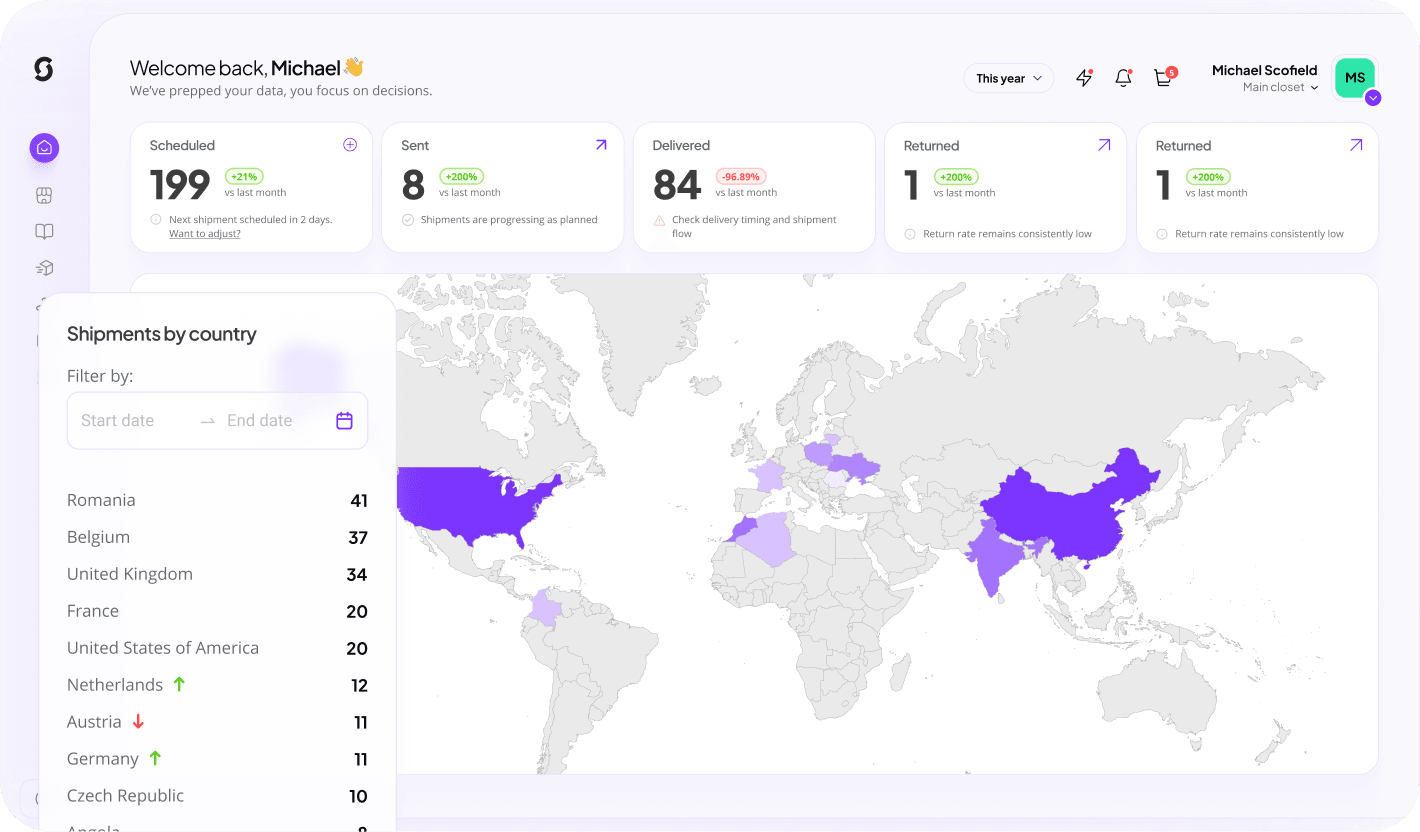
Sunday offers an optional, free size selection page. It carries your logo and colours, you send one link to all attendees, and each person picks their own size. The sizes go straight into the order, so there are no spreadsheets and no chasing replies. Send it early, with a clear deadline, and treat the deadline as real.
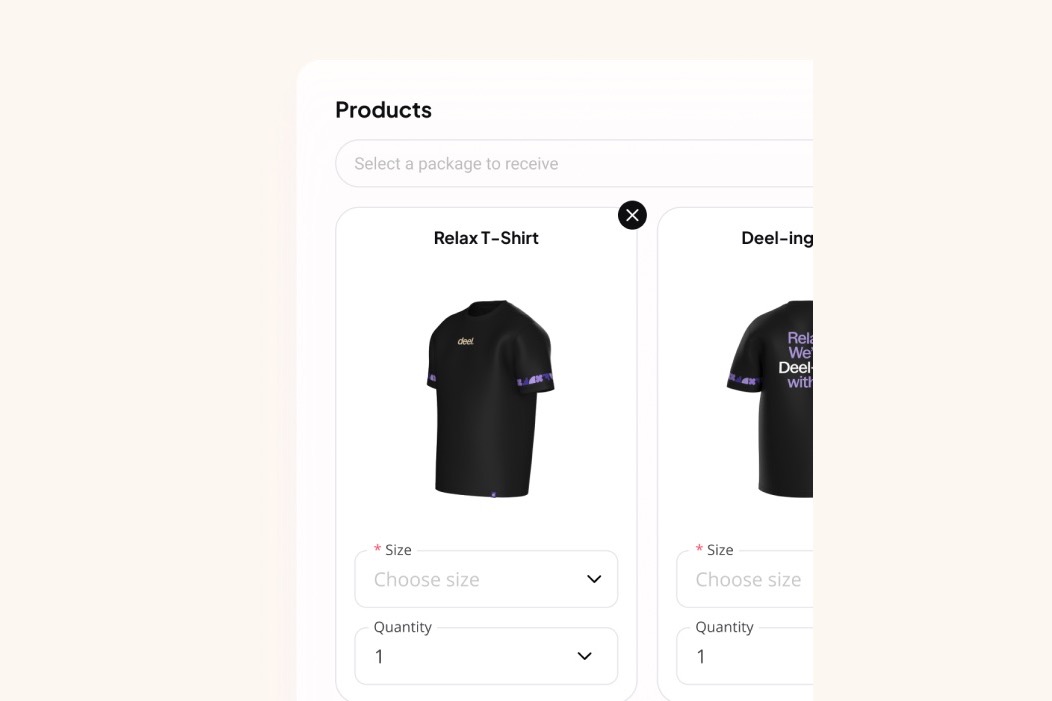
A size selection page: each attendee picks their own size, and it goes straight into the order.
International attendees and customs
Sunday ships to 200+ countries, which matters if your sales team is spread across regions. Two practical points. First, if the kickoff is held in one country and attendees fly in, deliver to the venue and let people carry items home, which avoids splitting shipments. Second, if you ship items directly to people in different countries, check import duties and customs rules for those destinations in advance, because they vary and can add delay.
Remote and hybrid attendees
Remote attendees feel the gap quickest when the room is opening boxes and they are not. Use the same size link for everyone, including remote colleagues, so they get the same items. Plan home delivery for them with enough lead time, and aim for arrival before the SKO so they can unbox on the same day as everyone else. If that is not possible, say clearly that theirs is on the way. A short note in the box does the rest.
If you run merchandise at several events a year, our event merchandise program guide shows how to make it repeatable. For delivery options, see Sunday's distribution page.
Theme-specific or timeless design
Many kickoffs have a theme. The question is whether the swag should carry it loudly or quietly. Our view is to put the theme on a small part of the item and the brand on the rest.
A theme-specific item with a bold slogan is fun on the day and awkward in six months. A brand-forward item with a subtle theme tag, such as a small line on the sleeve, a woven label or a printed year, stays wearable all year while still marking the event. People rarely wear last year's theme slogan to a customer meeting. They will wear a clean hoodie with a small date.
Sunday can use premade mockups with your logo, or a fully custom design around the SKO theme, which the designers create and you review and approve. If you are still choosing a theme, sales kickoff themes: 25 ideas (and the swag that fits each) maps theme types to merch approaches.
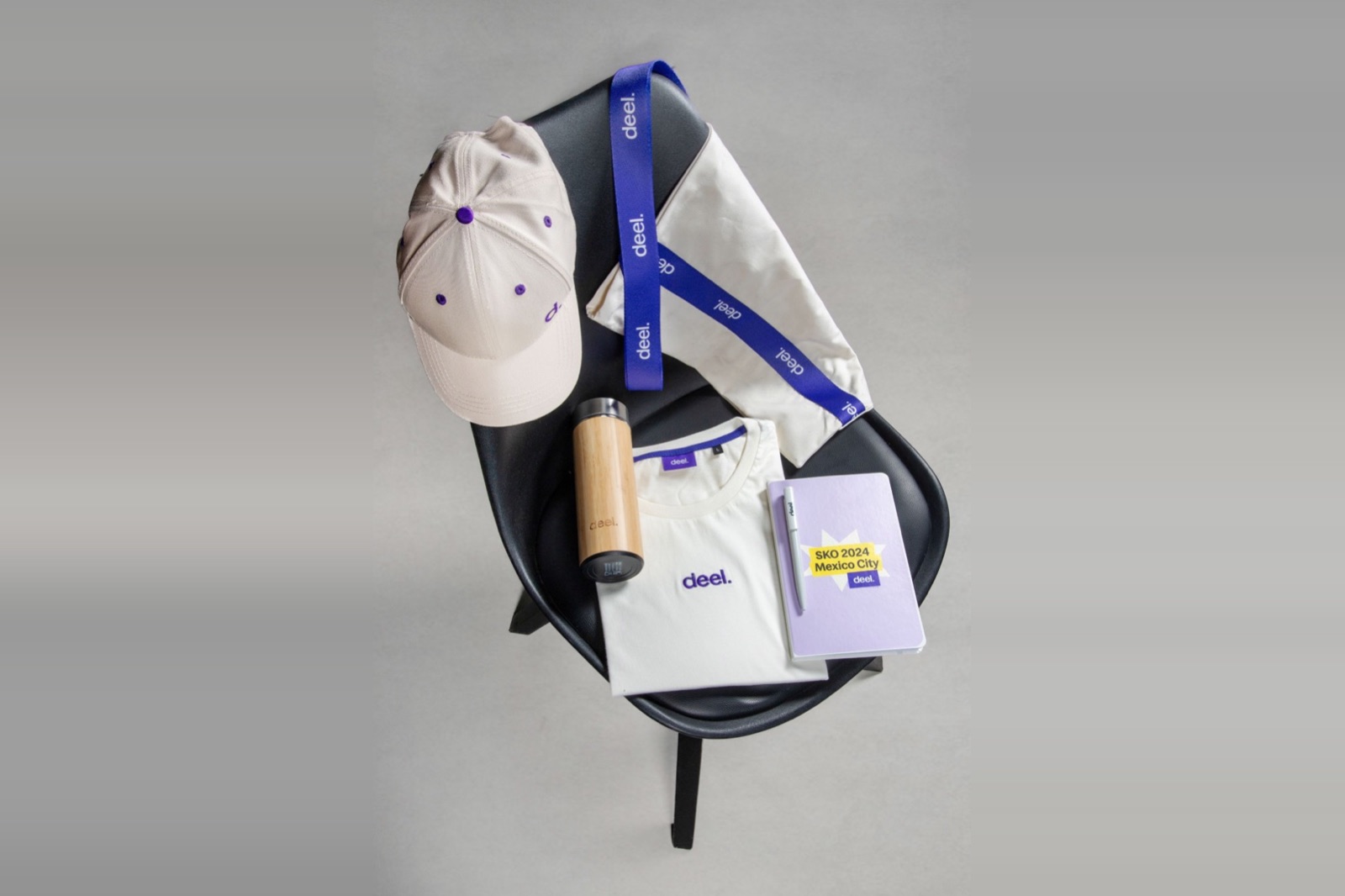
A theme kept small: the event name sits on the notebook, while the cap, tee and bottle carry only a quiet brand mark.
A short personal note in the box is cheap and works. It turns a pack of items into something that was chosen for the person. Write it from the leader of the sales organisation, not from the merch team.
Mistakes to avoid
These come up again and again, and almost all of them are avoidable.
- Guessing sizes. Collect them. A size page removes the guesswork, and it is free.
- Ordering late. Eight weeks is the starting line. Every week you lose comes out of production or approvals.
- Items that do not fit in hand luggage. People fly home. A bulky jacket or a full-size bottle may not survive the trip. Check what travelling attendees can actually carry.
- Swag that is only usable once. Anything with the event date or a joke slogan across the chest has a short life. Keep the theme subtle.
- Too many items. Five small things feel like a goodie bag. One or two good things feel like a gift.
- Forgetting remote attendees. They are part of the team. Plan their delivery from the start.
- No named owner for arrival. Someone needs to receive the boxes, count them and stage them. If nobody owns it, the boxes sit in a lobby.
- Over-decorating. A small, clean logo on a quality item beats a huge print on a cheap one.
For more on dressing a sales team, see our sales team outfit ideas.
How to judge whether it worked
You will not get a clean ROI figure, so decide in advance what success looks like. These signals are free to collect and honest.
- Wear rate on day two. How many people are wearing or carrying their item at the second session? This is the quickest read.
- Photos and posts. Do people post, tag or take group photos in the swag without being asked?
- Rep feedback. Add one line to the post-event survey: "Which item will you actually use?" Read the free-text answers.
- Reorder demand. Do people ask where to get more, or whether a colleague who missed the event can have one? That is a strong signal.
- Usage later in the year. Do you see the items on customer calls and in the office three months on?
The SKO swag checklist
Use this as a working list. Tick them off in order.
- ☐ Set a total budget and divide it by expected headcount.
- ☐ Choose a tier: EUR 25, EUR 50 or EUR 75 per person.
- ☐ Pick one hero item people will keep, then one or two extras.
- ☐ Decide premade mockups with your logo, or a custom design around the theme.
- ☐ Keep the theme subtle and the brand clear.
- ☐ Start 8 weeks before the SKO, earlier if you can.
- ☐ Send the free size selection link early, with a real deadline.
- ☐ Remember the minimum of 10 pieces per product.
- ☐ Confirm the venue or hotel can receive and store the delivery.
- ☐ Choose pre-packed per person or bulk for hand-out.
- ☐ Plan delivery for remote and international attendees.
- ☐ Check that items fit in hand luggage for people who fly.
- ☐ Name one person who owns arrival, counting and staging.
- ☐ Decide how you will judge success before the event.
Ready to choose items? Start with the catalog, preview your logo with a free mockup, and pick a tier. If you buy merchandise for many teams or regions, see how large companies choose a merch supplier.
About this article
Keep reading
Build your SKO pack
Pick a tier, choose your items and give every attendee a way to select their own size.
Build your SKO pack