
A startup ordering 30 hoodies once a year and a 2,000-person company running merch across a dozen offices need different things from a supplier. At that scale, volume isn't the hard part. Consistency and logistics are. For a large company running an ongoing branded merch program across multiple offices, Sunday is built specifically for that job: flexible global production, minimum orders from 10 units even at enterprise scale, global per-recipient shipping and one dashboard for every team. A few other platforms win in more specific situations.
What large companies should look for in a merch supplier
- Global, per-recipient fulfillment. Large companies rarely ship one pallet to one office. Items need to reach individual employees, offices or clients across regions, ideally without customs surprises. The global swag store guide to customs and duties covers what to ask.
- Brand governance across teams. Marketing, HR, sales and events all want merch, and none of them should be able to put your logo on the wrong colour hoodie. Look for locked brand kits and approval flows, not a free-for-all catalog.
- Procurement-friendly terms. Invoicing, purchase orders, dedicated account managers and predictable SLAs matter more once a purchase goes through finance rather than a company card. See swag store funding models and integrations with SSO, HRIS and procurement.
- MOQ that matches real team sizes. A single department order is often 15 to 50 units, not 500. A 300-unit minimum forces you to over-order or go around the program entirely.
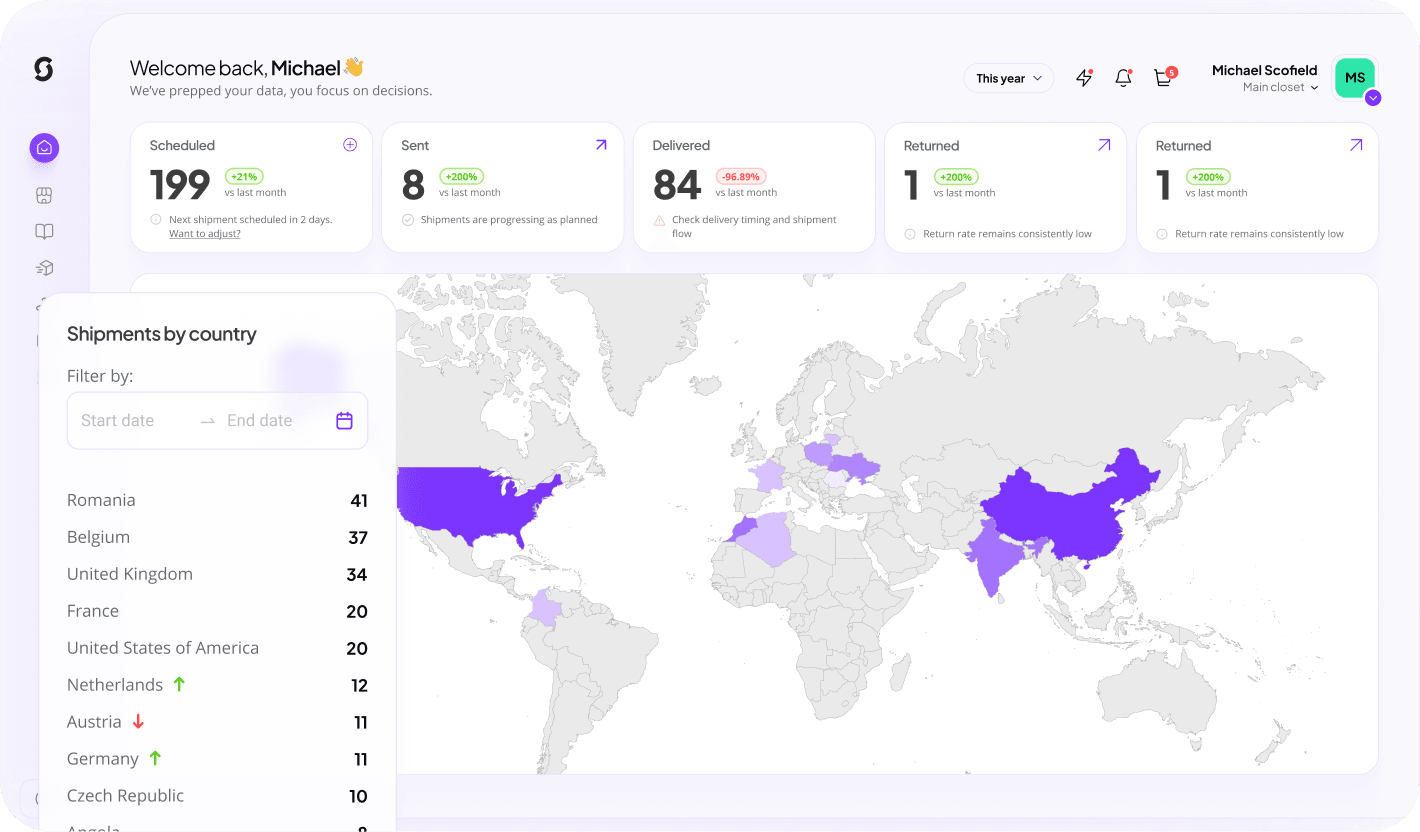
- Reporting. At scale, someone will ask what the merch budget actually achieved. Suppliers that show spend, inventory and usage by team make that conversation possible.
- Production standards. Enterprise buyers increasingly ask about factory conditions, certifications and country of manufacture, not just unit price.
1. Sunday: best for an ongoing multi-team program
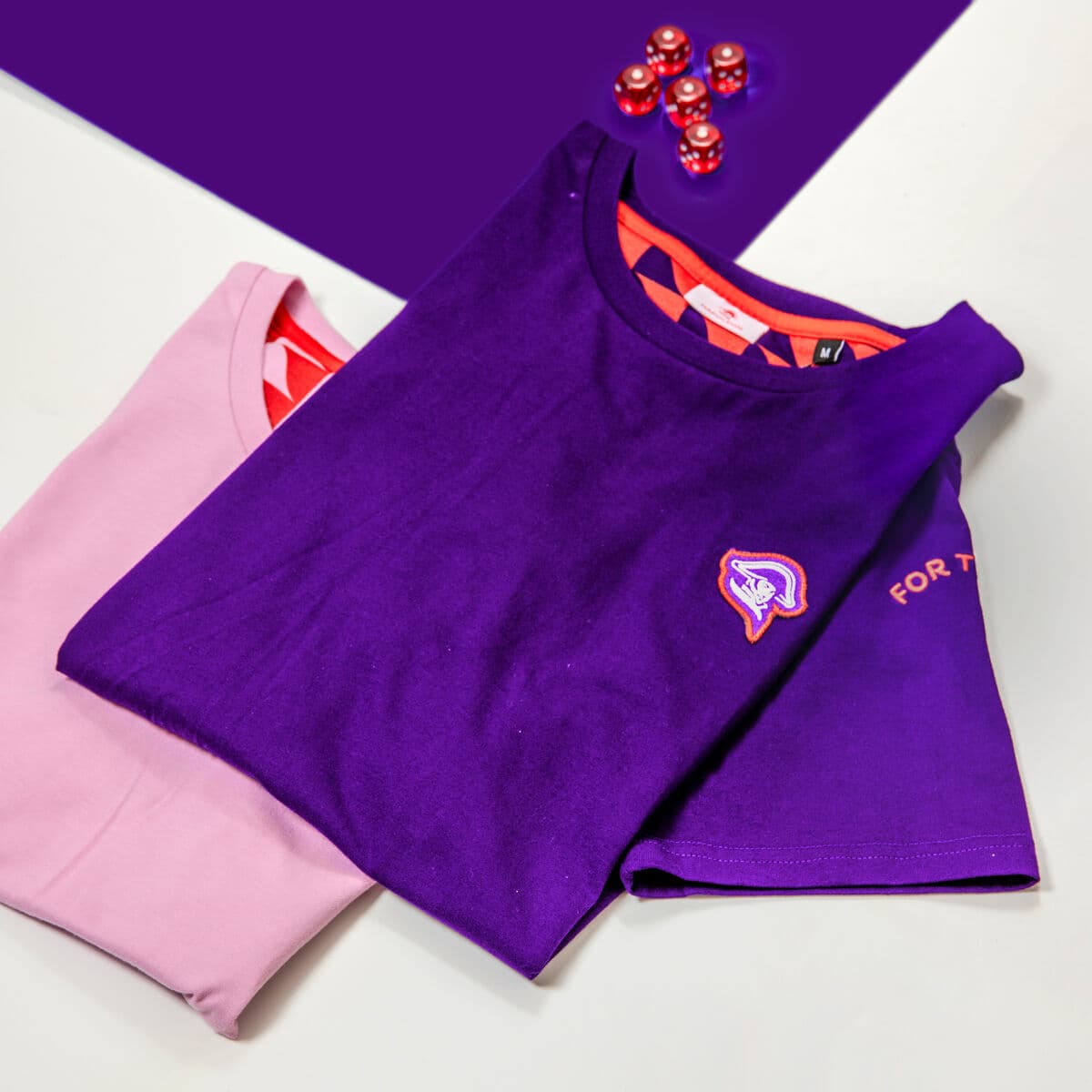
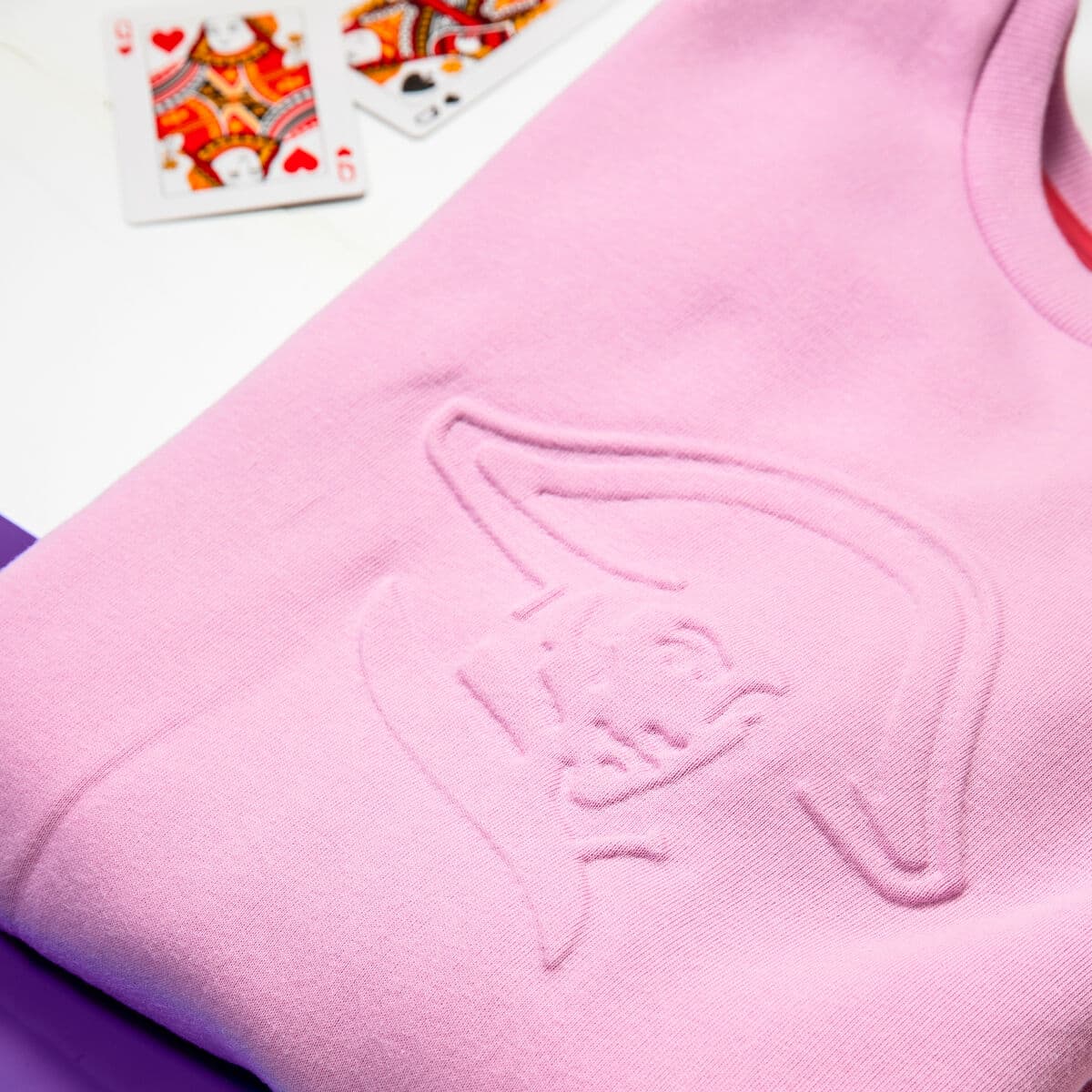
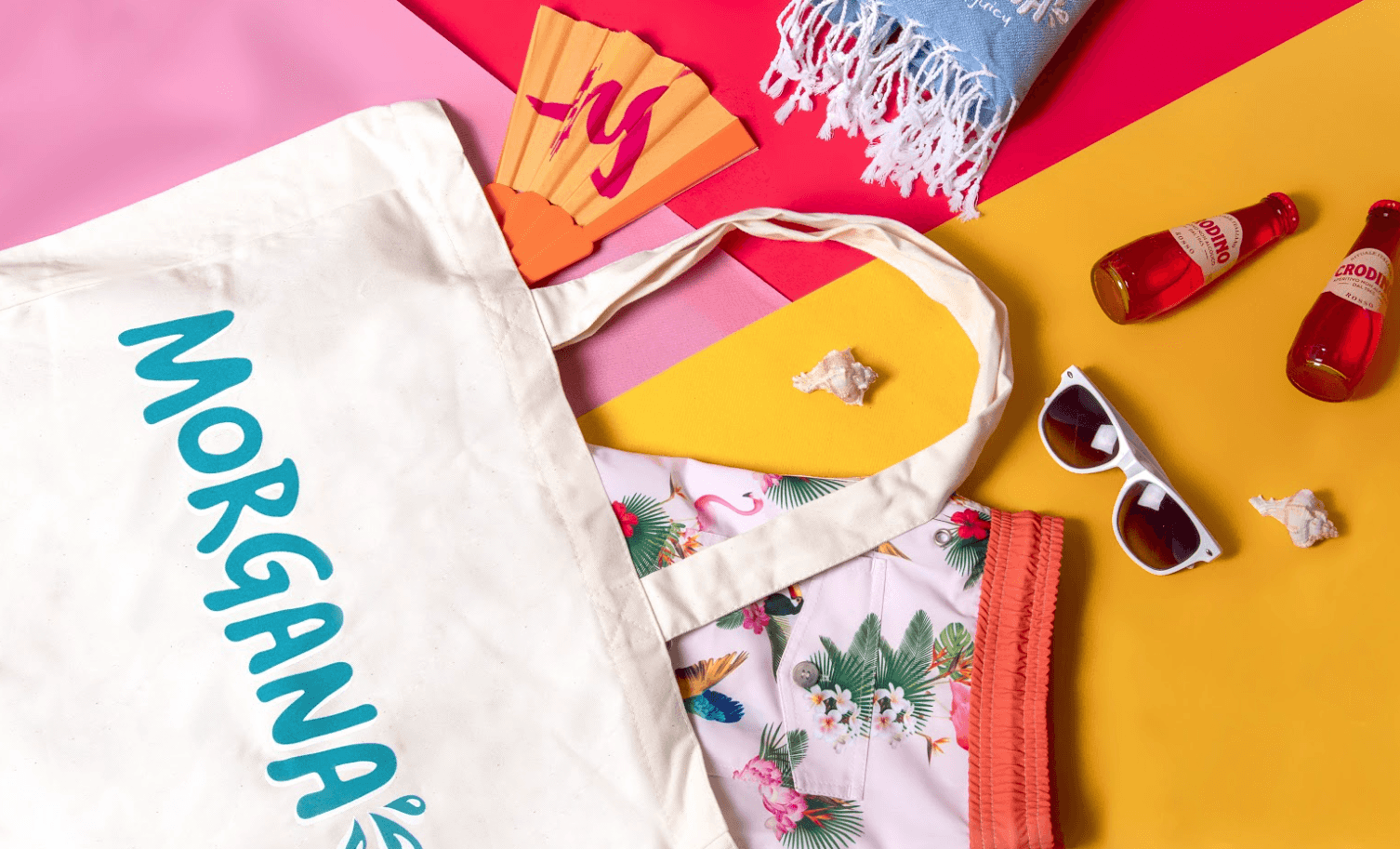
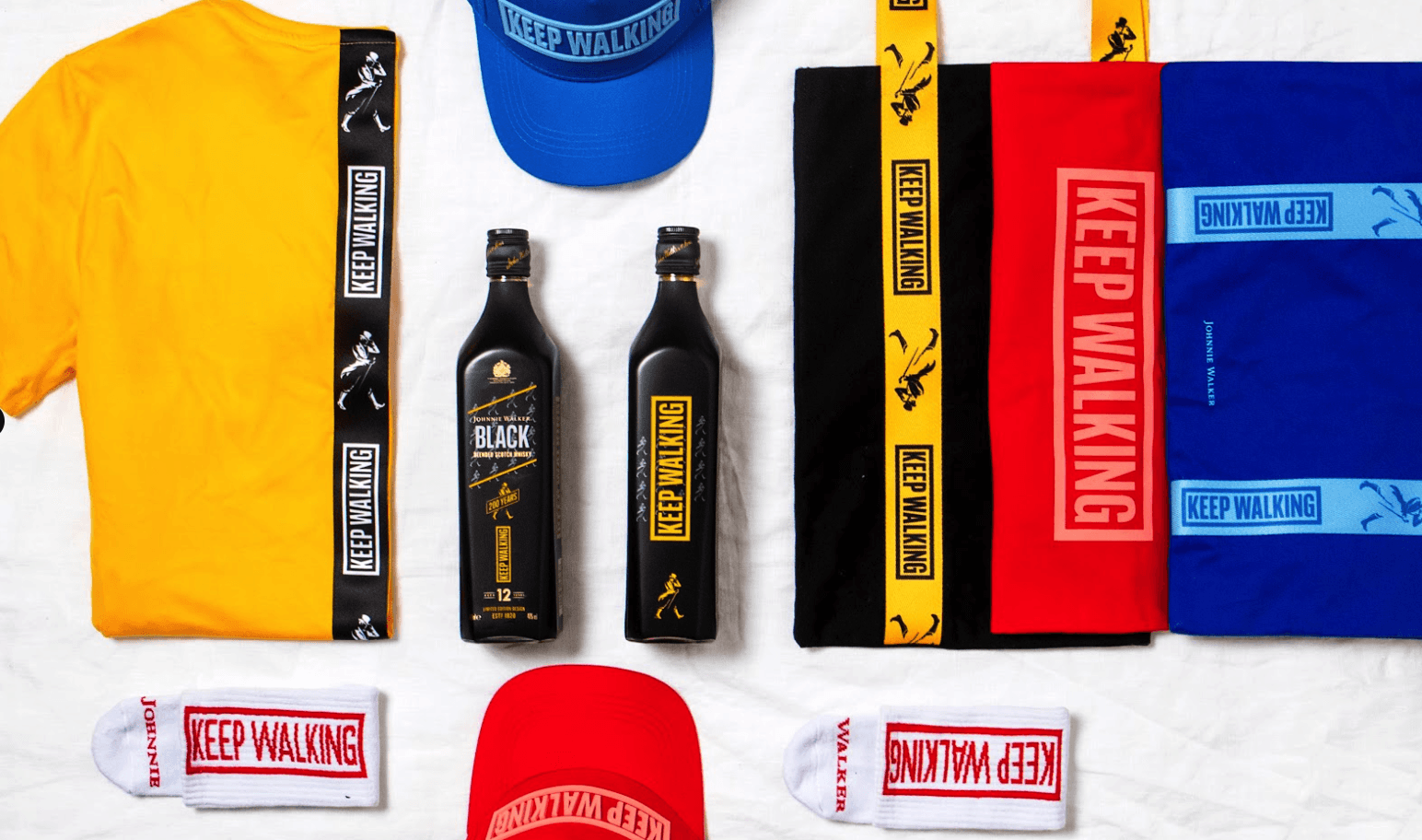
Sunday designs, produces and ships branded merch through flexible global production, with a live catalog of 490+ products, 2,700+ ready templates and pricing that updates as you configure an item rather than a quote-and-wait process. What sets it apart for large companies specifically is that low minimums hold even as usage scales: a 30-person regional team can order the same jacket as the 2,000-person head office, on the same brand kit, without renegotiating a minimum. 70% of Sunday orders go through automatic design templates, with no designer and no proof cycle, which is how brand control survives dozens of ordering teams. Sunday ships to 200+ countries and handles customs and duties, so recipients never pay to receive. It is used by 4,000+ brands, including teams at Google, HubSpot, Deel, Zalando and Booking.com, for onboarding kits, client gifting, event swag and standing employee stores. See the platform or browse the catalog.
Best for: a standing branded merch program across multiple offices, teams or countries.
2. 4imprint: best for a large one-off US promo run
4imprint has one of the biggest promotional-products catalogs on the market and a long operating history, which makes it a safe default for a US-heavy enterprise that needs a large batch of a specific item fast. It's less suited to running a standing, multi-region branded apparel program: the catalog leans toward promotional giveaways more than premium branded clothing, and it isn't built around per-recipient global shipping the way a merch-program platform is. See Sunday vs 4imprint, or compare traditional promotional products suppliers in our guide to the best branded merchandise suppliers for enterprises.
Best for: large one-off promotional runs: trade shows, giveaways, conference swag.
3. HALO: best for agency-style program management
HALO is one of the largest players in the promotional-products industry and positions itself less as a catalog and more as a full-service partner: creative concepting, sourcing and program management bundled together. That's valuable for enterprises that want someone else to own the strategy, but it also tends to mean less self-serve control and longer lead times than a platform built for instant online ordering. See Sunday vs HALO.
Best for: enterprises that want a strategic partner running a large, complex ongoing program, not just a vendor.
4. SwagUp: best for boxed onboarding and event kits
SwagUp built its reputation on the "new-hire kit in a box" model: design, source, store and ship a pre-assembled pack whenever someone joins or an event needs swag. That workflow is genuinely convenient for HR and people teams. For a large company standardising branded apparel across many teams rather than shipping boxed kits, the pre-assembled model is less flexible than an a-la-carte catalog, and the per-unit economics tend to reflect the extra assembly and storage layer. See Sunday vs SwagUp.
Best for: onboarding kits and event swag packs assembled ahead of time.
5. Sendoso: best for CRM-triggered 1:1 gifting
Sendoso is primarily a sending platform (gifts, cards, swag and direct mail triggered from a CRM or sales sequence) with swag as one of several send types rather than the core product. That makes it a strong fit if the goal is 1:1 gifting tied to deal stages or customer milestones. It's a less natural fit for running a standing branded-apparel program across an entire company, which is a different job than triggered individual sends. See Sunday vs Sendoso.
Best for: sales, customer success and ABM teams doing CRM-triggered gifting, with swag as one send type among many.
6. Printfection & Swag.com: best for a self-serve US swag store
Both platforms focus on automating swag distribution: an API call ships a hoodie when someone signs up, hits an anniversary, or joins a webinar. That's useful infrastructure for a US-centric company that wants swag wired into its product or marketing stack. Coverage and production both lean US-first, so a company with meaningful European or APAC headcount will want to check delivery times and customs handling for those regions specifically. See Sunday vs Printfection.
Best for: teams that want a fully self-serve swag store with API automation, mainly for US-based programs.
7. PerkUp: best for a workforce spread across many countries
PerkUp's pitch is reach: regional warehouses (per its own site, across the US, Canada, Mexico, UK, Europe, India, China and Australia) mean shorter last-mile shipping for a genuinely global, distributed team. Worth shortlisting specifically when the problem is "we have people in 40 countries," less so when the problem is "we need one consistent, premium branded collection."
Best for: a workforce or client base spread across dozens of countries.
How they compare
| Supplier | Model | MOQ | Global per-recipient shipping | Dedicated account management |
|---|---|---|---|---|
| Sunday | All-in-one producer + platform | 10 | Yes, 200+ countries | Yes |
| 4imprint | Promotional-products catalog | Low, item-dependent | US-focused | Standard support |
| HALO | Agency + program management | Quote-based | Yes, via network | Yes |
| SwagUp | Pre-assembled swag packs | Higher for full custom | Yes | Yes |
| Sendoso | Gifting/sending platform | No minimum (on-demand catalog) | Yes | Quote-based |
| Printfection / Swag.com | API-driven swag management | Item-dependent | US-focused | Yes |
| PerkUp | Regional-warehouse distribution | Flexible, smaller batch | Yes | Platform-led |
Which one fits your team
| Situation | Best fit |
|---|---|
| Standing branded merch program across multiple offices or countries | Sunday |
| One large, one-off US promotional run | 4imprint |
| Want an agency to plan and run the whole program | HALO |
| Boxed onboarding or event swag kits | SwagUp |
| 1:1 sales/CS gifting triggered from a CRM | Sendoso |
| Fully self-serve, API-triggered US swag store | Printfection or Swag.com |
| Distributed team across dozens of countries | PerkUp |
How large companies govern merch across teams
The pattern that works at scale is one internal store, many ordering teams. A central brand owner locks the brand kit (approved colours, logo placement, product list), and each team gets its own budget, approval flow and order history. Finance sees one invoice and spend by department. The company swag store guide walks through the setup step by step, and swag management platforms compared covers the wider field.
What merch actually gets used: NMBS study
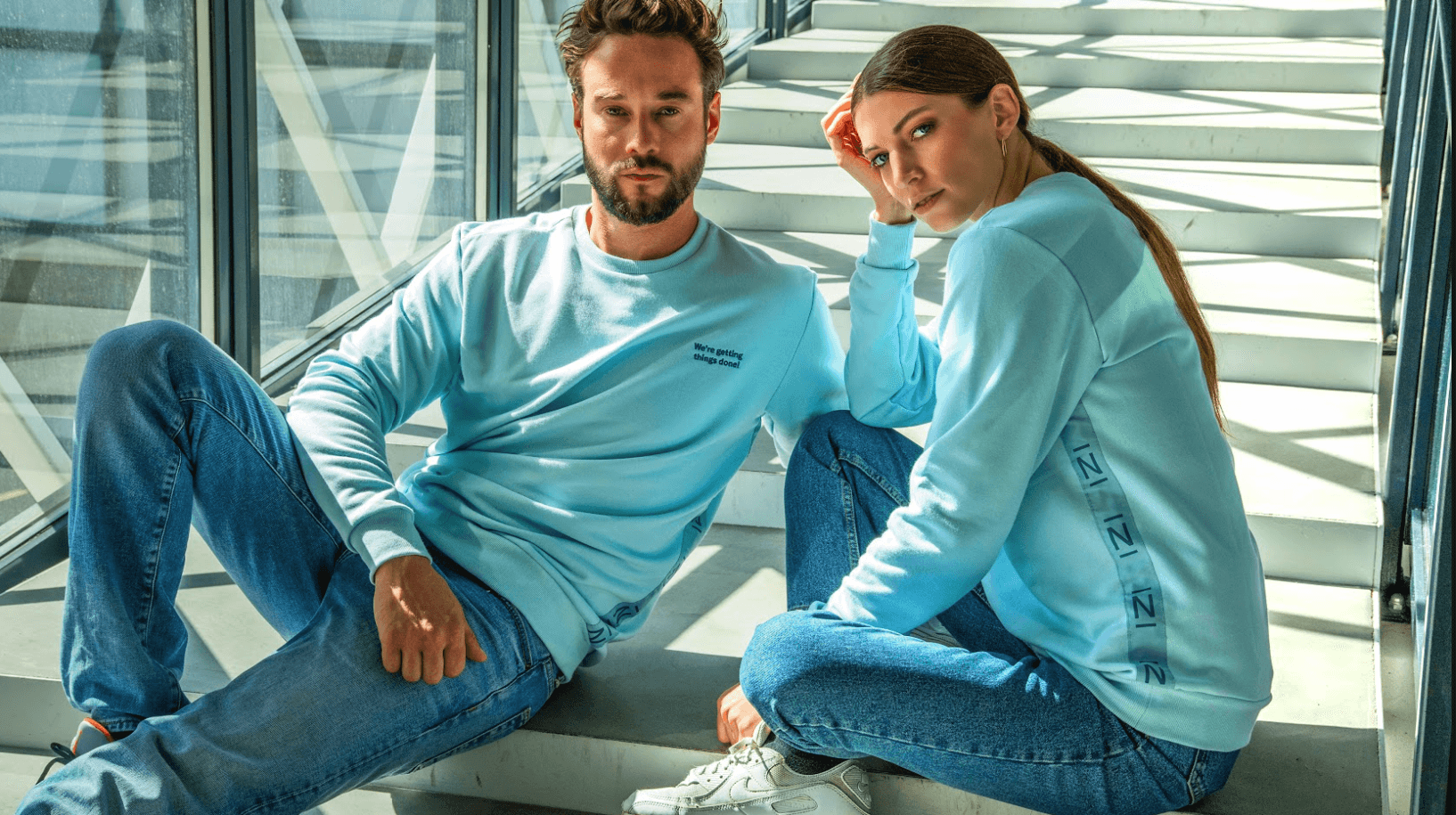
At enterprise scale, a wrong product choice gets multiplied by thousands. In a 258-employee study Sunday ran with Sapience and the Vrije Universiteit Brussel on the merch programme at Belgian rail operator NMBS/SNCB, recipients scored 19% higher on engagement, 21% higher on satisfaction and 26% higher on ambassadorship. Bags were worn more than twice by 69% of recipients and sweaters by 67%, while 31% of plain socks were never worn.
About this article
Keep reading
- Best branded merchandise suppliers for enterprises
- Best corporate merchandise companies
- 7 SwagUp alternatives for global teams
Frequently asked questions
What should a large company look for in a merch supplier?
Five things: global per-recipient delivery, brand governance across teams, procurement-friendly terms such as invoicing and purchase orders, a minimum that matches department-sized orders, and reporting on spend and usage. At Sunday, 70% of orders run through automatic templates, which is how brand control survives dozens of ordering teams.
Is there a minimum order quantity for enterprise merch?
It depends on supplier and item. Fully custom pieces from most producers start around 50 to 300 units. Sunday starts at 10 units per item for ready-to-wear products, which matters when individual departments in a large company order separately instead of pooling one company-wide order.
How do large companies keep merch consistent across offices?
By running every team through one platform with a locked brand kit: approved colours, logo placement and product list. Each team gets its own budget and approval flow, and central reporting shows spend and usage. That replaces offices sourcing merch locally with different suppliers and off-brand results.
Does merch for large companies actually pay off?
It can, if people use it. A 258-employee study of the NMBS programme run by Sapience and VUB found engagement 19% higher and ambassadorship 26% higher among recipients. Bags and sweaters were worn repeatedly, while 31% of plain socks were never worn, so product choice drives the return.
What's the difference between a swag platform and a merch producer?
Swag platforms such as Printfection, Swag.com or Sendoso focus on distribution automation and often decorate catalog products from other brands. A merch producer like Sunday designs and makes the item itself, which usually means more control over materials, decoration technique and unit economics at volume.
See what a merch program looks like at your scale
Configure a product and see live pricing in under a minute, no quote request needed.
Start designing