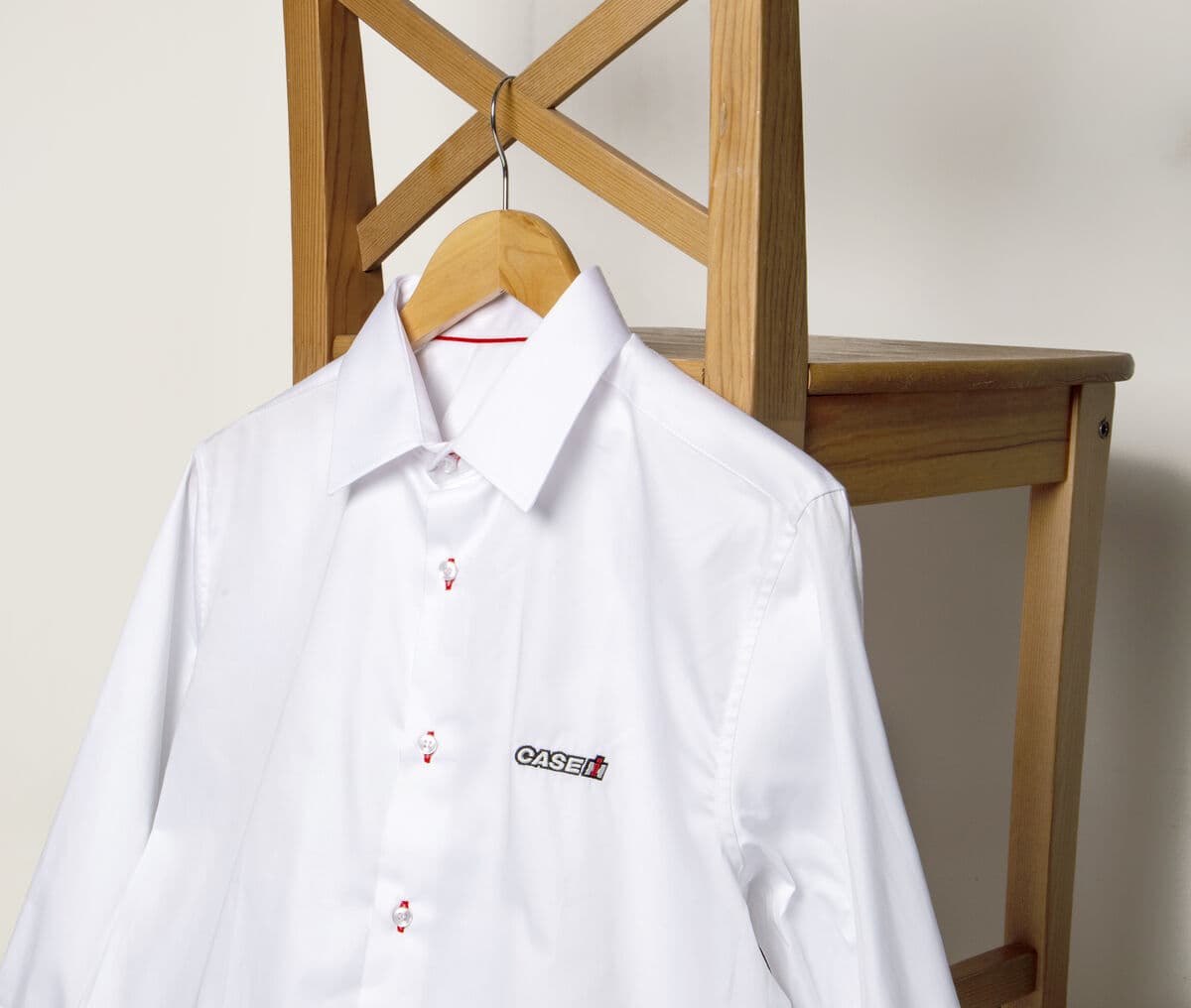

Through channel marketing automation is software that lets a manufacturer's partners run brand-approved marketing themselves, without asking head office. It automates asset access, co-branding, approvals, ordering, budgets and reporting. The point is not efficiency. It is activation. When executing a local campaign takes minutes instead of weeks, far more partners actually execute one.
The argument of this article in one line: partner activation is a friction problem, and friction is the one variable a central marketing team can change without hiring anyone.
What's in this guide
What through channel marketing automation is
Through channel marketing automation, usually shortened to TCMA, is the category of software that lets a brand run marketing through its partners rather than at them. A manufacturer sets up campaigns, assets, rules and budgets centrally. Dealers, distributors, installers, resellers and franchisees then execute locally, inside those rules, on their own initiative.
The category is often confused with two neighbours, so it is worth separating them.
| Tool | What it does | Who acts |
|---|---|---|
| PRM (partner relationship management) | Manages the partner relationship: tiers, deal registration, certification, contracts | The vendor's channel team |
| Asset portal or brand portal | Stores logos, templates and guidelines for download | Whoever bothers to log in |
| Through channel marketing automation | Lets the partner produce and run brand-approved marketing without a central request | The partner, unassisted |
The difference is not features. It is who is allowed to act without asking. A brand portal makes assets available. TCMA makes local activity happen. The gap between those two things is the entire subject of this cluster, and it is set out in full in the channel brand activation network pillar.
Friction, not willingness
Ask a central marketing team why partner adoption is low and you will usually hear a version of "our partners are not engaged". Ask the partners and you get something far more concrete.
- The campaign kit arrived as a ZIP of layered files that nobody in the dealership can open.
- Adding the local address means finding a designer, which means a quote, which means next month.
- The co-op fund exists, but the claim form asks for proof of spend the dealer has not incurred yet.
- Approval takes eleven days and the regional fair is in nine.
- Ordering forty branded jackets means an email thread with six people in three countries.
None of that is a motivation problem. Every one of those items is a fixed cost that the partner pays before they see any benefit, and the benefit is shared with a manufacturer who is not paying that cost. Economists have a name for this shape, and the cooperative advertising research models it directly: local activity is structurally under-supplied because the partner carries the effort and captures only part of the return.
Subsidy corrects part of it. Automation corrects the rest. If the fixed cost of one local activation drops from a week of hassle to four clicks, the calculation changes for every partner in the network at the same time, including the small ones who were never going to call you.

The approval step is where most partner programmes die. Fix the product, the logo placement and the quality once, and the review queue disappears because there is nothing off-brand left to review.
What Forrester reported for Veeam
Veeam is a useful example because it has no direct business to fall back on. The company sells entirely through partners, and roughly 70% of its transacting partners were described as low touch: real, revenue-generating companies that the channel team had almost no active relationship with. Engagement with marketing programmes was weak, the tools that existed were underused, partner-sourced leads were thin, and adding a marketing person for every reseller was never going to be affordable.
So the company rebuilt how a partner runs marketing, with the explicit goal of making campaigns easier to execute rather than better to look at. Forrester reported the following first-year results.
Forrester also reported a 134% increase in partner marketing activities over the same period. Those numbers belong to Veeam and to Forrester as the reporting source. They are not Sunday data and they are not a promise about your network.
The interesting figure is not the lead growth. It is the tripling in the number of partner companies generating leads. Growth of that shape does not come from your top twenty partners working harder. It comes from the long tail switching on, which is exactly what you would expect if the binding constraint was effort rather than intent.
What to automate
TCMA is often sold as one product. In practice it is seven jobs, and most programmes only need three of them to start working.
| Layer | What automation removes |
|---|---|
| Asset access | Hunting for the current logo. Partners see only what applies to their market and tier, always the latest version. |
| Co-branding | Design work. The dealer's name and details drop into a locked template, so the output is on brand by construction. |
| Approvals | The queue. Anything inside the rules needs no sign-off, because the rules were the sign-off. |
| Ordering | Email threads and quotes. Partners order approved products directly, in their own quantities. |
| Budgets and credits | The purchase decision. Allocated funds per partner, region or campaign mean the partner is spending an allowance, not defending a cost. |
| Fulfilment | Central logistics. Production and delivery run straight to the local address without headquarters touching a shipment. |
| Reporting | The quarterly spreadsheet chase. Orders, budget use, stock and activity land in one view automatically. |
Read that list again and notice what it has in common. Every layer removes a step where a human at headquarters was standing between a partner and a local activation. That is the whole design principle.

Automated does not mean generic. The specification, the finish and the logo treatment are decided once by the brand, then reproduced identically on every partner order.
What stays human
Automating the wrong thing is how these programmes get a bad reputation internally. Three things should stay with people.
Campaign concept
Nobody has automated the decision about what a campaign should say. The idea, the offer, the positioning and the creative still come from a marketing team who understand the category. Automation distributes that thinking. It does not produce it.
Relationship decisions
Which partners get a bigger budget. Who gets early access to a new range. Which relationship needs a visit rather than a notification. Those are commercial judgements with consequences, and a rules engine is the wrong place for them. Recognition works the same way, which is why partner appreciation gifts stay a deliberate human gesture rather than a scheduled send.
Exceptional approvals
A large distributor wants a co-branded product that falls outside the standard rules for a genuinely good reason. That request should reach a person quickly and get a real answer. The mistake is routing all 400 ordinary requests through the same door in order to catch the four unusual ones.
Local marketing automation is the layer underneath
Local marketing automation is the same mechanism seen from the partner's side. Where TCMA describes the manufacturer's system for enabling a network, local marketing automation describes what an individual location gets: templates that already carry its address and opening hours, local paid search that runs without anyone in that branch touching an ad account, review requests, event kit, showroom material.
Franchise networks tend to use the local term, manufacturer channels tend to use the through-channel term, and the underlying problem is identical. A local unit has no marketing capacity, and the brand needs consistency across hundreds of them. Both terms describe the same answer: controlled self-service.
What differs is the partner type, and that difference matters more than the vocabulary. A franchisee is contractually bound to your brand. A two-step distributor carries four competitors. An independent installer has no marketing function at all. The distributor and partner marketing playbook works through what each type actually needs, because setting the same rules for all of them is the most common design error in this category.
Where merchandise fits: the physical layer of TCMA
Most TCMA platforms stop at the screen. They handle emails, landing pages, social posts and paid media. That covers a real part of the job and misses the part that happens in the room where the product is actually sold.
Channel selling is physical. A customer stands in a showroom. An installer arrives at a house. A distributor's rep walks onto a site. A trade fair stand fills up on a Thursday morning. None of those moments are influenced by a co-branded landing page, and all of them are influenced by what the people in the room are wearing and handing over.
Merchandise is also the layer that keeps working after the campaign budget stops. A digital campaign ends on a date. A branded jacket on a service technician is in front of customers for two winters. Research supports the mechanism rather than any specific return: promotional products measurably improve advertising credibility, attitude and purchase and referral intention, and physical use influences brand evaluation more than equivalent passive visual exposure. The full evidence review, including what the research does not establish, is in do promotional products work.
Treating merchandise as part of the automated layer means the same seven jobs apply to it. Approved collections instead of a catalogue. Locked co-branding instead of design files. Partner-level budgets instead of purchase orders. Direct fulfilment instead of a central warehouse and a reshipment. One reporting view instead of an annual reconciliation. That is what turns merchandise from a series of orders into channel infrastructure a dealer can use on their own.

An activation set, not a giveaway. When a partner can order a complete, brand-approved set in one action, a local activation stops depending on anyone's design skills or spare afternoon.
How to build the first version
Programmes that stick tend to start narrow and prove the mechanism before anyone writes a platform business case.
- Pick one market and one partner type. Mixing dealers, distributors and installers in a pilot makes every result unreadable.
- Define a small approved collection. Six to twelve products covering events, showroom, field teams and customer gifting is enough. Field-facing apparel does most of the work, which is why custom jackets and polos anchor most channel collections.
- Write the co-branding rule in one paragraph a non-designer can follow, then lock it into the product rather than into a PDF.
- Allocate a credit per partner so ordering is not a purchase decision every time.
- Delete the approval step inside the rules. This is the part most programmes keep, and it is the part that decides adoption.
- Let partners preview their own version before committing. A free jacket mockup generator removes the "what will it look like" hesitation without a sample run.
- Instrument it from day one, so the activated-versus-non-activated comparison is possible in twelve months.
Connect it to what already exists rather than rebuilding. New partners meet the programme first through partner onboarding kits. The storefront partners actually log into is covered in company swag store, and the operational layer underneath it in swag management platform. For installer and field-service networks in the Benelux, the workwear side is covered in werkkleding.
What to measure
The instinct is to judge a new programme on order volume in the first quarter. Order volume mostly tells you which partners already had budget. Adoption tells you whether the friction actually came down.
| Stage | What to measure |
|---|---|
| First 90 days | Partner adoption rate, percentage of active partners, first-order rate by region |
| Months 3 to 6 | Number of local activations, percentage using approved assets, budget utilisation, time from partner request to delivery |
| Months 6 to 12 | Repeat ordering rate, cost per activation, breadth across the long tail rather than the top 20 partners |
| Year one onward | Sales performance by activated versus non-activated partner, sell-through by adoption level |
The Veeam figures are useful here as a shape rather than a benchmark. The number that moved most was the count of partner companies participating at all. If your equivalent number is not moving, the friction is still somewhere in the flow, and no amount of campaign quality will fix it.
About this article
Automate the physical layer too
Approved collections, locked co-branding, partner-level budgets, independent ordering and delivery to 200+ countries. Create a free account and see how it runs.
Set up partner ordering