

Part of our complete guide to turning your dealer network into a local brand activation network.
Yes, with a specific mechanism. Peer-reviewed research finds that promotional products significantly improve advertising credibility, attitude toward the ad and product, purchase intention and referral intention. Separate work finds people evaluate unfamiliar brands more positively after simply using branded merchandise, even when they cannot recall or recognise the brand afterwards.
That second finding is the one worth sitting with, and this article covers it in detail, along with the boundary of what the evidence supports. If you are here to find a number that proves branded merchandise makes dealers sell more, read the honest limits section first. That number does not appear to exist in public research, and the way to get one is to measure it yourself.
What's in this guide
The question, properly asked
"Do promotional products work" is usually asked badly, which is why it usually gets answered badly. Work at what? Recall? Attitude? Purchase? Sales?
Most industry statistics quoted about promotional products come from trade association surveys asking recipients whether they remember an advertiser. That is a recall question, self-reported, from a population that already accepted the item. It is not nothing, but it is a long way from evidence that anyone behaved differently.
The academic literature asks tighter questions, and the answers are more interesting than the survey numbers. Two bodies of work matter most.
| Study | Published in | What it tested |
|---|---|---|
| Liu, LeBlanc, Kanso & Nelson (2023) | Journal of Marketing Communications | Whether promotional products change advertising credibility, attitudes and intentions, alone and alongside other media |
| Kamleitner & Marckhgott (2021) | International Journal of Advertising | Whether merely using branded merchandise changes how people evaluate an unfamiliar brand |
What Liu, LeBlanc, Kanso and Nelson found
Writing in the Journal of Marketing Communications in 2023, Liu, LeBlanc, Kanso and Nelson tested promotional products against a set of outcomes that marketers actually care about. They found significant improvements across five measures:
- Advertising credibility
- Attitude toward the ad
- Attitude toward the product
- Purchase intention
- Referral intention
Advertising credibility is the one people skip past, and it may be the most useful. Credibility is upstream of everything else. If a physical object makes the surrounding advertising more believable, it is doing work that no additional impression can do.
Referral intention is the other quiet finding. Referral is how most dealer and installer businesses actually grow. A measure that moves referral intention is speaking directly to the mechanism that drives local trade.
Merchandise plus media, not merchandise instead of media
The same study found something that matters for any manufacturer already buying national advertising: promotional products increased the effectiveness of television and print advertising when combined with them.
That reframes the budget conversation. Merchandise is not a rival line item competing with media for the same money. It is a multiplier on media you are already buying. For a channel-heavy brand running national campaigns while the last mile is handled by independent partners, that is the argument that actually lands with a CFO.
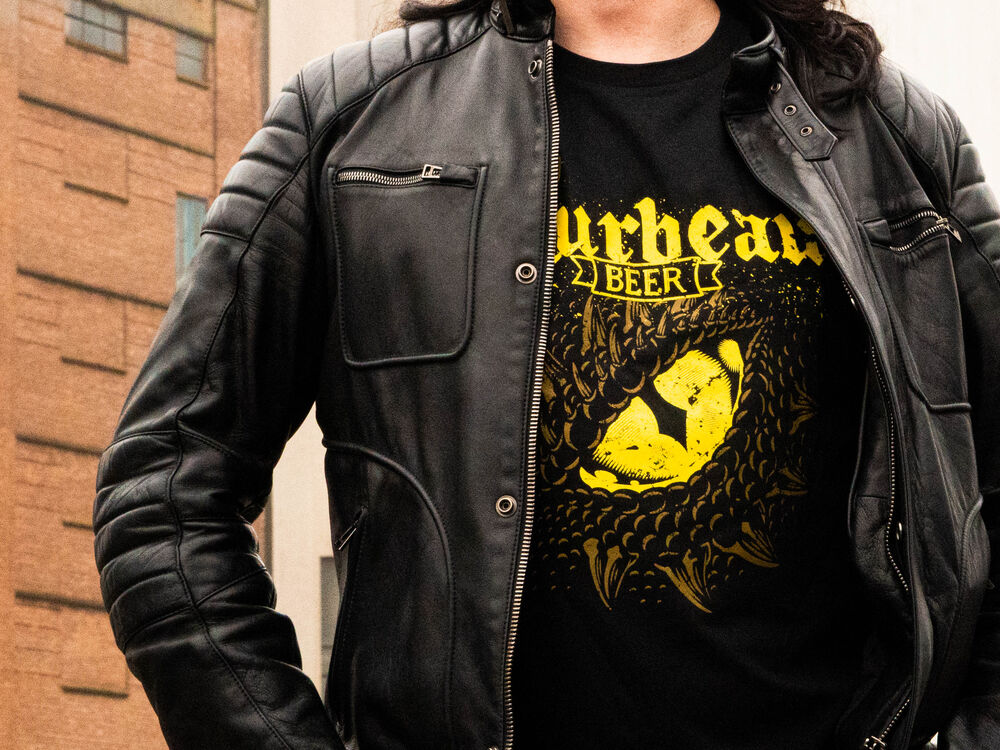
Merchandise does its work in ordinary settings, alongside everything else a brand is doing, rather than in place of it.
Silent persuasion
The more surprising research comes from Kamleitner and Marckhgott in the International Journal of Advertising. Their work introduces the idea of "silent persuasion": the finding that participants evaluated unfamiliar brands more positively after merely using branded merchandise.
Note the word "using". Not seeing. Not being advertised to. Handling the object and getting on with a task while the brand happened to be present.
The pen experiment
The clearest demonstration is the pen study, and the numbers are worth quoting exactly.
Participants used a branded pen. Afterwards, 90% could not spontaneously recall the brand. 61% still did not recognise it when they were shown the logo. And yet, compared with participants who had not used the pen, they rated the brand higher, ranked it higher and were willing to pay more for it.
That combination is what makes the study worth citing. The effect survived the absence of memory. Whatever happened was not "they remembered the ad". It was something more like familiarity accruing quietly, below the level people can report on.
Physical use beat passive visual exposure
The same research found that physical merchandise outperformed equivalent passive visual exposure. Seeing the logo the same number of times was not the same as holding the object that carried it.
That distinction is the whole argument for merchandise as a channel tool. An impression is something that happens to a person. An object is something a person uses. Only one of those becomes part of somebody's day.
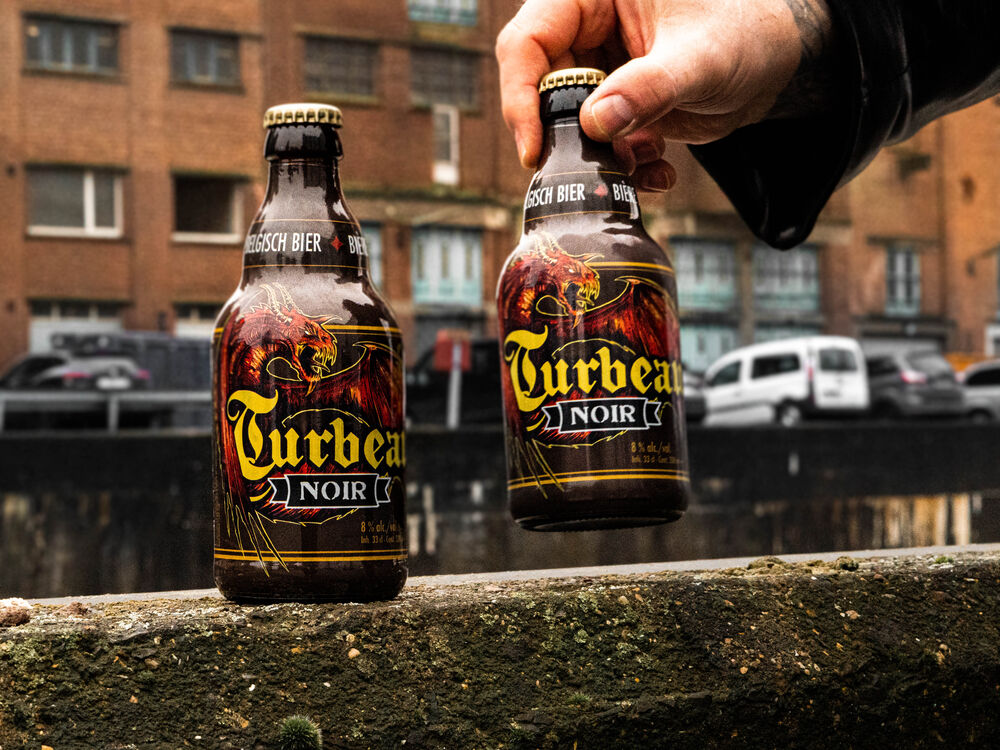
Use, not exposure. The research finding is about handling the object, not about counting how many times a logo was seen.
What this means in a dealer or installer environment
Now put that finding in a channel context, because that is where it becomes commercially interesting.
A contractor does not stop to analyse the logo on a jacket. A homeowner watching a boiler being installed is not consciously processing the brand on the fitter's polo, the toolbag, the van or the folder left on the kitchen table. A buyer walking a dealer showroom is not evaluating the staff apparel as advertising.
The objects become part of the environment. That is precisely the condition the silent persuasion research describes, and it happens to be the normal state of a dealer network. Your brand is present, repeatedly, in the exact physical setting where the product is demonstrated, recommended, installed and bought, and nobody is treating it as an advertisement.
Three properties of that setting make merchandise unusually well suited to it:
- Duration. A digital campaign stops on a date. A work jacket runs for two or three seasons in customers' homes and on customers' sites.
- Proximity to the decision. The apparel is present at the moment of demonstration and recommendation, which is where the sale is actually made.
- Third-party credibility. The person wearing it is the independent local business the customer already chose to trust, not the manufacturer talking about itself.
That third one is the part manufacturers most often miss. The dealer's own credibility is a resource. Merchandise borrows against it, which is why the co-branding rules matter as much as the products themselves. That is covered in co-branded merchandise for dealers.
The honest limits
Here is where most content on this topic starts inventing things, so this section is deliberately blunt.
What the evidence does support, stated carefully:
| Supported | Not supported |
|---|---|
| Promotional products improve advertising credibility, attitude toward the ad and product, purchase intention and referral intention | A fixed percentage sales uplift for any given programme |
| Merchandise increases the effectiveness of TV and print when combined with them | A universal media multiplier you can put in a business case |
| People evaluate unfamiliar brands more positively after using branded merchandise, even without recall | That this transfers identically to well-known brands or every product category |
| Physical use outperforms equivalent passive visual exposure | An exchange rate between an object and a number of impressions |
| Named enterprise channel programmes report large activation gains | That those results are attributable to merchandise specifically, or repeatable in your network |
Those distinctions are not pedantry. They decide whether a claim survives a procurement review, a CFO question or a competitor's fact-check. A precise claim you can defend is worth more than a big one you cannot.
How to measure it yourself
The good news for a channel-heavy brand is that you are unusually well equipped to produce the number the literature does not give you. A dealer network is close to a natural experiment: hundreds of comparable local units, differing mainly in whether they adopted the programme.
1. Activated versus non-activated dealers
Compare sell-through between partners actively using the merchandise programme and matched partners who are not. Match on size, region, tenure and product mix, because unmatched comparisons will simply tell you that bigger dealers do more of everything.
2. Before and after, same partners
Track the same partners across the twelve months either side of activation. This controls for the partner-quality problem that undermines cross-sectional comparisons, though it does not control for seasonality or a general market trend, so run both.
3. High versus low adoption regions
Adoption never lands evenly. Regions differ, sales managers differ, some markets switch on faster. That variation is free experimental design if you record it.
4. Connect ordering data to CRM and ERP
Join merchandise ordering data to sell-through in your CRM and ERP so the comparison runs automatically rather than as an annual project someone has to volunteer for. Instrument this from day one. Retrofitting it a year later is how good programmes fail to prove themselves.
Do that and after a year you have your own figure, for your own network, in your own category. That is worth considerably more internally than a borrowed statistic from a trade association. The KPI sequence for the first twelve months is in dealer marketing programs.
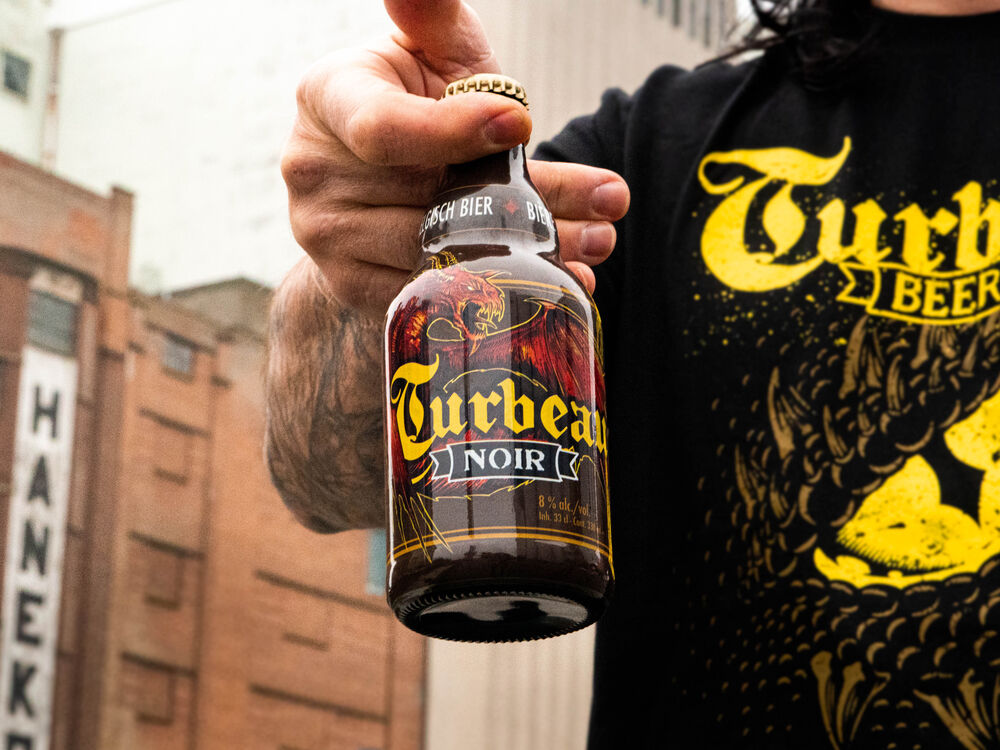
Brand objects sitting in ordinary environments rather than in advertising space. That is the setting the silent persuasion research describes, and it is also the setting a dealer network operates in every day.
Designing merchandise that actually gets used
Every finding above depends on one condition: the object has to be used. A branded item in a drawer produces nothing. Which turns "does merchandise work" into a much more practical question about product choice.
- Choose for daily use, not for the moment of handover. The impressive gift that lives on a shelf loses to the ordinary item someone wears every day.
- Match the item to the environment. Field teams need workwear that performs. Showroom staff need something that looks like retail. These are different products.
- Quality decides duration. A jacket that lasts three seasons delivers three seasons. A cheap one is thrown away and takes the brand impression with it.
- Keep the branding wearable. An item people are happy to be seen in gets worn outside work, which is where reach compounds.
- Fix the specification centrally. Consistency across hundreds of partners comes from the product, not from a review queue.
In practice, most channel programmes run on polos and jackets, because those are what customer-facing staff, showroom teams and installers actually wear in front of customers. You can see the range on the custom polos and custom jackets pages, and preview a co-branded version in your own colours with the free polo mockup generator. For installer networks in the Netherlands and Belgium, the workwear detail is in corporate clothing brand store. For customer and partner gifting rather than uniform, see corporate gifts and partner appreciation gifts.
One closing note on the enterprise evidence, since it is often quoted alongside the academic work. Impartner's Stanley Black & Decker case study reports a 163% increase in reseller leads and 100% programme adoption, and ROI360's Ariens case study reports point-of-sale materials used in three times more dealerships after implementation. Those are activation results reported by those organisations. They show what happens when local marketing gets easier. They are not evidence that merchandise alone caused the outcome, and this article will not present them as such.
About this article
Put the evidence to work in your network
Approved collections, partner budgets, independent ordering and order data you can join to sell-through. Create a free account and start measuring it yourself.
Start your merch programme