




Channel marketing is how a manufacturer creates demand through the partners who actually sell its products: dealers, distributors, installers, resellers and franchisees. The hard part is not producing campaigns centrally. It is getting hundreds of independent local businesses to run them. Merchandise is the physical layer that makes local activation easy enough to actually happen.
The thesis of this guide in one line: your distribution network is already built, and it is the largest under-used marketing asset you own. Turning it into a brand activation network is an infrastructure problem, not a creative one.
What's in this guide
- The final-mile problem
- What channel marketing is
- Availability is not activation
- The economics: cooperative advertising
- What enterprise programmes report
- Merchandise as the persistent layer
- Control versus freedom
- Who controls what
- The multiplier
- From supplier to infrastructure
- Better early KPIs
- The honest limits
- Where to start
The final-mile problem
A manufacturer with a serious channel spends heavily and carefully on the brand. Positioning work. Campaign production. Media. Trade press. A sponsorship or two. All of it aimed at the moment a customer decides.
Then the customer walks into a dealer showroom, or an installer arrives at their house, or a distributor's sales rep visits their site. And what happens in that room is decided by a company you do not own, do not manage and cannot instruct.
That is the shape of the problem. Eight hundred installers. Three hundred distributors. Thousands of dealers across a dozen countries. Each one a legally independent business with its own priorities, its own customers, and a marketing function that is often one person doing three other jobs as well.
Manufacturers spent decades building physical distribution networks. Marketing never caught up. Central teams still send PDFs, brand portals and quarterly campaign kits into that network and hope hundreds of independent companies turn them into local activity. Mostly, they do not.
What channel marketing is, and what it is not
Channel marketing is the discipline of generating demand through partners rather than around them. It sits next to direct marketing, not underneath it. Where direct marketing addresses the end customer with your own budget and your own team, channel marketing works by making a third party more effective at selling your product in their own market.
It is often confused with three neighbours, and the differences matter.
| Discipline | What it actually does | Who executes |
|---|---|---|
| Channel marketing | Creates demand through partners in their local markets | The partner, enabled by the manufacturer |
| Partner marketing | Markets to partners to win and retain them | The manufacturer |
| Trade marketing | Wins shelf space, listings and merchandising position | The manufacturer, with the retailer |
| Sales enablement | Equips sellers with tools, content and training | Shared, usually asset-led |
Most channel-heavy brands are doing partner marketing and sales enablement, calling it channel marketing, and wondering why local demand does not move. The distinction is not academic. It decides what you build and what you measure. The distributor and partner marketing playbook goes through how the answer changes by partner type, because a franchisee, a two-step distributor and an independent installer need very different things.
Availability is not activation
Here is the sentence that most channel programmes are built to avoid facing: making marketing available does not necessarily mean partners will use it.
Every large manufacturer has a partner portal. Most have logo files, brand guidelines, campaign templates, co-op advertising funds and a quarterly newsletter announcing all of it. Adoption is usually terrible, and the reasons are not mysterious.
- The partner has no marketing person, or has one who is also doing quotes and social media.
- They carry four or five competing brands and yours is one line item in a busy week.
- The assets need adapting, and adapting means design skills they do not have in-house.
- The co-op fund exists but the claim process takes longer than the campaign.
- Nobody ever told them what a good local activation actually looks like.
Availability is a supply-side answer to a demand-side problem. The bottleneck is not the existence of assets. It is the effort required to turn an asset into something that happens in a real showroom, on a real van, at a real trade fair. Lower that effort and activation rises. That is the whole mechanism, and it is why through channel marketing automation matters more than another asset library.

Local activation is people, not files. Every branded team at an event, showroom or open day is a brand impression the central marketing department did not have to produce.
The economics: what cooperative advertising research supports
The idea that a manufacturer should pay towards a retailer's local advertising is old, and it has been modelled seriously. In the European Journal of Operational Research, Xie and Wei examined cooperative advertising and pricing across a two-member supply chain. Their comparison of a non-cooperative model with a cooperative one found that cooperation generated greater advertising effort and higher total channel profits than the non-cooperative arrangement.
That is a mechanism, not a marketing slogan, and it is worth being precise about what it says. When the manufacturer carries part of the local advertising cost, the local partner rationally does more local advertising, and the whole channel ends up better off than when each party optimises alone. Related work in the Journal of Business Research points the same way, finding that manufacturer support for local advertising can improve channel performance, including under uncertain demand.
The practical reading is simple. Local activity is under-supplied by default because the partner bears the full cost and captures only part of the benefit. Subsidy, in whatever form, corrects that. The full economics, and how the modern version has moved well beyond reimbursing newspaper ads, are in cooperative advertising explained.
What enterprise channel programmes report
Academic models tell you the direction. Named programmes tell you the size of the prize. Three are worth knowing, and all three numbers belong to the organisation that reported them, not to Sunday.
Stanley Black & Decker. Impartner's Stanley Black & Decker case study describes the MTD Benelux business working with roughly 150 local resellers. Instead of shipping campaign assets and hoping, the programme automatically generated co-branded campaign pages for each reseller. Impartner reports a 163% increase in reseller-generated leads, a 49% reduction in cost per lead, and 100% programme adoption across the reseller base.
The adoption figure is the one to sit with. Not 30%. Not 60%. The programme was designed so that participating required almost nothing from the reseller, and effectively all of them participated.
Veeam. Veeam sells entirely through partners, and around 70% of its transacting partners were described as low touch. Forrester reported first-year results after the company rebuilt how partners could run marketing: a 294% increase in partner-generated leads, a 300% increase in the number of partner companies generating leads, a 101% increase in active partners, and a 134% increase in partner marketing activities.
Again, look past the headline. The number of partner companies generating leads roughly quadrupled. That is not existing top partners doing more. That is the long tail switching on.
Ariens. Ariens makes outdoor power equipment and sells through roughly 300 dealers. ROI360's Ariens case study describes a central dealer marketing environment covering point-of-sale materials, advertising, sales materials, co-branded artwork, exhibition materials and branded clothing. ROI360 reports that point-of-sale materials were used in three times more dealerships after implementation.
Three different industries, three different vendors, one shared pattern: the results came from removing friction, not from producing better assets. Dealer marketing programs takes the Stanley Black & Decker and Ariens implementations apart in detail.
Merchandise is the layer that persists
Campaign pages, co-branded ads and local search all stop the moment the budget stops. Physical merchandise behaves differently. A jacket worn by an installer keeps working for two winters. A showroom fit-out keeps working until it is replaced. A branded polo on a service technician is in front of a customer at the exact moment the product is being demonstrated, installed or recommended.
There is research behind that, and it is worth quoting accurately rather than inflating. Liu, LeBlanc, Kanso and Nelson, writing in the Journal of Marketing Communications in 2023, found that promotional products significantly improved advertising credibility, attitude toward the ad, attitude toward the product, purchase intention and referral intention. They also found that merchandise increased the effectiveness of television and print advertising when combined with them, which matters for a manufacturer already spending on media.
The more interesting finding, for a channel context, comes from Kamleitner and Marckhgott in the International Journal of Advertising. Their work on "silent persuasion" showed that participants evaluated unfamiliar brands more positively after merely using branded merchandise. In their pen experiment, 90% could not spontaneously recall the brand and 61% still did not recognise it when shown the logo, yet they rated the brand higher, ranked it higher and were willing to pay more. Physical merchandise outperformed equivalent passive visual exposure.
Think about what that means in a dealer environment. A contractor does not stop to analyse the logo on a jacket. A homeowner does not consciously process the brand on the installer's van, the toolbag, the polo. The objects become part of the environment. That is precisely the condition the research describes. The full evidence review is in do promotional products work.

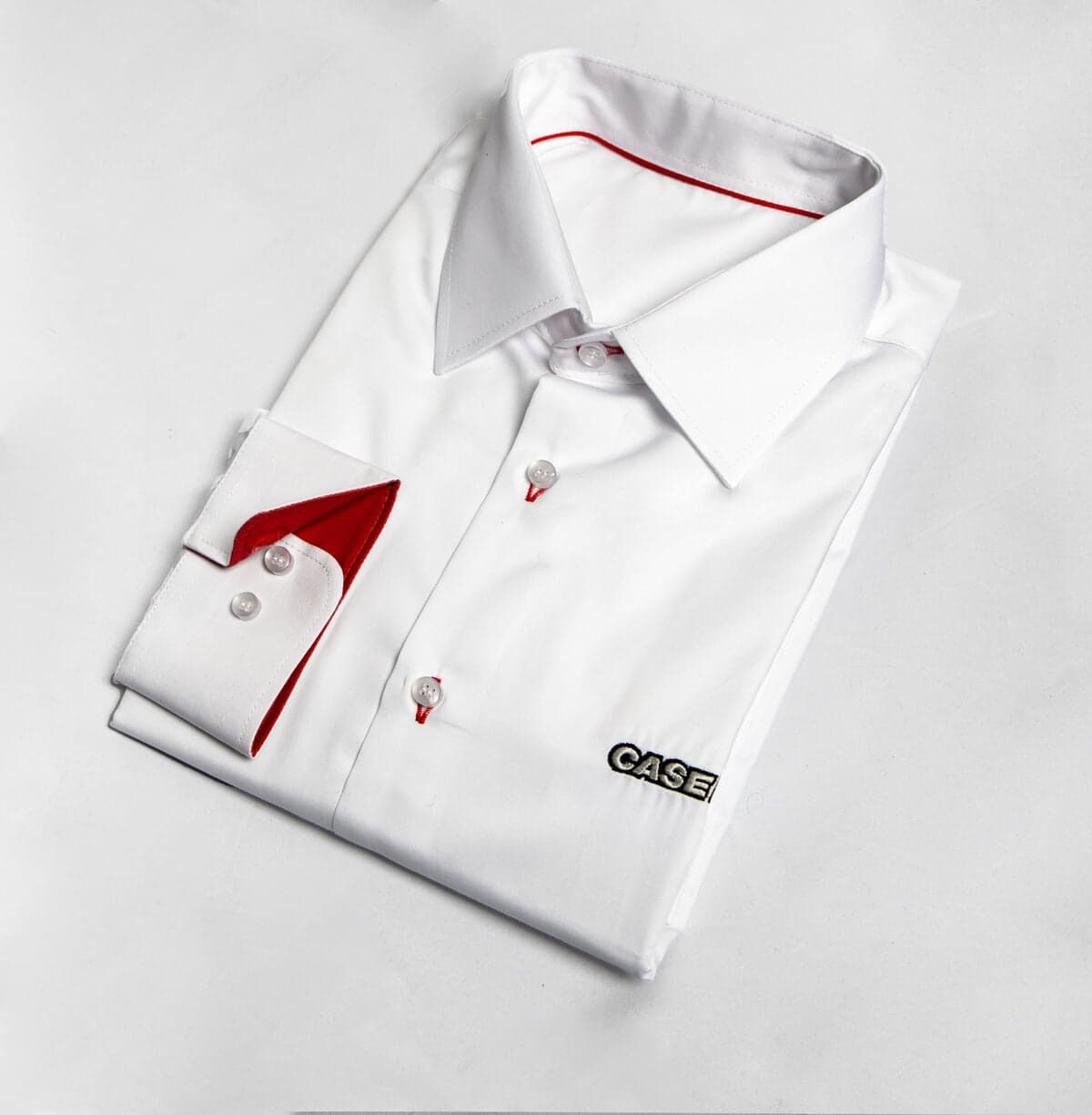
An activation set, not a giveaway. When a partner can order a coherent, brand-approved collection in one action, local activity stops depending on anyone's design skills.
The trade-off every channel marketer knows
There are two failure modes and most manufacturers have lived through both.
Total local freedom. Partners do whatever they want. Logos get stretched. Colours drift. A dealer prints a version of your identity that has not existed since 2019. Brand consistency dies quietly across four hundred small decisions, and central marketing finds out from a photo on LinkedIn.
Total central control. Every local request routes through headquarters. A dealer in Lyon wants forty polos for a regional fair. That becomes an email, a brief, an approval, a quote, a design file, a proof, a purchase order and a shipment, all handled by a central team that has eleven other markets asking for the same thing. Marketing becomes the bottleneck. Partners stop asking. Activation drops to zero and everyone calls it a lack of partner engagement.
Neither scales. The answer is the third option: controlled self-service. Central defines the boundaries. The partner acts freely inside them, without asking permission and without waiting.
Who controls what
Controlled self-service only works if the split is explicit. Vague governance produces either chaos or a queue.
| The manufacturer controls | The partner controls |
|---|---|
| Brand guidelines and approved artwork | When merchandise is actually needed |
| The approved product range | Which approved products fit the local moment |
| Quality standards and suppliers | Quantities |
| Budgets, credits and spending limits | Local distribution and who receives what |
| Which customisation is available | Co-branding, where the rules allow it |
| Inventory and reporting | The local campaign the merchandise supports |
Read the right-hand column again. Everything in it is knowledge the partner has and you do not. They know their regional fair calendar, their key accounts, which installer teams are customer-facing this quarter, and when a competitor is opening down the road. Central cannot schedule that from a headquarters spreadsheet, and should stop trying.
The co-branding rules are usually the most contested part of the split, because they touch the brand directly. Co-branded merchandise for dealers covers how to write rules that a dealer can follow without a designer.

Consistency lives in the specification, not in the approval queue. Fix the product, the finishing and the placement once, and every local order comes out on brand without a review step.
The multiplier
The arithmetic is the reason this is a strategy and not a procurement improvement.
Take 500 distributors. Ask each of them to do four meaningful local activations a year. A regional trade fair. A showroom refresh. A key-customer visit programme. An installer team kitted out for a season. That is 2,000 local brand activations a year, in 2,000 places, in front of the people who actually decide.
No central marketing team is going to execute 2,000 local activations. That is not a resourcing gap you can close by hiring. It is a structural impossibility, and it is why the role of the central team has to change. The job stops being execute every activation and becomes build the infrastructure that makes activations possible.
From merchandise supplier to channel infrastructure
Most manufacturers buy merchandise as a series of events. Someone needs something. An email goes out. A quote comes back. A design file is attached, revised, approved. Stock is ordered, stored somewhere, shipped somewhere else. Multiply that by markets and partners and it becomes a job nobody wanted.
The shift is to treat merchandise the way you already treat spare parts or order entry: as infrastructure that runs continuously without a person driving each transaction. In practice that means a small set of capabilities working together.
- Centrally approved collections, so there is nothing off-brand to order.
- Controlled access per market and per partner, so each sees only what applies to them.
- Co-branded products for individual dealers, generated inside the rules rather than by request.
- Independent partner ordering within predefined limits, with no central approval step.
- Budgets or credits allocated by partner, region or campaign.
- Support for the real use cases: events, showrooms, sales teams, local customer campaigns.
- One inventory position and one reporting view across orders, budgets, stock and activity.
That is what Sunday builds for channel-heavy brands. Not a catalogue, and not an agency relationship. A platform where the central team sets the rules once, partners order inside them, and distribution to 200+ countries happens without anyone at headquarters touching a shipment. If you want the operational detail of that layer, the swag management platform guide covers it, and company swag store covers the storefront partners actually see.

Infrastructure looks boring on purpose. The same specification, the same placement, the same quality, ordered independently by hundreds of partners without a central queue.
Better early KPIs than order volume
The most common measurement mistake is to judge a new channel activation programme on merchandise order volume in quarter one. Order volume is a lagging, noisy signal that mostly tells you which partners already had budget. The early questions are about adoption and behaviour.
| Stage | What to measure |
|---|---|
| First 90 days | Partner adoption rate, percentage of active dealers, first-order rate by region |
| Months 3 to 6 | Number of local activations, percentage using approved assets, merchandise distributed, budget utilisation |
| Months 6 to 12 | Repeat ordering rate, cost per activation, breadth across the long tail rather than the top 20 partners |
| Year one onward | Sales performance by activated versus non-activated dealer, sell-through by adoption level |
Note the shape. Adoption first, activity second, efficiency third, commercial outcome last. Trying to prove the last one in month two is how good programmes get killed before they have a chance.
The honest limits, and what to do about them
Being straight about the evidence is more useful than overselling it, so here is the limit.
What the research does support is the mechanisms. Cooperative advertising economics are well studied and point clearly toward manufacturer support increasing local effort and total channel profit. Promotional products research shows measurable effects on advertising credibility, attitude and purchase and referral intention, and shows that physical use beats passive visual exposure. Named enterprise programmes report specific activation results. Those are three solid, separate things. They are not one universal multiplier, and anyone selling you one is guessing.
Which is fine, because a channel-heavy brand is unusually well placed to measure it directly. You have hundreds of comparable local units, which is close to a natural experiment. Four ways to run it:
- Activated versus non-activated dealers. Compare sell-through between partners who use the programme and matched partners who do not.
- Before and after. Track the same partners across the twelve months either side of activation.
- High versus low adoption regions. Adoption rarely lands evenly. Use that.
- Connect the systems. Join merchandise ordering data to CRM and ERP sell-through so the comparison is automatic rather than an annual project.
Do that for a year and you will have something better than a borrowed statistic. You will have your own number, for your own network, that nobody can argue with internally.
Where to start
The programmes that work tend to start narrow and prove the mechanism before scaling it.
- Pick one market and one partner type. Mixing dealers, distributors and installers in a pilot muddies every result.
- Define the approved collection. Small. Six to twelve products that cover events, showroom, field teams and customer gifting.
- Write the co-branding rule in one paragraph a non-designer can follow.
- Allocate budget or credits per partner so ordering does not require a purchase decision every time.
- Remove the approval step inside the rules. This is the part most programmes get wrong, and it is the part that decides adoption.
- Instrument it from day one so the activated-versus-non-activated comparison is possible later.
Adjacent programmes are worth connecting rather than rebuilding. Partner onboarding is the natural first touchpoint, covered in partner onboarding kits. Recognition and relationship moments sit in partner appreciation gifts and corporate gifts. And for installer and field-service networks in the Benelux, the workwear side is covered in the corporate clothing brand store guide.
On product choice: polos and jackets carry most channel programmes, because they are what field teams, showroom staff and installers actually wear in front of customers. You can see the range on the custom polos and custom jackets pages, and preview a co-branded version in your own colours with the free polo mockup generator before you commit to a collection.
About this article
Keep reading
- Dealer marketing: how to build a dealer marketing program partners actually use
- Cooperative advertising explained: the economics, the evidence and the modern version
- Through channel marketing automation: less friction, more partner activation
- Distributor marketing: a partner marketing playbook by partner type
- Do promotional products work? What the research actually shows
- Co-branded merchandise for dealers: the operating model
Your network. Your brand. Locally activated.
Approved collections, controlled partner ordering, budgets by region, and global delivery. Create a free account and see how the infrastructure works.
Build your channel programme