



Distributor marketing is how a manufacturer helps the companies that resell its products create local demand. It sits inside channel partner marketing and differs from partner marketing, which recruits and retains partners. The practical work is defining what each partner type needs, then letting them act inside brand rules without asking head office first.
The argument of this article in one line: your network is not one audience, and the programme that works for a franchisee will quietly fail for a distributor.
What's in this guide
What distributor marketing is
Distributor marketing is the work a manufacturer does to help the companies that resell its products generate demand in their own markets. Not marketing aimed at distributors. Marketing that happens through them, in their territory, under their local relationships, carrying your brand.
In most industrial and consumer-durables categories that is where the buying decision is actually made. A wholesaler's counter staff recommend one brand of fitting over another. A machinery dealer decides which two ranges get floor space. An installer tells a homeowner what to buy. The manufacturer funds the brand and someone else controls the moment it converts.
That is a strategy problem before it is a procurement problem, and the full narrative sits in the channel brand activation network pillar. This article is the operating layer underneath it: how the answer changes depending on who your partners are.
Partner marketing, channel partner marketing, distributor marketing
The three terms get used interchangeably in job titles and vendor decks, and the distinction decides what you build.
| Term | What it means | Who executes |
|---|---|---|
| Partner marketing | Marketing to partners: recruitment, tiering, enablement, keeping them loyal | The manufacturer |
| Channel partner marketing | The umbrella for demand generation through any partner type | Shared |
| Distributor marketing | The same discipline applied to distributors and wholesalers specifically | The distributor, enabled by the manufacturer |
Partner marketing asks how to get partners to choose you. Channel partner marketing asks how to get them to generate demand once they have. Teams that measure the first while funding the second end up with excellent partner satisfaction scores and no local activity.
Six partner types, six different needs
This is the part most programmes skip. Every partner in the table below sells your product, and almost nothing else about them matches.
| Partner type | What they actually need | Where programmes fail them |
|---|---|---|
| Dealer (showroom, own customers) | Showroom presence, point-of-sale material, staff apparel, co-branded local ads, open-day kit | Digital-only campaign kits that ignore the physical room where they sell |
| Distributor / wholesaler (sells to trade, rarely to end users) | Counter and warehouse visibility, material their own sales reps can hand on, trade-fair support, kit for their customers | Consumer-facing creative that their trade customers cannot use |
| Installer / service partner | Workwear, van and toolbag presence, leave-behinds, simple recommendation aids. No marketing capacity at all | Anything that requires logging into a portal, adapting a file or writing copy |
| Franchisee | Turnkey local campaigns, strict brand consistency, a fixed calendar they can follow | Too much freedom, which produces drift across hundreds of locations |
| Reseller (carries competing brands) | Reasons to pick you this quarter, co-branded lead generation, quick wins with visible return | Long programmes with delayed payoff, when a competitor offers something usable today |
| Agency / integrator | Credibility material for client conversations, spec and technical content, gifting for their own clients | Retail-style promotion that is wrong for a consultative sale |
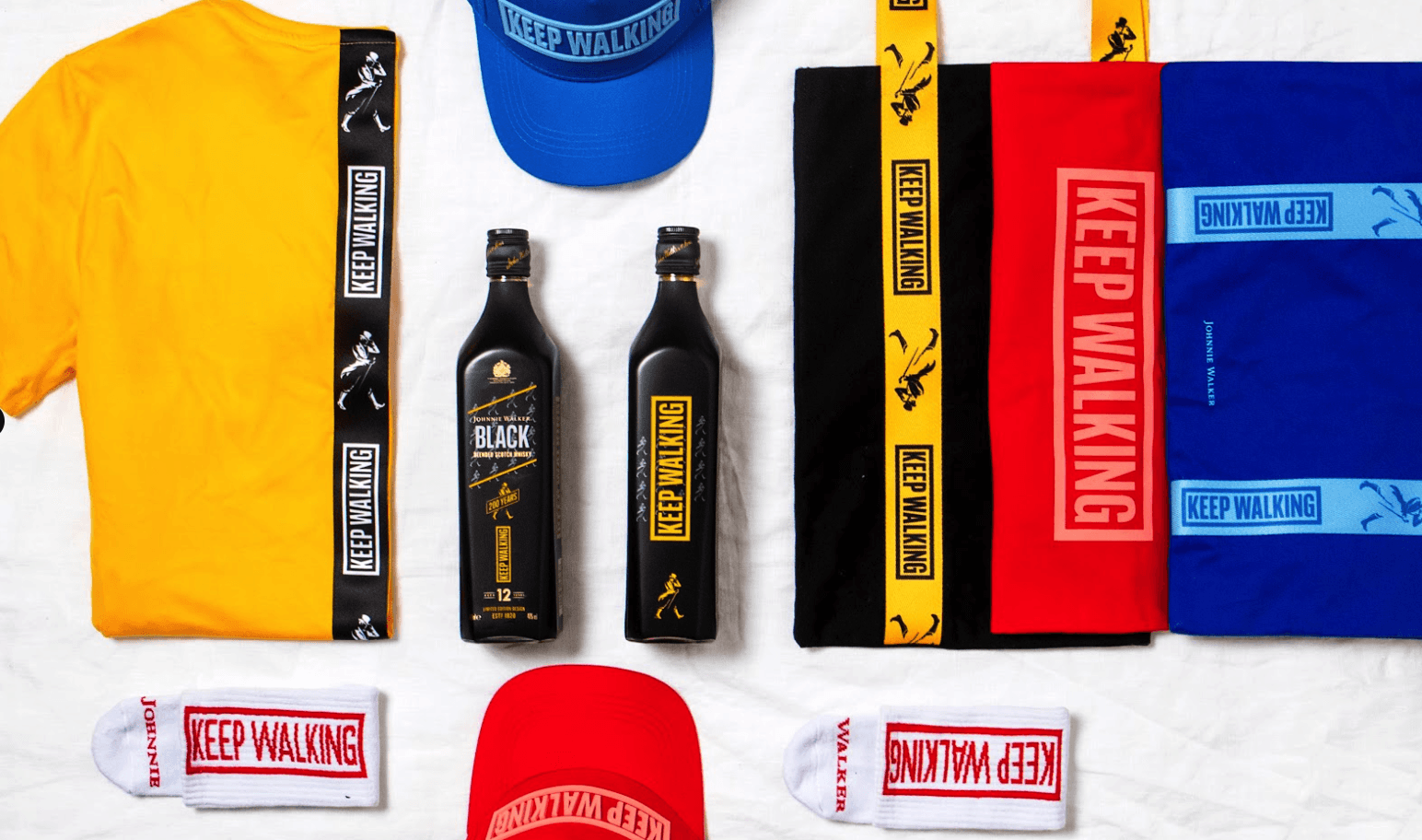
Two patterns are worth pulling out. First, the partners with the least marketing capacity are usually the ones closest to the end customer. An installer standing in someone's kitchen has more influence over the purchase than a distributor's marketing manager, and less ability to act on it. Second, physical material is the common denominator. Every one of these six types has a moment where something branded needs to exist in a real place, which is why co-branded merchandise for dealers is the layer that ends up serving all of them.

One approved collection, many partner types. The dealer takes showroom apparel, the installer takes outerwear, the distributor takes bags for its own trade customers. Same rules, different selections.
Control versus autonomy, and the answer that scales
Every channel marketer has lived through both failure modes.
Total local autonomy. Partners do whatever they want. Logos get stretched. A distributor prints a version of your identity that was retired in 2019. Consistency dies across four hundred small decisions, and headquarters finds out from a photo on LinkedIn.
Total central control. Every request routes through head office. A dealer in Lyon wants forty polos for a regional fair, and that becomes a brief, an approval, a quote, a design file, a proof, a purchase order and a shipment, handled by a team with eleven other markets asking the same thing. Marketing becomes the bottleneck. Partners stop asking, and everyone calls it disengagement.
Neither scales past a few dozen partners. The answer is the third option: controlled self-service. Central defines the boundaries once. The partner acts freely inside them, immediately, without permission.
Who decides what
Controlled self-service only works if the split is written down. Vague governance produces either chaos or a queue.
| The manufacturer controls | The partner controls |
|---|---|
| Brand guidelines and approved artwork | When merchandise is actually needed |
| The approved product range per partner type | Which approved products fit the local moment |
| Quality standards and suppliers | Quantities |
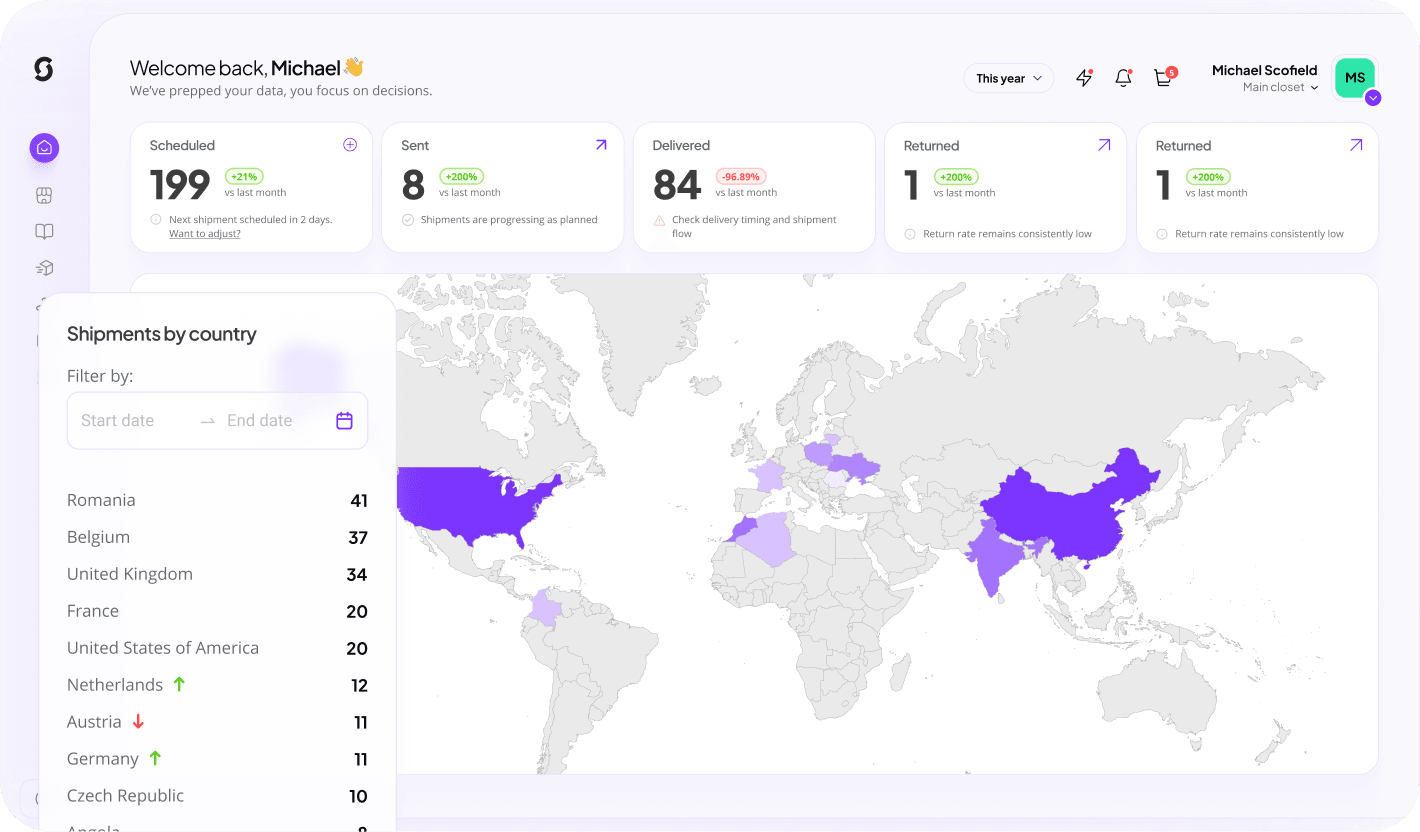
| Budgets, credits and spending limits | Local distribution and who receives what |
| Which customisation is available | Co-branding, where the rules allow it |
| Inventory and reporting | The local campaign the merchandise supports |
Everything in the right-hand column is knowledge the partner has and you do not. They know their regional fair calendar, their key accounts, which service teams are customer-facing this quarter and when a competitor opens a branch down the road. No headquarters spreadsheet is going to schedule that, and the attempt is what creates the queue in the first place.

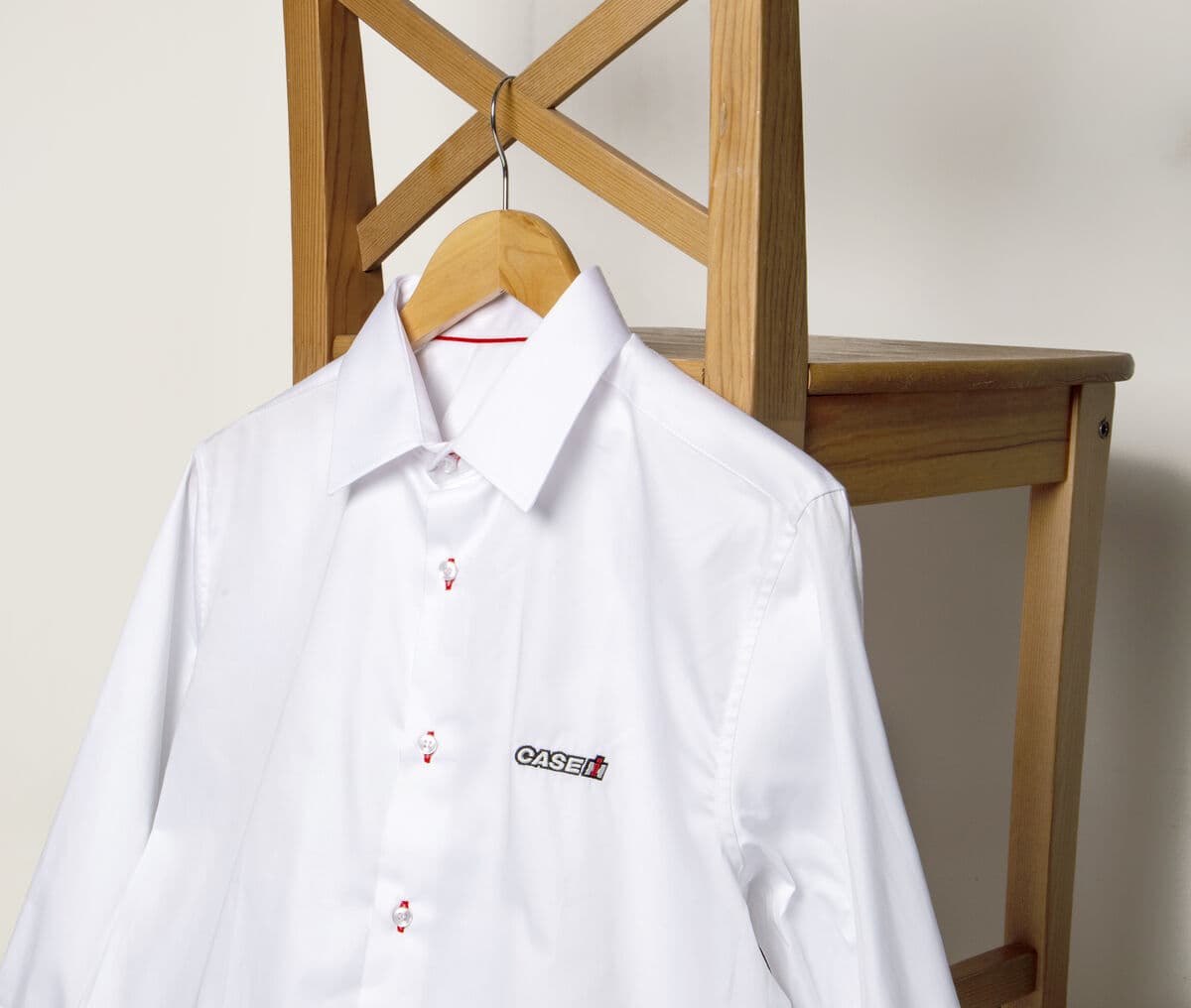
Variants inside one specification. Partners choose the version that suits their setting, without either of them being able to produce something off brand.
Budgets and credits: the change that moves adoption
The single most effective change in most distributor marketing programmes is not a new asset library. It is removing the purchase decision.
When a partner has to spend their own money, every order becomes a small business case competing with everything else on their desk. When a partner has an allocated credit that expires, the question flips from "is this worth it" to "what should I use this on". The behavioural difference is enormous and it costs the manufacturer no more than a co-op fund already does. Cooperative advertising research supports the underlying economics, and the mechanism is unpacked in cooperative advertising explained.
Three ways to allocate, and most large networks use all three at once.
- By partner. A standing annual credit, usually scaled to tier or volume. Predictable, easy to communicate, and the version partners understand fastest.
- By region. A pool a country or area manager can direct where it will do most good. Useful when partner quality varies widely inside one market.
- By campaign. Credit released for a specific launch or season, which concentrates activity and makes the results readable.
Two rules make the difference between a used budget and an unused one. Give it an expiry, because open-ended funds get postponed indefinitely. And make the balance visible at the moment of ordering, not in a quarterly statement.
The activation multiplier
Here is the arithmetic that turns this from a procurement improvement into a strategy. It is an illustration rather than a benchmark, so run it with your own numbers.
Take 500 distributors. Ask each for four meaningful local activations a year: a regional trade fair, a counter or showroom refresh, a key-customer visit programme, and a field team properly kitted out for a season. That is 2,000 local brand activations a year, in 2,000 places, in front of the people who actually decide.
No central marketing team executes 2,000 activations. That is not a resourcing gap you close by hiring, it is a structural impossibility, and it is why the central role has to change from executing every activation to building the infrastructure that makes them possible.
Read those three carefully. Each belongs to the organisation that reported it, not to Sunday, and none of them is a promise about your network. What they share is the mechanism: the results came from more partners participating, not from better creative. How those two programmes were built is taken apart in dealer marketing programs, and the automation that made the participation possible in through channel marketing automation.
The partner lifecycle around it
Activation is the middle of a longer relationship, and the two ends of it are usually already funded somewhere in your organisation.
At the start: onboarding
A new distributor's first impression of your brand is physical. What arrives in week one sets the expectation for everything after it, and it is the cheapest moment to explain how the programme works. That is covered in partner onboarding kits.
In the middle: activation
Everything in this article. Approved collections, partner-level budgets, independent ordering, local campaigns, showroom and event presence, field teams that look like your brand rather than a random assortment.
Alongside it: recognition
Channel relationships are relationships. Renewal conversations, milestone years, a top-performing region, a distributor who backed a launch when it was risky. Those moments deserve something deliberate rather than automated, and they are covered in partner appreciation gifts and corporate gifts.
On product choice, most distributor programmes are anchored by field-facing apparel because that is what partners are wearing in front of customers. You can see the range on the custom polos and custom jackets pages, and preview a co-branded version in your own colours with the free polo mockup generator before you fix a collection. For installer and service networks in the Benelux, the workwear side is covered in the corporate clothing brand store guide.

Small, cheap, specific. Items like this are what a distributor's rep hands to a trade customer, which is a moment central marketing will never be in the room for.
What to measure
Distributor marketing gets judged too early on the wrong number. Order volume in quarter one mostly tells you which partners already had budget.
| Stage | What to measure |
|---|---|
| First 90 days | Partner adoption rate, percentage of active partners, first-order rate by region and by partner type |
| Months 3 to 6 | Number of local activations, percentage using approved assets, merchandise distributed, budget utilisation |
| Months 6 to 12 | Repeat ordering rate, cost per activation, breadth across the long tail rather than the top 20 partners |
| Year one onward | Sell-through by activated versus non-activated partner, performance by adoption level |
Segment every one of those by partner type. An average adoption rate across dealers, distributors and installers hides the only finding that matters, which is usually that one type has taken to it and another has not been given what it needs. The operational reporting behind this sits in the swag management platform guide, and the storefront partners actually use in company swag store.
About this article
One programme. Every partner type.
Approved collections per partner type, budgets by partner or region, independent ordering and delivery to 200+ countries. Create a free account and see how it works.
Build your partner programme