





A global swag store sells one curated assortment to employees, customers or partners in multiple countries. Nothing inherently breaks at global scale, but every global rule must be prepared: the company covers and organises customs and duties, currencies and tax are configured before launch, warehousing follows a routing model, and returns are decided as policy.
Global is not a technical problem. It is a preparation problem. The store can present prices in six currencies and ship to forty countries on day one. What fails is the undecided detail: who pays the duty, which entity invoices, whether a size exchange from Singapore is worth the freight.
This article is part of Sunday's complete guide to the company swag store. It draws on how Sunday ships merchandise for 4,000+ brands to 200+ countries, with customs and duties handled so recipients never pay to receive.
What's in this guide
Global does not break, global must be prepared
Most fears about running a global swag store come from stories where nothing was decided in advance. A parcel leaves the warehouse with a commercial invoice that says the wrong thing. The courier bills the recipient. The recipient refuses the parcel. The parcel comes back. Support spends two weeks on a t-shirt.
None of that is a failure of international shipping. It is a failure to choose a policy before the first order. The four decisions below cover almost all of it.
Customs and duties: the company pays
This is the one non-negotiable in a global merchandise programme. The company covers and organises customs. An employee must never receive a demand for payment to collect company swag.
The moment a recipient is asked to pay a duty, a handling fee or a VAT charge to release a parcel, the gift stops being a gift. It becomes an administrative task with an emotional cost attached, and the brand pays for it twice: once in goodwill, once in operations.
Delivered duty paid, or an equivalent company-paid arrangement, protects the experience. It also protects the budget in ways that are easy to underestimate:
- Fewer rejected deliveries. People refuse parcels they are asked to pay for.
- Less support and communication. No explaining a customs invoice to a new hire in their first week.
- Fewer return costs. A refused parcel is a return, and an international return is expensive.
- Predictable landed cost. Duties become a planned programme cost rather than a surprise borne by the recipient.
Behind that sits documentation: correct commodity codes, correct declared values, correct country of origin, correct entity as the importer. That work is invisible when it is right and impossible to ignore when it is wrong. It is the same discipline that a global gifting programme needs, as covered in building a corporate gifting programme.

Every one of these items crosses a border with a declared value, a commodity code and an importer of record. Getting that right is how a recipient never hears the word customs.
Currencies and tax
Multi-currency pricing and destination-based tax are deployable commerce capabilities. They are not a reason to avoid a global store.
BVNK runs an internal store with real payments in multiple currencies, which is the practical proof that this is configuration rather than invention. If a store needs to present pounds to one audience and euros to another, it can.
What has to be agreed before launch is the policy and the accounting model, not the technology:
| Decision | Why it has to be made first |
|---|---|
| Which currencies are presented | Every currency adds rounding, price maintenance and refund handling. Fewer is calmer |
| How tax is handled per destination | Determines pricing display, invoicing and what appears at checkout |
| Which entity sells | Drives invoicing, VAT treatment and where revenue lands |
| How internal costs are recharged | Company-funded orders still need a cost centre and a country |
| What refunds look like | Refunding a coin balance and refunding a card payment are different processes |
Most employee stores avoid half of this by not charging employees at all. When the store runs on company funding or coins, the currency question shrinks to reporting. The funding options are compared in swag store funding models.
One warehouse or several
One location is simpler. One stock pool, one set of pick rules, one replenishment conversation, one source of truth for what exists. For most programmes, including many that ship worldwide, one warehouse plus good courier coverage is the right answer for longer than people expect.
Multiple locations become worth it when volume in a region justifies the duplication, or when delivery times and duty treatment materially change the experience. The moment you add a second location you need a multi-warehousing solution with three rules written down:
- Routing. Which warehouse serves which destination, and what happens when the preferred one is out of stock.
- Stock ownership. Who owns the inventory in each location, and how it appears in reporting.
- Replenishment. How each location is refilled, from where, and on what trigger.
Without those rules, a second warehouse does not halve your delivery times. It doubles your stock problems. A solid operating partner matters more than adding locations without a coherent model.
Stock strategy and warehousing decisions belong together, which is why the small-batch approach in print on demand versus warehouse stock and the replenishment loop in swag inventory management are worth reading alongside this.

One product, held once, shipped everywhere. Consolidated stock is usually a better global strategy than more locations without a routing model.
Returns are a policy decision
Here is the sentence that changes the conversation. A t-shirt worth 25 euros can cost 50 euros to return internationally, once you count freight, customs paperwork, handling, inspection and restocking. That is an illustrative example rather than a fixed number, but the shape is right and it holds across most low-value merchandise.
So the question is not only whether the system can process a return. It is whether the company should require one. Four policies work, and mature programmes use different ones for different price bands.
| Policy | Best for | What it costs you |
|---|---|---|
| Keep and replace | Damaged or faulty low-value items | The item, and nothing else. Usually cheaper than the freight |
| Local donation | Wrong size or unwanted low-value items | The item, plus a defined charity or local route |
| Size exchange without return | Apparel where the size curve was the problem | A second unit, in exchange for a much better experience |
| Standard return | Higher-value items where the economics work | Freight, documentation and handling, justified by the value |
Two practical notes. First, publish the policy in the store so nobody has to ask. Second, treat a generous low-value policy as a cost of a good experience, not as a loss. The item you let someone keep is cheaper than the support thread you avoid.
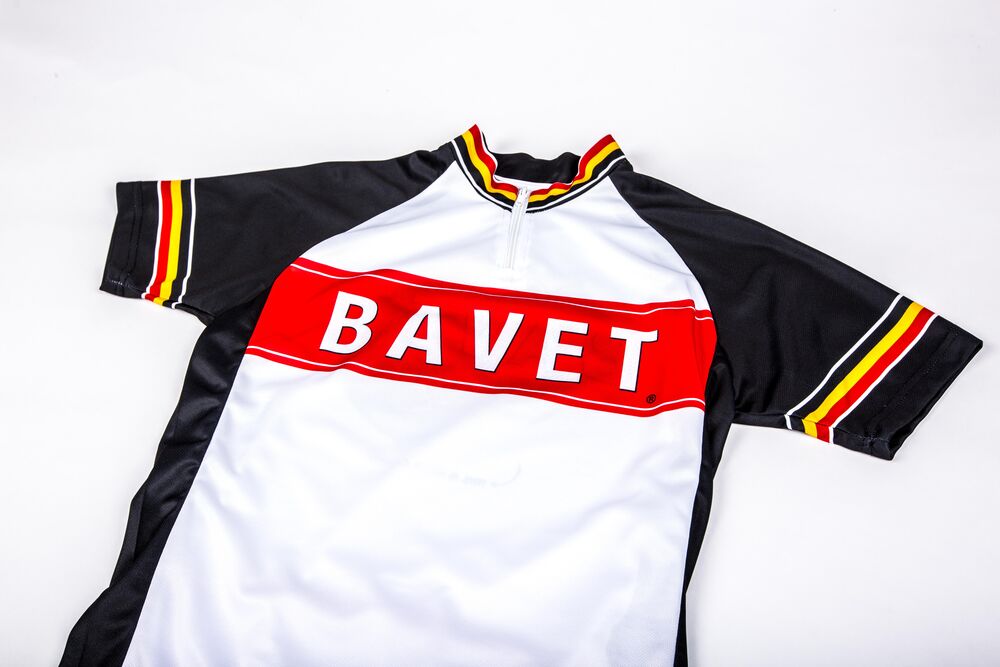
Higher-value items justify a standard return. A low-value tee usually does not. Same store, different policy, applied automatically.
The pre-launch global checklist
Everything above compresses into a short list. Answer it before the store opens, not after the first parcel is stuck.
- Destinations. Which countries the store ships to, and which it does not.
- Duties. Company-paid, on a delivered duty paid or equivalent basis. Never the recipient.
- Documentation. Commodity codes, declared values, origin, importer of record.
- Currencies and tax. Which currencies show, how tax is applied, which entity sells.
- Shipping charges. Who pays freight, and whether it differs by audience or destination.
- Warehousing. One location or several, with routing, ownership and replenishment rules.
- Returns. A written policy per price band, enforced by the store.
- Support. Who answers a delivery question, in which language, within what time.
Most of these are configuration once decided, and several depend on the systems around the store, from address collection to courier status events. Those connections are covered in swag store integrations, and the full launch sequence is in how to launch a swag store. If the store serves staff, the employee swag store guide covers access and coins.
To see how Sunday handles global fulfilment, duties and multi-country delivery, explore the platform, distribution, the catalog and how it works.
Frequently asked questions
Who pays customs on company swag?
The company. An employee or customer should never be asked to pay a duty, VAT charge or handling fee to collect company merchandise. Ship delivered duty paid (DDP) or an equivalent arrangement. Sunday ships to 200+ countries this way, which turns duties into a planned cost instead of a refused parcel.
What is DDP shipping for merchandise?
Delivered duty paid means the sender covers import duties and taxes before the parcel reaches the recipient. For a merch programme it protects the experience, cuts refused deliveries and makes landed cost predictable. It only works when commodity codes, declared values, origin and importer of record are correct on every shipment.
Can a swag store charge in multiple currencies?
Yes. Multi-currency pricing and destination-based tax are configuration, not invention. BVNK runs an internal Sunday store with real payments in several currencies. Decide which currencies to show, which entity sells and how refunds work before launch, because each extra currency adds rounding, maintenance and refund handling.
Do I need more than one warehouse for a global swag store?
Usually not at first. One warehouse plus good courier coverage serves most programmes, including many shipping worldwide. Add a second location only when regional volume, delivery time or duty treatment justifies it, and write down routing, stock ownership and replenishment rules before you do.
How should international swag returns work?
Decide the policy per price band before choosing technology. A low-value T-shirt can cost more to return across a border than to replace, so keep-and-replace, local donation or a size exchange without return often beat a standard return. Reserve full returns for higher-value items where the economics work.
About this article
Ship the same store to every country
Company-paid duties, multi-currency pricing, one operating partner and a returns policy the store enforces for you. Create a free account and see how it works.
Build your swag store