Custom sportswear in bulk starts from a low minimum, around 10 to 25 units depending on the item, with the unit price falling as the quantity rises. The big advantage: a low-quantity order still gets full all-over sublimation with no per-colour charge, so a small team can run a bold, complex design at no premium. Cost is driven by garment type, fabric, fit, recycled versus standard material, quantity, names and numbers, reflective details and construction, not by how many colours you use. Sublimated production runs typically land in a two to four week window depending on volume and personalisation.
Custom sportswear has a reputation for being expensive and high-minimum. It is neither, if you buy it the right way. Fully custom sublimated kit is one of the few branded-apparel categories where a complex, full-surface design costs the same as a plain one, and where minimums are low enough for a single office team. This page breaks down what you actually pay for, so you can plan a run with real numbers rather than guesses. Exact prices sit in the catalog, but the logic below is what moves the number.
Minimum order quantity
Minimums are low. Most sportswear items start from around 10 units, with some kits and more technical builds sitting nearer 25. That means a company running team, a cycling group or a single department can order a proper custom sportswear bulk run without hitting a wall. You do not need a warehouse-sized order to unlock full customisation.
The reason low minimums matter so much here is the decoration method. With sublimation there is no screen to set up per colour and no per-logo charge, so the economics that force high minimums on other products simply do not apply. See the range on the custom sportswear page.
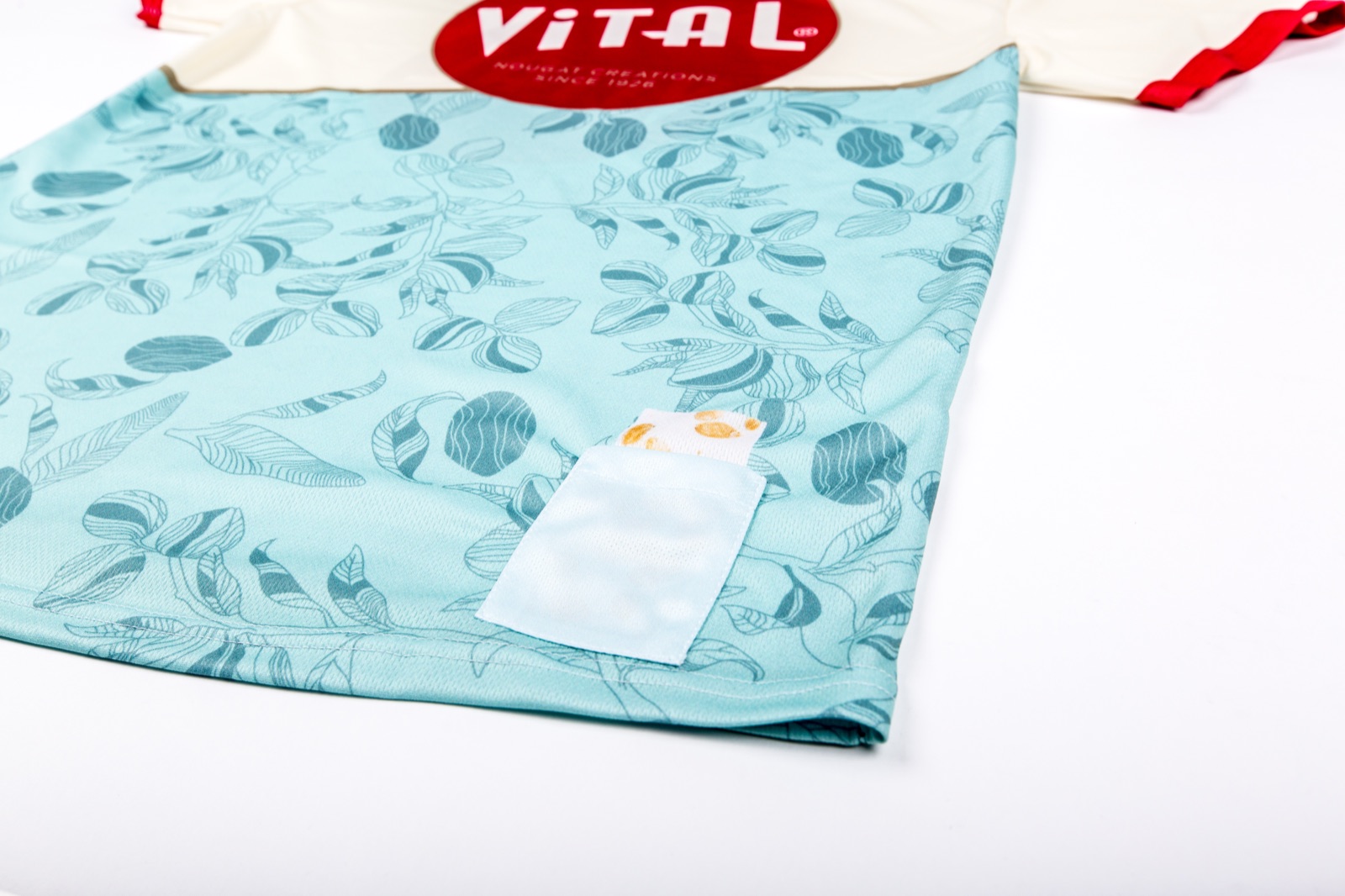
A Vital-branded custom sports jersey. Because the design is printed into the fabric before cutting, ordering 10 or 200 does not change the artwork cost.
How volume affects price
The unit price falls as quantity rises. It is the classic volume curve: setup and design time are spread across more units, and material is bought in larger lots. The bands below are illustrative of how the curve behaves, not fixed quotes. Confirm your exact numbers in the catalog or with a quick account.
| Quantity band | Best for | Unit price trend |
|---|---|---|
| 10–25 | A single team, department or cycling group | Highest per unit, still full customisation |
| 25–75 | A club, event squad or multi-team activity | Meaningful step down |
| 75–200 | A large event, wellness campaign or sponsorship | Strong volume pricing |
| 200+ | Company-wide programmes and recurring runs | Best unit price |
The takeaway is not to over-order for a discount you do not need. Order for the activity. A 12-person running team does not become cheaper overall by buying 50 shirts nobody wears. Match quantity to participation, then let the per-unit price sit where it sits.
The real cost drivers
Colours and design complexity are not on this list, and that is the point. Here is what genuinely moves the price on a sportswear run.
- Garment type. A lightweight running shirt, a technical cycling jersey, a tracksuit and an insulated windbreaker sit at very different price points.
- Fabric. The technical spec matters most. Breathable, moisture-wicking Dry Fit and Cooltech fabrics cost more than basic material, and heavier or weatherproof fabrics cost more again.
- Fit and construction. A race-cut jersey with panelled construction, strong seams and durable collars and cuffs costs more than a relaxed, simple build.
- Recycled versus standard. Certified recycled technical fabric can carry a small premium over standard material at the same performance level.
- Quantity. The volume band, as above.
- Names and numbers. Personalisation adds a per-unit cost but significantly lifts perceived value and the real-team feeling.
- Reflective details. Reflective prints for running and cycling in low light add cost.
- Zippers, pockets and technical features. Every functional extra, from a full-length zip to rear pockets, adds to the build.
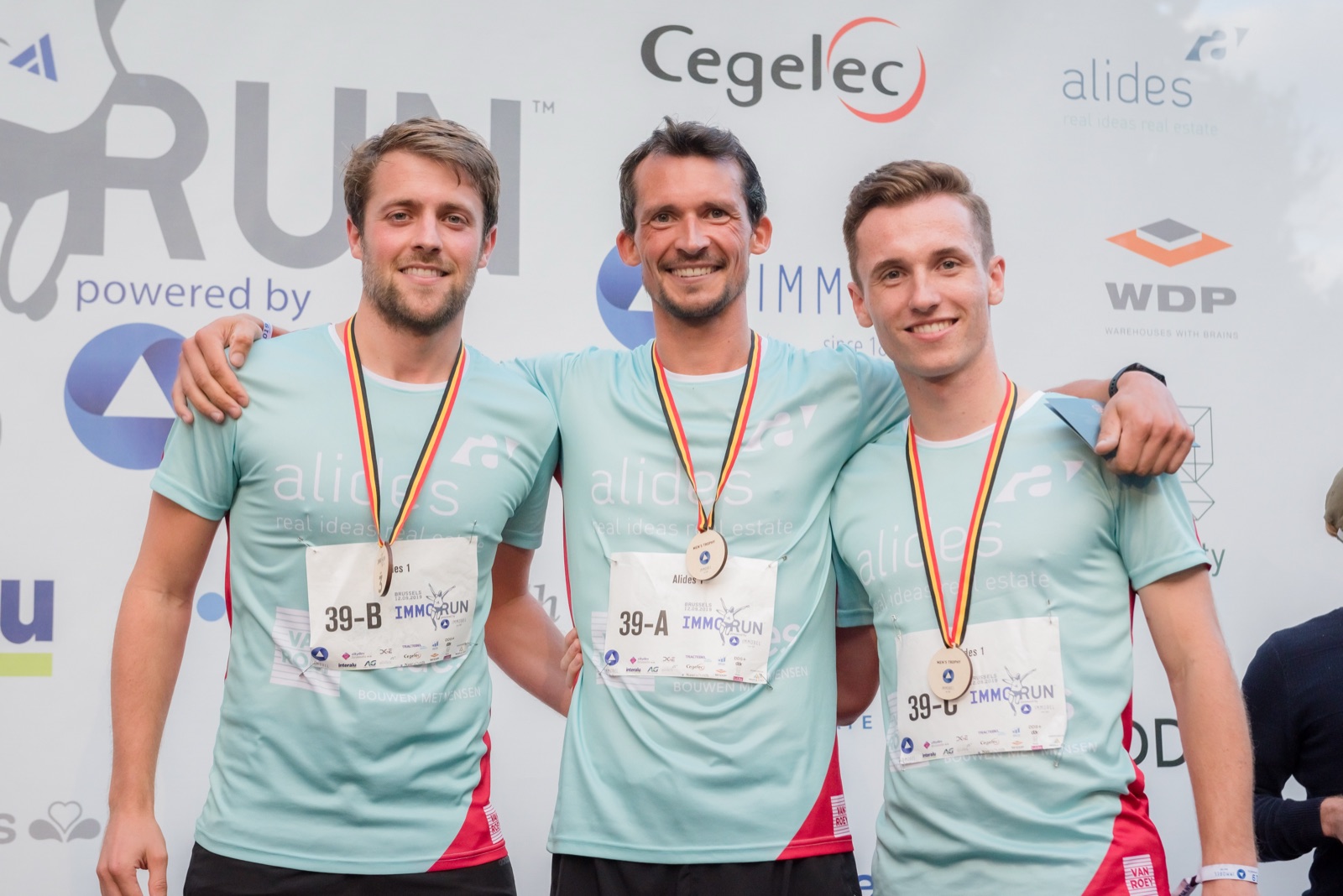
An Alides-branded custom sports jersey. Names and numbers are a per-unit cost, but the cheapest way to turn a kit into a real team. Preview them before you commit in the mockup generator.
Why design complexity is free
This is the single most useful thing to understand about sportswear pricing. With sublimation the design is printed into the fabric before the panels are cut and sewn. There is no separate print placement, no per-colour screen and no per-logo charge. A plain single-colour jersey and a full-surface, multi-colour, gradient-heavy design cost the same to produce.
This is very different from screen print or embroidery on stock apparel, where every extra colour or logo position adds cost. For a full comparison of methods and why embroidery does not belong on lightweight sportswear, see our printing versus embroidery guide. Want to see a complex design in your colours before you order? Build one free in the sportswear mockup generator.
A Vital-branded custom sports jersey. Fabric is the biggest lever on price: a technical Dry Fit or Cooltech build costs more than basic material.
Lead times
Because sublimated kit is produced from scratch rather than decorated on stock, plan for a production window rather than same-week turnaround. As a working guide, a straightforward run lands in roughly two to three weeks, and larger or heavily personalised runs push toward three to four weeks. Names and numbers, complex kits and high volumes add time. Build a buffer before your event date and lock the design early. See how the flow works on the how it works page.
| Run type | Indicative lead time | What adds time |
|---|---|---|
| Small team, logo-led design | ~2 weeks | Design sign-off delays |
| Full custom kit, names and numbers | 2–3 weeks | Personalisation per unit |
| Large event or campaign run | 3–4 weeks | Volume and complex construction |
How to budget a run
Work in this order and the number becomes predictable. First, match the garment and fabric to the activity, not to the most technical option available. Second, set quantity to expected participation. Third, decide on personalisation and reflective detail. Only then look at the total. The most common budget mistake is over-specifying: paying for performance features a casual participant will never use.
An Alides-branded custom sports jersey. Spec to the activity, not the catalogue: a casual ride needs basic wear, a serious challenge justifies pro-level fabric and fit.
Frequently asked questions
What is the minimum order for custom sportswear?
Minimums are low. Most items start from around 10 units, with some kits and more technical builds nearer 25. That is low enough for a single company team, a cycling group or a department. Because sublimation has no per-colour setup, low minimums still get full all-over customisation with no design premium.
Does a bigger order get a lower price?
Yes. The unit price falls as quantity rises, since setup and design time spread across more units and material is bought in larger lots. Bands of 10 to 25, 25 to 75, 75 to 200 and 200 plus each bring the per-unit cost down. Order for expected participation rather than over-buying for a discount you do not need.
Do more colours or a complex design cost more?
No. On a sublimated run the design is printed into the fabric before the panels are cut and sewn, so there is no per-colour or per-logo charge. A plain jersey and a full-surface, multi-colour, gradient design cost the same to produce. Spend your budget on fabric, fit and personalisation instead.
What actually drives the price?
Garment type, fabric spec, fit and construction, recycled versus standard material, quantity, names and numbers, reflective detail, and functional features like zippers and pockets. Fabric is usually the biggest lever. Design complexity is not a cost driver.
How long does a bulk sportswear order take?
Plan for a production window rather than same-week turnaround, because sublimated kit is made from scratch. A straightforward run lands in roughly two to three weeks, and larger or heavily personalised runs push toward three to four weeks. Lock the design early and add a buffer before your event date.
Do names and numbers cost extra?
Yes, personalisation adds a per-unit cost. It is worth it. Names, numbers and department tags turn a matching kit into a real team and significantly lift perceived value, which is exactly what you want when the goal is participation and team identity.
Is recycled fabric more expensive?
Certified recycled technical fabric can carry a small premium over standard material at the same performance level. Both deliver the same Dry Fit and Cooltech breathability and moisture management, so the choice comes down to your sustainability priorities and budget.
Keep reading: custom sportswear
Get live pricing for your run
Create a free account, design a jersey or full kit in your colours, and see live per-unit pricing and lead times in 30 seconds.
Get free designs