
You don't need to become a textile engineer to order branded socks. But understanding how socks are manufactured makes you a better buyer. You'll know why certain designs cost more, why some logos translate better than others, why lead times are what they are, and why the material choice you make at the brief stage determines everything downstream.
This guide walks through the full manufacturing process from yarn to delivered product, explaining each stage in terms that matter for branded merchandise decisions. No jargon for jargon's sake. Just the information you need to brief a manufacturer effectively and evaluate the product you get back.
- 7: distinct manufacturing stages from yarn to packed sock.
- 144+: needles needed for crisp logo reproduction in knitting.
- 20 min: average knitting time per pair on modern machines.
Why this matters. Most branded sock problems trace back to a manufacturing decision that seemed insignificant at brief stage. The wrong needle count produces blurry logos. The wrong toe-closure method creates uncomfortable seams. The wrong yarn blend pills after three washes. Understanding the process prevents these issues.
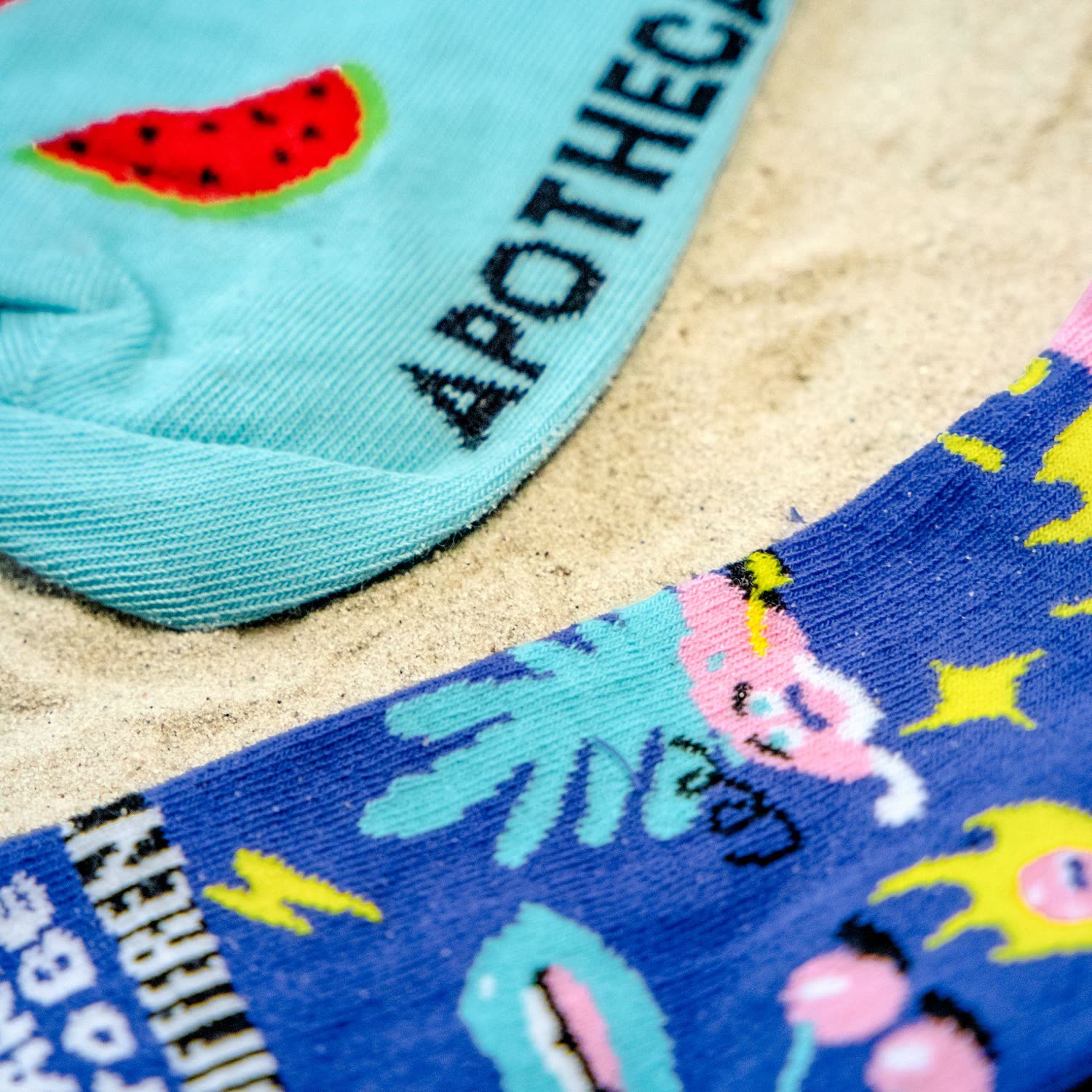
Manufacturing process overview
| Stage | Timing | Key variable | What it affects |
| Yarn selection | At brief stage | Fiber type and composition | Comfort, durability, price, sustainability claims |
| Design programming | 1-3 days | Needle count, color allocation | Logo sharpness, pattern detail, color accuracy |
| Knitting | 15-25 min/pair | Machine type and speed | Fabric density, fit, stretch |
| Toe closure | Seconds per sock | Hand-linked vs machine | Comfort at the toe seam |
| Finishing | Varies | Washing, boarding, pressing | Shape, shrinkage, final feel |
| Quality control | Per pair | Inspection thoroughness | Defect rate in delivered product |
| Packaging | Per pair | Packaging type | First impression and perceived value |
Yarn selection and preparation
Everything starts with yarn. The fiber you choose determines the sock's feel, performance, appearance, price, and sustainability credentials. Full material comparison is in our material guide, but from a manufacturing perspective, the key consideration is how the yarn behaves on the knitting machine.
Cotton and cotton blends are the easiest to knit and produce the most consistent results across machines. Bamboo viscose knits smoothly but requires slightly slower machine speeds. Merino needs careful tension management to avoid pilling during production. Synthetic yarns (polyester, nylon) knit fast and consistently but produce a different fabric hand-feel.
Before knitting begins, yarn is wound onto cones and mounted on the knitting machine's creel (the rack of yarn spools that feeds the needles). Each color in your design requires a separate cone. This is why sock designs are typically limited to 6-8 colors: it's a physical constraint of how many yarns the machine can feed simultaneously.
Knitting: where the sock takes shape
Modern sock knitting uses circular knitting machines. These are cylinder-shaped machines with needles arranged in a circle. The cylinder rotates and the needles move independently, creating a tube of fabric one row at a time. Your design is programmed as a pattern file that tells each needle when to pick up which yarn.
The needle count determines resolution. Think of it like pixels: more needles mean more detail. A 96-needle machine creates a coarse, chunky sock suitable for heavy athletic wear. A 200-needle machine produces a fine-gauge dress sock. For branded merchandise with logos, 144 needles is the sweet spot. It gives enough resolution for clean logo reproduction while maintaining a comfortable, medium-weight fabric.
Knitting takes 15-25 minutes per sock (one sock at a time, so 30-50 minutes per pair). A typical factory runs machines 20-24 hours per day, with each machine producing roughly 70-80 pairs per day. This is why production runs take weeks, not days.
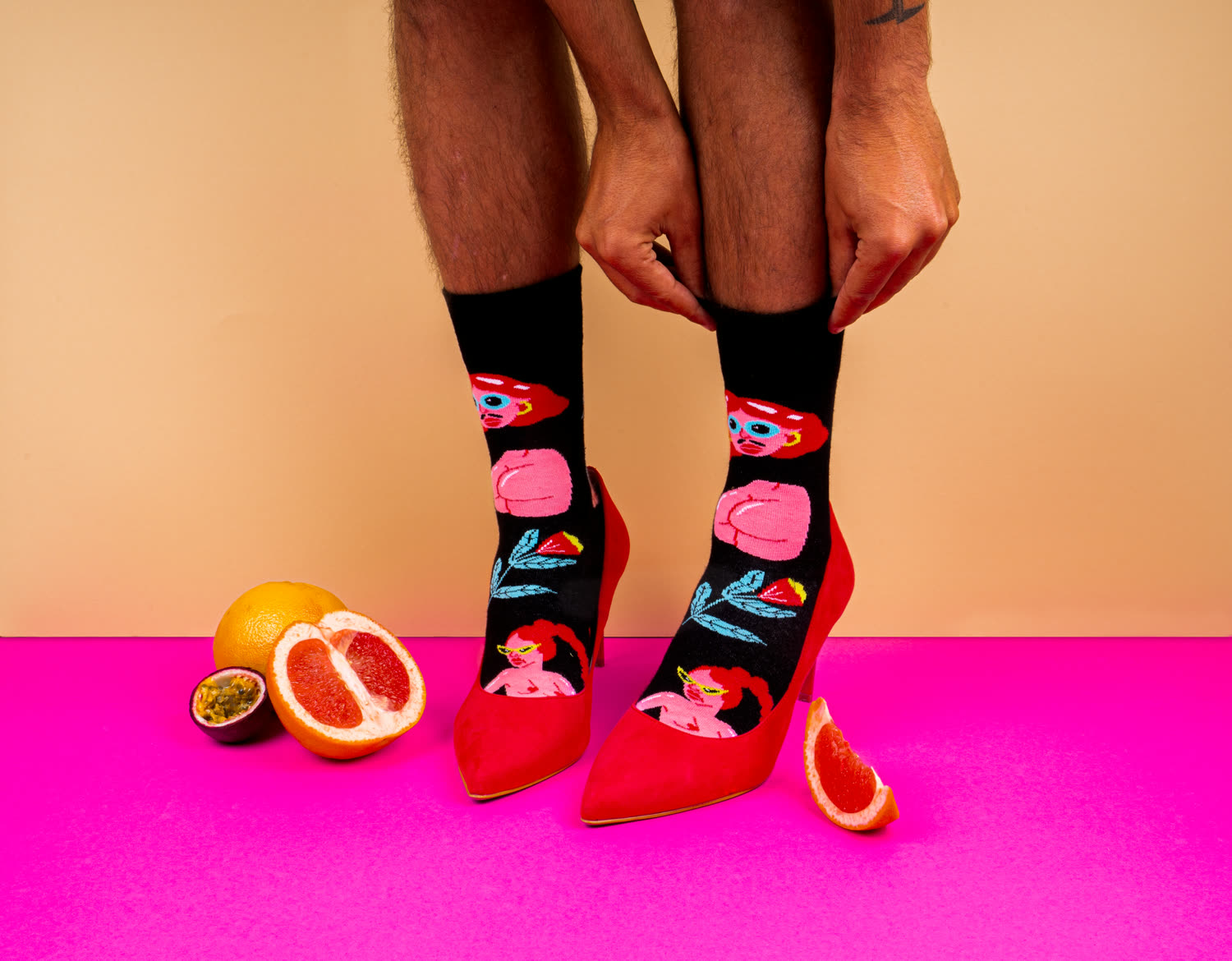
Logo integration methods
Knitted-in (jacquard): The logo is part of the fabric. Different colored yarns are switched in and out as the sock is knitted, creating the logo within the fabric structure. This is the standard for quality branded socks. The logo is permanent, doesn't crack, and feels integrated rather than applied. Limited to the number of yarn colors available on the machine (typically 6-8).
Sublimation print: A full-color design is printed onto the sock fabric using heat transfer. Requires a polyester-content sock. Allows photographic images, gradients, and unlimited colors. The print sits on top of the fabric rather than being part of it. It feels different to the touch and can fade slightly over many washes.
Embroidery: Logo stitched on after the sock is manufactured. Used rarely for socks because it creates a rigid area on a stretch fabric. Generally limited to small marks on the cuff. Higher cost per unit.
Finishing, sizing and toe closure
The sock comes off the machine as an open tube. The toe needs to be closed. Two methods dominate:
Machine-linked (looped): An automated machine closes the toe. Fast and consistent. Creates a small seam that's barely noticeable in well-made socks. The standard for most branded merchandise.
Hand-linked: A skilled operator manually links each stitch to close the toe seamlessly. Produces a completely flat toe closure with no seam at all. Premium finish for high-end socks. Adds time and cost.
After toe closure, socks are washed (to remove manufacturing oils and achieve final hand-feel), then pressed onto sock-shaped metal forms called "boards" to set the size and shape. This boarding process determines the sock's final dimensions and ensures consistent sizing across the production run.
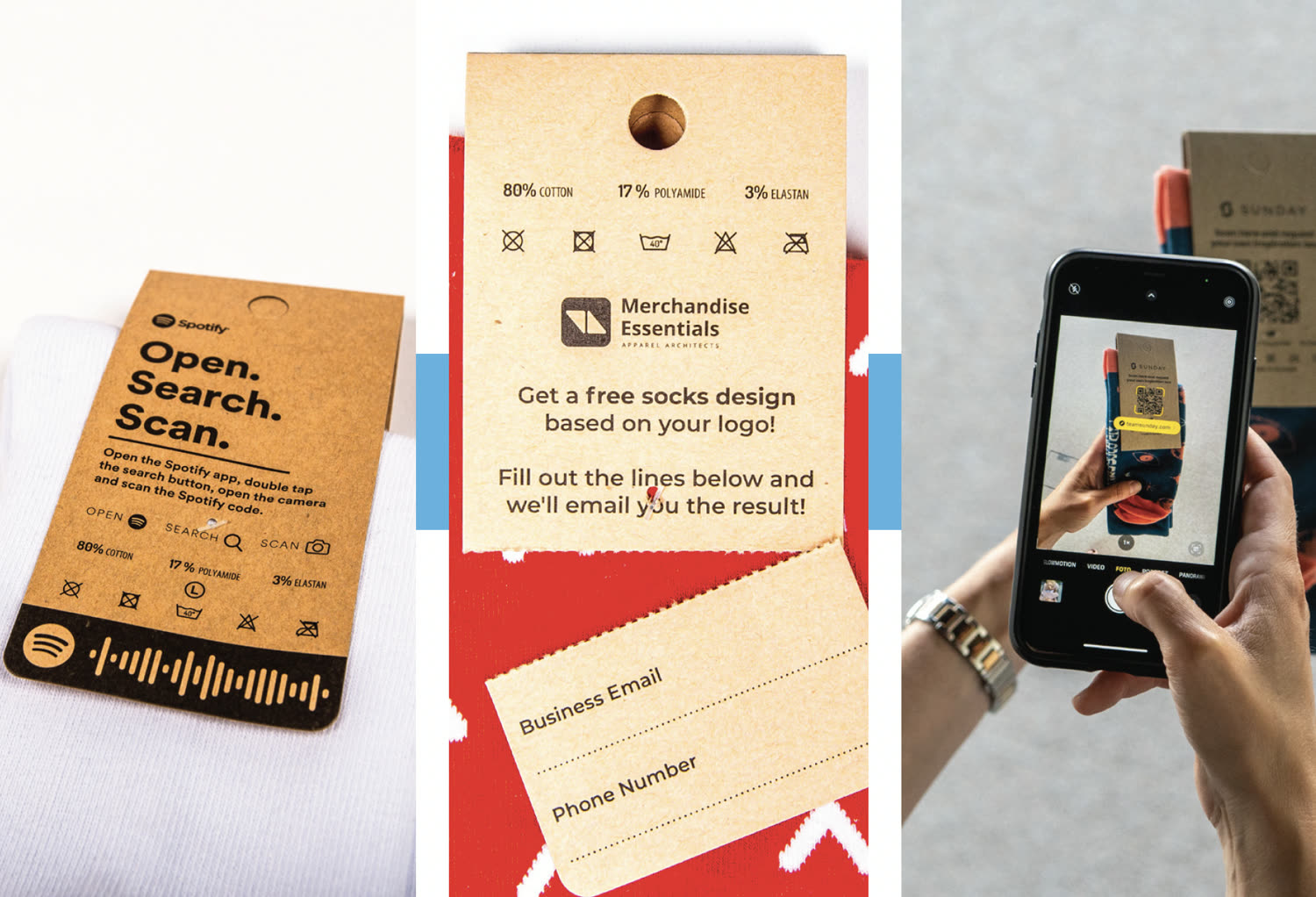
Quality control
QC is where good manufacturers separate from mediocre ones. The standard process: every pair is visually inspected for knitting defects (dropped stitches, wrong colors, holes), sizing consistency (are both socks the same length?), logo accuracy (does the logo match the approved design?), and finish quality (clean toe closure, no loose threads).
The acceptable defect rate should be under 2%. At Sunday, we run 100% visual inspection on every pair. Defective pairs are pulled and don't ship. This sounds obvious, but many manufacturers inspect only a sample of the production run, which means defective pairs reach you.
Packaging and shipping
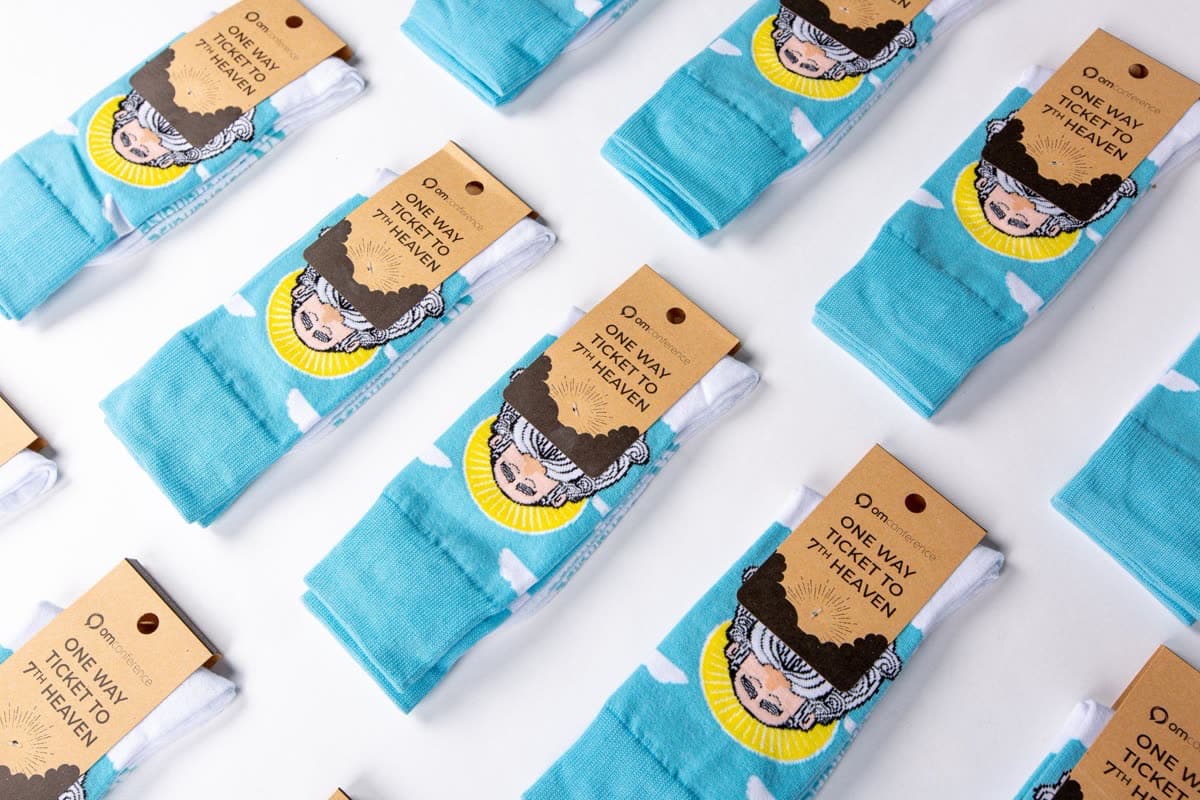
After QC, socks are paired, folded, and packaged according to the order specifications. Packaging is the final manufacturing step and the first thing your recipient sees. The production facility handles belly bands, poly bags, and basic boxes. Custom premium packaging (branded boxes, tissue paper, cards) is typically assembled at a finishing or fulfillment center.
Finished, packaged socks are then shipped to the client's specified destination. For Sunday clients, socks ship to our fulfillment centers in Europe and the US, where they're held for on-demand dispatch to final recipients.
How manufacturing affects your merch decisions
| Decision or situation | Manufacturing impact | Recommendation |
| Complex multi-color design | More yarn changes, slower production | Stay under 6-8 colors for knitted designs |
| Very fine logo detail | Requires high needle count (168+) | Simplify logos for cleaner knit reproduction |
| Premium bamboo or merino | Slower knitting speed, higher waste rate | Expect 15-25% higher cost than cotton |
| Small order (under 50 pairs) | Machine setup time is same as large orders | Setup costs distributed over fewer pairs raises unit price |
| Rush production | Displaces other orders in machine schedule | Expect 15-25% surcharge for rush |
Working with Sunday
You brief the design. We manage everything else.
We select the right factory
Sunday works with vetted manufacturing partners optimized for different materials and styles. We match your brief to the right production facility.
We optimize the design for production
Our design team adapts your logo and colors for the specific needle count and yarn palette. We prevent production issues before they happen.
We run quality control
100% visual inspection on every pair. Pantone color verification against approved samples. Defect rate under 2%. Your name is on the sock. We treat it like ours.
We handle fulfillment
Finished socks ship to our warehouses and dispatch to 200+ countries on demand. Individual or bulk. Automated or manual. Your dashboard tracks everything.
You focus on the brand. We manage yarn, knitting, quality and delivery across 200+ countries.