Selling custom socks through a branded merch program is different from selling socks at retail. The goal isn't margin maximization on anonymous consumers. It's building community, rewarding loyalty, and creating physical touchpoints that strengthen the relationship between a brand and its people.
This distinction matters because it changes every decision. The design should reflect shared identity, not market trends. The pricing should feel fair and accessible, not luxury retail. The distribution should be through channels your audience already uses, not a separate e-commerce site they'll never revisit.
Whether you're a company selling branded socks to employees and partners through an internal storefront, a creator launching merch for a community, or a brand building a physical product line from scratch, the mechanics are the same. This guide covers each step.
- 60-70%: typical margin on branded socks sold through merch programs.
- $12-25: sweet-spot retail price for community-oriented branded socks.
- 3-4x: reorder rate for limited-edition drops vs permanent collections.
Key framing. Selling custom socks as merch works because socks are affordable, universal, and personal. A $15 pair of branded socks is an accessible entry point to your brand. It's cheaper than a hoodie, more personal than a sticker, and more useful than a poster. For communities, it's the physical proof of belonging.
Why sell socks as part of a merch program
| Retail | Merch program | |
| Goal | Revenue and market share | Community, brand affinity, engagement |
| Design driver | Fashion trends | Shared identity and brand story |
| Pricing | Market-rate competitive | Fair and accessible for the community |
| Distribution | E-commerce, retail stores | Internal storefront, events, direct |
| Volume model | Continuous high-volume | Limited drops, seasonal, on-demand |
| Success metric | Revenue, sell-through rate | Engagement, reorder rate, social sharing |
Product strategy and positioning
Start with one strong design rather than a full collection. A single sock that captures your brand's personality will outperform five generic designs. Position it clearly: "Our community sock" or "The [Brand Name] crew sock." Give it a name, not just a SKU number.
Once the first design proves demand (measured by sell-through and social posts), expand to a collection of 2-4 designs with different color stories or themes. Each design should have a reason to exist: a seasonal edition, a collaboration, a milestone commemoration.
Pricing and margins
Production cost for a quality branded crew sock at 200+ quantity: $4-7 per pair. Retail pricing for community merch: $12-25 per pair. That gives you a 60-75% gross margin, which is healthy enough to cover fulfillment, packaging, and platform costs while keeping the price accessible.
Don't price like a luxury sock brand ($30+) unless your audience expects premium pricing. The sweet spot for merch socks is "I'll grab a pair without thinking about it." That's $12-18 for most audiences. If you're selling through a subsidized employee store with company credits, you can price lower and treat the difference as a benefit cost.
Design for sellable socks
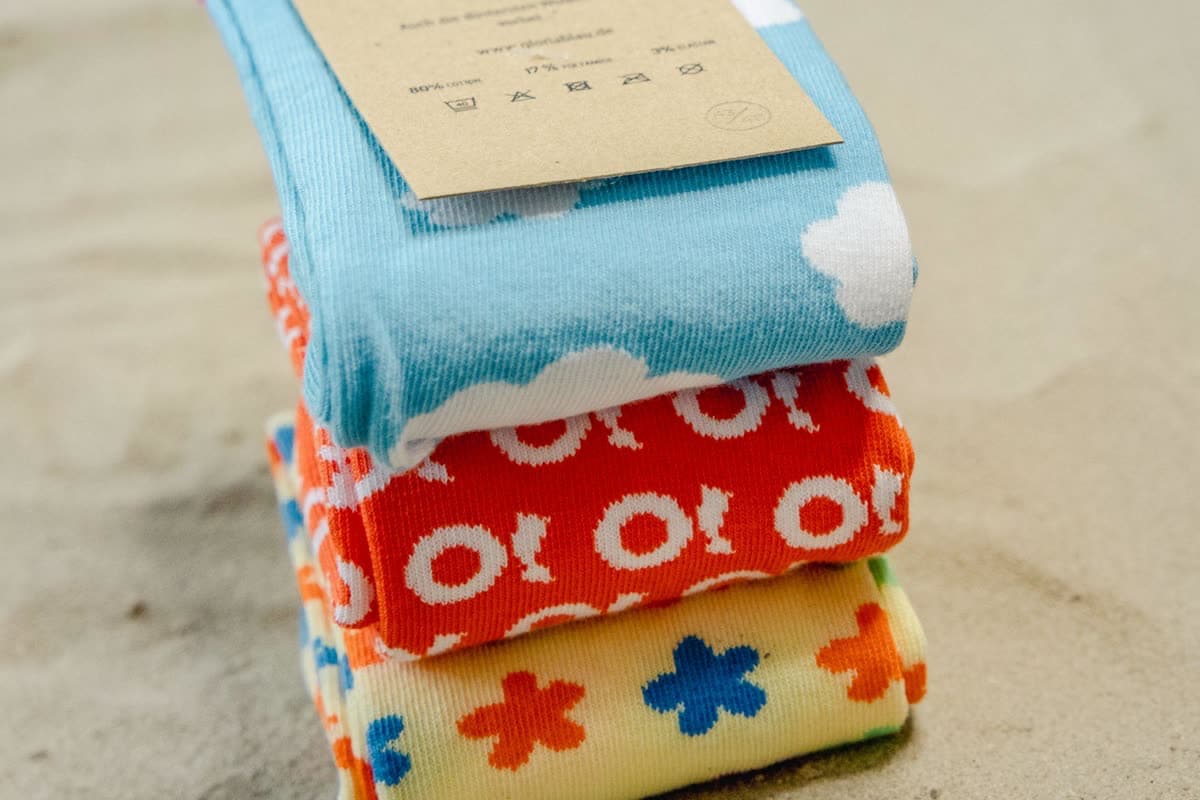
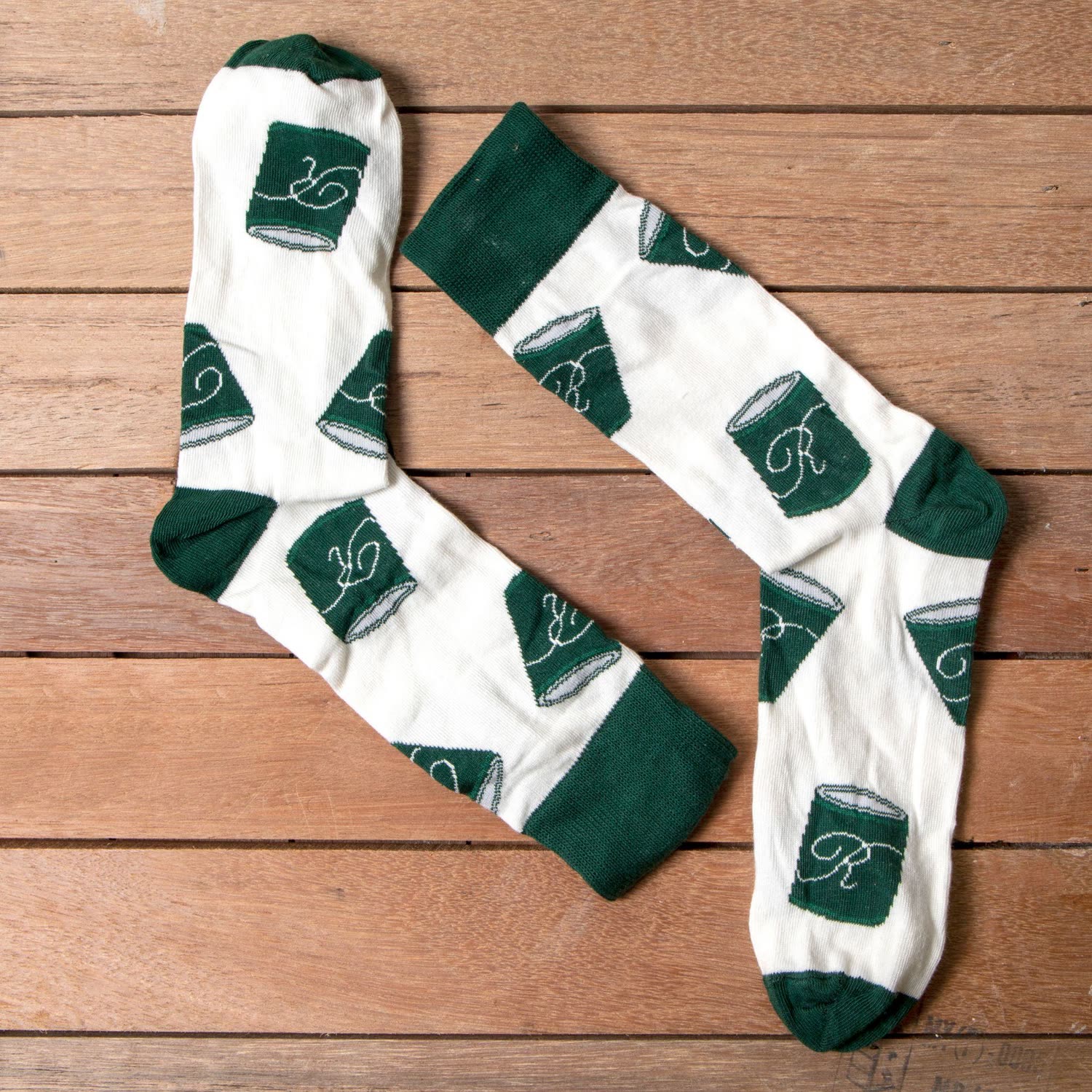
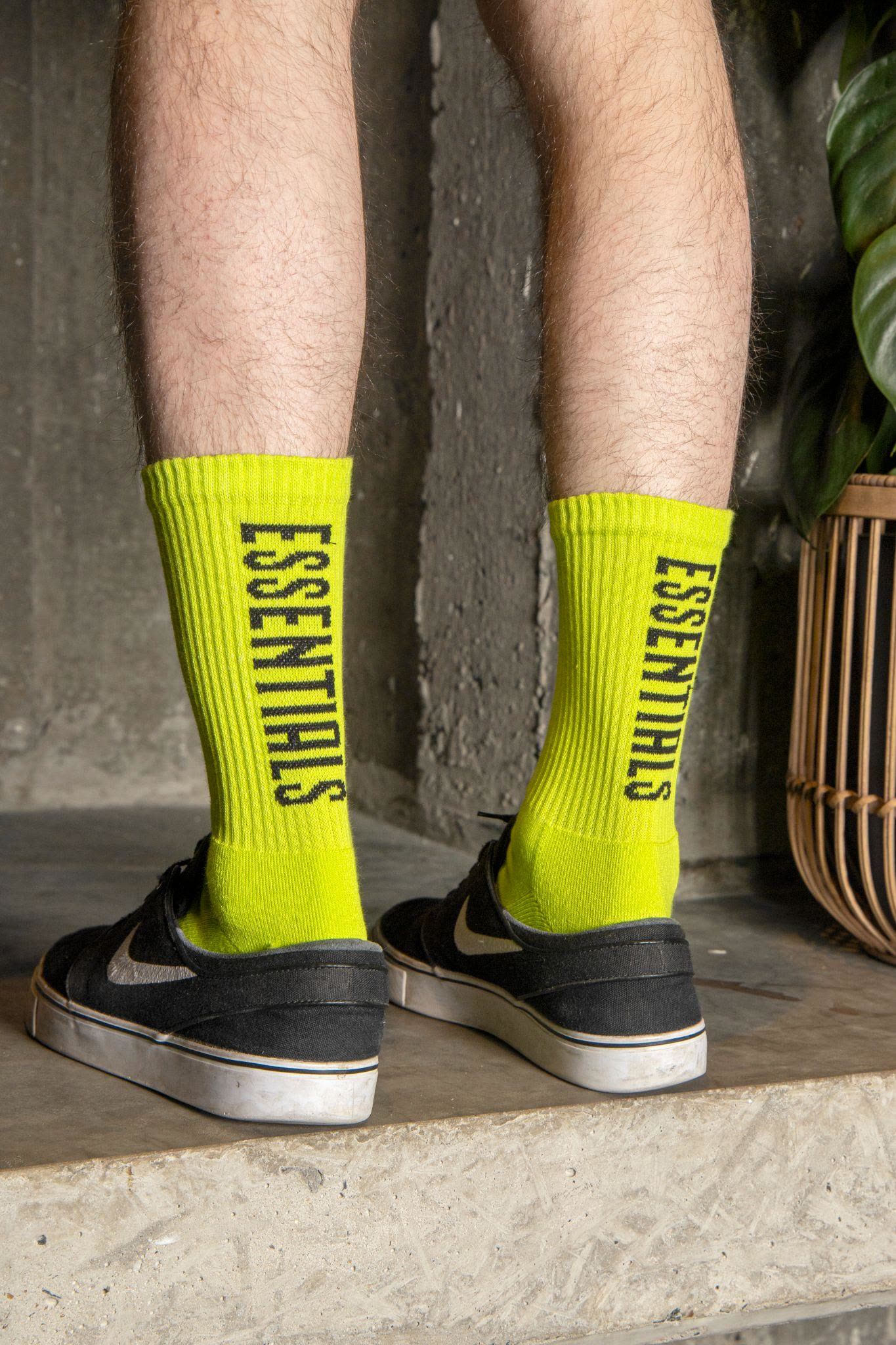
Sellable socks need to work as fashion items, not corporate billboards. The design should make someone think "I'd wear those" before they notice the brand mark. Use your color palette boldly, incorporate patterns that feel intentional, and keep the logo secondary to the overall design.
Limited-edition designs drive urgency. "Only 200 pairs" creates scarcity that motivates immediate purchase. Date-stamped designs ("Summer 2025 Edition") create collectibility over time.
Storefront setup and fulfillment
You don't need a full e-commerce site. A branded merch storefront through Sunday's Wardrobe platform gives you a professional storefront with product listings, size selection, payment processing, and global shipping. Stock is held at our fulfillment centers and ships on demand.
For companies selling to employees, the storefront can use a credit/coin system where employees receive a merch budget and "spend" it on items including socks. This approach drives engagement without creating a cash transaction.
Launch campaigns and bundles
Launch your sock line as an event, not a quiet product listing. Announce it on your channels with a clear story: why you made this sock, who it's for, and what it represents. Show people wearing them. Create a countdown.
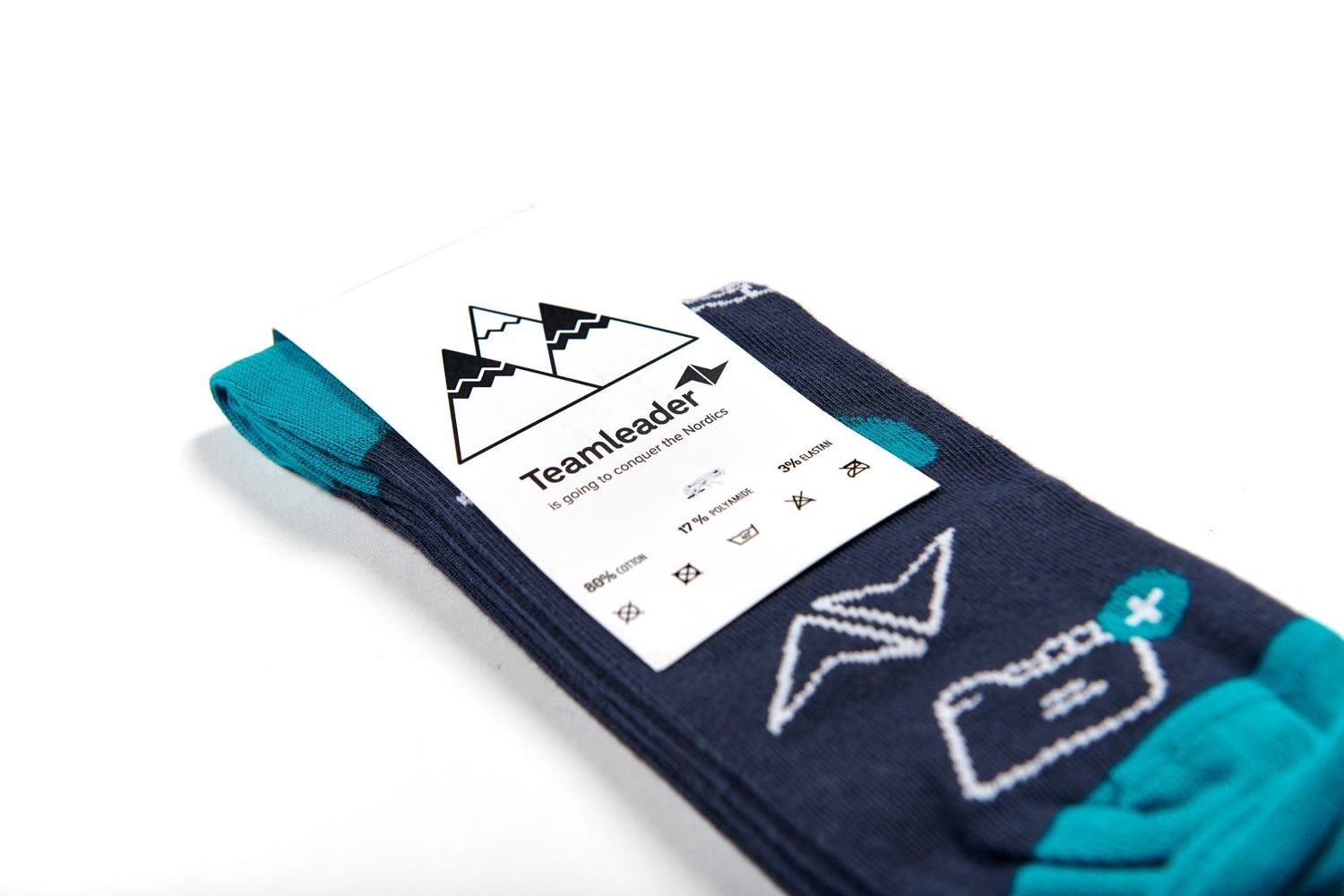
Bundles increase average order value. Pair socks with a complementary item (beanie, mug, or sticker pack) at a bundled price. A "starter kit" bundle also makes the purchase feel more substantial than a single pair of socks.
Repeat drops and community building
The strongest merch programs operate on a drop model: new designs released quarterly or seasonally, each with a limited run. This creates anticipation, rewards repeat buyers, and keeps your merch feed fresh on social media.
Between drops, engage your community: polls on next colorways, behind-the-scenes design process, user-generated photos of people wearing the socks. The merch becomes a conversation, not just a product.
Launch checklist
Custom sock launch checklist
- Define your audience and positioning (community, employee, fan base)
- Design 1-2 strong initial designs with your brand story
- Set pricing: production cost + margin + fulfillment buffer
- Choose your storefront (Sunday Wardrobe, Shopify, or internal)
- Produce initial inventory (200-500 pairs for first drop)
- Set up fulfillment and shipping
- Create launch assets: photos, social posts, email announcement
- Announce with a 7-day countdown to build anticipation
- Launch with a 48-72 hour "first access" window for core community
- Track sales, social mentions, and reorder signals
- Plan second drop based on learnings from launch
From first drop to ongoing program
Scale from a single launch to a self-sustaining merch channel.
Test with one design
Launch a single strong design to your core audience. Measure demand, gather feedback, and learn what resonates before investing in a full collection.
Build a 3-design collection
Based on first-drop data, create two more designs. Vary the style: one bold, one subtle, one limited edition. This gives buyers a reason to return.
Establish a drop calendar
Commit to quarterly drops. Announce them in advance. Each drop refreshes your merch program and gives your community something to anticipate.
Add bundles and collaborations
Partner with complementary brands or internal teams for co-branded socks. Bundle socks with other merch items. Expand the product story beyond single-pair sales.
Automate and scale
Move to platform-managed inventory with automated restocking, storefront analytics, and on-demand global fulfillment. The merch runs itself while you focus on community and design.
Design, produce, store, and sell. Sunday handles the infrastructure so you can focus on your brand.