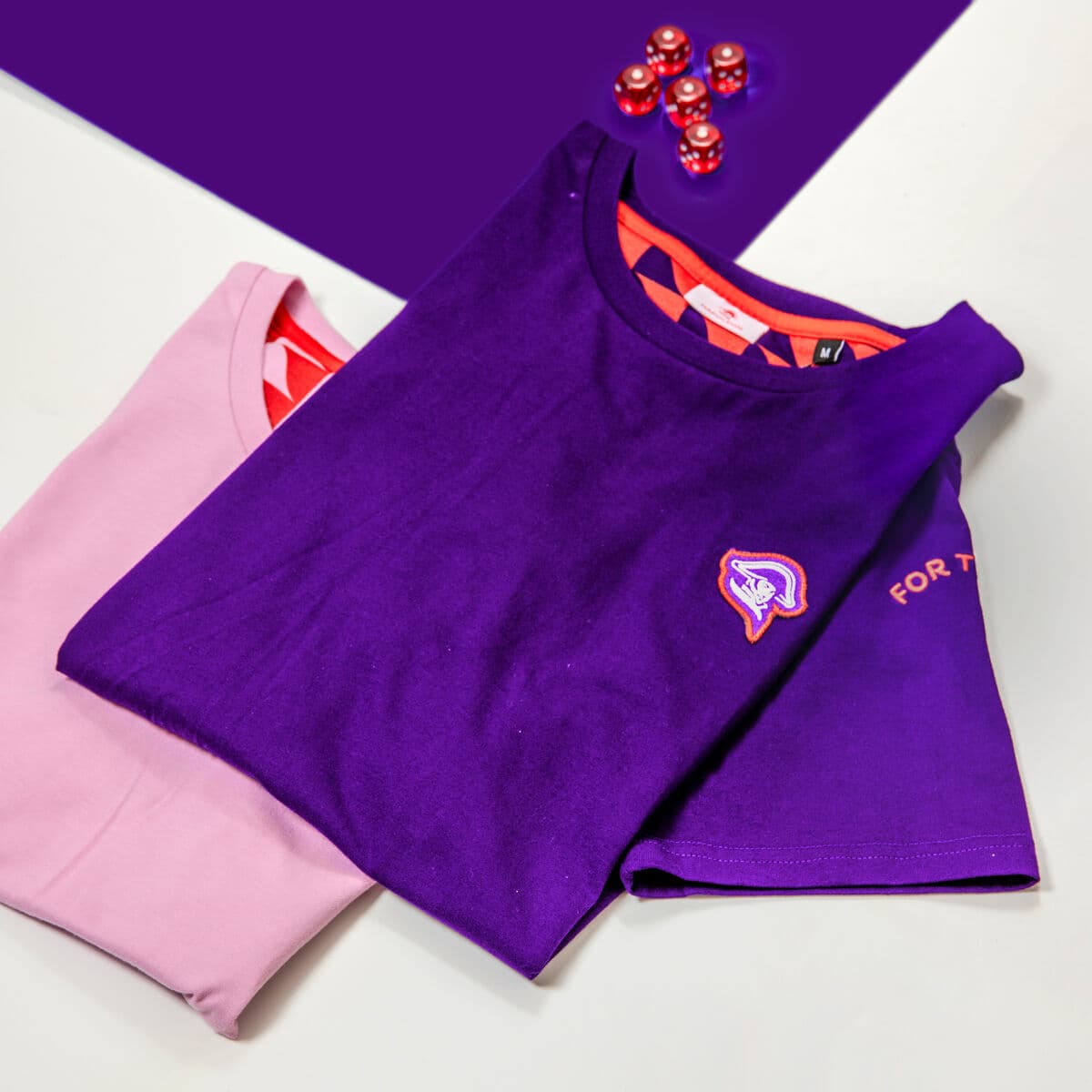





A merchandise storefront is a branded online store where people browse, select, and order branded merchandise. That's the surface definition. The deeper value is what it replaces: spreadsheets of merch requests, email threads about sizes, manual packing sessions in the office kitchen, and the person in HR who somehow became the "swag coordinator" despite never applying for the role.
A storefront turns merch distribution from manual labor into a self-service experience. Employees pick their own items. Event attendees redeem their allocation. Partners browse and order on their own schedule. Each order ships automatically from a fulfillment center. Nobody hand-packs anything. Nobody manages a spreadsheet.
This guide explains when a storefront makes sense, what features to look for, and how Sunday's Wardrobe platform powers branded merchandise programs for 4,000+ brands.
- 60%: shipping cost reduction for HubSpot using Sunday's storefront.
- 40 min: monthly admin for Zalando's merch program (down from 40 hours).
- 200+: countries supported for storefront order fulfillment.
Definition. A merchandise storefront is a branded e-commerce experience for distributing company merchandise. Unlike a public online store, it's typically access-controlled (invite-only, SSO login, or specific URL) and may use credits, coins, or budgets instead of direct payment. It's the operational layer that makes merchandise programs scalable.
What is a merchandise storefront?
At its simplest, a merch storefront is a website where authorized people can browse and order branded items. It looks like a small e-commerce store but operates under different rules. Access might be restricted to employees, partners, or specific groups. Payment might use company credits instead of credit cards. Inventory is managed centrally, and fulfillment happens automatically from a warehouse.
The shift from manual merch distribution to a storefront model is the difference between reactive and proactive merchandise management. Instead of responding to individual requests, you stock a storefront and let people self-serve. Your role moves from order fulfillment to collection curation.
When to use one
| Manual approach | With a storefront | |
| New hire onboarding (50/month) | Manual packing, spreadsheet tracking | Automated order on hire date, ships to home |
| Annual merch refresh (500 employees) | Survey, order, distribute manually | Employees choose their own items from a curated selection |
| Partner rewards program | Email requests, manual fulfillment | Partners redeem credits on the storefront |
| Event follow-up (1,000 attendees) | Ship all at once, no choice | Attendees select and order from the storefront via redeem link |
| Customer appreciation | One-size-fits-all gift | Customers choose preferred item and size |
Storefront audiences
- Employees: The most common use case. Employees access the storefront to claim onboarding kits, select anniversary gifts, or spend a merch budget. Access controlled by SSO or invite link. Often uses a credit/coin system where each employee gets an annual merch allowance.
- Fans and community: Public or semi-public storefront for brand fans, community members, or social followers. Direct payment (credit card). Limited-edition drops create urgency and engagement.
- Partners and clients: Invite-only access for resellers, affiliates, agencies, or key clients. May use credits allocated per account. Often co-branded items available.
Features that matter
| What to look for | |
| Branded experience | The storefront should look like your brand, not a generic e-commerce template |
| Access control | Invite-only, SSO, or specific group permissions. Not every storefront should be public |
| Credit/coin system | Employees "spend" allocated credits instead of paying. Simplifies budgeting |
| Approval workflows | Manager approval for high-value items or bulk orders. Controls spend |
| Size selection | Recipients choose their own size. Eliminates size surveys and returns |
| Global shipping | Ship to any country from centralized inventory. Critical for distributed teams |
| Real-time inventory | Stock levels visible. Automated restock alerts. No overselling |
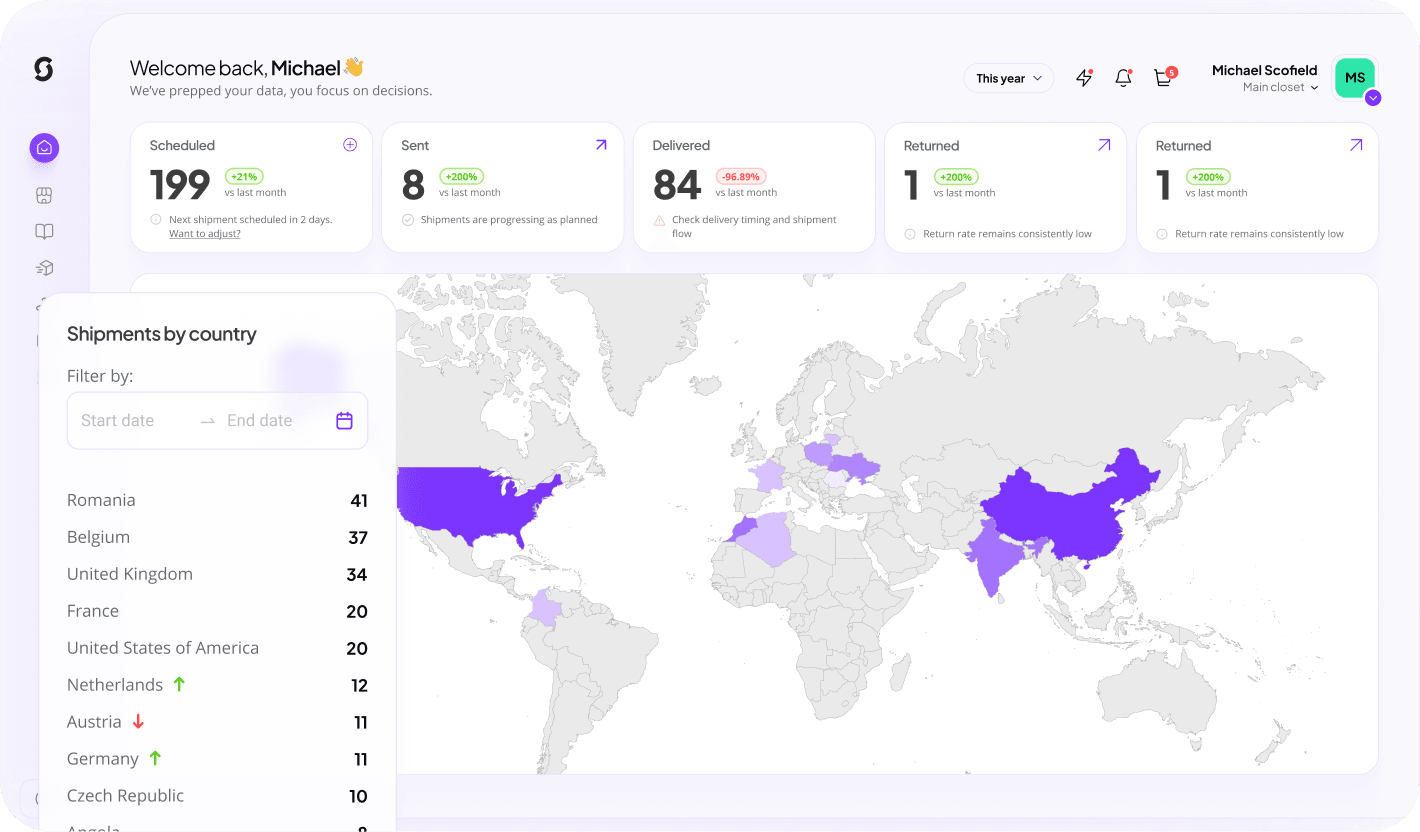
| Reporting | Track who ordered what, spending per department, popular items, fulfillment status |
Shopify vs dedicated merch platform
Shopify works well for selling socks to the public. It's a retail e-commerce platform built for direct-to-consumer sales. But it doesn't handle employee credit systems, access-controlled storefronts, automated onboarding flows, or centralized merch program management. For those, you need a purpose-built platform.
Sunday's Wardrobe is built specifically for branded merchandise programs. It handles the operational complexity that retail platforms don't: credits and budgets, group-based access, approval workflows, centralized inventory across product types, and global fulfillment from one dashboard. If you're running a merch program (not a retail store), this is the right layer.
Sunday Wardrobe as your storefront
Sunday Wardrobe is the platform that connects product design, inventory, storefront, and fulfillment in one system. You curate a collection of branded items (socks, apparel, accessories), stock them at our fulfillment centers, and give your audience access to a branded storefront where they browse, select, and order. Sunday handles the rest: picking, packing, shipping to 200+ countries.
The platform integrates with onboarding workflows for automatic new-hire fulfillment. It supports credit/coin systems for employee merch budgets. It provides real-time analytics on orders, popular items, and spending by department. And it works for any audience: employees, partners, customers, or public fans.
Setting up your merch storefront
From zero to operational storefront in five steps.
01. Define your audience and access model
Who shops here? Employees only? Partners? Public? This determines access controls, payment method (credits vs card), and the product catalog.
02. Curate your product collection
Start with 5-10 items including socks, a hoodie or T-shirt, and 2-3 accessories. Don't launch with 50 products. A curated selection feels intentional. A sprawling catalog feels like a warehouse.
03. Produce and stock inventory
Manufacture your branded items and ship them to Sunday's fulfillment centers. Stock levels are tracked in real time through your dashboard.
04. Configure the storefront
Brand the storefront with your logo and colors. Set up access controls, credit allocations, and shipping options. Preview and test before going live.
05. Launch and communicate
Announce the storefront to your audience. Provide clear instructions on how to access, browse, and order. Track adoption in the first two weeks and adjust the collection based on what people actually want.
Sunday Wardrobe handles products, inventory, storefront, and global fulfillment in one platform.