



An employee swag store, or employee store, is a branded online store where staff sign in, spend a company-funded balance and receive merchandise directly. It works when the first experience is receiving value rather than paying for it. Give everyone an item or a coin balance at launch, then let optional paid extras follow. That order decides adoption. This guide is part of Sunday's complete company swag store guide.
One rule runs through this entire guide: give before you sell. Everything else, the login flow, the photography, the assortment, the permissions, is downstream of whether the store feels like a benefit or a shop your employer opened to make money from you.
What's in this guide
- Why a paid-first employee store fails
- Seed value at launch
- What people need from an employee swag store
- Login, SSO and permissions
- New hires vs existing employees
- Designing coins around real moments
- Keeping the store alive
- What employees actually wear
- What adoption actually looks like
- Frequently asked questions
Why a paid-first employee swag store fails
Most failed employee stores fail the same way. The company launches a well-designed storefront full of branded products, all of them priced, and waits. A handful of enthusiasts buy a hoodie. Everyone else looks once and never returns.
The reason is not price sensitivity. It is the read on intent. When the only thing a store does is take money from staff, people conclude the employer is profiting from them, and that conclusion is very hard to reverse afterwards. Merchandise is supposed to signal belonging. A price tag with no gift behind it signals the opposite.
This is why an employee store is not a revenue line. The return on a swag store for employees is engagement, ambassadorship and culture, not merch margin. Once you accept that, the design decisions get easier, because you stop optimising for conversion and start optimising for whether people feel good using it.
Seed value at launch
Seeding is the highest-impact thing you can do on launch day. It costs a defined amount, it happens once, and it sets the perception permanently.
Fastned's employee store shows the simplest working version. Employees sign in with SSO, coins are allocated automatically on first login, and Fastned can add more whenever there is a reason to. Nobody arrives at an empty basket and a price list. The first visit is a reward, and the store spends the rest of its life being judged against that first impression.
Three seeding patterns that work:
- Automatic coins on first login. Zero admin, immediate value, and it scales to any headcount.
- A launch item everyone can claim. One good product, free, ordered through the store so people learn the flow.
- A funded baseline plus optional extras. Essentials covered by the company, upgrades available to buy.
What matters is that value arrives before any request for payment. Whether you use coins, credits or free items is a mechanics question, covered in swag store funding models. The build itself is in how to launch a swag store.
What people need from an employee swag store
Employees do not grade your store against other corporate tools. They grade it against the last consumer store they used, which is a much harder comparison and a fairer one. Seven expectations show up every time:
- Fast, familiar navigation. Categories, a grid, a product page. Nothing to learn.
- Retail-quality photography. Flat, badly lit product shots undo good products instantly.
- Low-friction login and checkout. No account creation for the sake of it.
- Transparent balances, prices, shipping and status. People should never wonder what something costs them.
- Relevant products, not an oversized catalogue. Less choice creates more usage.
- Permissions that quietly tailor what they see. No error messages, no locked products, just the right store.
- A reason to return. Which almost always means a new collection.
Interstellar's employee store is a useful example of how much the experience layer matters on its own. It runs a coin model, and it does not use SSO today. What it has is a store people like looking at, and it is praised internally for its look and feel. That praise is qualitative feedback rather than a measured result, and it is worth labelling as such. It still tells you something real: employees notice design, and they respond to it.
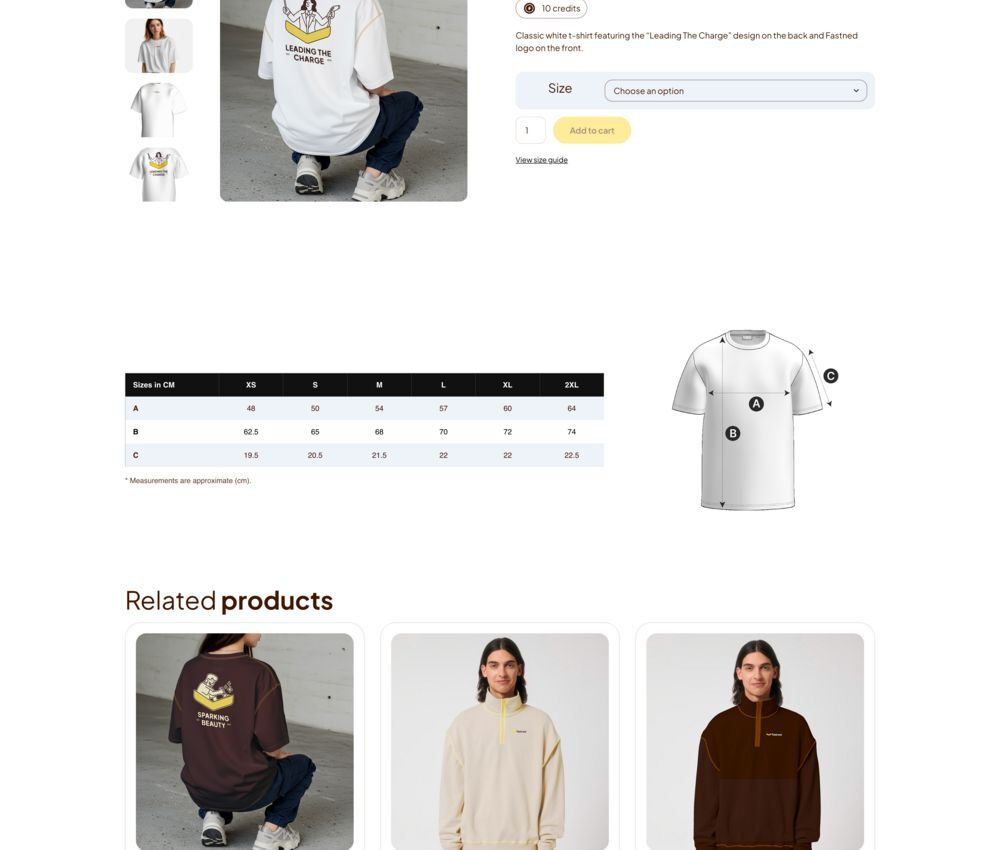
Fastned's employee store: SSO login, coins allocated automatically on first login, and the option for the company to add more. Give before you sell, implemented in one step.
Login, SSO and permissions
Login is where most employee stores lose people. Every extra field is a reason to close the tab, and a password reset on day one is fatal to a launch. For any organisation with an identity provider, single sign-on is the right answer: employees are recognised, IT is comfortable, and there is no separate credential to forget.
SSO also does quiet work beyond convenience. It tells the store who someone is, which lets permissions tailor the experience without anyone noticing. ITI's store hides both individual products and entire pages depending on the user's role, and runs a custom SSO experience on top. One storefront, several audiences, none of them aware of the others. The store is sized for an expected 35,000 to 40,000 users a year, which is a design target rather than a reported result, and that scale is exactly why the rules have to be automatic.
The rule of thumb: permissions should subtract, never scold. If someone is not eligible for an item, they should simply not see it. Locked products and access-denied messages turn a benefit into a bureaucracy. How the identity layer connects to HR systems and rewards tools is covered in swag store integrations.
New hires vs existing employees
These are two different jobs and one store often tries to do both badly. Separate them.
| New hires | Existing employees | |
|---|---|---|
| What they need | Something deterministic on day one | An ongoing reason to come back |
| Right format | A welcome kit or a small essential selection | A rotating store with collections |
| Funding | Company-funded, no decision required | Coins tied to anniversaries and recognition |
| Failure mode | An open catalogue and no guidance | The same nine products all year |
A new joiner does not want to browse. They want the right laptop sleeve, the right hoodie in the right size, and to feel expected. That is a kit, and often a redeem page rather than a full store. The comparison is in company swag boxes vs swag stores, and the kit itself in new hire welcome kits.
Existing employees are the opposite. They already have the basics, so the store has to earn attention with new collections, seasonal drops and credits attached to moments that mean something. That includes work anniversary gifts and recognition, which is where the coin model does its best work.
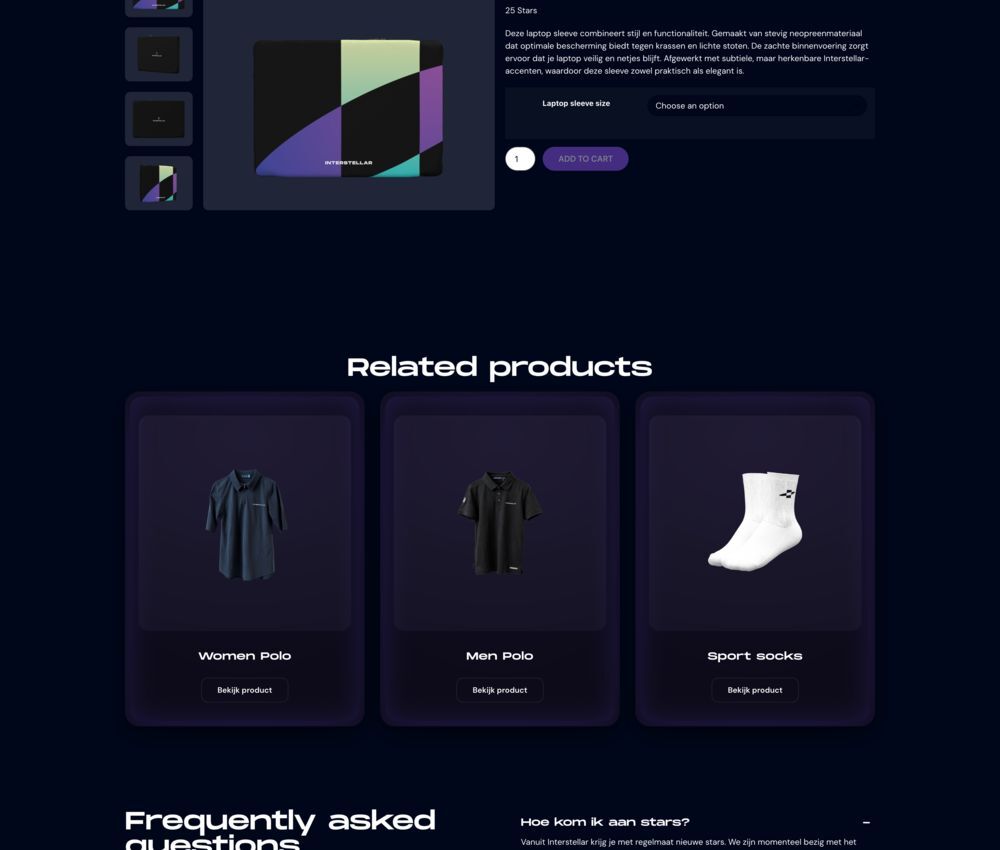
Interstellar runs a coin model without SSO today. The store is praised internally for its look and feel, which is qualitative feedback rather than a measured outcome, and still a signal worth taking seriously.
Designing coins around real moments
Coins are not gamification. They are a way of connecting merchandise to moments that already matter in the employee lifecycle. The question to ask is not how many coins someone should get. It is what behaviour or moment should this balance enable.
The moments that consistently justify a credit:
- Onboarding and the first week.
- Work anniversaries.
- Birthdays.
- Peer or manager recognition.
- Referrals that lead to a hire.
- Completed training or certification.
- Wellness participation.
- Sales or team achievement.
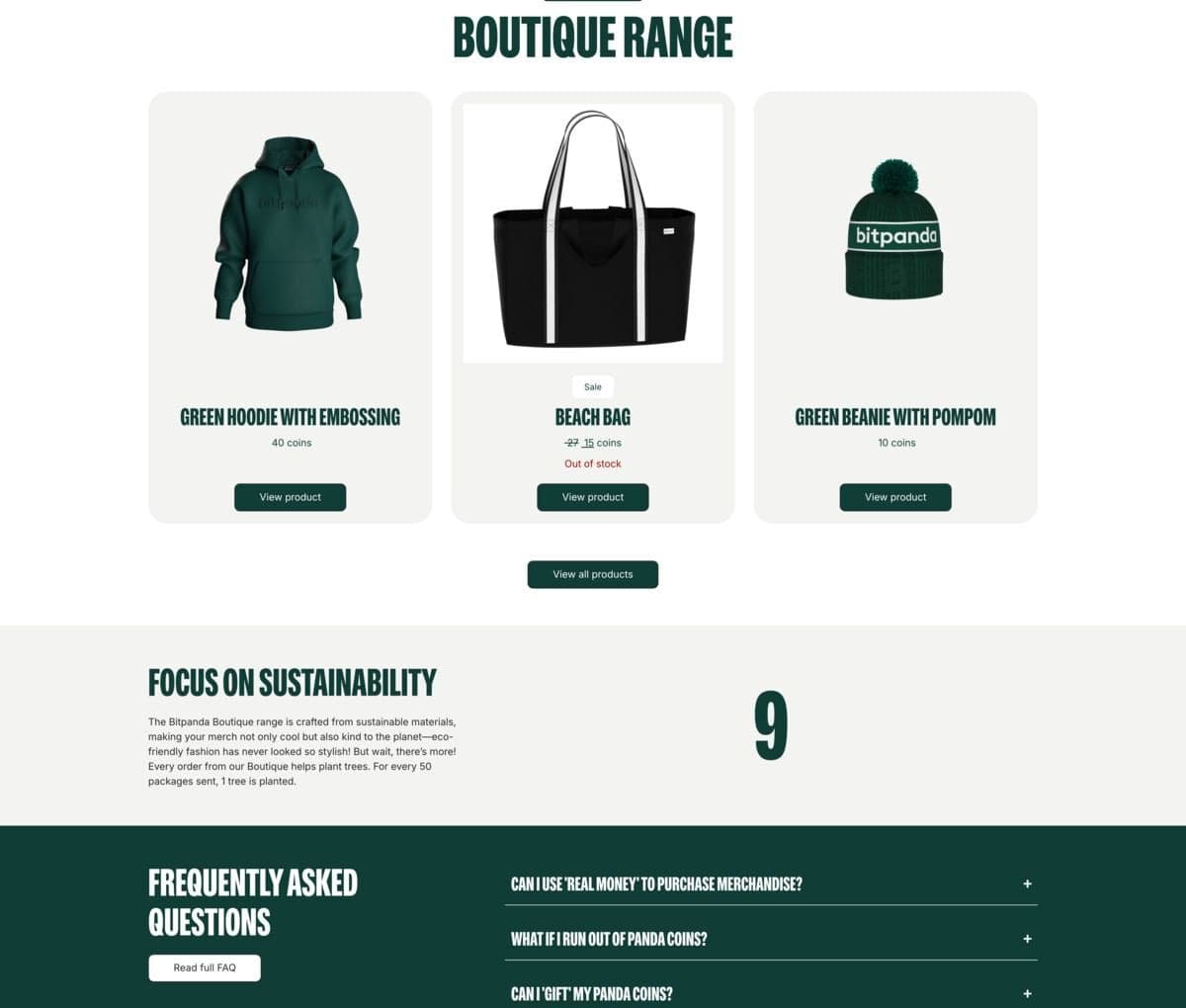
Allocation can stay manual or run automatically. Manual keeps it personal, which is right for recognition, where the point is that a human decided. HRIS-driven allocation scales, which is right for lifecycle events like anniversaries where the trigger is a date. Bitpanda Boutique runs credits through the Workday API and tags new products automatically, so the store stays current without anyone maintaining it by hand. Most mature programmes use both routes at once.
Whatever you choose, tell people what a coin is worth. An unexplained balance creates hesitation, and hesitation is the enemy of a store you want people to use casually.
Keeping the store alive
The most common failure after launch is not a bad store. It is a static one. A store that never changes gets one visit per employee and then quietly disappears from everyone's mental map of the company.
Rotation fixes it. Quarterly collections, a seasonal drop, a limited item for a company milestone, an annual sell-off to clear what did not move. Controlled scarcity is a feature here: when a drop sells out and the core essentials remain available, the store feels alive rather than broken. The mechanics of stock rotation are in swag inventory management.
And keep the quality bar high. It is tempting to widen the assortment with cheap print-on-demand items to give people more to look at, but a low-quality item that gets worn twice damages the brand more than a small catalogue ever would. The trade-off is set out in print on demand vs warehouse stock.
What employees actually wear
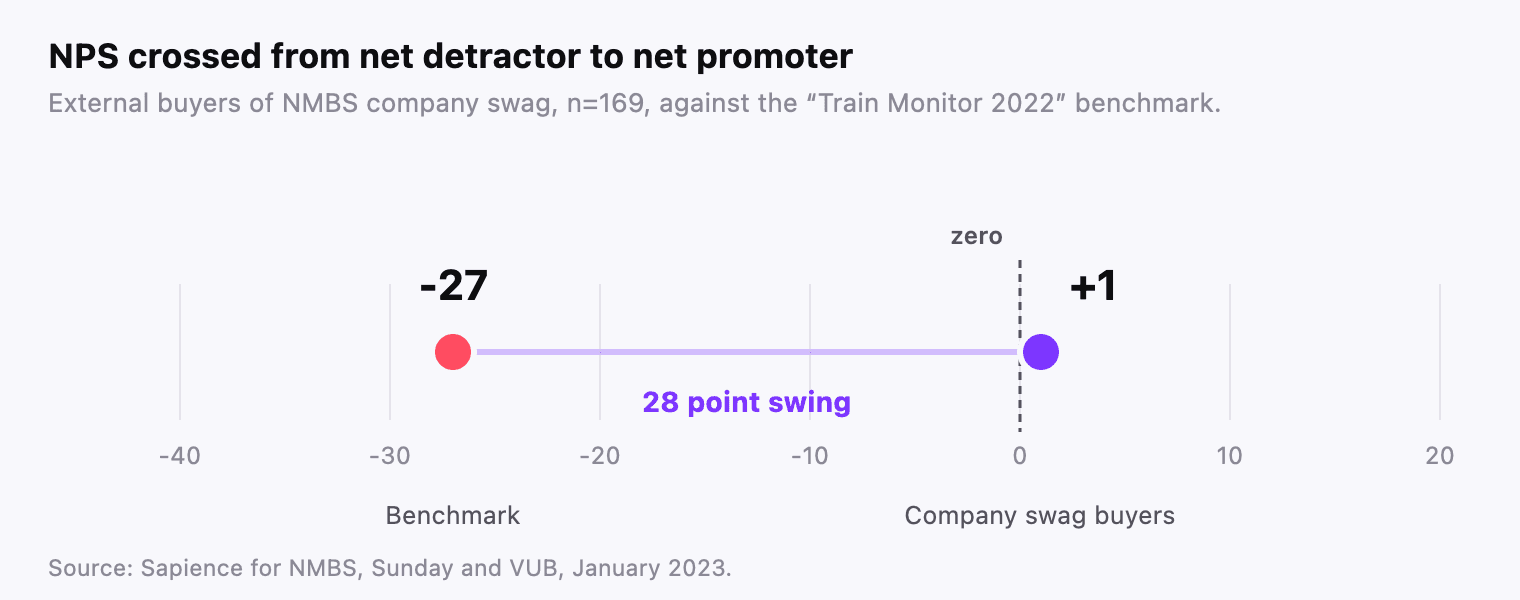
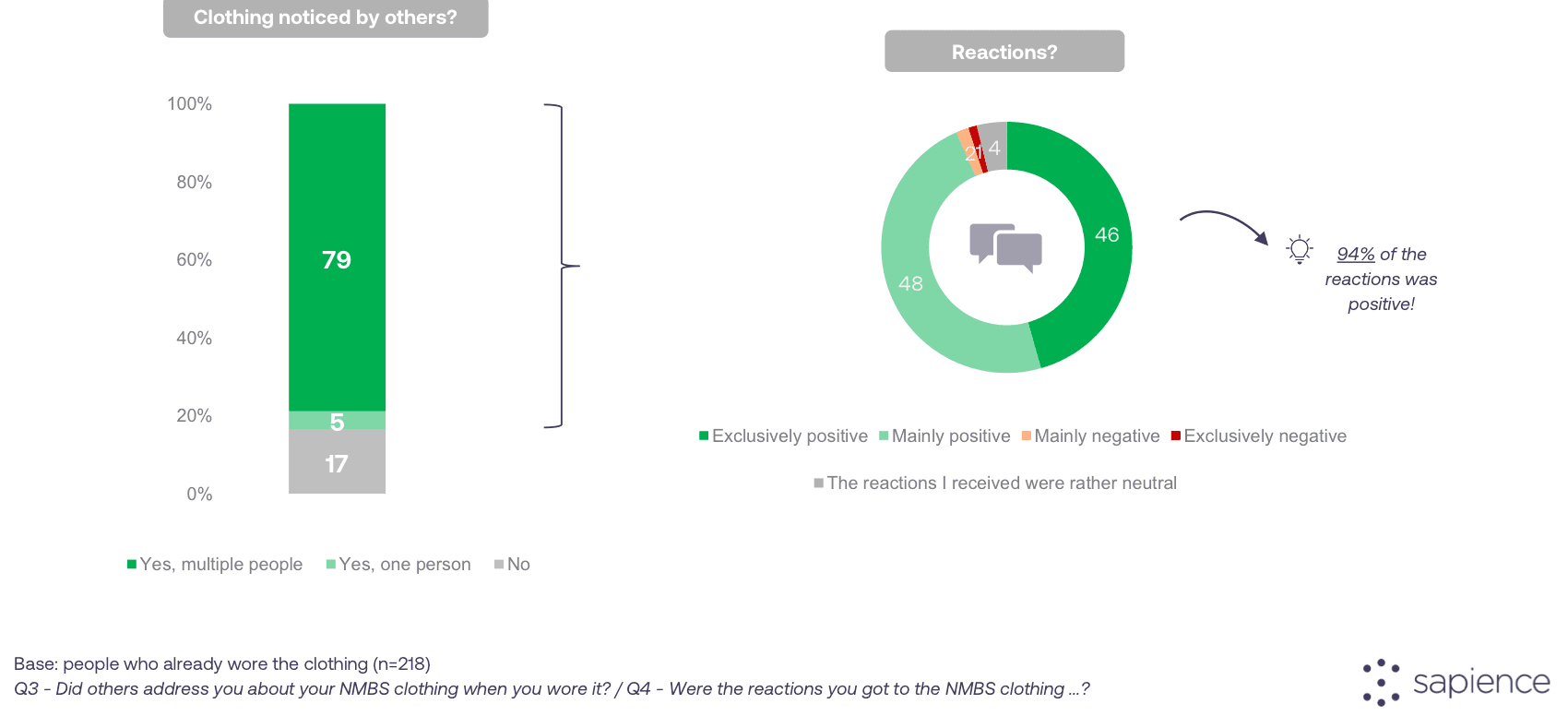
An employee store only pays back if people use what they order. Sunday commissioned research agency Sapience and the VUB to test that in a 258-person study of the NMBS merchandise programme. Employees who received merchandise scored 19% higher on engagement, 21% higher on satisfaction and 26% higher on ambassadorship.
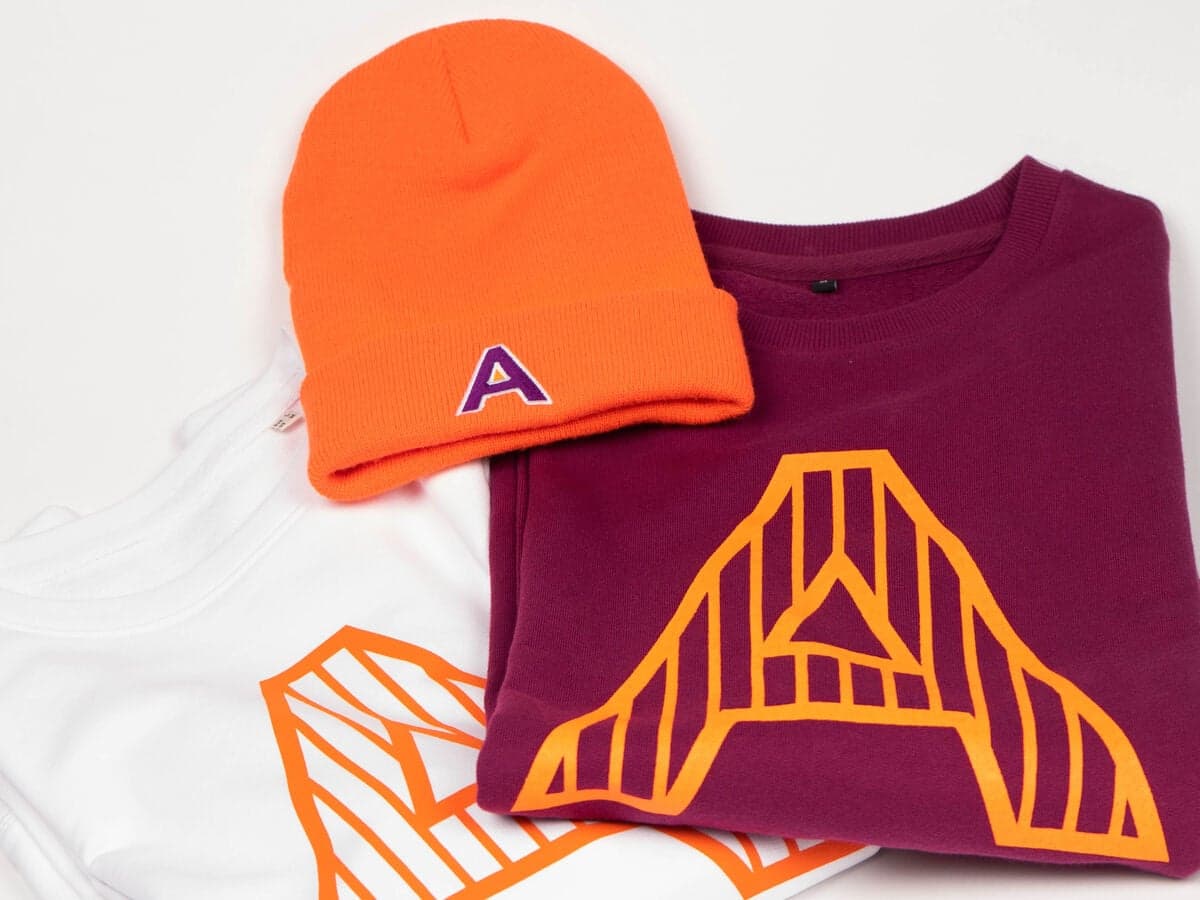
What they wore was just as telling. Branded bags were worn more than twice by 69% of recipients and sweaters by 67%, while 31% of plain socks were never worn. Across Sunday's 4,000+ brands, sports socks are still the most-ordered product, followed by T-shirts and hoodies. The lesson is not to drop socks. It is that design decides whether a basic gets used.
What adoption actually looks like
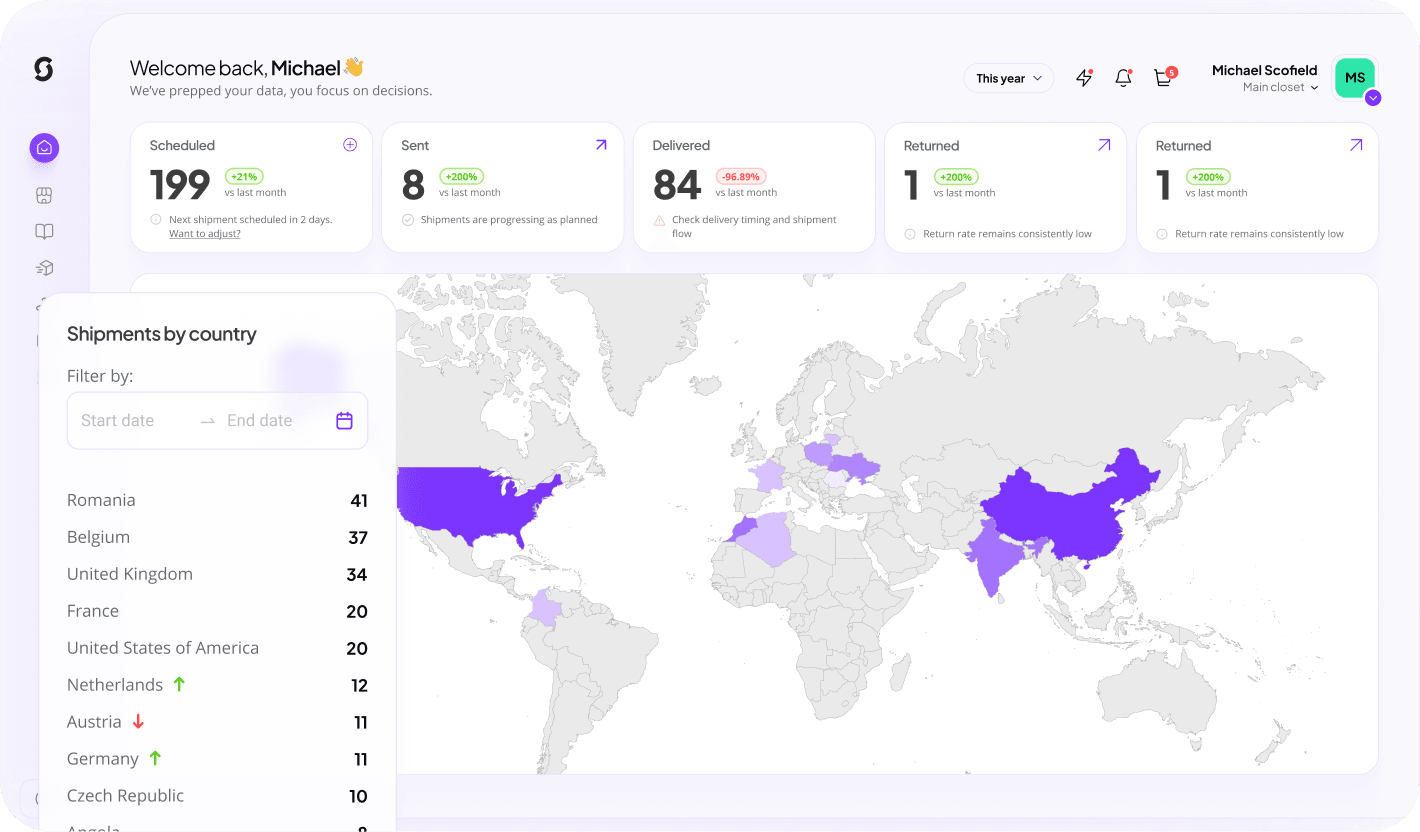
Orders and sessions tell you the store is working mechanically. They do not tell you it was worth building. For an employee swag store, the honest measures sit one level up: adoption across the eligible population, redemption of the balances you granted, repeat use rather than a single launch spike, MerchMetrics on how merchandise is actually being used, and direct feedback from the people using it.
Connect those to why the store exists, which for employee programmes is engagement, retention, ambassadorship and culture. A store with modest order volume and most of the eligible population redeeming a balance is healthier than one with strong revenue and thin participation. Measure the campaign, not the store. Full framework in swag store metrics.
If you are still deciding whether an employee store is the right interface at all, start from the company swag store hub. If the operational side is what you need to solve, that is the swag management platform layer, a different product from the store your employees see, compared in best swag platform. To see what Sunday builds, explore the catalog, the platform and how it works.
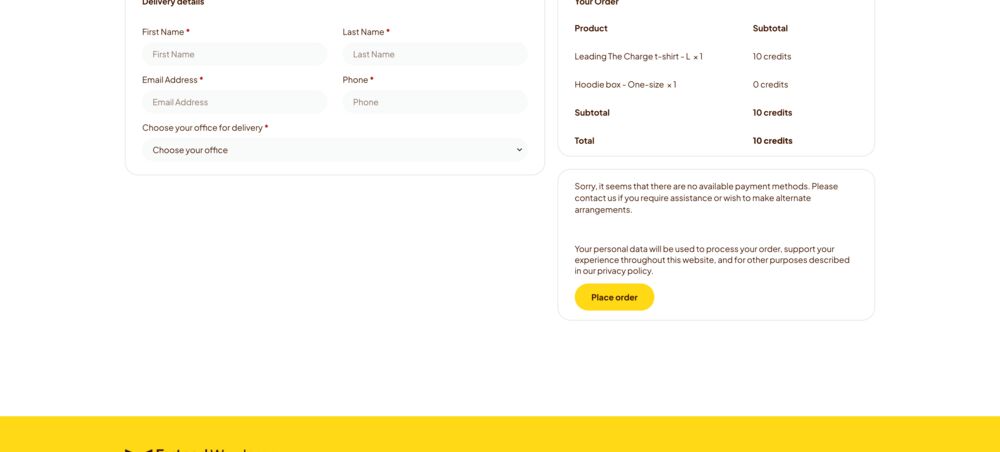
Checkout is where good intentions get tested. Transparent balances, no surprise costs, no unnecessary account creation.
Frequently asked questions
What is an employee swag store?
A branded online store where employees sign in, usually with SSO, and spend a company-funded balance of coins or credits on merchandise. Orders ship directly to their home or office. It works when the first experience is receiving value, with optional paid extras only after a funded baseline.
Should employees pay for company swag?
Not first. A store where everything is priced reads as the employer profiting from staff, and adoption collapses. Give everyone an item, credits or coins at launch, then offer paid extras. The return is engagement and ambassadorship: an NMBS study of 258 people measured +19% engagement and +26% ambassadorship.
How do coins work in an employee swag store?
Coins are a company-funded balance tied to real moments: onboarding, anniversaries, birthdays, recognition, referrals. Allocate them manually for recognition or automatically from your HRIS for date-based events. Bitpanda Boutique runs credits through the Workday API. Always tell people what one coin is worth.
Do you need SSO for an employee swag store?
If you have an identity provider, yes. SSO removes passwords and account creation, keeps IT comfortable, and tells the store who each person is so permissions can quietly hide products or pages by role. Fastned and ITI both run SSO-gated Sunday stores, and the setup is part of implementation.
What merch do employees actually use?
Useful, well-designed basics. In a 258-person NMBS study, 69% wore branded bags and 67% wore sweaters more than twice, while 31% of plain socks were never worn. Across Sunday's 4,000+ brands, socks, T-shirts and hoodies are the most-ordered products, so design quality decides whether they get used.
An employee store people actually use
SSO, coins, curated collections, automated fulfilment and global shipping. Create a free account and build an employee swag store that feels like a benefit.
Build your employee store