
This article is part of our complete guide to branded workwear.
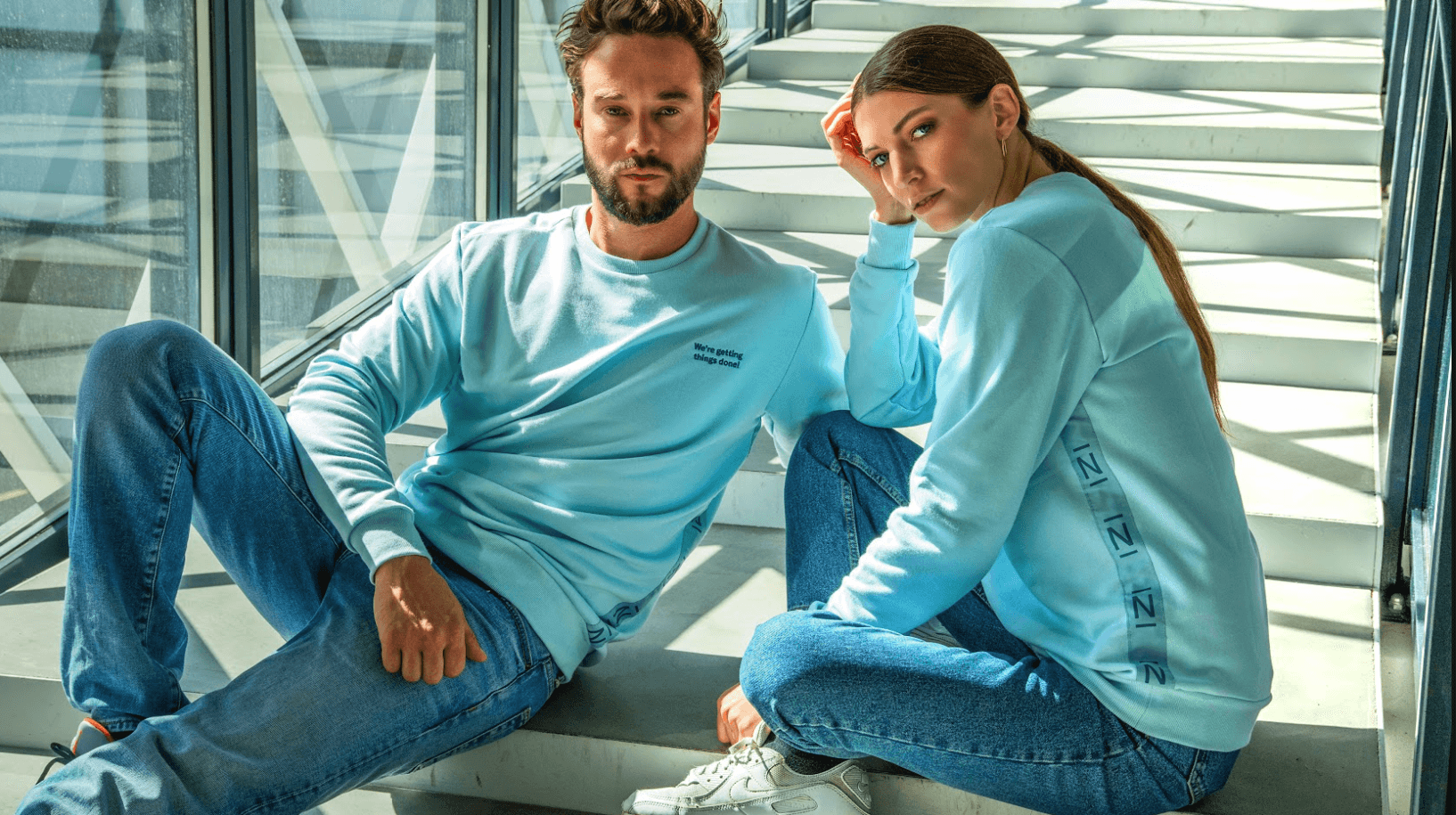
Women's workwear isn't a side note, and it isn't a nice-to-have. It's half your team. Yet a large share of companies order one unisex style, hand it out to everyone, and then wonder why it sits crooked, wears out fast, and ends up left at home. Here are the nine things that actually make the difference.
The 9 things
The 9 things that make workwear for women actually work
-
1
A true women's fit, not a unisex compromise
A unisex style is designed on a male body and then scaled down. The result: shoulders that are too wide, a straight waist, sleeves that run too long, and armholes in the wrong place. A women's cut fixes that with a different shoulder line, a tailored side seam, and an adjusted sleeve length.
It sounds like a detail. It's the difference between clothing someone would choose for themselves and clothing they're handed.
-
2
Sizing that matches what people are used to
The biggest operational drag on workwear is sizing. Work with clear, accurate size charts in real measurements, not just S, M, and L. Sunday's clothing sits close to fashion sizing: if you wear a medium in your favourite shirt, you'll likely wear a medium with us too. That prevents the unexpected-too-small or unexpected-too-big trap, and it results in noticeably fewer returns.
-
3
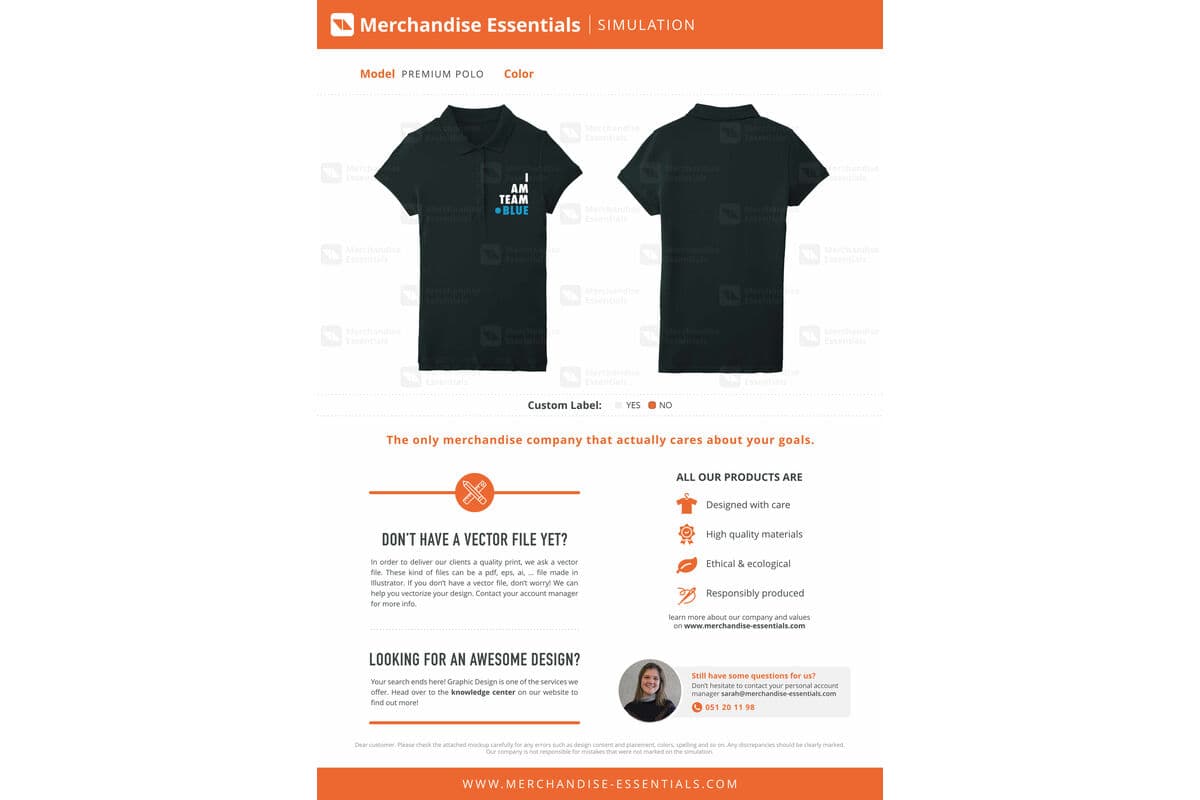
Polos in a women's cut
For most customer-facing teams, the polo is the backbone of the range: professional, recognisable, and practical. That's exactly why a women's version has to exist. Pay attention to collar shape, placket, and length, because those three details decide whether a polo looks put-together or borrowed from someone else.
-
4
Business shirts with the right cut
For front office, reception, showroom, and sales, the business shirt is the workhorse. In a women's cut, it comes down to the closure, the waist, and the sleeve length. A shirt that pulls at the waist or bunches at the shoulder never looks professional, no matter how nice the logo on it is.
-
5
Softshells and jackets in a women's cut
Outdoor teams, installation, warehouse, and events: everyone eventually needs a layer on top. Softshells, work jackets, and padded jackets exist in women's cuts, and it's with a jacket that you notice the difference immediately. A jacket that's too roomy across the shoulders insulates worse and moves with you less.
-
6
An inclusive size range, at both ends
Ordering a women's fit and then stopping at size L isn't an inclusive size range. Make sure the whole team fits, from the smallest to the largest size. Nothing undermines a workwear programme faster than one person who can't get their size and reaches for something else instead.
-
7
Logo placement that fits a women's cut
A chest logo that sits perfectly on a men's polo can land too high, too low, or too far out on a women's polo. Let placement be decided per fit, not once for every style. The same goes for the decoration technique: embroidery remains the strongest choice because it's stitched into the fabric and doesn't wash out. More on that in our guide to branded workwear printing.
-
8
The sector sets the mix
A hotel, a retail chain, an installation network, and a healthcare organisation all need a different combination. Hospitality needs aprons and shirts that survive hot washes. Retail needs recognisable polos in brand colours. Installation needs softshells and work trousers. See what you need per sector in our guide to workwear by industry.
-
9
Reordering without gaps in women's sizes
Workwear is never finished. People join and leave, sizes run out, garments wear down. The pattern we see most often: women's sizes run out first, because they were ordered in smaller quantities to begin with. Plan from day one for live stock visibility, reorder quantities, and size availability per fit, not per style.
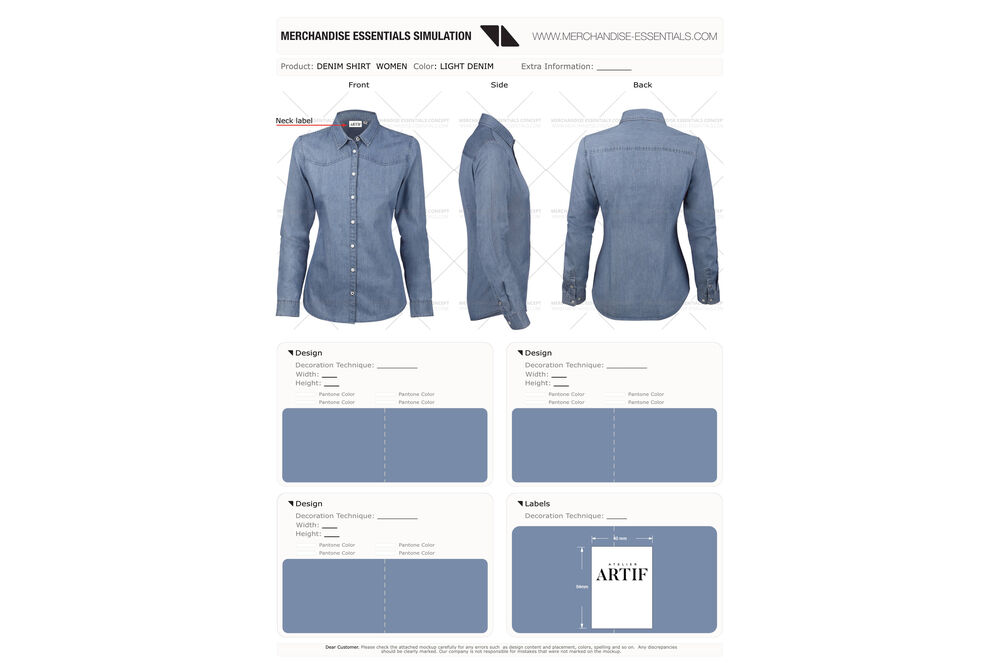
The business shirt in a women's cut: the closure, waist, and sleeve length decide whether it looks professional or borrowed.
What women themselves say they miss in workwear
Ask the people who wear it every day and you hear the same things back, over and over.
- Pockets that are actually usable. Not decorative, but deep enough for a phone or an order pad.
- Fabric that breathes. Especially in hospitality and retail, where you're moving all day in a warm space.
- Freedom of movement in the shoulders. Reaching for a shelf or a top rack shouldn't be a problem.
- Length that works. A polo or shirt that rides up out of your trousers when you bend is a daily irritation.
- Clothing that still looks good after washing. Holds its shape, holds its colour, and keeps a logo that stays put.
Sizing: where it goes wrong and how to fix it
| The problem | What it causes | The fix |
|---|---|---|
| Only unisex ordered | Poor-fitting clothing for half the team | Men's and women's fit from the start |
| Only S, M, L in the chart | Hesitation, wrong choices, returns | Size chart with real measurements per size |
| Unfamiliar, inconsistent sizing | Everyone orders wrong the first time | Sizing close to fashion sizing |
| Size range too narrow | People who fall outside it | Inclusive range, at both ends |
| Women's sizes in too-small quantities | First to sell out on reorder | Plan stock per fit, not per style |
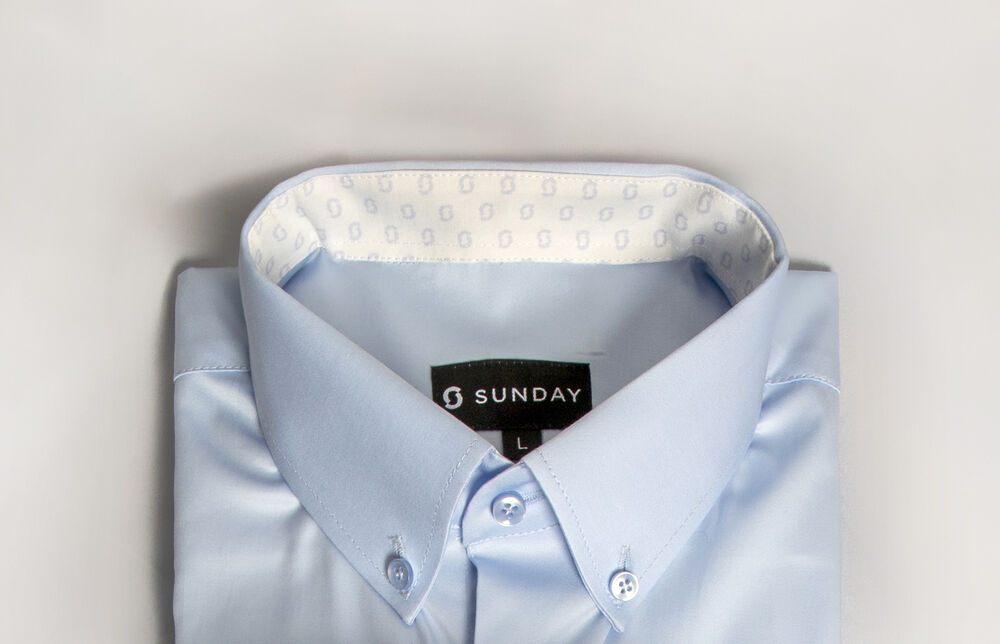
Plan stock per fit, not per style. Women's sizes are almost always the first thing to run out when reordering.
Jackets: where the difference is biggest
With a polo, you notice a bad fit. With a jacket, you feel it. A softshell or padded jacket that hangs too loose across the shoulders insulates worse, moves with you less, and looks sloppy the moment someone opens it up. For outdoor work, showroom, and installation, choose a women's cut deliberately instead of the smallest men's size.
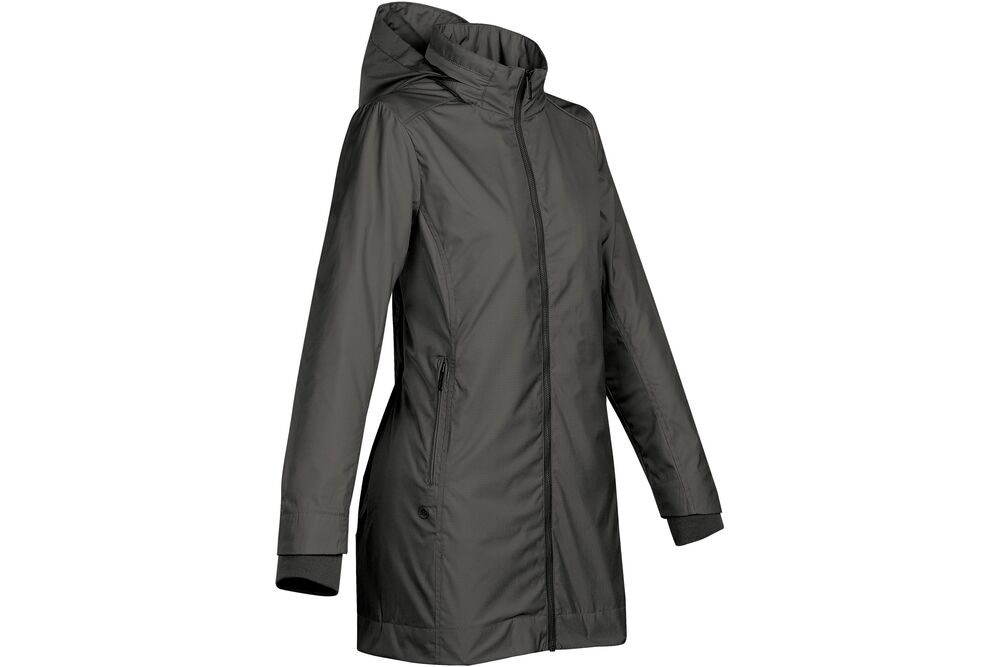
With jackets, the difference between a unisex style and a women's cut is biggest: shoulder line, armhole, and sleeve length decide comfort and appearance.
Workwear for women with Sunday
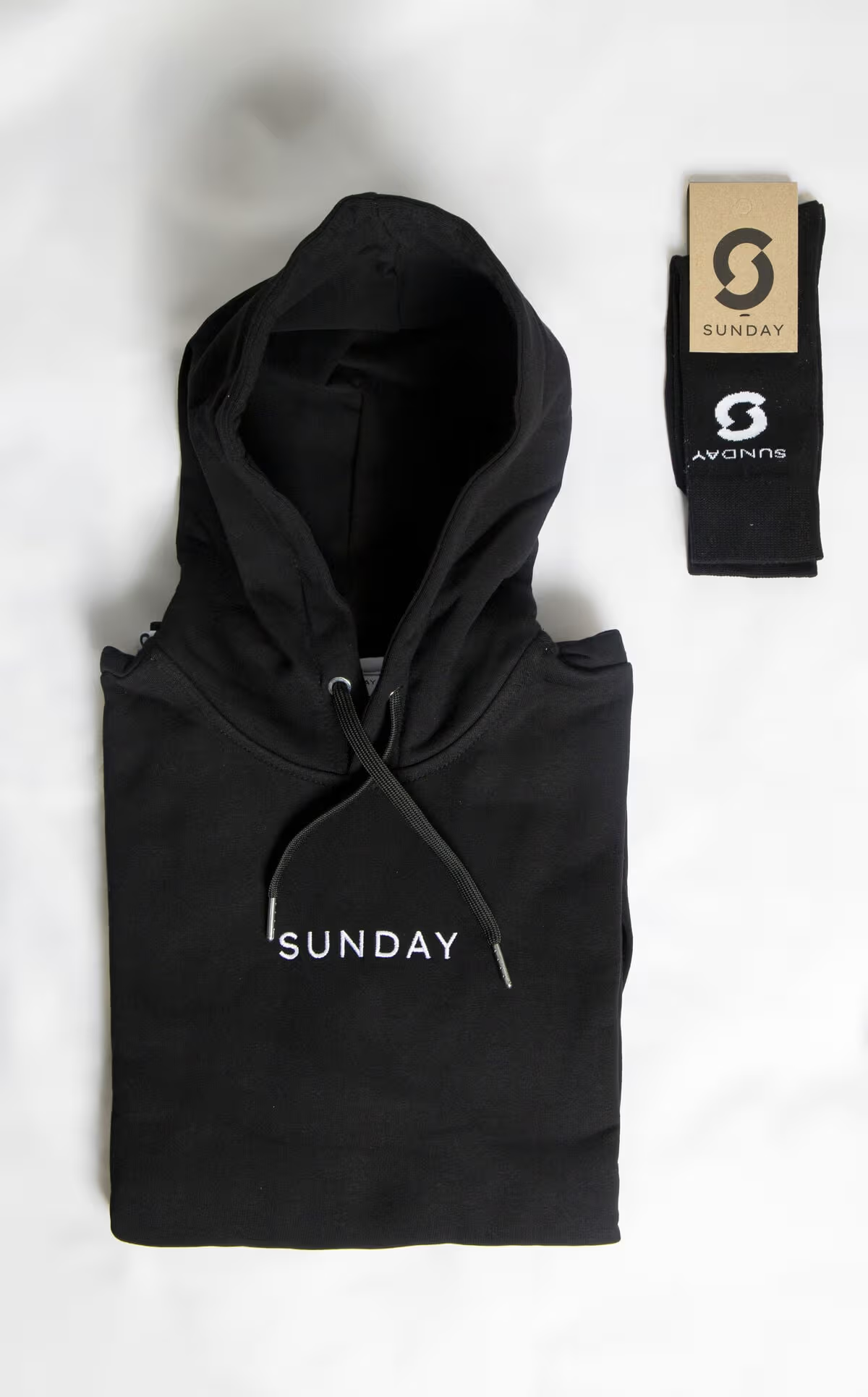
Sunday is merch infrastructure, not a classic supplier. You open a product page and the platform immediately shows design directions with live pricing, in both men's and women's fits. You see how a branded polo looks in your colours and which decoration holds up to washing.
Want to see the design before you order, use the free polo mockup generator. The full branded workwear range is on the product page.
One note: Sunday supplies non-certified, branded workwear. Where strict safety standards apply, such as hi-vis and EN ISO 20471, use certified safety wear. If instead of functional workwear you're looking for a voluntary, brand-driven wardrobe people choose for themselves, read our guide to branded company apparel.
Want to know what to look out for before you order, read our buying guide for workwear. Ordering larger volumes, check our guide to ordering workwear in bulk for prices, quantities, and lead times.
About this article
Workwear that fits your whole team
Men's and women's fits, reliable sizing, and a logo that survives the washing machine. Made in the EU, live pricing in 30 seconds.
Get free designs