
Definition
Event signage is the printed and fabricated graphics that brand a venue, move people through it and tell them what is happening where. It runs from the four metre banner over the entrance down to the A4 card on a door saying the workshop shifted to room two. Signage is the only branded surface every single attendee sees, including the ones who never stop at your stand.
Definition
Signage does four jobs, and the job decides the material. Identity signage carries the brand: entrance arches, stage backdrops, step-and-repeat walls. Wayfinding moves people: directional arrows, floor decals, room numbers, hanging aisle markers. Informational signage answers a question before someone has to ask a human: agenda boards, session times, sponsor lists, wifi codes, allergen cards on a buffet. Regulatory signage keeps you legal: fire exits, capacity notices, photography consent at the door.
Take a 900-person conference in a hotel. The pack is one four metre entrance banner, two retractable banners at registration, six foam board room signs on easels, fourteen arrows on stair landings, a 6 by 3 metre tension fabric stage backdrop, thirty sponsor plaques, and a box of blank A4 holders with a marker. That last item costs almost nothing and gets used more than anything else, because rooms change on the morning.
How event signage works
Material follows lifespan and mounting. Five millimetre foam PVC is the workhorse for room signs and easel boards: rigid, light, cuts cleanly, prints direct on a flatbed UV press. Corrugated plastic is the cheap outdoor option for car park and site arrows. Aluminium composite is the one that survives rain and rough handling. Tension fabric stretched over an aluminium frame is what you want behind a stage, because it has no glare under lights and folds into a bag rather than a crate. Self-adhesive vinyl handles glass and floors, and floor vinyl needs an anti-slip rating, R10 or better, or the venue will refuse it.
Legibility is arithmetic, not taste. Allow roughly 25 mm of capital letter height for every three metres of reading distance. A room sign read from four metres needs about 35 mm caps. An overhead aisle marker read from fifteen metres needs 125 mm. Set arrows at eye level or above, keep one message per sign, and use high contrast, dark on light or light on dark, since hall lighting flattens everything in between. Design in vector, hand over a flattened print-ready PDF at full scale with 3 mm bleed, and check the sign is readable in greyscale before you approve it.
The venue is where budgets die. Most halls charge a rigging fee for anything suspended from the ceiling and quote it per point, so a hanging banner can cost more to hang than to print. Many venues ban adhesive on painted walls and will invoice you for the paintwork if you ignore it. European venues frequently demand a fire retardancy certificate for fabric and foam, typically B1 or a Euroclass rating under EN 13501, so ask your printer for the certificate at order time rather than at the door. Print lead time is five to ten working days, custom frames two to three weeks, and artwork approval always eats a week you did not budget for.
Event signage in branded merch
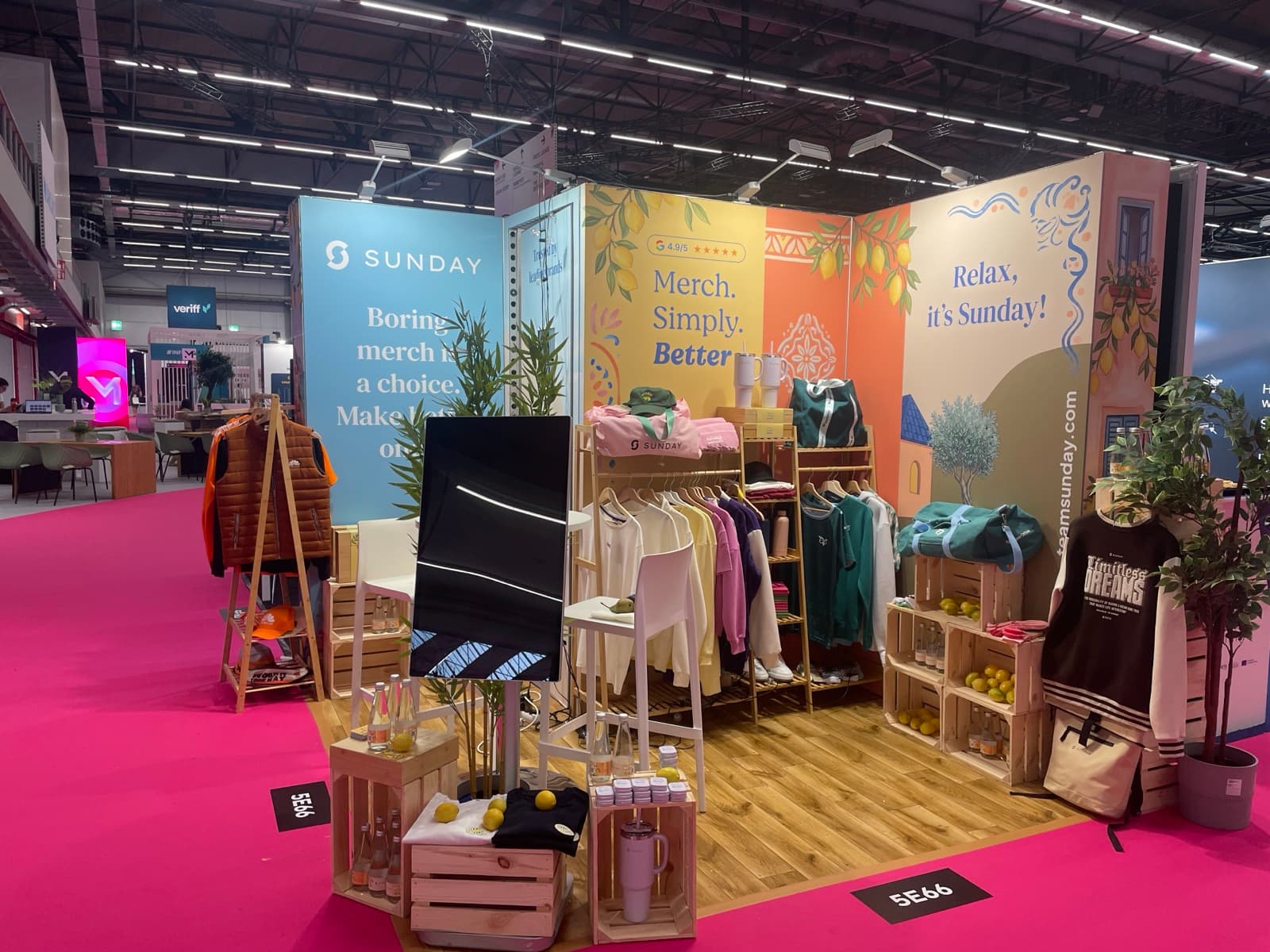
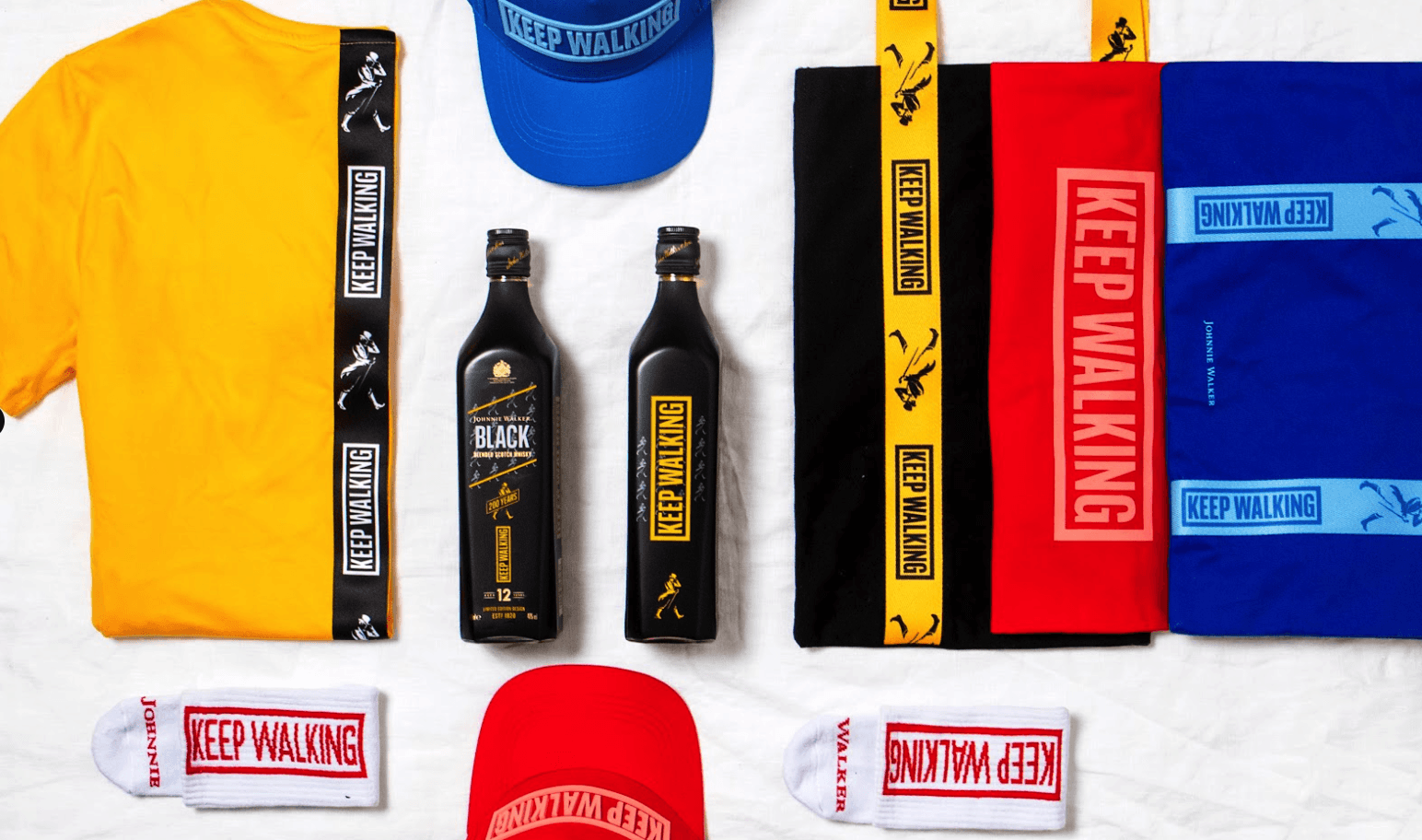
- Trade show stands: Signage and merch are one visual system, not two orders. The stand graphics, the table throw, the staff polos and the giveaway bag should carry the same colour build, or the stand reads as rented rather than owned.
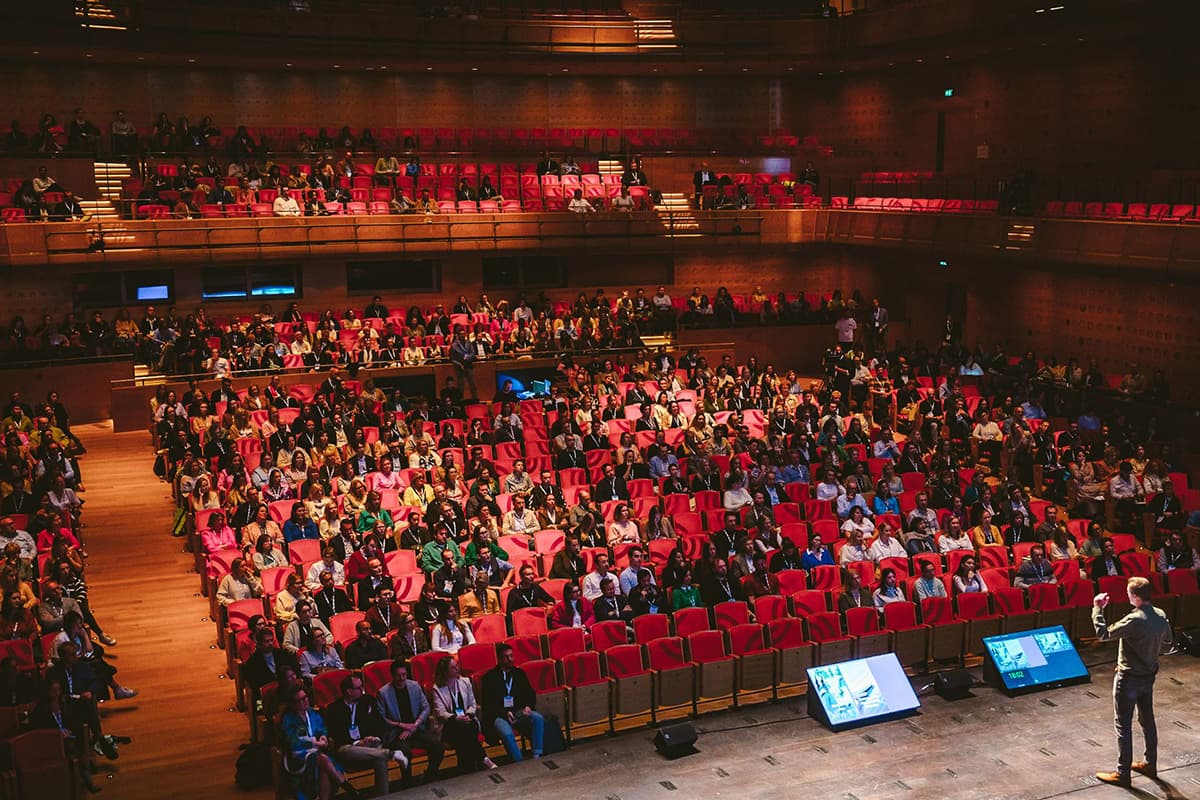
- Conferences and summits: Stage backdrops, session boards and sponsor walls run alongside the attendee kit. Sponsors buy signage placements as much as they buy the bag insert, so the sign artwork sells inventory.
- Internal events and roadshows: All-hands, onboarding weeks, and office open days. A modular set of frames with swappable graphics turns one investment into a sign kit the team reuses for years, with only the printed face reordered per event.
Event signage is the printed and fabricated graphics used at an event to brand the space, guide movement through it, and communicate information to attendees.
5 tips to elevate your Event signage strategy
| Tip | Steps |
|---|---|
| Size text by viewing distance | Roughly 25 mm of cap height for every three metres a reader stands back. |
| Ask the venue before you print | Rigging fees, wall adhesive bans and fire certificates all change the spec. |
| Buy frames, print faces | Reusable frames plus a fresh printed skin per event cuts the recurring cost. |
| Bring blank signs and a marker | Rooms and times move on the day. Every event needs a sign nobody planned. |
| One message per sign | A sign with three messages is read as none. Split it into three signs. |
Key Terminologies
Frequently Asked Questions
What are the main types of event signage?
Event signage splits into identity signage such as backdrops and entrance banners, wayfinding such as arrows and room numbers, informational signage such as agendas and sponsor boards, and regulatory signage such as fire exits and capacity notices. Most events need all four, and teams usually underorder the wayfinding.
What material is best for event signage?
Five millimetre foam PVC covers most indoor rigid signs, corrugated plastic handles cheap outdoor arrows, aluminium composite survives weather, and tension fabric on an aluminium frame is best for large backdrops because it does not reflect stage lighting. Choose the material by where it hangs and how many times you plan to use it.
How big should the text on event signage be?
Allow about 25 mm of capital letter height for every three metres of reading distance. A directional sign read from ten metres therefore needs roughly 85 mm capitals, and an overhead marker read across a hall needs 125 mm or more.
How far in advance should event signage be ordered?
Allow five to ten working days for printing, two to three weeks if custom frames or hanging structures are involved, and a further week for artwork sign-off. Book the venue conversation earliest, because rigging rules and fire certificate requirements can change the whole specification.
Can event signage be reused?
Yes, if you separate the frame from the face. Reusable aluminium frames, easels and roll-up bases last for years while you reprint only the graphic, which typically cuts the cost of the second event by half or more.