

Definition
Garment care symbols are the small icons on a clothing label that tell you how to wash, bleach, dry, iron and professionally clean the item. The whole system runs on five base shapes: a washtub, a triangle, a square, an iron and a circle. Dots, bars and crosses modify each shape to set temperature, cycle strength and whether a treatment is allowed at all.
Definition
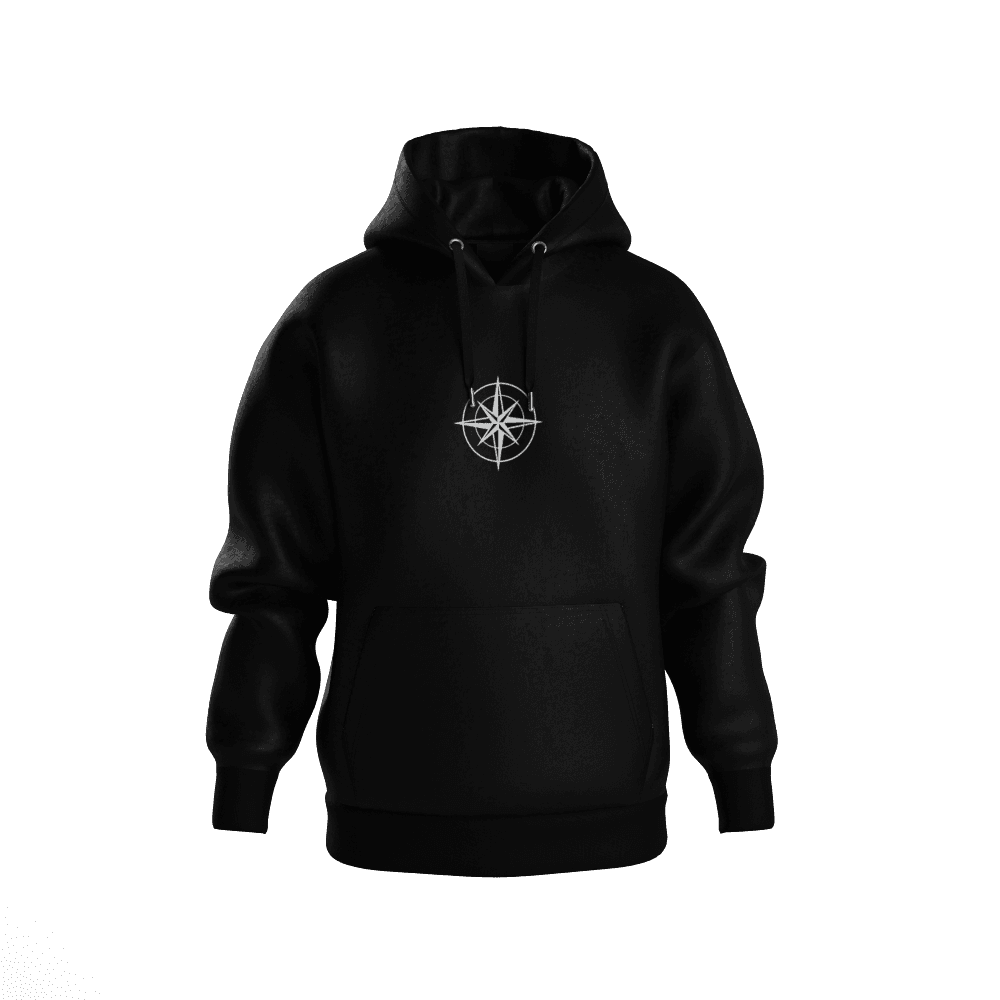
Care symbols are defined by ISO 3758 in Europe, where the icons are licensed by GINETEX, and by ASTM D5489 in the United States. The two systems share the same five shapes but differ in details, which is why an American label may carry a dryer symbol with dots while a European one relies on the same square with a circle inside. A typical hoodie label reads: washtub with 30 and one bar, crossed triangle, square with a circle and one dot, iron with one dot, crossed circle. In plain language that means wash at 30 degrees on a gentle cycle, no bleach, tumble dry on low, iron on the cool setting, do not dry clean.
How garment care symbols work
Each shape owns one treatment. The washtub covers washing, and the number inside is the maximum water temperature in degrees Celsius. A hand in the tub means hand wash only. The triangle covers bleaching, the square covers drying, the iron covers ironing, and the circle covers professional cleaning by a dry cleaner. Read left to right, the five icons walk through the life of the garment in the order you would treat it.
Modifiers do the rest of the work. A bar under a symbol means a milder mechanical action, so one bar signals a synthetics cycle and two bars signal a delicate cycle. Dots signal heat: one dot is low, two dots is medium, three dots is high. On the iron, one dot caps the soleplate at roughly 110 degrees, two dots at 150 and three dots at 200. A cross through any symbol is a hard prohibition, not a suggestion. Letters inside the circle tell a professional cleaner which solvent to use, with P for tetrachloroethylene, F for hydrocarbon solvents and W for professional wet cleaning.
Two things trip people up. First, the numbers are maximums, not recommendations, so a 40 degree washtub does not mean the garment needs 40 degrees. Second, the symbols describe the blank garment as the mill made it, not the decorated version you shipped. A print, a transfer or a badge can be far more heat sensitive than the polyester or cotton underneath it, so the label that arrives from the factory is often more permissive than the garment can actually handle.
Garment care symbols in branded merch
- Protecting the decoration. Screen prints, DTG ink, vinyl transfers and heat-applied badges all fail before the fabric does. Reading and, where needed, tightening the care symbols keeps a logo from cracking after three washes.
- Setting expectations for recipients. Employees and customers rarely read paragraphs. They do glance at icons. Clear care symbols are the difference between a hoodie that stays in rotation for two years and one that comes out of the dryer two sizes smaller.
- Private label and relabelling. When you swap the mill label for your own woven or printed one, the care symbols move with it. That relabelled tag becomes your statement about how the garment should be treated, so the icons need to match the real construction and decoration.
Garment care symbols are a standardised set of label icons that communicate the safe washing, bleaching, drying, ironing and professional cleaning treatments for a garment without using words.
5 tips to elevate your Garment care symbols strategy
| Tip | Steps |
|---|---|
| Check the label before you decorate | Confirm the wash temperature and drying symbols on the blank so your print method suits how the garment will actually be treated. |
| Wash cold, dry low for printed merch | Advise 30 degrees and low tumble drying on anything decorated, even when the blank allows 40 degrees and high heat. |
| Never iron over a print | Add a do not iron instruction for the decorated area, or tell recipients to press inside out on a low setting. |
| Keep the symbols legible | Woven labels hold up longer than printed ones. If the icons rub off in six months, the care information is gone. |
| Match the label to the market | Use ISO 3758 icons for Europe and add ASTM equivalents or short wording for the US, where care instructions are legally required. |
Key Terminologies
Frequently Asked Questions
What do the five garment care symbols mean?
The washtub means washing, the triangle means bleaching, the square means drying, the iron means ironing and the circle means professional cleaning. Numbers, dots, bars and crosses modify each shape to set the allowed temperature, cycle and treatment.
What do the dots on a care symbol mean?
Dots indicate heat. One dot is low, two dots is medium and three dots is high. On an iron, one dot is roughly 110 degrees Celsius, two dots is 150 and three dots is 200.
What does a crossed out symbol mean?
A cross through a symbol means the treatment is forbidden. A crossed triangle means do not bleach, a crossed circle means do not dry clean and a crossed washtub means do not wash at all.
Do I need care symbols on branded merchandise?
In the United States care instructions are legally required on textile garments. In the EU they are voluntary but expected, and most buyers include them because they protect both the garment and the print.
How should printed merch be washed?
Wash at 30 degrees on a gentle cycle, inside out, and tumble dry on low or air dry. Avoid bleach and never iron directly over the print, since heat and friction damage the decoration long before the fabric.