Definition
Hackathon swag is the branded merchandise handed out at a hackathon: the participant tee everyone collects at check-in, the sticker sheets stacked on sponsor tables, the mentor shirts in a different colour, and the kit that goes to the winning team. It works as uniform, sponsor credit, and prize at the same time. Developers are a hard audience to impress with merch, and also the audience most likely to still wear a good tee three years later.
Definition
Hackathon swag is defined less by the products in it than by who receives what. Sponsorship tiers usually decide whose logo appears on the participant shirt, who gets a table, and who only gets a mention in the opening slides. That makes the shirt the most negotiated item in the entire program, because it is the one object every builder in the room wears at once, and the one that appears in every photo that leaves the venue.
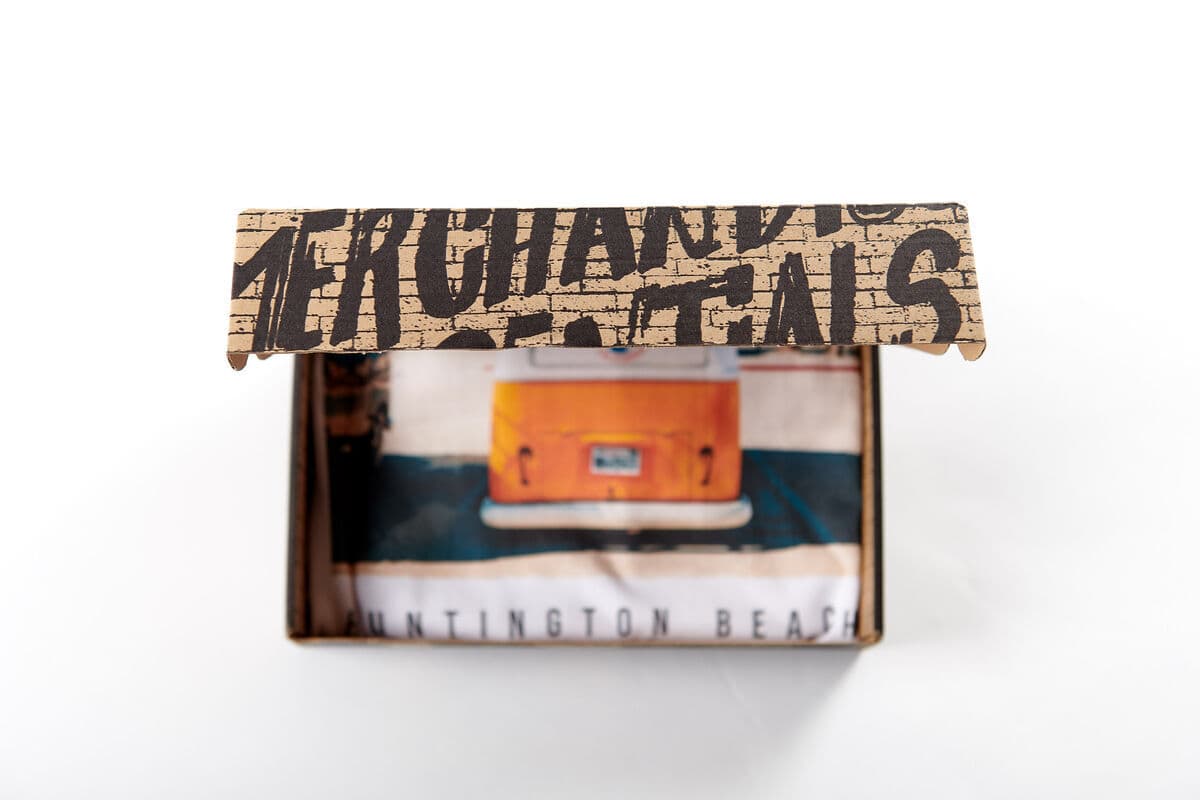
A concrete example. A 300-person, 36-hour student hackathon prints 350 participant tees carrying six sponsor logos on the back and sleeve, 40 organiser tees in black, 25 mentor tees in a contrasting colour so help is visible across a dark room at 3am, 3,000 die-cut stickers spread across the sponsor tables, and one hardware kit per member of the winning team. Sizes come from the registration form, not from a guess.
How hackathon swag works
The size problem solves itself, and most organisers still get it wrong. Every participant registers in advance and can be asked for a shirt size at signup, which means you know the split before a single unit is printed. Ordering against that real split instead of a generic size curve removes the usual pile of unworn XS and 3XL, and it lets you carry a full range from XS to 3XL without waste. Registration numbers are not attendance numbers though. Free student events routinely see a third of signups never check in, so print against confirmed attendance with a modest buffer rather than against the waitlist.
Sponsor items follow their own logic. A laptop lid is real estate, and a well-drawn die-cut vinyl sticker is the cheapest way onto it. Developers judge a sticker on whether the mark looks good next to their other stickers, not on brand guidelines, so a clean logomark beats a full lockup with a tagline underneath. Beyond stickers, the items that clear the table are the ones that solve a problem during the event itself: USB-C cables, adapters, power banks, socks, and a bottle that survives 36 hours next to a keyboard. Pens and branded notepads mostly stay where they were left.
Quality decides everything that happens after the event. A hackathon tee gets worn through the night, slept in, and thrown in a wash on Monday. A thin 130 gsm shirt fails that test and reaches a charity bin within the month. A 180 to 200 gsm ringspun combed cotton tee survives it and turns into a wardrobe item, which is where the sponsor value actually accrues. Screen printing handles high volumes cheaply. DTF printing makes more sense for small runs and for the multi-logo sponsor blocks that change every edition. One last detail worth arguing about: put the year on the sleeve or leave it off entirely, because a big date on the chest turns every leftover shirt into dead stock the day the event ends.
Hackathon swag in branded merch
- Participant apparel: The core item. One tee per builder, ideally in a soft, mid-weight cotton, with the event mark on the front and sponsor logos grouped on the back. Hoodies work as a second tier for multi-day or winter events, since venues run cold overnight.
- Sponsor tables and sticker packs: Sponsors staff a table and trade stickers, cables, and credits for a conversation about their API. This is sponsor swag at its most direct, and stickers carry it because they cost almost nothing and get displayed for years.
- Prize, mentor, and organiser kits: Colour-coded shirts make roles readable across a busy room, and winning teams get something with real value, often hardware, a jacket, or a branded gift set. This tier is small, named, and worth spending on.
Hackathon swag is branded merchandise distributed at a hackathon to identify participants, credit sponsors, and reward the teams that ship.
5 tips to elevate your Hackathon swag strategy
| Tip | Steps |
|---|---|
| Ask for sizes at signup | You have a registration form. Use it, then print to the actual split. |
| Skip the big date | Year on the sleeve or nowhere. Undated shirts can be reissued next edition. |
| Buy weight, not volume | One 190 gsm tee that gets worn beats three thin ones that do not. |
| Give sponsors the back | Chest for the event mark, back and sleeve for logos, ordered by tier. |
| Print to check-ins | Assume a third of free signups never arrive, and hold a buffer for walk-ups. |
Key Terminologies
Frequently Asked Questions
What swag do hackathons give out?
Most hackathons give every participant a branded t-shirt at check-in, plus stickers, cables, and small items from sponsor tables. Organisers and mentors wear shirts in different colours so roles are visible, and winning teams receive a higher-value prize such as hardware or a jacket.
What makes good hackathon swag for developers?
It has to be useful during the event or wearable after it. Quality mid-weight tees, socks, USB-C cables, power banks, and well-designed die-cut stickers land well. Branded pens, lanyard-clip gadgets, and thin promotional tees do not.
How many hackathon t-shirts should you order?
Order against expected check-ins rather than registrations, since free events commonly lose a third of signups to no-shows. Add a buffer of around 10 percent for organisers, judges, and last-minute walk-ups.
What do hackathon sponsors get on the swag?
Sponsor logos are typically grouped on the back or sleeve of the participant shirt, sized by tier, with the top tier sometimes getting a separate placement. Sponsors also bring their own stickers and items to their table, which is where most direct handouts happen.
How much does hackathon swag cost per participant?
The participant shirt is usually the largest single line, followed by stickers, which cost very little per unit. Sponsors typically fund the shirt in exchange for logo placement, so the organiser's net cost per participant often lands well below the printed value of what each builder walks away with.