Almost every employee advocacy program works the same way. Pick a tool, load it with pre-approved posts, ask staff to share them, and report on reach.
These programs have a predictable arc. Strong participation in month one, a steep drop by month four, and a small core of the same enthusiastic people carrying it by month twelve. The reason is structural: the program depends on repeated voluntary effort from people whose actual job is something else.
There is a second kind of advocacy that does not decay, because it requires no ongoing action at all. We have measurement for it.
What advocacy programs are actually trying to move
Strip away the tooling and the goal is ambassadorship: whether an employee speaks positively about their employer to people outside the company.
That is a measurable thing, and it probably already sits in your engagement survey, usually worded as whether someone would recommend the company as a place to work. Share counts measure participation in a piece of software. Ambassadorship measures the outcome.
The passive alternative, with numbers
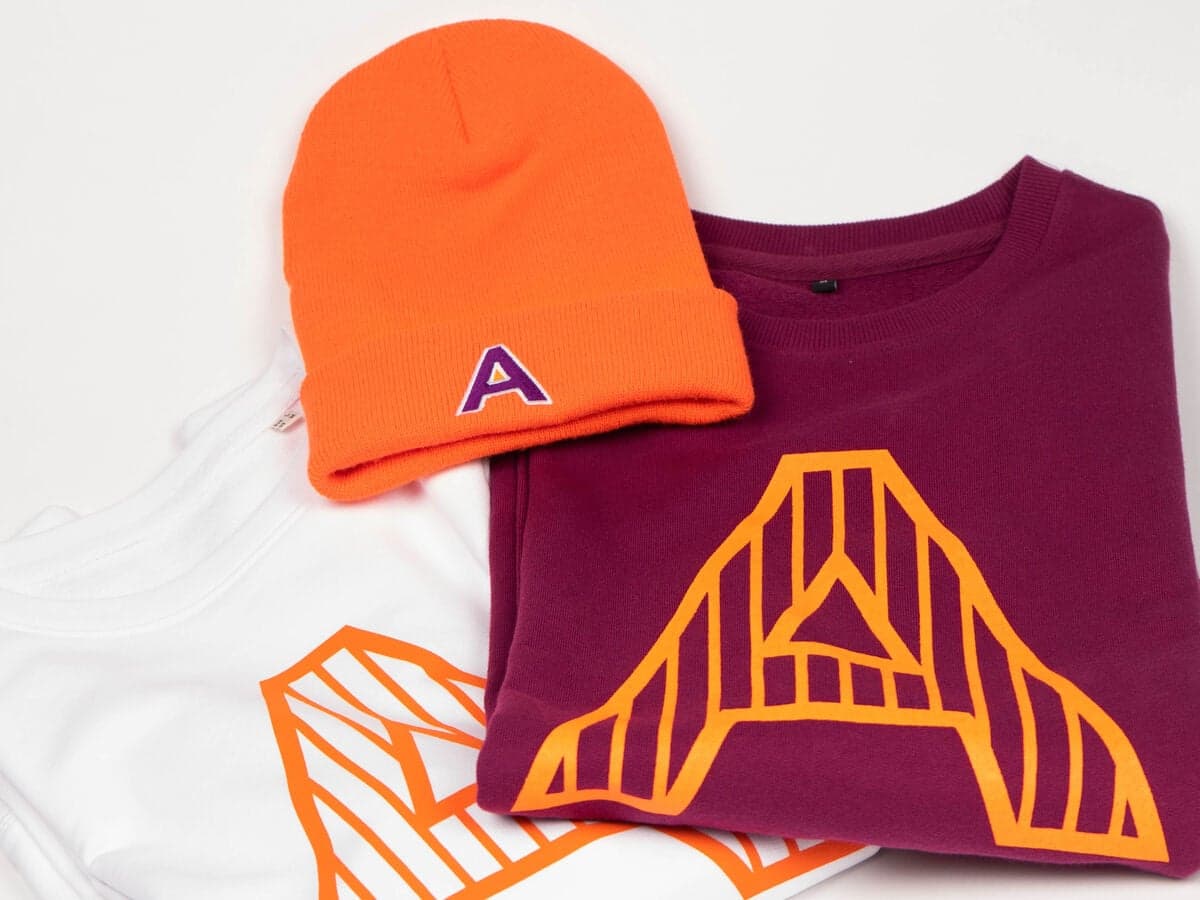
NMBS/SNCB ran a branded clothing programme. Research agency Sapience, with the Vrije Universiteit Brussel, surveyed 258 participants and benchmarked them against the company's own prior employee survey.
| Engagement sub-factor | Benchmark | Received the clothing | Gap |
|---|---|---|---|
| Ambassadorship | 6.6 | 8.3 | +1.7 |
| Energy | 6.6 | 7.9 | +1.3 |
| Passion | 7.1 | 8.3 | +1.2 |
| Loyalty | 6.9 | 8.0 | +1.1 |
| Performance | 7.9 | 8.9 | +1.0 |
Ambassadorship moved most, at 26% above the company benchmark. It was the largest single effect measured anywhere in the study.
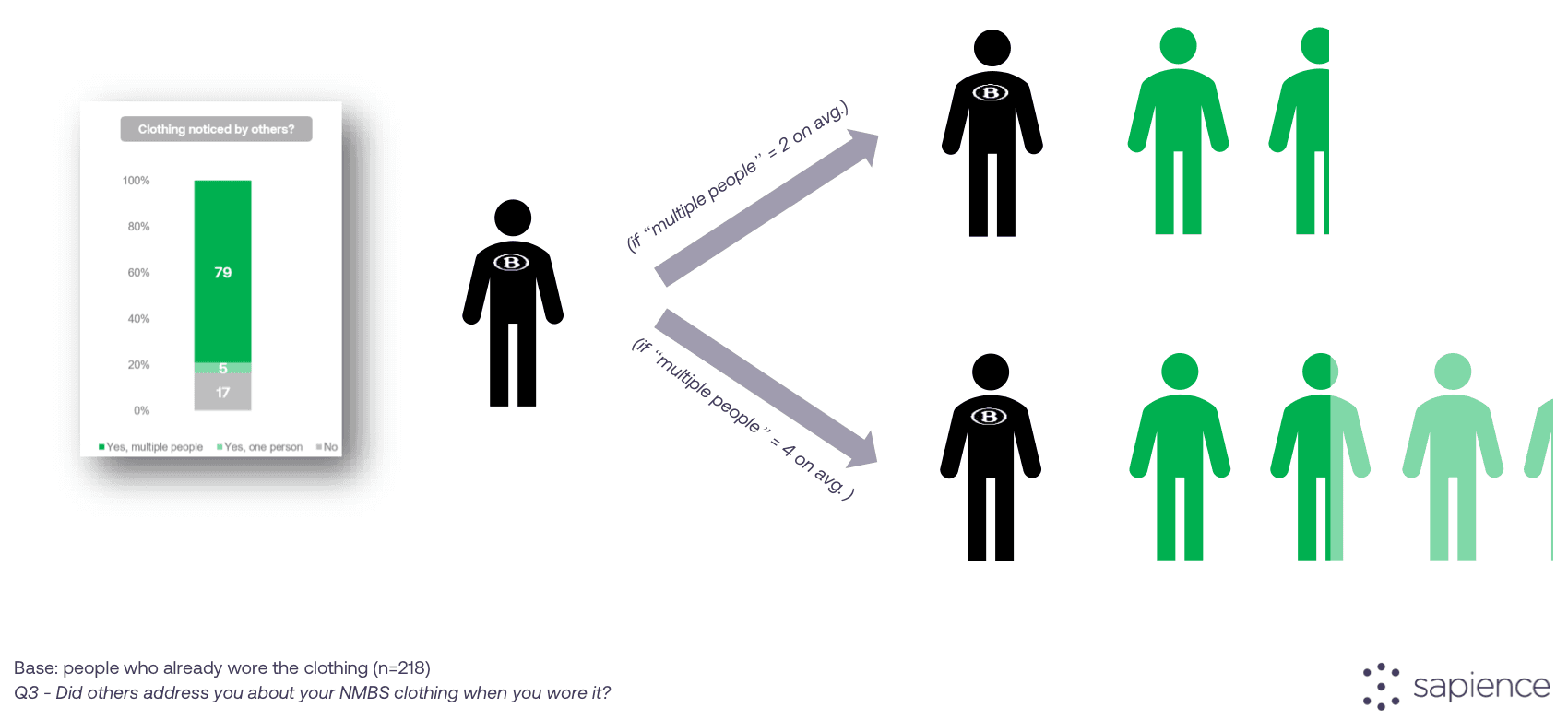
The mechanism is worth being precise about, because it explains why it does not decay. Among people who wore the clothing:
- 84% were spoken to about it by someone else
- 94% of those reactions were positive
- Each wearer generated 1.6 to 3.2 conversations per wearing occasion
Nobody had to remember to do anything. The advocacy happened because a person got dressed.
Why this outperforms a sharing tool
No ongoing effort. The single biggest predictor of advocacy program failure is asking busy people to do a recurring optional task.
It reaches people social tools cannot. A LinkedIn post reaches an employee's professional network. A visible logo reaches whoever is physically nearby, including people with no connection to your industry.
It reads as genuine, because it is. Ghost-written posts are recognisable. Someone choosing to wear something is a costlier and therefore more credible signal.
It is measurable in an instrument you already own. Add one exposure question to your engagement survey and split the ambassadorship item by it. The method is in our survey questions guide.
The two conditions that decide whether it works
This is not automatic, and the study is specific about where the effect lives.
The logo has to be visible. Employees with visibly branded items scored 8.6 on engagement; those with non-branded or non-visible items scored 8.1. A discreet inside-collar label opts you out of the mechanism entirely.
The item has to be worn. Every effect concentrated among people who actually wore what they received. This makes item selection the whole programme rather than a procurement detail. Choose from items ranked by measured wear rate, not by unit price. In the study, plain socks had a 31% never-worn rate; bags and sweaters were worn repeatedly by roughly two thirds of recipients.
Running both together
This is not an argument against social advocacy programs. It is an argument against relying on one that decays.
Passive advocacy sets a floor that does not depend on enthusiasm. Active advocacy adds a ceiling when you have something specific to say, like a launch or a hiring push. Run the passive layer permanently and the active layer in campaigns.
And measure both against ambassadorship rather than against reach, because reach is the metric the tool vendor chose.
Frequently asked questions
What is an employee advocacy program?
A structured effort to get employees to speak positively about their employer externally. Most are built around social sharing, but the underlying outcome is ambassadorship, which can be moved by other means.
How do you measure employee advocacy?
Through the ambassadorship item in your existing engagement survey, split by exposure to whatever you changed. Share counts measure participation in a tool, not advocacy.
Do employee advocacy programs work?
Active social sharing programs tend to decay as novelty fades. In a benchmarked study, a passive approach produced a 26% lift in ambassadorship, the largest single effect measured.
What is the difference between employee advocacy and employer branding?
Advocacy is a tactic; employer branding is the outcome. Advocacy is one of the strongest levers on employer brand because it is the channel prospective employees trust most.
Does company merchandise count as employee advocacy?
In the study it produced the largest measured advocacy effect, provided the item was visibly branded and actually worn. An unworn or unbranded item produced nothing.
Further reading
The full study, methodology and limitations · A measurable employer branding strategy · 11 engagement levers ranked by evidence · Employer branding examples with real outcomes · Swag ranked by wear rate · Corporate gift ideas