Search for employer branding examples and you get the same thing every time: a campaign described in glowing terms, a screenshot of a careers page, and no answer to the only question that matters. Did it work?
This post is organised around that question. Nine approaches worth copying, ranked by how easy they are to verify, and one case where we have the measured outcome because we commissioned the research ourselves.
The short version: employer branding examples are only useful if you can see what changed. Of the nine below, most are directionally sound but unmeasured. One has a published methodology, a benchmark, and a number: a 26% lift in employee ambassadorship.
What makes an employer branding example actually useful
Before the list, the filter. A useful example needs three things, and most published examples have none of them.
- A stated outcome. Not "engagement improved" but a number, against a baseline.
- A baseline you can trust. Compared to what? A company's own prior measurement is worth more than an industry average.
- A mechanism you can copy. If the example depends on being a famous consumer brand with a beloved founder, it is not an example. It is a biography.
Hold the nine approaches below against those three tests as you read.
1. Put your employee value proposition in writing
The most common failure in employer branding is that nobody inside the company can state what the offer actually is. Writing it down, honestly, including what you are not, forces the trade-offs into the open.
Verifiable? Partly. You can measure whether candidates repeat your language back at interview.
2. Let employees speak without a script
Employee-generated content outperforms corporate content on reach and trust, which is why so many companies run advocacy programmes. The failure mode is obvious the moment you see it: ghost-written LinkedIn posts read as ghost-written.
Verifiable? Yes, through reach and engagement on employee posts versus brand posts.
3. Fix the thing people complain about
The cheapest employer branding move available is to read your own exit interviews and act on the most repeated item. Employer brand is downstream of employee experience. No campaign survives contact with a workforce that has a real grievance.
Verifiable? Yes, in retention data, though slowly.
4. Make onboarding feel deliberate
The first week sets the tone for the relationship, and it is the one moment where every new hire is paying full attention. A structured first week, a manager who is actually free, and a welcome kit that arrives before day one all signal the same thing: we were expecting you.
Verifiable? Yes, through 90-day retention and new-hire survey scores.
5. Give people something visible to wear
This is the example we can measure, so it gets the detail. The rest of this section is the case study.
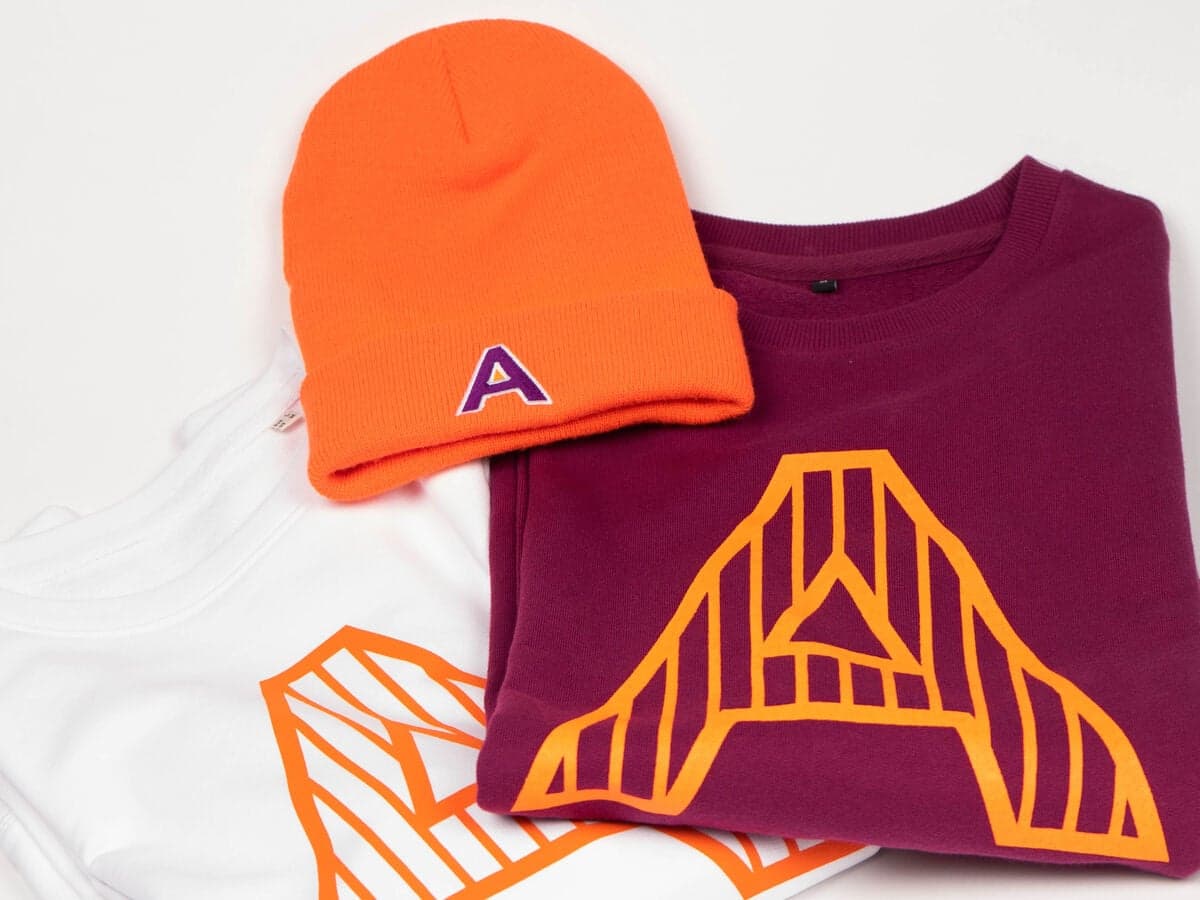
NMBS/SNCB, the Belgian national railway, sold a branded clothing collection to its own staff and to the public. Research agency Sapience, working with the Vrije Universiteit Brussel, surveyed 258 of the people who bought it and compared the results against NMBS's own pre-existing employee survey and brand tracker.
| Measure | Company benchmark | Received company swag | Change |
|---|---|---|---|
| Employee engagement | 7.0 | 8.3 | +19% |
| Employee satisfaction | 6.6 | 8.0 | +21% |
| Ambassadorship | 6.6 | 8.3 | +26% |
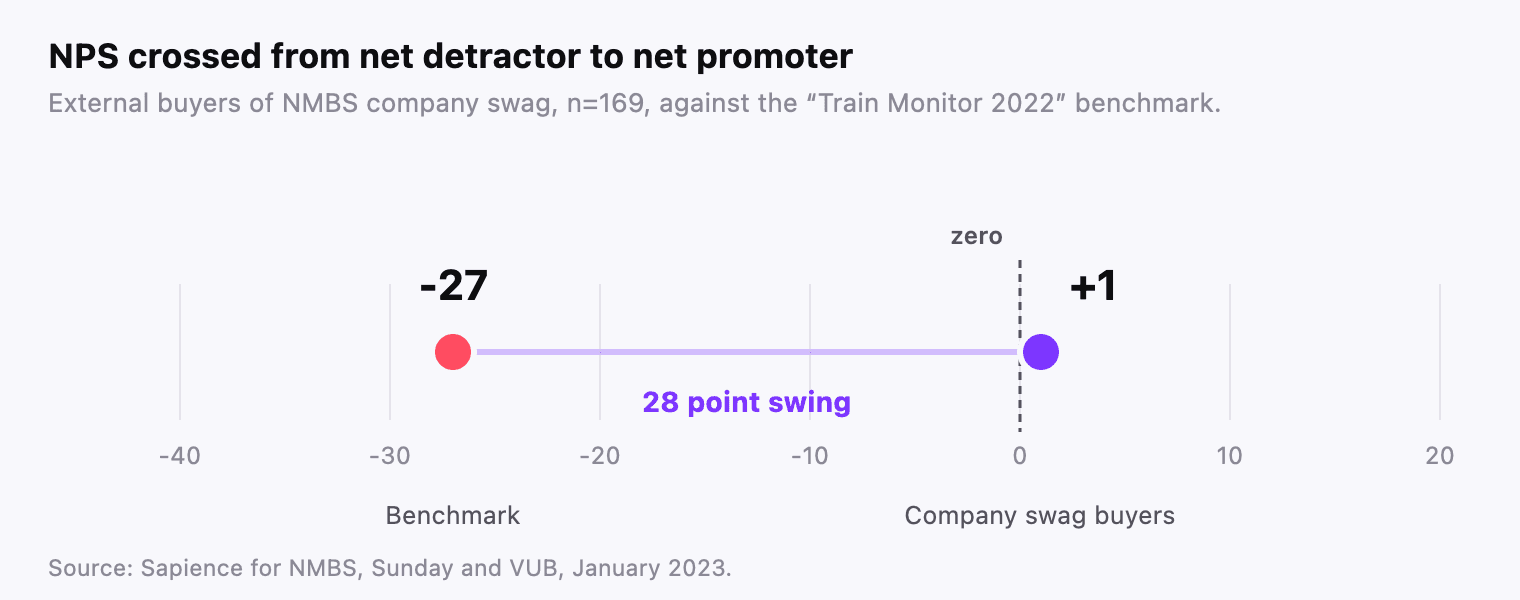
| Net Promoter Score (customers) | -27 | +1 | +28 points |
Ambassadorship, the measure of whether an employee speaks positively about their employer to the outside world, moved more than any other factor. That is an employer branding outcome in the most literal sense available.
Two details make this example copyable rather than admirable:
Visibility did the work. Employees who received branded, visible items scored 8.6 on engagement and 8.4 on satisfaction. Those who received non-branded or non-visible items scored 8.1 and 7.7. Same employer, same year, same programme. The only difference was whether the logo could be seen.
It was sold, not given. NMBS charged for the collection and still recorded the full effect, which means the programme can run at break-even.
The full study, methodology and limitations are published here, including what it does not prove. If you want to act on this one, the practical starting point is a list of items ranked by how often people actually wear them, because an unworn garment produces none of the above.
6. Recognise people in public, specifically
Generic recognition reads as policy. Specific recognition reads as attention. The distinction costs nothing and is the difference between a scheme people ignore and one they talk about. Pair it with something physical when the milestone warrants it: a considered gift outlasts an email.
Verifiable? Yes, through recognition frequency and engagement sub-scores.
7. Publish your limitations
Careers pages that admit what is hard about the job attract better-matched candidates and reduce early attrition. It also transfers directly: the study above publishes its own limitations, and that is a large part of why anyone believes the numbers.
Verifiable? Yes, through offer-acceptance and 12-month retention.
8. Treat alumni as a channel
People who left and speak well of you are the highest-credibility employer brand asset you have, precisely because they have nothing to gain. Most companies end the relationship at the exit interview.
Verifiable? Yes, through boomerang hires and referral source data.
9. Move employer branding out of procurement
A structural point rather than a campaign. In most organisations the physical expression of the employer brand, from employee swag to onboarding kits, is bought by procurement on unit price. Nobody in that chain is accountable for an employer branding outcome, so nobody measures one.
The study above found the biggest effect in a budget line that usually reports to purchasing. Moving it to whoever owns employer branding and internal communications is free, and it is the change most likely to make the other eight items on this list measurable.
How to build your own measured example
The reason so few employer branding examples carry numbers is not that measurement is hard. It is that nobody sets a baseline before starting.
You almost certainly already run an employee engagement survey. Add two questions about whatever you are about to change, keep the wording of your existing instrument so the benchmark stays valid, and split your results by who was exposed to the change and who was not. That is the entire method behind the case in section 5, and it costs nothing beyond two survey lines.
Full question wording and the benchmarking principle are in the study appendix.
Frequently asked questions
What is the best employer branding example?
The most useful ones are the ones with published outcomes rather than the most famous ones. On this page, the measured example is NMBS: a branded clothing programme that lifted employee ambassadorship 26% against the company's own benchmark, with the methodology and limitations published.
How do you measure employer branding?
Against a baseline you already own. Use your existing employee engagement survey, keep the question wording identical so the benchmark remains valid, and split results by exposure to whatever you changed. Ambassadorship, whether employees speak positively about you externally, is the most direct employer branding measure.
Does company merchandise affect employer branding?
In the study above, yes, and more than expected. Employees who received branded company clothing scored 26% higher on ambassadorship than the company benchmark. The effect was concentrated among those whose items carried a visible logo, at 8.6 engagement versus 8.1 for non-visible items.
What is the difference between employer branding and employee value proposition?
The employee value proposition is the offer: pay, progression, flexibility, purpose. Employer branding is how that offer is communicated and perceived, internally and externally. The EVP is what you have; employer branding is whether anyone knows.
How long does employer branding take to show results?
Perception measures such as ambassadorship and engagement can move within a single survey cycle. Recruitment and retention outcomes lag, typically 12 months or more, because they depend on people making decisions on their own timelines.
Where to start
If you take one thing from this page, take the filter rather than the list. Ask of any employer branding example you are shown: what was the baseline, what was the number, and could a company without our brand recognition copy it?
Most examples fail all three. The ones that survive are worth your quarter.
Further reading: the full research study · swag items ranked by real wear rate · running a welcome kit programme · sustainable corporate gifts
Talk to Sunday about the physical side of your employer brand