


Most employer branding strategies fail in the same quiet way. Twelve months of work, a refreshed careers page, some video, and no way to answer the question the CFO asks: what changed?
This is a six-step strategy designed so that question has an answer. It assumes you have no budget for a new measurement system, because most teams do not.
The core idea: build the measurement before the campaign. Every step below names what it changes and how you would see it move.
Step 1: Find your baseline before you change anything
You almost certainly already run an employee engagement survey. That is your baseline, and it is worth more than any benchmark you could buy, because it measures your own people with your own wording.
Pull the last two cycles and look specifically for the item closest to ambassadorship, usually worded as whether people would recommend the company as a place to work. That single item is the most direct employer branding measure you have.
The rule that makes this work, and the one most teams break: do not change the question wording. The moment you reword an item you lose the ability to trend it, and a strategy you cannot trend is a strategy you cannot defend.
Step 2: Write the offer down, including what it is not
An employer value proposition that claims everything says nothing. Fast growth means instability. Autonomy means less support. Stating the trade-off attracts people who want that trade and repels people who would leave in nine months.
How you see it move: offer-acceptance rate, and whether candidates repeat your language back at interview unprompted.
Step 3: Fix the loudest internal complaint first
Employer brand is downstream of employee experience. No external campaign outruns a workforce with a genuine grievance, because the people you are marketing to will ask the people who work there.
Read your last twelve exit interviews and act on the most repeated item. This is unglamorous and it is usually the highest-return step on this list.
How you see it move: the relevant engagement sub-score, and regretted attrition.
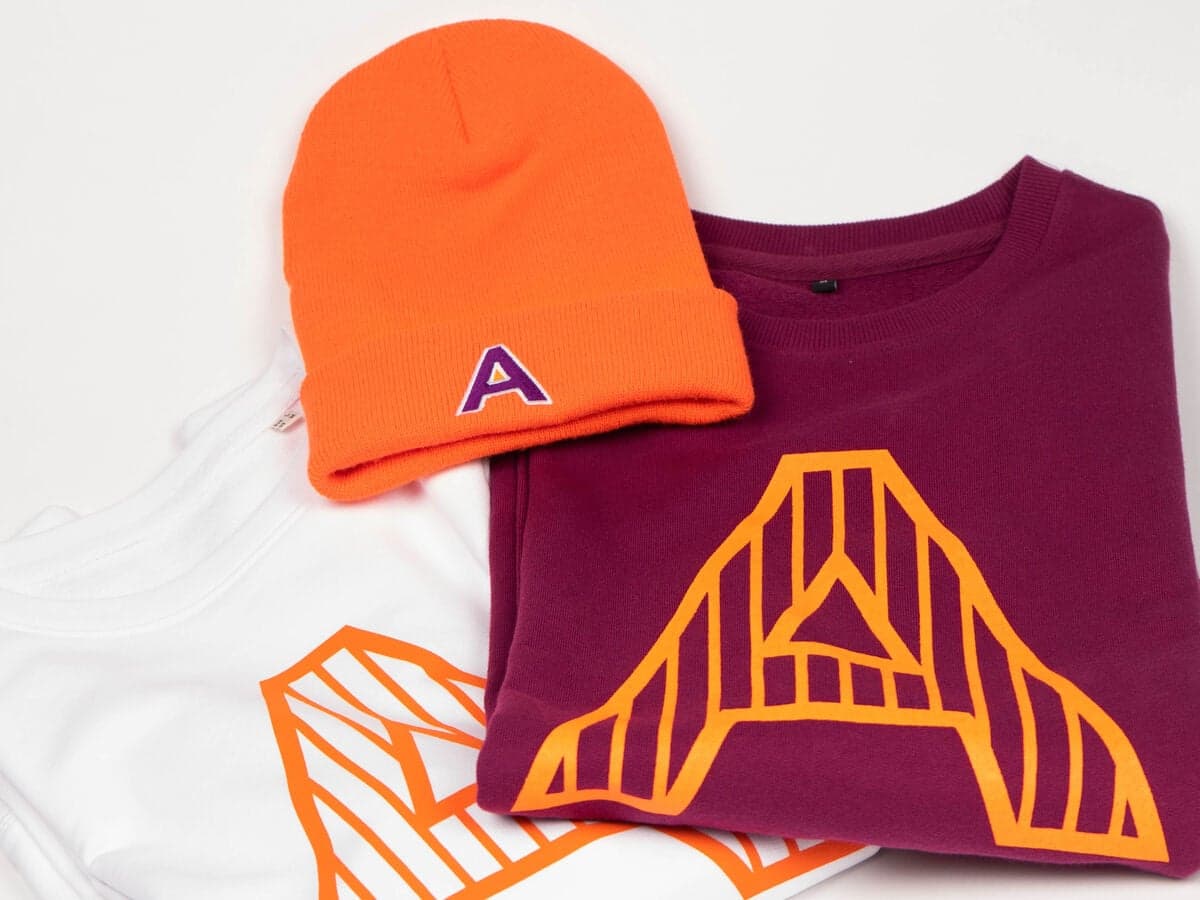
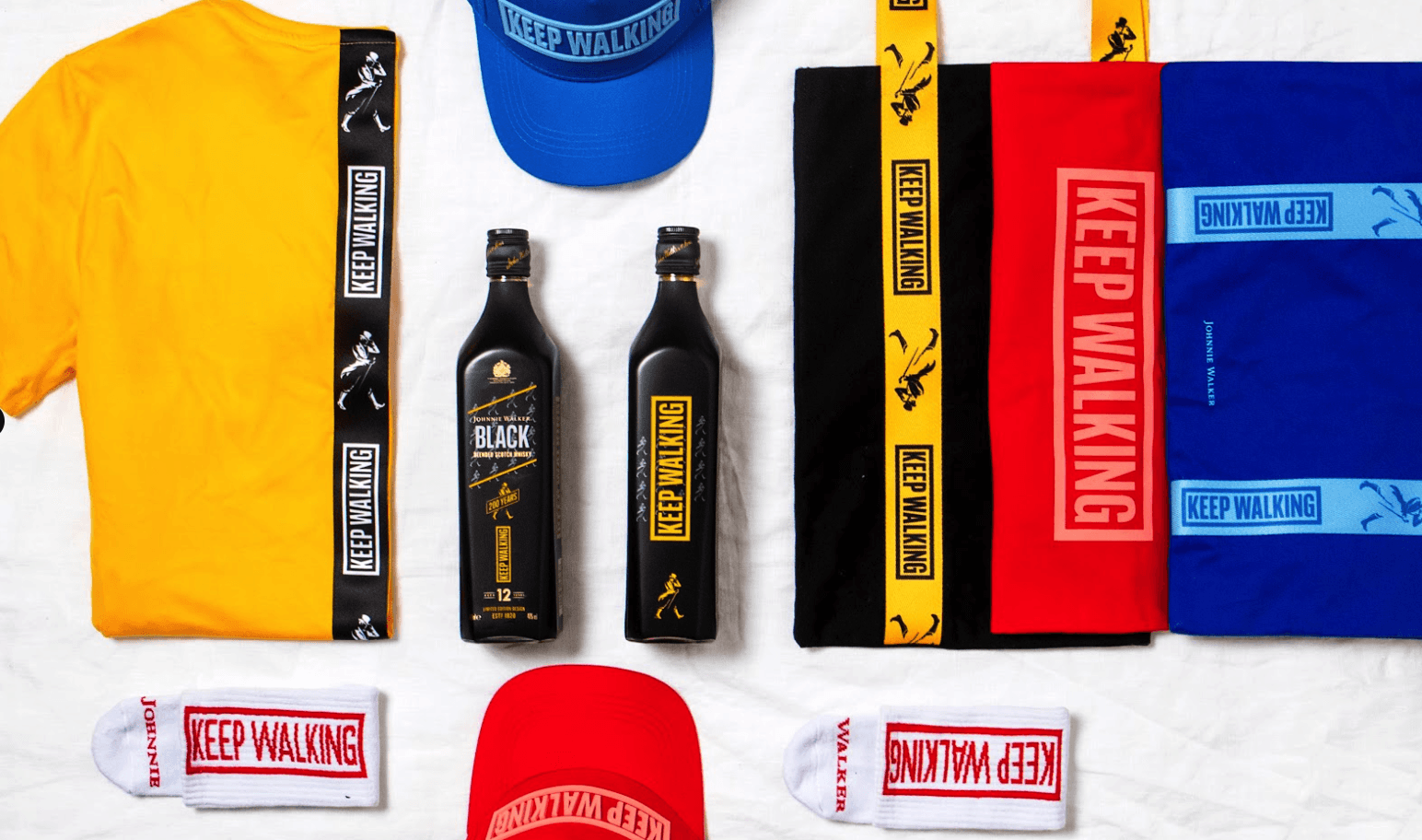
Step 4: Give the brand a physical form
This is the step most strategies skip, and the one we have measurement for.
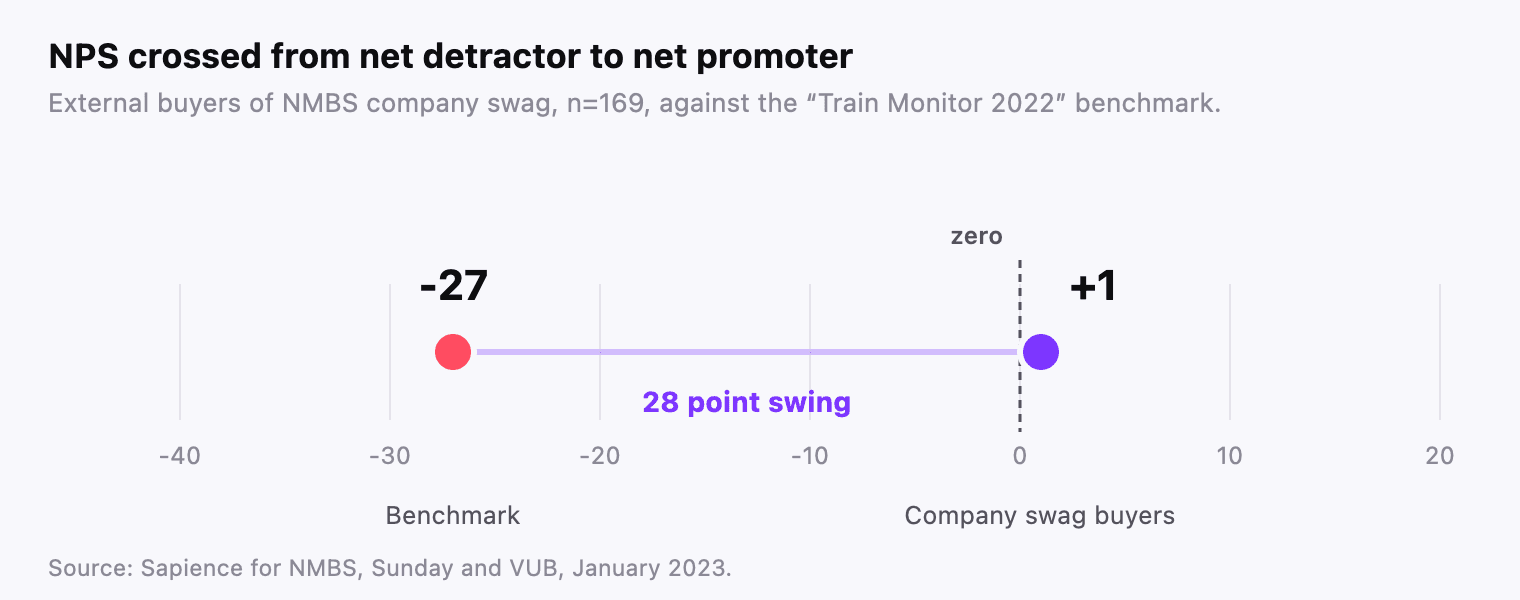
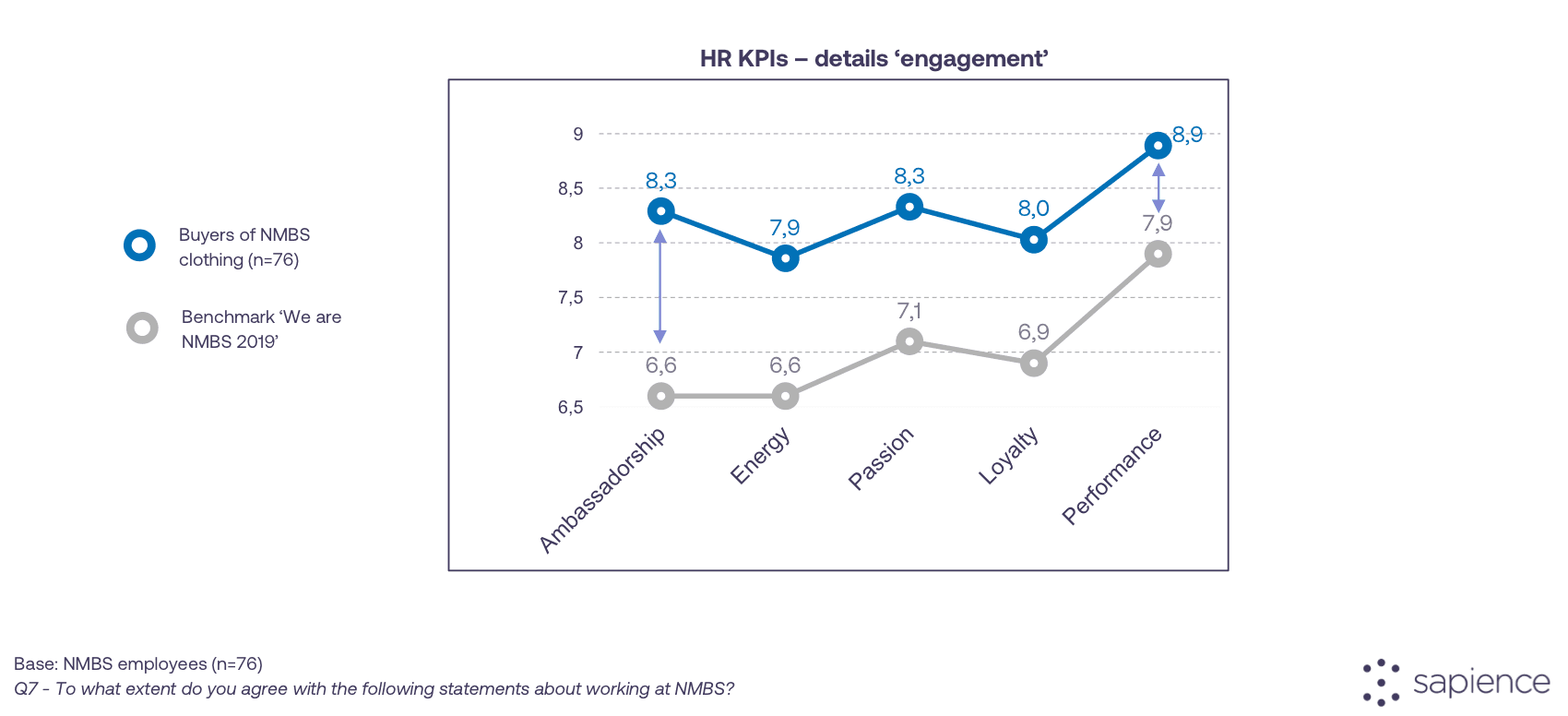
NMBS/SNCB ran a branded clothing programme. Research agency Sapience, with the Vrije Universiteit Brussel, surveyed 258 participants and benchmarked them against NMBS's own prior employee survey.
| Measure | Company benchmark | Received the clothing | Change |
|---|---|---|---|
| Ambassadorship | 6.6 | 8.3 | +26% |
| Engagement | 7.0 | 8.3 | +19% |
| Satisfaction | 6.6 | 8.0 | +21% |
Ambassadorship moved most, which matters because ambassadorship is the employer branding outcome rather than a proxy for one.
Three execution details decided the result, and they are the difference between this working and this being a waste of budget:
- Visibility. Visible logos scored 8.6 on engagement, non-visible items 8.1. A discreet inside-collar label opts you out of the mechanism.
- Wear rate. Effects concentrated among people who actually wore the item. Start from items ranked by measured wear rate, not unit price.
- It was sold, not given. Charging for it did not suppress the effect, which means this line can run at break-even.
Full methodology and limitations are in the study. It is correlational, not causal, and we say so there at length.
Step 5: Move the budget to someone accountable for the outcome
A structural step rather than a creative one. In most organisations the physical expression of the employer brand sits in procurement and is bought on unit price. Nobody in that chain is measured on an employer branding outcome, so nobody produces one.
The study above found its largest effect in a budget line that usually reports to purchasing. Moving it to whoever owns employer branding and internal communications costs nothing and is the change most likely to make the rest of this strategy measurable.
Step 6: Publish what you found, including the parts that did not work
Internally this protects the programme from being cut during its lag period. Externally it is a differentiator, because almost nobody does it.
In the study above, one brand attribute did not improve at all. Publishing that is a large part of why the rest of the numbers are believable.
A realistic timeline
| Horizon | What moves |
|---|---|
| One survey cycle (3 to 6 months) | Ambassadorship, satisfaction, perception measures |
| 6 to 12 months | Offer-acceptance, time-to-hire, referral volume |
| 12 months and beyond | Regretted attrition, retention, cost per hire |
The mismatch between those rows is why employer branding programmes get cancelled. Perception moves first, money moves last, and budget decisions are made in between. Report the fast measures early and explicitly, or you will not survive to see the slow ones.
Frequently asked questions
What is an employer branding strategy?
A plan for what your company offers as an employer, how that offer is communicated internally and externally, and how you will know whether perception changed. The third part is what separates a strategy from a campaign.
How do you measure an employer branding strategy?
Against your own prior employee survey, with unchanged question wording, split by exposure to whatever you changed. The item closest to ambassadorship, whether people would recommend you as a place to work, is the most direct measure available.
How long does an employer branding strategy take to work?
Perception measures such as ambassadorship can move within one survey cycle, typically three to six months. Recruitment metrics follow at 6 to 12 months. Retention effects take 12 months or more.
What is the difference between employer branding and recruitment marketing?
Recruitment marketing promotes open roles. Employer branding shapes what people believe about working somewhere whether or not you are hiring. Recruitment marketing spends against a vacancy; employer branding compounds.
Does merchandise belong in an employer branding strategy?
In the study above it produced the largest measured effect on ambassadorship, at 26% against the company's own benchmark. The effect depended on visible branding and on items people chose to wear, so it belongs in the strategy only if executed on those terms.
Further reading
Employer branding examples with measured outcomes · The full research study · 11 engagement levers ranked by evidence · Swag ranked by wear rate · The welcome kit guide · Corporate gift ideas
Talk to Sunday about the physical layer of your employer brand