


Two campaigns, two problems
Sunday ran two global employee gift campaigns for Deel, the payroll, EOR and HR platform for distributed teams. First an end-of-year gift: 4,870 packages to more than 110 countries and territories. Then a company-wide thank-you when Deel crossed a $1 billion annual run rate. Design, production, customs, distribution and post-delivery reporting all ran on Sunday.
The first campaign was a distribution problem: how do you get a physical box to a workforce that has no offices. The second was a data problem, and solving it is what made the second campaign land cleanly.
Who Deel is
Deel is the payroll, EOR and HR platform companies use to hire and pay people anywhere. In June 2025 the company announced it had passed a $1 billion annual run rate, and it has since reported crossing $1.5 billion. The relevant detail for gifting is that Deel is the ultimate remote-first company: its own workforce is spread across the world in exactly the pattern its product is built to serve. There is no head office to ship a pallet to. Every gift is an international parcel to a private residence.
That is the hardest possible shape for employee gifting, and it is increasingly the normal one.
Campaign 1: an end-of-year gift to 110+ countries
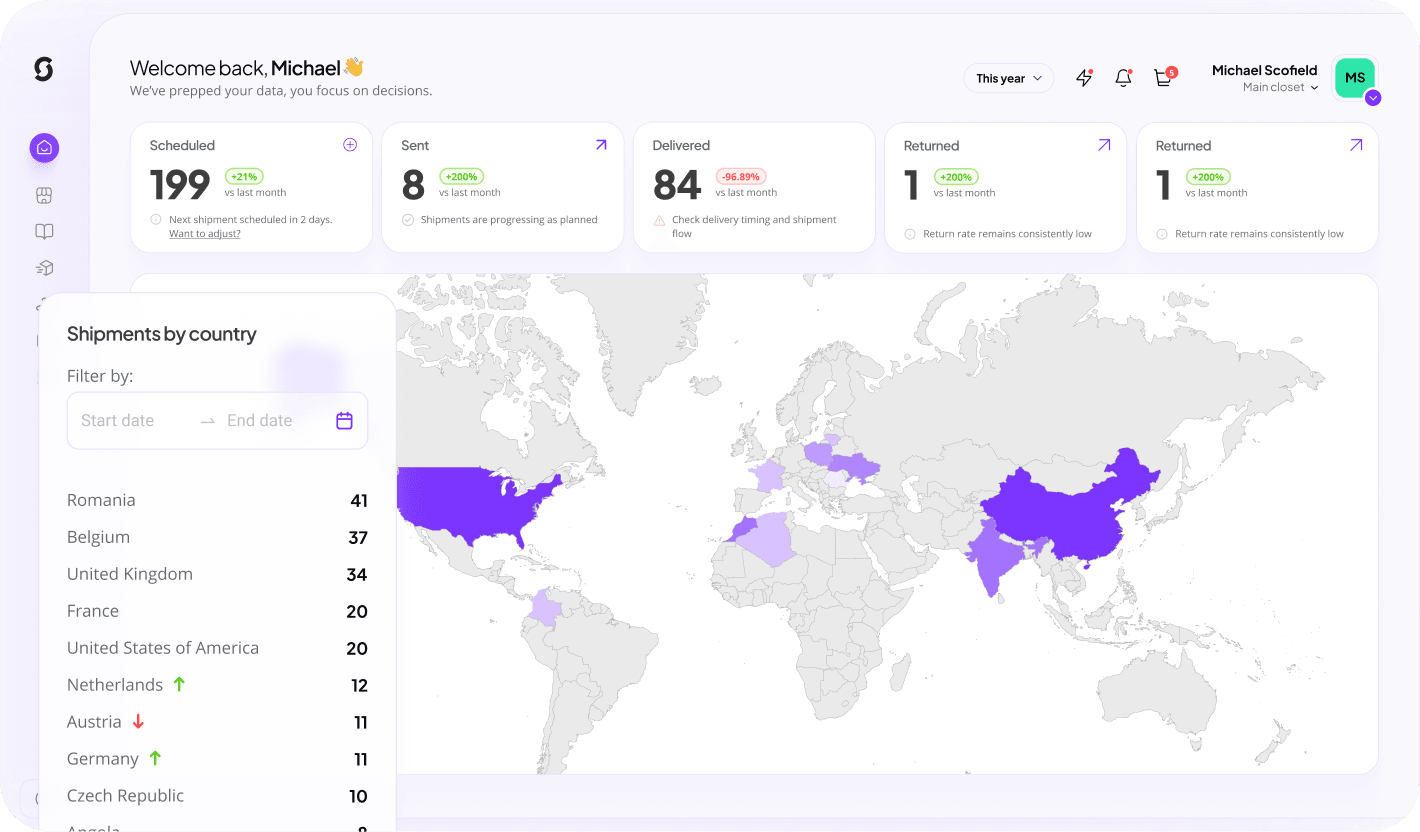
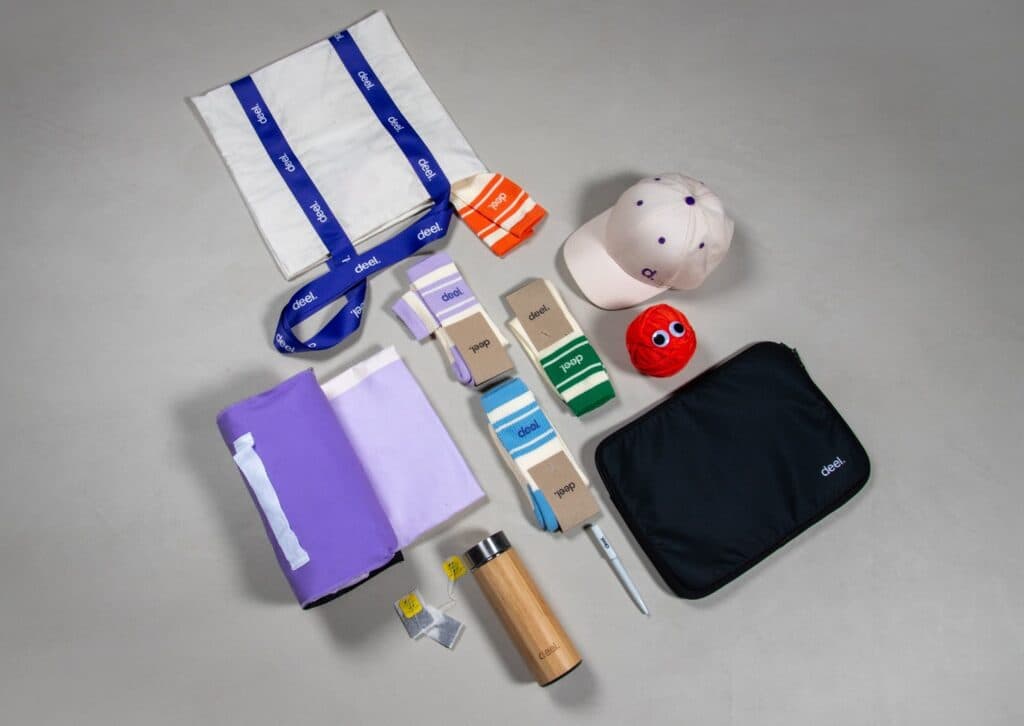
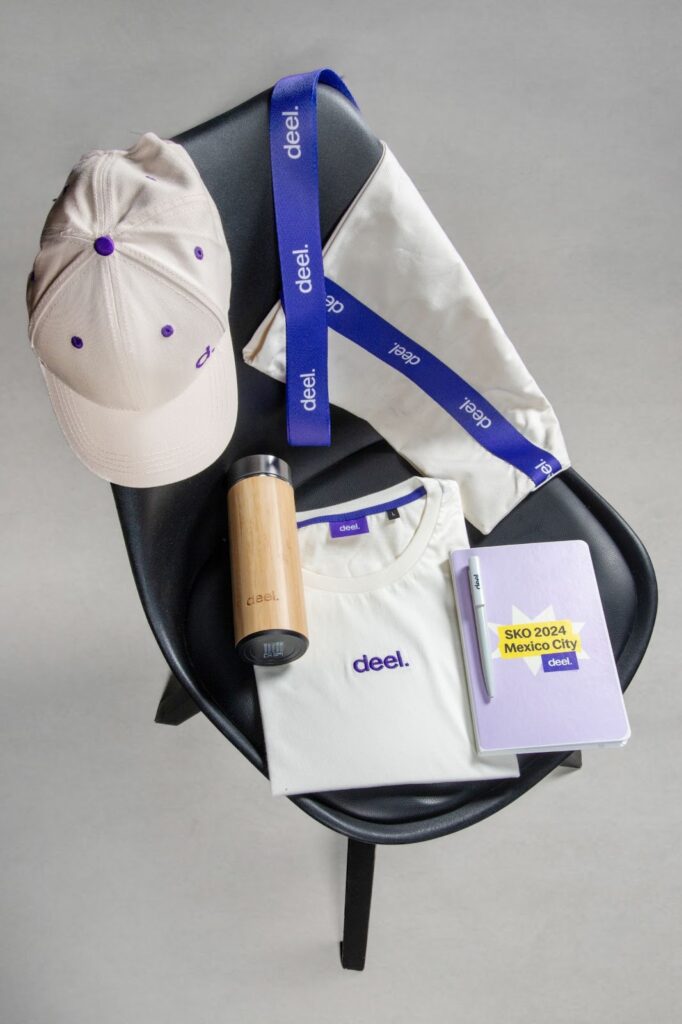
The Christmas campaign moved 4,870 packages in two configurations, 1,543 of one and 3,327 of the other, to more than 110 countries and territories. The largest markets were the United States (551), India (530), the United Kingdom (339), South Africa (337), Brazil (264) and Spain (255). Below that the curve flattens into a very long tail: 29 to Jamaica, 8 to Mauritius, 3 to Zambia, and a single package each to Lesotho, Niger, Suriname and the Democratic Republic of the Congo.
Roughly half the destination countries received fewer than ten packages, and those are the ones that consume the work. Each one still needs a correct commercial invoice, a customs value, a proforma, a gift declaration, an HS classification and a courier that actually delivers to that address. A country receiving one package requires nearly the same setup as a country receiving five hundred. This is what "global distribution" actually means once you stop treating it as a shipping rate.

The problem that only shows up at scale
Both campaigns needed one thing before anything could ship: a complete, valid delivery address for every single person. The default method is a spreadsheet — HR exports employee records, sends a file, the fulfilment partner ships against it. At 50 people that works. At several thousand across a hundred countries it collapses.
Of roughly 4,500 addresses supplied for the end-of-year campaign, only about 1,800 were usable. A 60% failure rate. Nothing about that reflects carelessness. HR systems store an address as free text, spreadsheets strip leading zeros from postcodes, courier systems truncate street fields, non-Western address formats do not survive a Western template, and people move without updating a record they had no reason to think mattered. The consequences are all downstream and all expensive: returned parcels, parcels destroyed at destination, courier surcharges, address-correction fees, and gifts arriving in February.
The fix was to stop collecting addresses centrally. For the second campaign, Sunday ran a branded Redeem Page. Each employee received a link, entered their own delivery details, chose their size, and the page validated the address at the point of entry. After the switch, all packages were delivered correctly and on time. The person who knows an employee's current address is the employee: ask the recipient directly and validate on entry, and the problem stops existing.
Campaign 2: a thank-you at $1 billion
When Deel passed a $1 billion run rate, it marked the milestone with a gift to every employee. The mechanics carried over from the first campaign, now with the address problem solved. Employees redeemed their own gift, picked their own size and entered their own address. Production ran against confirmed selections rather than a forecast, which is what prevents a stockroom of unwanted sizes at this scale.
What large-scale management looks like afterwards
The part most gifting suppliers cannot offer is what happens once the boxes land. Deel's dashboard tracks the campaign as an ongoing asset rather than a closed project:
- 154 working days saved — the internal effort of preparing and shipping these packages, measured rather than asserted. A full-time person for most of a year.
- €45,371.90 saved on fulfilment, warehousing and logistics.
- 4.71 out of 5 average satisfaction, from 425 responses to 4,128 surveys sent (a 10.3% response rate).
- 72 trees planted, absorbing an estimated 1,800 kg of CO₂ per year.
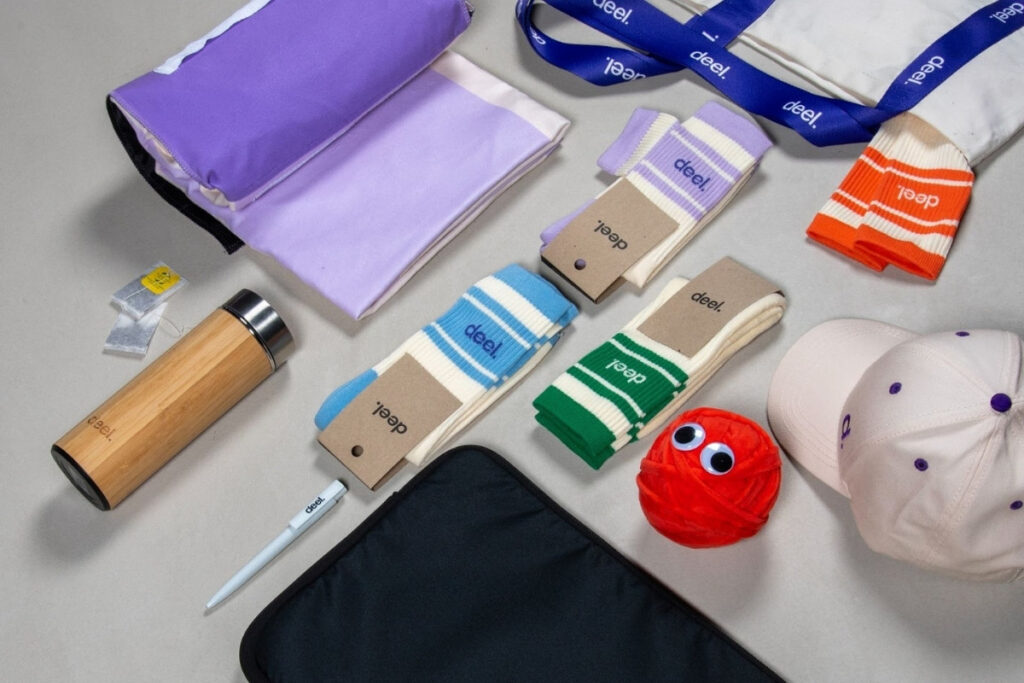
Then the numbers that reframe what the campaign was: around 250 ambassadors, roughly 38,000 wears, approximately 3.7 million impressions and about 68,000 brand conversations, all accumulating in the months after delivery. A gift campaign is usually booked as an HR cost. These figures describe a brand channel with a long tail: the spend happens once, the impressions accumulate for a year, and the inventory is worn voluntarily by people who chose it.
What to copy if you are gifting a distributed workforce
Never collect addresses in a spreadsheet. Send every recipient a link, let them enter their own details, and validate at the point of entry. A 60% error rate is the normal outcome of spreadsheet collection at scale, not an unusual one.
Let people choose their own size, which also gives you real production numbers instead of a forecast. Budget for the long tail, not the average: half your destination countries will take a handful of packages each and consume most of the customs work. And measure past the delivery date — wears, impressions, conversations and satisfaction all accumulate after the boxes land.
The same playbook scales down as well as up. See how delaware ran a 1,488-order campaign behind its own SSO, or how PGS Group turned gifting into a standing coin shop across nine countries.
4,870 packages. 110+ countries. A 60% address failure rate cut to zero.
Frequently asked questions
How do you ship employee gifts to a fully remote global workforce?
Send each employee a redeem link instead of collecting addresses centrally. They enter their own delivery details and size, the page validates the address on entry, and production runs against confirmed selections. Deel used this to reach recipients across more than 110 countries and territories, with 4,870 packages in a single end-of-year campaign.
Why do employee address lists fail at scale?
Because address data degrades every time it moves between systems. HR fields store addresses as free text, spreadsheets strip leading zeros from postcodes, courier systems truncate long street names, non-Western formats do not fit Western templates, and people move without updating records. Around 60% of the addresses supplied for Deel's first campaign were unusable for these reasons.
What is a redeem page?
A branded page where each recipient claims their own gift. They pick their size, enter and confirm their own shipping address, and the page validates it before submission. It removes central address collection entirely, which also means the company never assembles a file of employees' home addresses.
How much does it cost to ship gifts to over 100 countries?
The cost driver is not the average shipping rate, it is the long tail. Roughly half of Deel's destination countries received fewer than ten packages, and each still required its own customs documentation, proforma, gift declaration and courier arrangement. Exceptions such as returns, destroyed parcels and address corrections are where budgets actually break.
How do you measure the return on an employee gift campaign?
Track past the delivery date. Deel's dashboard reports 154 working days and €45,371.90 saved on the operational side, and on the brand side roughly 250 ambassadors, 38,000 wears, 3.7 million impressions and 68,000 brand conversations accumulating in the months after delivery.
Do employees actually want branded merchandise?
When they choose it themselves, the evidence says yes. Deel recipients rated their gift 4.71 out of 5 across 425 survey responses, and wears kept climbing for months after delivery. Chosen items get worn; assigned items do not.