

The slow part of a merch project was never the drawing. It was browsing a catalog to find what fits. Here is how an AI agent takes that part over, and where your team stays in charge.
Part of our guide to agentic commerce for branded merch.
AI merch design is using an AI assistant to go from a rough idea to products, designs and a quote for branded merchandise. With Sunday MCP, Claude, ChatGPT or Gemini suggests products that fit your audience, selects them and requests designs through Sunday. Your team signs off on the brand before any quote is approved.
Search for an AI merch generator and you mostly find consumer tools that create a T-shirt graphic for print-on-demand. That is a different job. A company ordering merch for its team, clients or events already has a logo and brand guidelines. The hard part is choosing what to make, for whom and at what price.
What is AI merch for a company?
For a creator or a small online shop, AI merch usually means generating an image and printing it on a blank shirt. For a company, it means something broader. You have a brand, an audience and a budget, and you need a set of products that fit all three, decorated properly and delivered on time.
That is where an AI agent helps. Connected to Sunday through Sunday MCP, an assistant like Claude, ChatGPT or Gemini can suggest products and pre-made kits, calculate prices, select products, request designs and prepare a quote. It works from the Sunday catalog and its pricing, so the suggestions are things Sunday actually produces.
If the connection itself is new to you, the pillar on Sunday MCP explains how it plugs into each assistant.
Why is the catalog the real bottleneck?
Ask anyone who has put together a merch order what took the longest. It is rarely the design. It is the browsing. Hundreds of products, colours, decoration methods and price breaks, while you try to picture which combination your audience will actually wear.
Niels Vandecasteele at Sunday puts it plainly. The Sunday platform already saves teams the time. The real value of the MCP is the creative side, and not having to browse the full catalog. You describe the audience, and the agent comes back with ideas that fit it.
That changes who can start a merch project. A team lead with a clear picture of who the merch is for no longer needs to know the catalog. They need to describe the people.
How does an agent turn an idea into suggestions?
The agent searches the whole catalog, looks at what is popular and what performs well, and shapes its suggestions around your audience and budget.
Illustrative example · You, in Claude: We're making merch for our engineering offsite in Lisbon. 60 people, mostly remote, and they hate generic swag. Budget around €4,000. What would they actually use?
Sunday MCP: Here are a few directions that suit a remote engineering team. Each one lists products from the Sunday catalog, a suggested decoration method and a price per person within your budget. Pick one and I'll select the products and request designs.
Two things are worth noticing. The brief describes people, and the reply ends with a choice for you to make. For more starting points, see 12 agentic AI examples in merch and gifting and the 30 prompts to run your merch program.
From suggestion to design request
Once you pick a direction, the agent selects the products and requests designs through Sunday from the same chat. The brief you wrote for the agent becomes the starting point for the design request.
Decoration is part of the decision. Embroidery reads differently from a screen print, and the right choice depends on the product and how often it will be worn. The agent can lay out the options and price them. You decide.
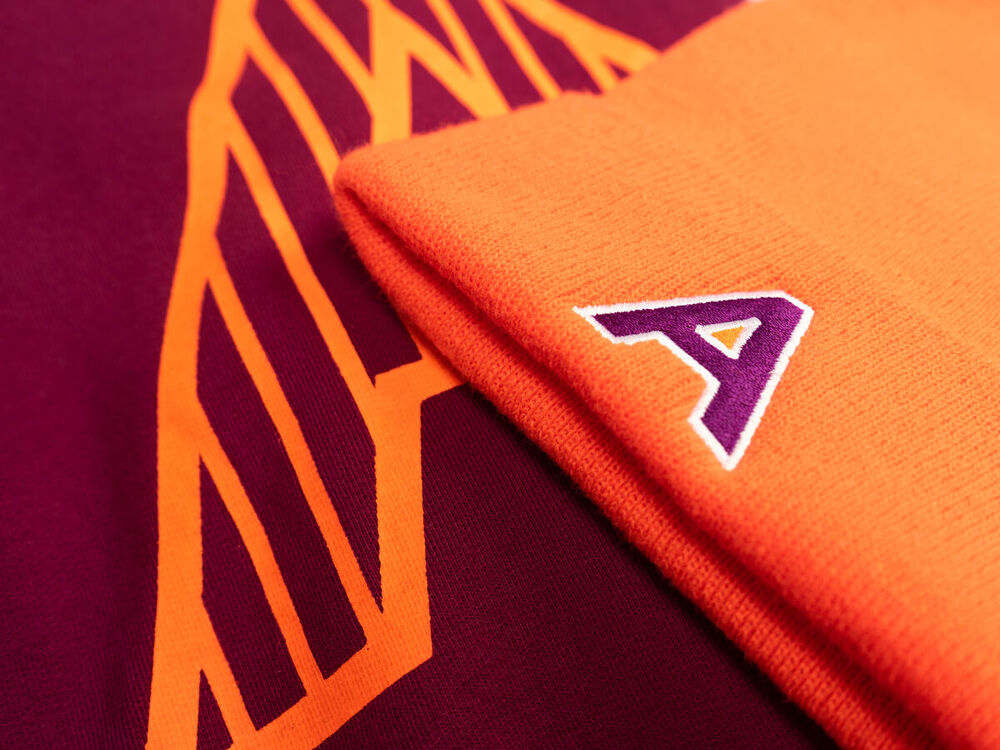
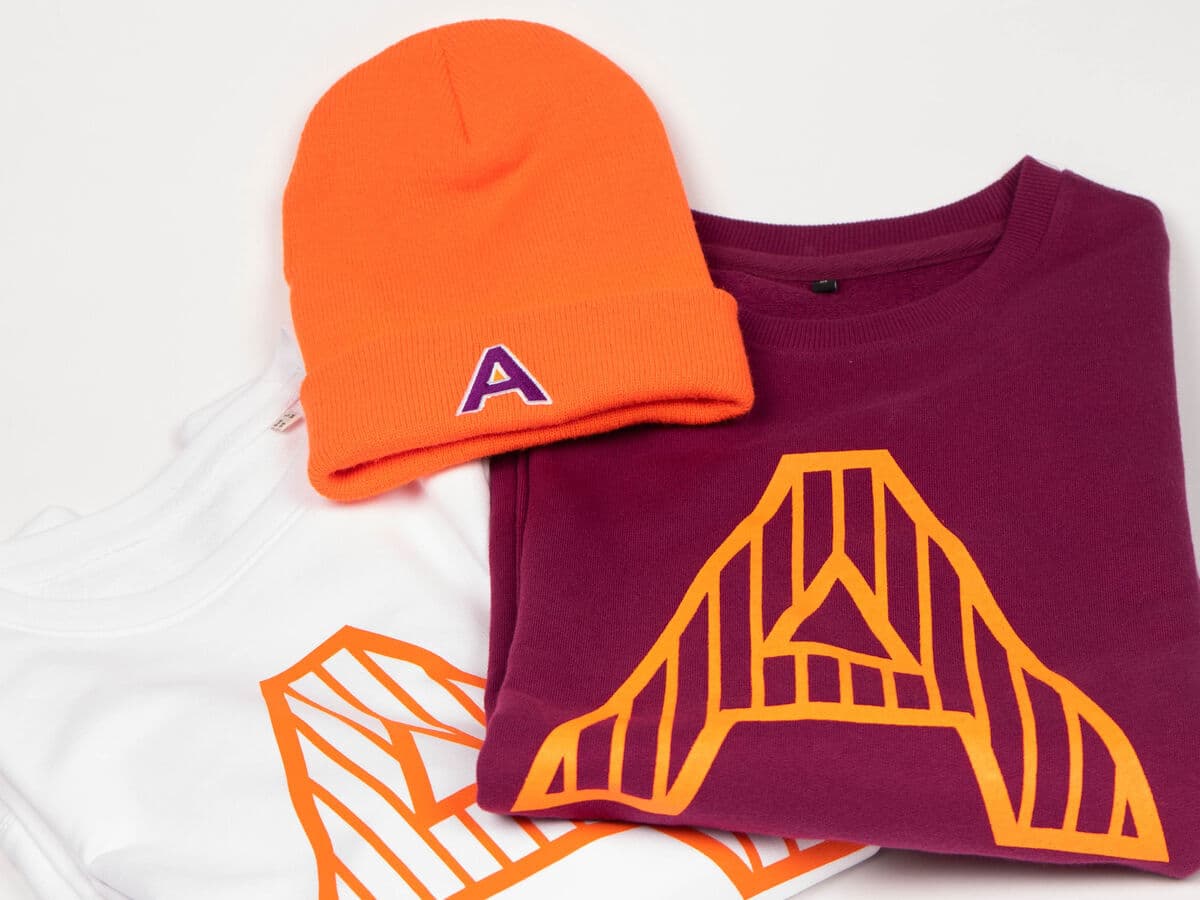
Screen print on the T-shirt, embroidery on the beanie, produced by Sunday. Choices like this come back as options to compare. The brand call stays with your team.
When the designs are ready, you check them against your brand guidelines. Once they pass, the agent prepares a quote, and a person approves it through a link. Only then does production start.
Where does a mockup generator fit?
Sometimes you want to see an idea before you involve anyone. Sunday's free hoodie mockup generator lets you put your logo on a hoodie and see how it looks before you commit to anything.
The mockup generator answers how something will look. The agent answers what to make, for whom and at what cost. Many teams will use both: the agent to narrow the options, the mockup to get a quick reaction from colleagues. No Sunday account yet? Create one here before you request MCP access.
Skip the catalog scroll
Describe the audience, get ideas that fit, and approve the quote yourself. Sunday MCP works in Claude, ChatGPT and Gemini.
Request Sunday MCP accessIncluded on every Sunday plan · Works with Claude, ChatGPT and Gemini · You approve every order
AI merch generator or merch agent?
The two get searched with the same words, and they solve different problems.
| Typical consumer AI merch generator | Merch agent with Sunday MCP | |
|---|---|---|
| Starting point | A text prompt for an image | An audience, a budget and your brand |
| Output | A graphic on a blank product | Product suggestions, design requests and a quote |
| Range | The blanks one print shop offers | The Sunday catalog and its pricing |
| Brand control | Usually none built in | Design sign-off by your team |
| Buying | Checkout | A quote a person approves through a link |
| After the order | One-off delivery | Stock questions, reorders and shipping to 200+ countries |
If you want a funny shirt for yourself, a generator is fine. If you run merch for a company, the work sits on the right side of that table.
What stays human in AI merch design?
Merch is more complex than most B2B purchases. There are designs, approvals and brand guidelines involved, and a misprinted logo on a few hundred hoodies cannot be fixed with an edit. Sunday's position is to automate as much as possible and keep a person in the loop to confirm the brand is respected.
That gives you three checkpoints in practice. Someone on your team approves the design. Someone approves the quote. Someone confirms the shipment. The agent never skips one of them, and it cannot place an order on its own. More on how that works in spend controls for AI agents.
How to write a brief an agent can use
The quality of the suggestions depends on the brief. A few habits help.
- Describe the people. Role, location, how they work, what they already own.
- Give a budget, total or per person.
- Say where and when it will be used. An outdoor event in March asks for different products than a desk kit.
- Mention what you ordered before, so the agent can check past orders and avoid repeats.
- Name the hard constraints. Brand colours, sizes, anything your guidelines rule out.
Then ask for options, not a single answer. Comparing a few directions is faster than arguing with one. For the full rollout, from first question to recurring tasks, read how to use AI agents for your merch program. The bigger shift behind it is in our guide to agentic commerce for branded merch.