




Concrete AI agent use cases for a merch program, from budget splits to leftover stock. Each one is a scenario showing how Sunday MCP works, with a person approving every order.
Part of our guide to agentic commerce for branded merch.

Agentic AI examples in merch are tasks where an AI agent such as Claude, ChatGPT or Gemini reads your merch data, suggests products, builds budgets and prepares quotes through an MCP connection like Sunday MCP. The agent does the legwork. A person approves every quote and shipment before anything is produced or sent.
Most lists of agentic AI examples are about travel bookings and support bots. This one is about something more physical: hoodies, welcome kits, event giveaways and client gifts. The twelve examples below show how an AI agent works with a merch program once Sunday MCP connects it to the Sunday platform.
What counts as agentic AI in merch?
An AI agent is an assistant that can take steps, not only answer. It reads data, calls tools and comes back with something you can act on. In merch, that means it can look at the catalog, your stock and your past orders, then propose what to do next.
The connection is MCP, the Model Context Protocol. Sunday MCP plugs the whole Sunday merchandise platform into any assistant that supports MCP, including Claude, ChatGPT and Gemini. If the protocol itself is new to you, start with what an MCP server is.
How to read these examples
Here is the full set at a glance. The right-hand column matters as much as the middle one.
| # | Example | The agent does | A person does |
|---|---|---|---|
| 1 | Budget split | Searches the catalog, prices options, splits the budget | Picks the version to quote |
| 2 | Shareable wish list | Turns suggestions into a list colleagues can review | Agrees the shortlist |
| 3 | Event forecast | Estimates quantities per event, prepares quotes for 3 or 6 months | Approves each quote |
| 4 | Pre-made kit | Suggests ready kits for an audience and prices them | Chooses a kit |
| 5 | Stock check | Reads current stock by product and size | Nothing, it is read-only |
| 6 | One-prompt reorder | Prepares a reorder as a quote | Approves the quote through a link |
| 7 | Leftover stock | Matches leftovers to people in other systems | Confirms the shipments |
| 8 | Reporting | Answers data questions and builds reports | Reads and shares them |
| 9 | CRM gifting | Generates gift packs for accounts flagged in the CRM | Approves before anything ships |
| 10 | Onboarding kits | Suggests a kit, checks stock, plans shipments | Confirms the shipments |
| 11 | Design request | Suggests products, selects them, requests designs | Signs off on the brand |
| 12 | Agency client request | Finds products, prices them, prepares a quote | The client approves |
Examples 1 to 4: budgets and planning
1. Split a budget across an audience
Say you have €20,000 to spend on merch for a sales kickoff, and the audience is account executives in four countries. Building that by hand means browsing, pricing and rebuilding a spreadsheet every time someone changes their mind. Niels Vandecasteele at Sunday calls assembling budgets the most boring task in merch. It is the first one worth handing to an agent.
With one prompt, the agent searches the whole catalog, looks at what is popular and what performs well, calculates prices and comes back with a budget split.
Illustrative example · You, in Claude: We have €20,000 for our sales kickoff. Around 300 attendees across Germany, France, Spain and the Netherlands. Suggest a merch budget split that people will actually use.
Sunday MCP: Here are a few ways to split it: one wearable, one desk item and a small giveaway, with unit prices, decoration and estimated shipping per country. Want me to turn the version you prefer into a shareable wish list or a quote?
2. Build a shareable wish list
Budgets rarely get decided by one person. The agent can turn its suggestions into a wish list you share with colleagues, so everyone reacts to the same shortlist.
3. Forecast merch for a season of events
Say your team runs a dozen trade shows a year and hands out somewhere between 1,000 and 1,500 items per event. Load the event calendar into the conversation and ask the agent to forecast next quarter. It works out quantities per event, then prepares quotes for the next three or six months so production lines up with the calendar. The event side is covered in event merchandise, and the recurring version in AI workflow automation for swag programs.
4. Suggest a pre-made kit
Sometimes you just need a kit that works. The agent can suggest pre-made kits for a given audience and budget, such as a remote team, a client thank-you or a speaker pack, and price them before anyone opens the catalog.
Examples 5 to 8: stock, reorders and data
5. Check stock by size
The simplest agentic AI example is a question: "How many black hoodies do we have left, by size?" The agent reads your current stock in Sunday and answers in the chat. No login, no export, no message to the one colleague who usually knows.
6. Reorder in one prompt
"Create a quote to reorder the pants." That is the whole request. The agent looks up what you ordered before, checks the product and the price, and prepares a quote. You open the link, check it and approve it.
Reorders are where Niels expects agents to take over first. In his words: "New products is a creative project. Reordering is an administrative transaction." A transaction with a clear precedent is exactly the kind of work an agent handles well.
7. Turn leftover stock into rewards
Every merch program ends up with leftovers. When Sunday MCP sits next to other systems in the same assistant, such as your CRM or HR tool, you can ask who should get them.
You, in ChatGPT: This is our leftover stock in Sunday. Which customers or employees should we reward with it this month?
Sunday MCP: Based on the stock in your Sunday warehouse and the accounts flagged in your CRM, here are two groups that fit, with a suggested item per person. I can plan the shipments for your confirmation.
8. Ask for reporting
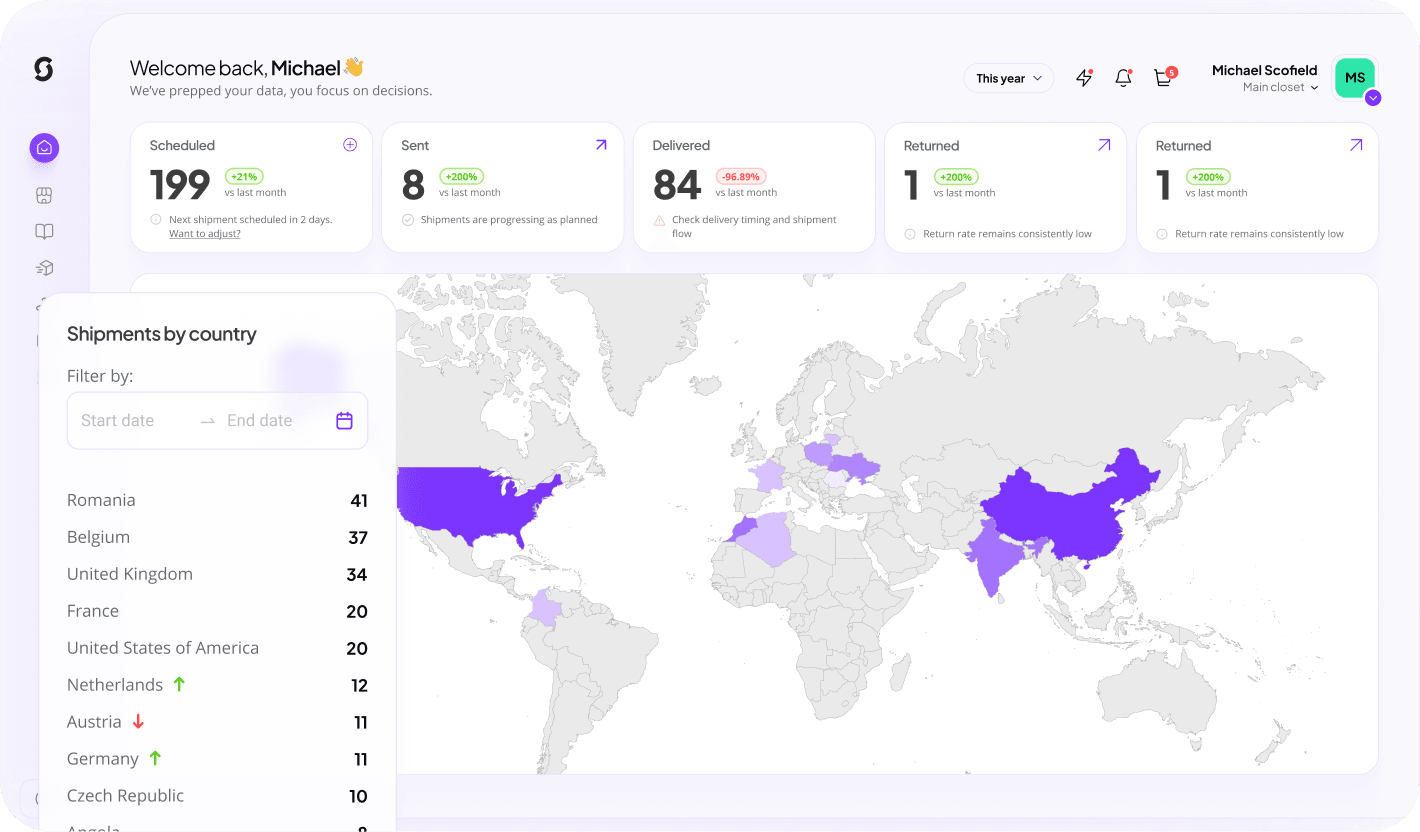
Finance asks how many items shipped last quarter. Marketing asks which countries order the most. The agent pulls both from Sunday and answers in plain language, or builds the report you would otherwise assemble by hand.
Run these examples on your own merch
Sunday MCP connects your merch program to Claude, ChatGPT and Gemini. Request access and Sunday sets you up.
Request Sunday MCP accessIncluded on every Sunday plan · Works with Claude, ChatGPT and Gemini · You approve every order
Examples 9 to 12: gifting, onboarding and creative work
9. From CRM signal to client gift
Connect HubSpot and Sunday MCP to the same assistant. Ask HubSpot which customers would be best to send a gift to right now, the ones where it would have the most impact. Then ask Sunday what to send them. The agent generates the packs in the Sunday app, and a person approves them before anything ships. The full flow is in AI agents for sales, and the gifting side in corporate gifts.
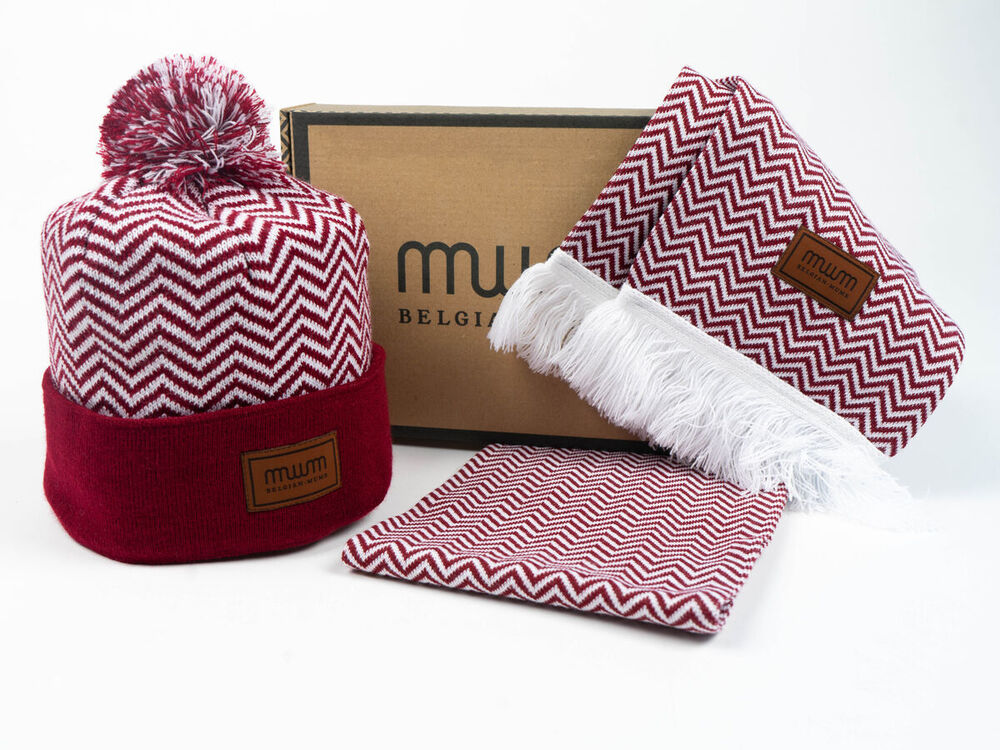
A knitted gift set produced through Sunday. A pack like this is what an agent can propose for a client list. A person still decides who receives it.
10. Prepare onboarding kits for new starters
Say HR has eight people starting next month across three offices. The agent can suggest a welcome kit, check that the items and sizes are in stock, and plan the shipments around each start date. A person confirms the shipments. More in AI agents for HR and new hire welcome kits.
11. Go from idea to design request
"We want something for our engineering team that they will actually wear." The agent suggests products that fit that audience, selects them and requests designs through Sunday. Brand sign-off stays with you. Niels sees this creative side as the real value of the MCP, because nobody has to scroll the full catalog to find a starting point. See AI merch design.
12. Handle client requests as an agency
Partners and agencies get merch requests from their own clients all week. With Sunday MCP they can find products, price them and prepare a client quote inside the assistant they already use. Sunday is now rolling out access to partners and agencies like these, and to power users who run large merch programs.
Which examples should you try first?
Start where the risk is lowest and the boredom is highest.
- Read-only questions. Stock, shipped items, top countries. Nothing gets ordered, and you learn how the agent reads your data.
- Budgets and wish lists. Still nothing ordered, but you see the quality of the suggestions.
- Reorders as quotes. Clear precedent, and a person approves.
- Cross-system examples like CRM gifting or leftover stock, once you trust the output.
The order is laid out step by step in how to use AI agents for your merch program, and if you want ready-made wording, the 30 prompts to run your merch program are grouped by job. No Sunday account yet? Create one first, then request MCP access.
What stays human in every example?
The agent prepares. A person decides. That holds for all twelve.
The agent never places an order. Orders start as quotes, and a person approves each one through a link. Shipments need a human confirmation. Designs need a human sign-off against your brand guidelines. There are no automatic orders today. That is deliberate. Merch carries your brand, and a wrong order is a physical thing sitting in someone's office.
If you are the one who has to defend this to finance, the controls are covered in spend controls for AI agents and the agentic commerce FAQ for procurement and finance.
Where is this heading?
Niels's bet is that around 20% of merch, maybe more, will be ordered by agents within about three years. Most of it will be reorders. Creative projects stay with people, helped by better suggestions.
His short version of what MCP changes: "It's like adding physical products to any software layer." Your CRM, HR system and event calendar already know when merch is needed. With an agent in between, they can propose what to send. The bigger picture is in our guide to agentic commerce for branded merch.