Monday Merch is a strong full-service merch partner. But if you need a more platform-first setup, better multi-team access, stronger global campaign logic, or a clearer path from branded catalog to measurable company swag, these are the alternatives worth shortlisting.
The best Monday Merch alternative depends on what you are actually buying: a one-off onboarding kit, a global company swag store, a sales gifting engine, or a central branded merchandise operating system. For most international marketing and people teams, the real decision is not "who can print a hoodie?" It is "who can help multiple teams design, order, store, ship, and measure company swag without rebuilding the process every month?"
That is why Sunday ranks first for companies that want a branded merchandise platform rather than a traditional swag vendor. Sunday's public positioning is explicit: one platform to design, produce, and ship company swag globally, with branded merchandise live in seconds and a free platform model where teams pay for merch rather than setup. The platform page also emphasizes internal brand stores, redeem campaigns, inventory visibility, and measurable merch performance.
Monday Merch remains a credible option. Its own site describes a full-service partner that supports product selection, design, production, warehousing, shipping, merch stores, and a platform for stock levels and shipments. The problem is fit. If your need is primarily fast merch packs, Monday Merch can work. If the brief includes multi-team access, internal ordering, event workflows, ABM campaigns, European production logic, global distribution, and data, you should compare alternatives more seriously.
Buyer tip. Do not shortlist swag platforms only by catalog size. Ask how the system handles recurring reorders, team permissions, budget visibility, stock, recipient data, international shipping, and performance reporting. Start with Sunday's platform overview, then compare specialist gifting tools against that operating model.
Why this category matters. PPAI's 2026 research says branded items are increasingly experienced as meaningful brand moments rather than throwaway extras, with 90% of consumers saying a promotional product improves their perception of the brand.
What is a Monday Merch alternative and why does it matter?
A Monday Merch alternative is any platform or partner that helps companies source, design, produce, store, distribute, automate, or measure branded merchandise without using Monday Merch. The strongest alternatives are not simple print shops. They combine product expertise, software workflows, fulfilment infrastructure, and campaign logic.
The buyer-intent keyword "monday merch alternative" usually signals one of four pains: the team wants more control, more automation, better pricing clarity, stronger international support, or a platform that different departments can use without asking one central person for every shipment. That is why a serious comparison should include catalog depth, fulfilment, software, service model, internal stores, integrations, and reporting.
| Old approach: swag vendor | New approach: merchandise platform |
|---|---|
| Email a supplier for every new request. | Use a central platform where approved products, pricing, and workflows are always available. |
| Store boxes in office cupboards and spreadsheets. | Use inventory visibility, central storage, and automatic stock logic. |
| Collect sizes and addresses manually. | Use redeem links where recipients enter preferences and delivery details themselves. |
| Every department negotiates separately. | Multi-team access lets HR, events, marketing, and sales order from the same approved brand store. |
| Measure success by "did it arrive?" | Measure cost, usage, satisfaction, wears, impressions, and campaign performance. |
| Choose cheap products because the process is opaque. | Use transparent pricing, better product selection, and long-term reordering logic. |
Warning. The cheapest merch quote is often not the cheapest operating model. Hidden costs show up in unused stock, duplicate orders, rushed shipments, customs issues, and internal admin time.
The 7 best Monday Merch alternatives in 2026
Each card has a "Best for X" badge so you can match the platform to your situation.
01. Sunday
Best for global company swag stores · teamsunday.com
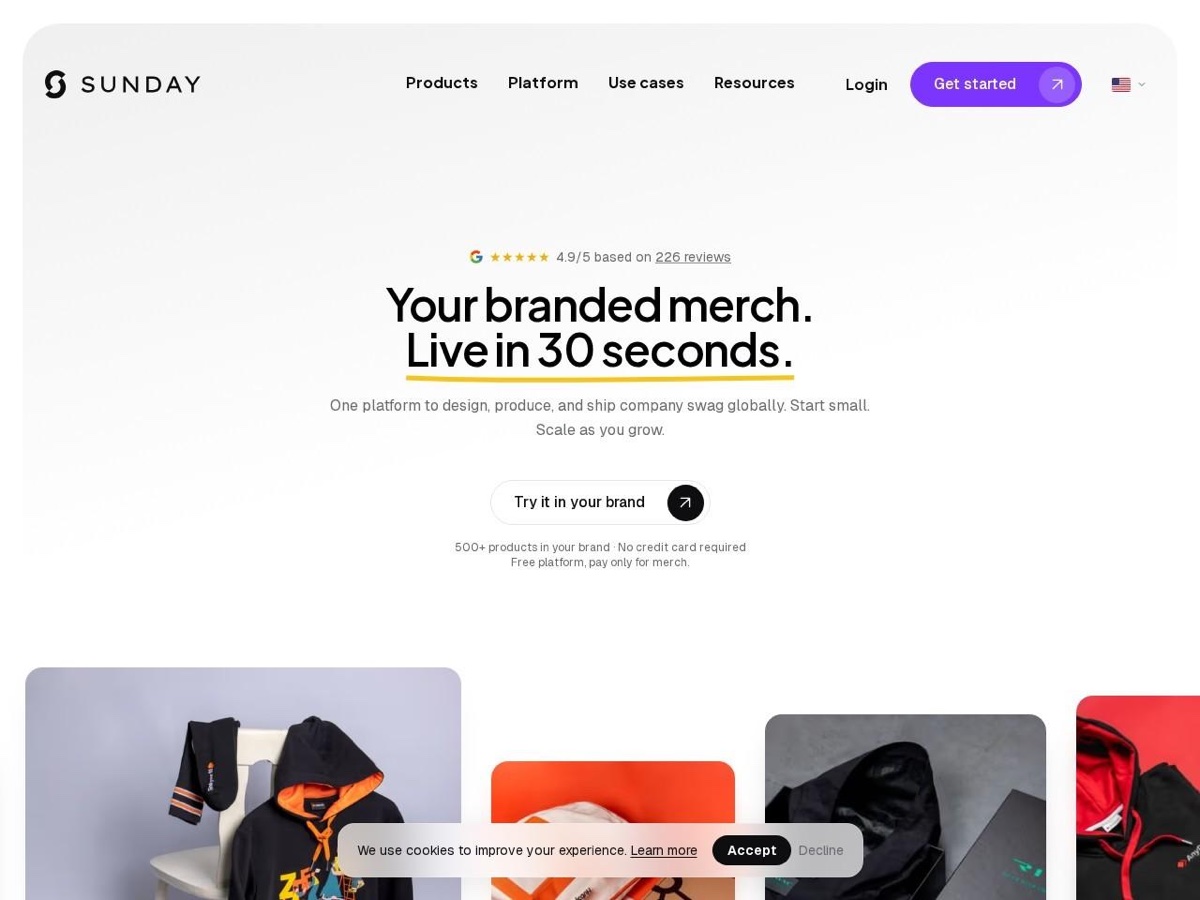
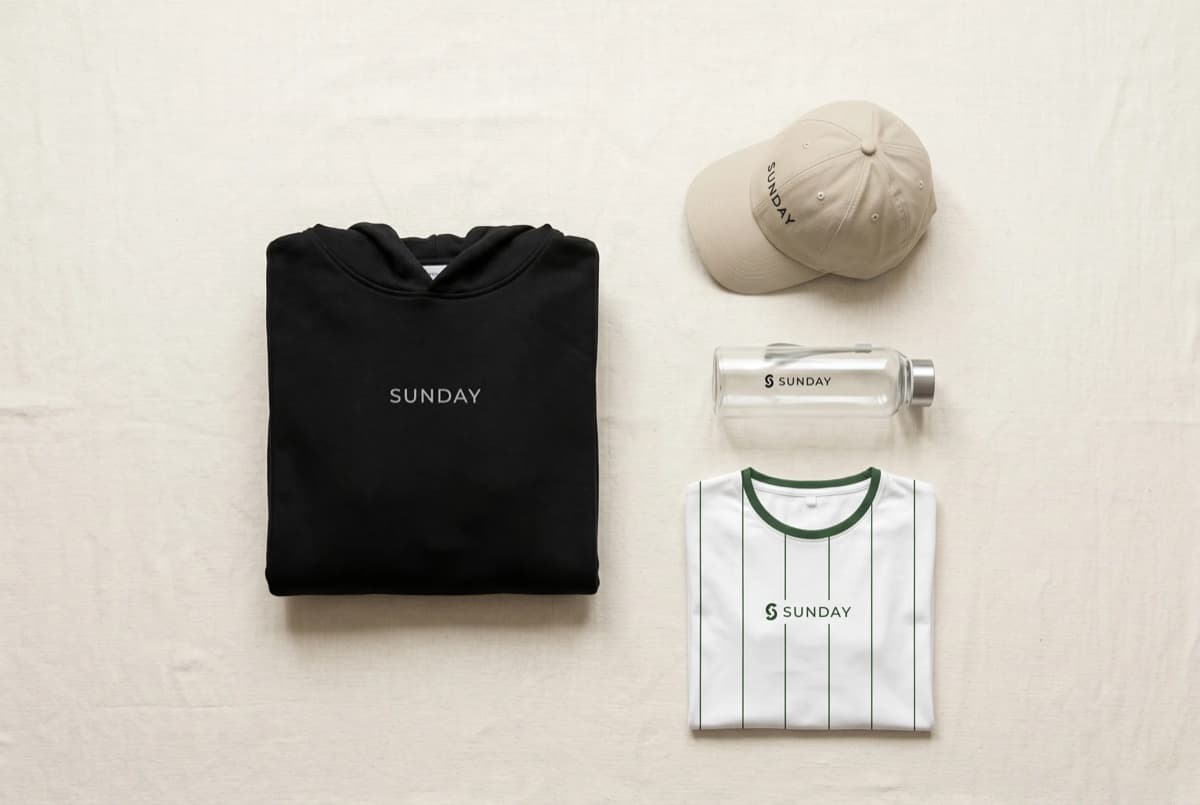
Sunday is the best Monday Merch alternative for companies that want the operational layer behind branded merchandise: branded catalog, internal brand store, design workflows, global delivery, redeem pages, warehousing, and reporting. It is especially strong when merchandise is used by several teams, not just HR onboarding.
Sunday ranks first because its model matches how modern companies actually buy swag: events need speed, HR needs onboarding kits, sales needs ABM gifts, brand needs consistency, and finance needs visibility. The platform is positioned around central control and fast setup, with a free workspace and exact pricing before ordering.
Key features
- Free branded workspace
- Internal brand store
- 500+ branded products
- Redeem pages
- Global production and delivery
- Inventory and storage options
- MerchMetrics reporting
- Multi-team collaboration
Pros
- Best fit for international companies, employer branding teams, field marketing teams, and brand leaders who want one platform for design, ordering, distribution, and measurement.
Cons
- Less relevant if you only need a tiny one-off print run or creator-style public merch shop. Sunday is strongest when there is repeat volume and cross-team complexity.
Why it wins. Sunday turns company swag from ad hoc purchasing into a central operating system for brand-controlled merchandise.
"Choose Sunday when your real problem is not buying merch, but making merch easy for every team without losing control."
Starting at €0/mo workspace; pay when you order.
02. SwagUp
Best for fast swag packs · swagup.com
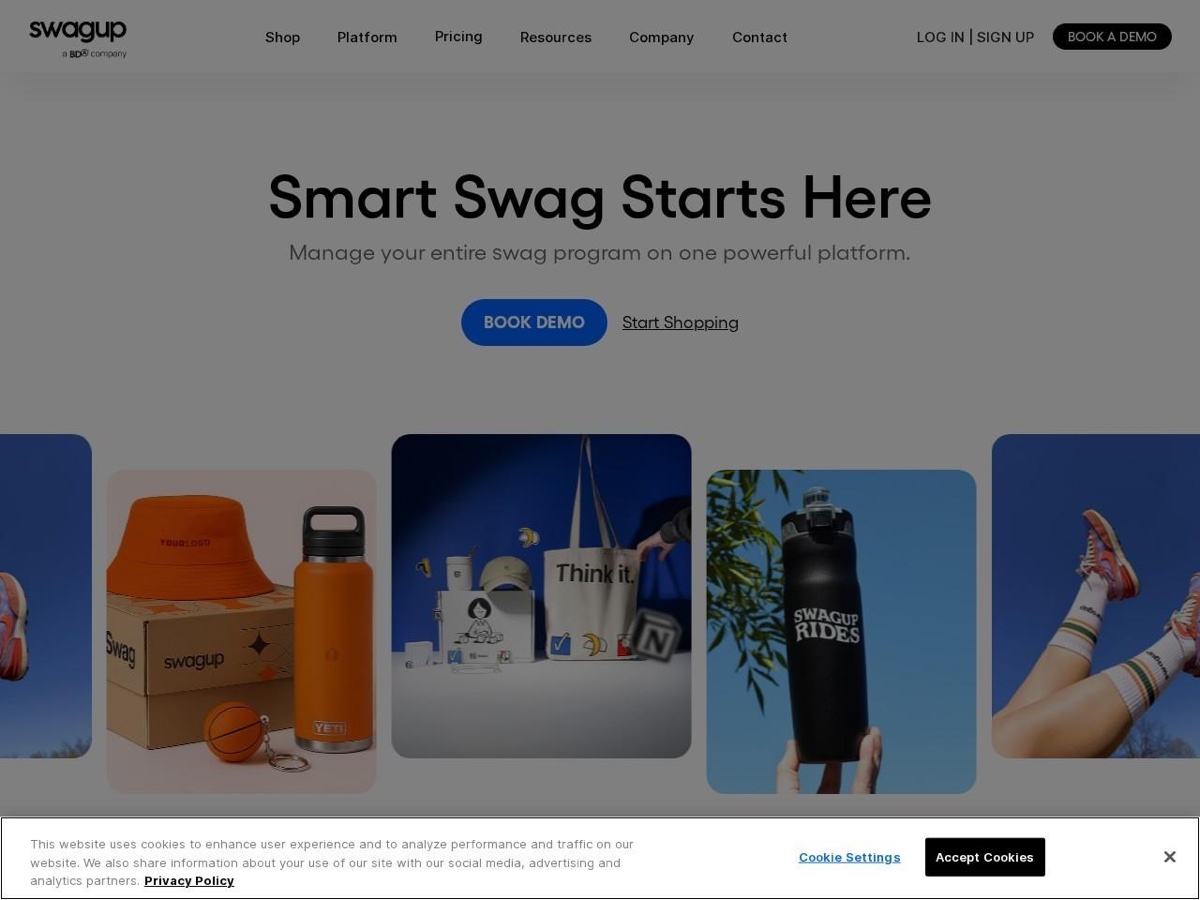
SwagUp is a strong alternative for teams that want to create packs quickly and hand off the operational mess of kitting, storage, and shipping. Its pricing page publicly lists warehousing fees by item size and notes that warehousing fees are charged every six months.
It ranks high because it is very practical for onboarding, event packs, customer kits, and campaign boxes. Compared with Sunday, it is more pack-first; compared with Monday Merch, it has strong US-market visibility and a clean swag-shop proposition.
Key features
- Custom swag packs
- Swag shops
- Warehousing
- Recipient distribution
- Creative support
- Campaign fulfilment
Pros
- Excellent for polished packs, new-hire boxes, and teams that want a guided pack-building process.
Cons
- Storage and fulfilment costs need close review; it can become less ideal if you want deep European multi-team brand-store infrastructure.
Why it wins. SwagUp wins when the immediate job is a good-looking kit shipped without internal chaos.
"SwagUp is a pack engine first. That is useful when speed and presentation matter more than platform depth."
Starting at $0/mo to start; storage and order costs apply.
03. Sendoso
Best for revenue gifting automation · sendoso.com
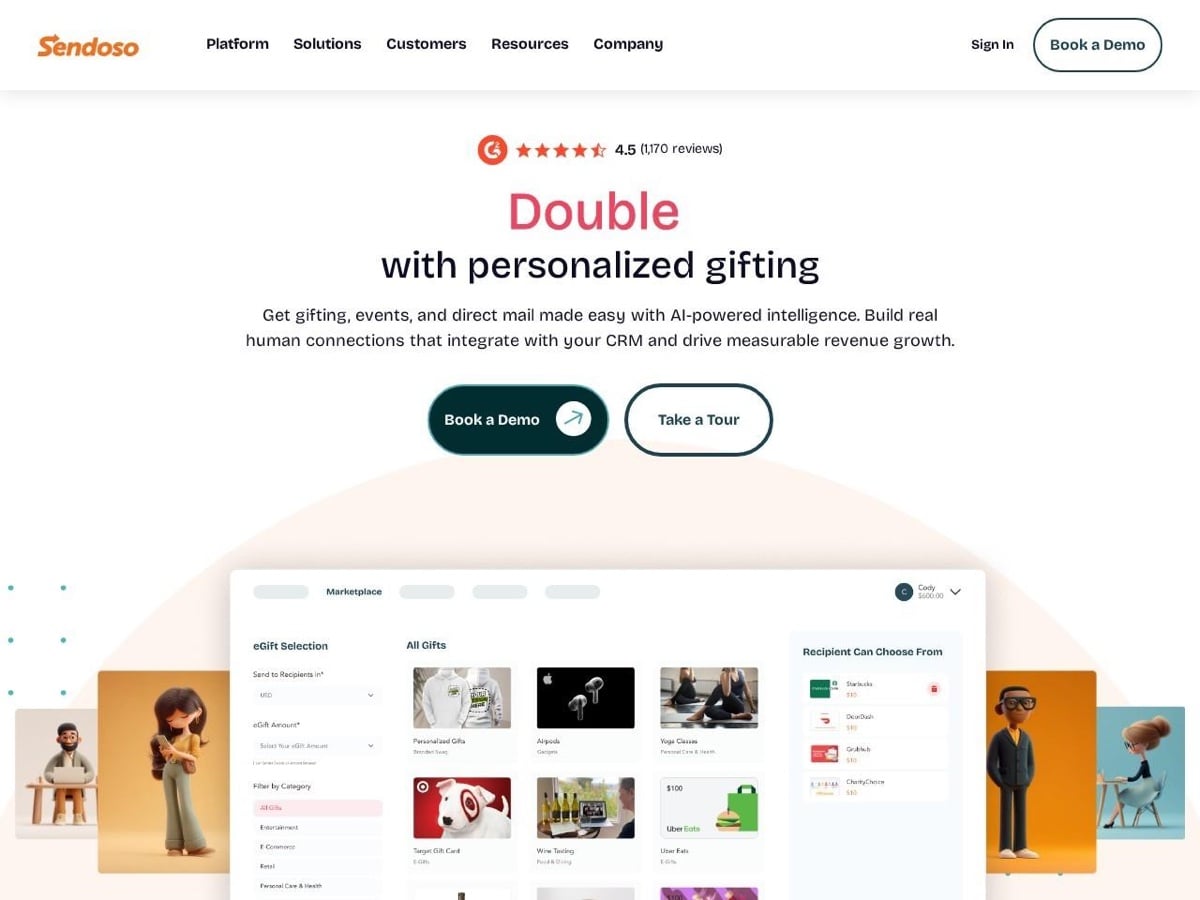
Sendoso is a direct marketing automation and gifting platform, best known for sales, marketing, and customer lifecycle gifting. Its plan page positions gifting as a way to automate personalized gifting at scale across the customer journey and notes flexible pricing based on size, goals, and global presence.
It ranks because many Monday Merch evaluators are actually looking for CRM-connected gifting, not a traditional merch store. Sendoso is particularly relevant for ABM, sales outreach, pipeline acceleration, and customer expansion campaigns.
Key features
- Sales gifting
- Marketing automation
- CRM integrations
- Campaign analytics
- Direct mail
- eGifts and physical gifts
Pros
- Strong for revenue teams that need gifting inside GTM workflows, especially Salesforce and HubSpot-led motions.
Cons
- Less focused on a company-wide internal swag store or merchandise collection strategy than Sunday or Monday Merch.
Why it wins. Sendoso wins when gifting needs to be triggered, tracked, and attributed inside sales and marketing systems.
"Use Sendoso when the merch moment is part of pipeline, not just procurement."
Custom pricing.
04. Reachdesk
Best for B2B gifting with global GTM teams · reachdesk.com
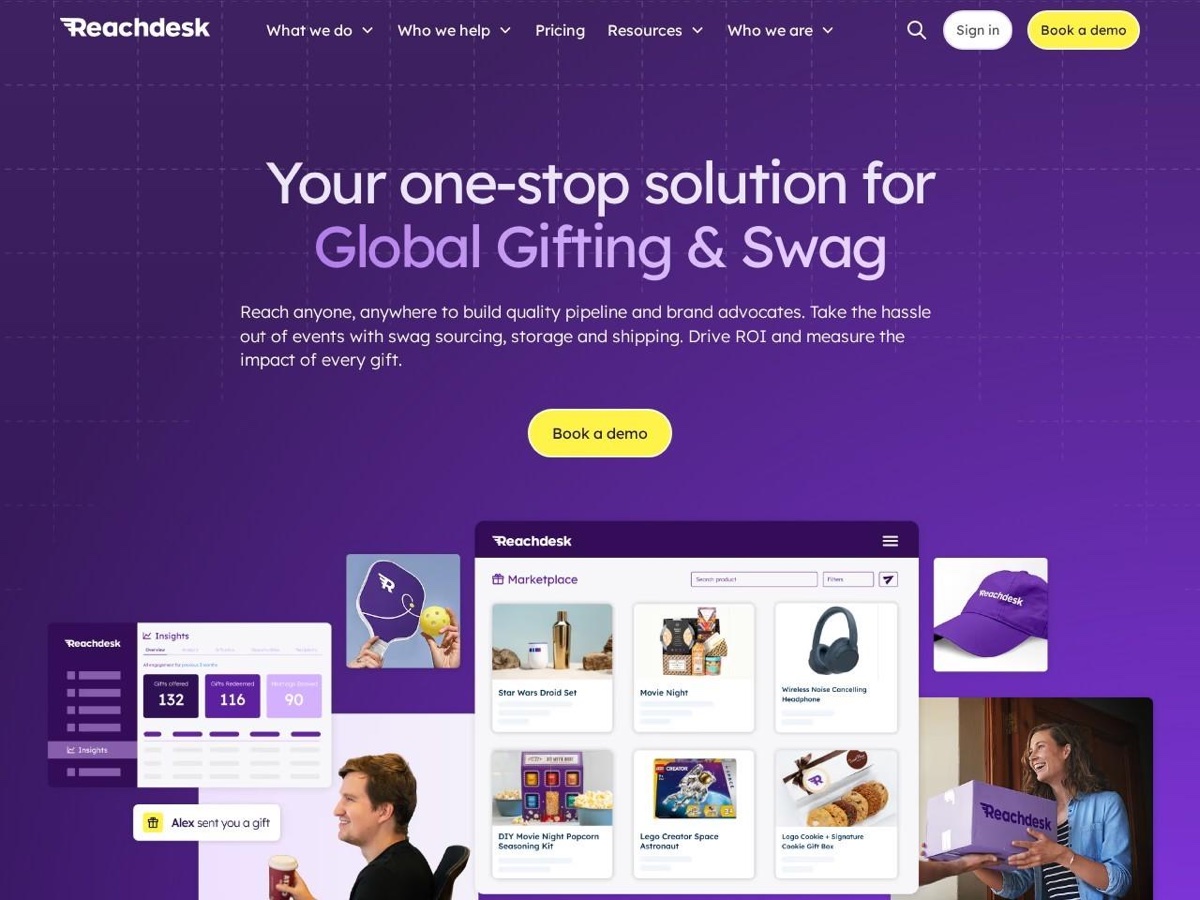
Reachdesk is a corporate gifting and swag platform for marketing, sales, customer success, and people teams. Its pricing page separates GTM platform and swag sourcing options and positions plans around gifting ROI, regions, warehouses, and event logistics.
Reachdesk ranks because it is one of the strongest options when gifting is part of a measurable B2B motion. Its integrations page describes gifting and swag campaigns connected directly into everyday tools such as Salesforce.
Key features
- B2B gifting platform
- Swag sourcing
- CRM integrations
- Regional warehouses
- Event fulfilment
- ROI reporting
Pros
- Strong for enterprise GTM teams that want integrated gifting and measurable revenue impact.
Cons
- May be heavier than needed for companies mainly looking for a simple, beautiful internal company swag store.
Why it wins. Reachdesk wins when the buying committee includes marketing ops and revenue operations.
"Reachdesk belongs on the shortlist when gifting needs governance, integrations, and revenue accountability."
Custom pricing.
05. Printfection / Swag Pro
Best for established swag management workflows · swag.com
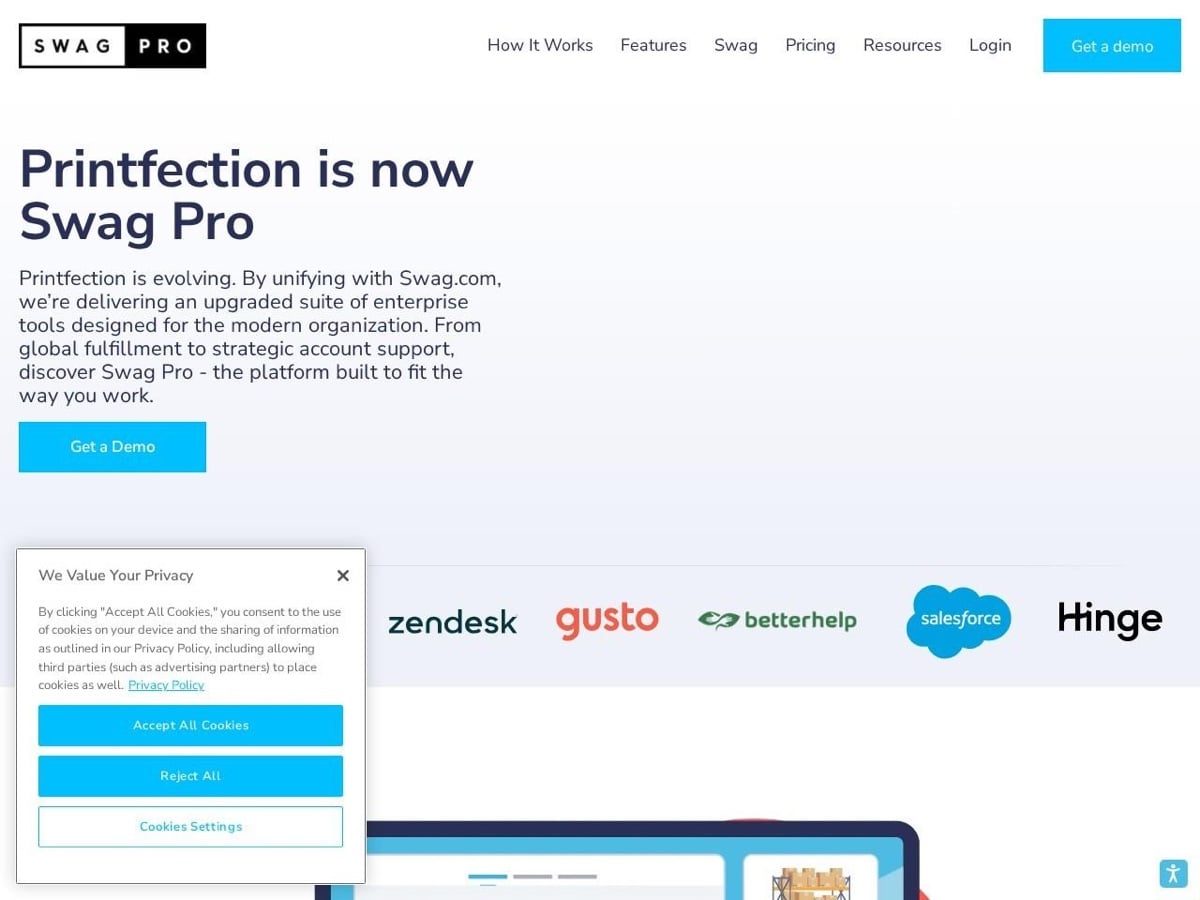
Printfection, now positioned as Swag Pro, is an end-to-end swag management platform for creating, storing, and shipping branded swag. Its pricing page says customers pay a flat monthly price to use the platform, with product price, fulfilment charge, and shipping as additional costs.
It ranks because it has long-standing credibility in swag management, especially for ABM, direct mail, trade shows, customer engagement, and employee swag programs. It is a good option for companies that want a SaaS-style swag platform and are comfortable with a subscription model.
Key features
- Swag management platform
- Inventory storage
- Direct mail campaigns
- Employee gifting
- Fulfilment network
- CRM/marketing use cases
Pros
- Proven choice for teams that need recurring swag programs and established campaign workflows.
Cons
- Flat monthly pricing can be less attractive than free-workspace models if your team is still exploring volume.
Why it wins. Printfection wins for mature teams that already know they need a dedicated swag management system.
"Printfection is not the lightest option, but it is built for teams that treat swag as an ongoing operational program."
Flat monthly platform pricing; quote required.
06. Gemnote
Best for premium custom merchandise · gemnote.com
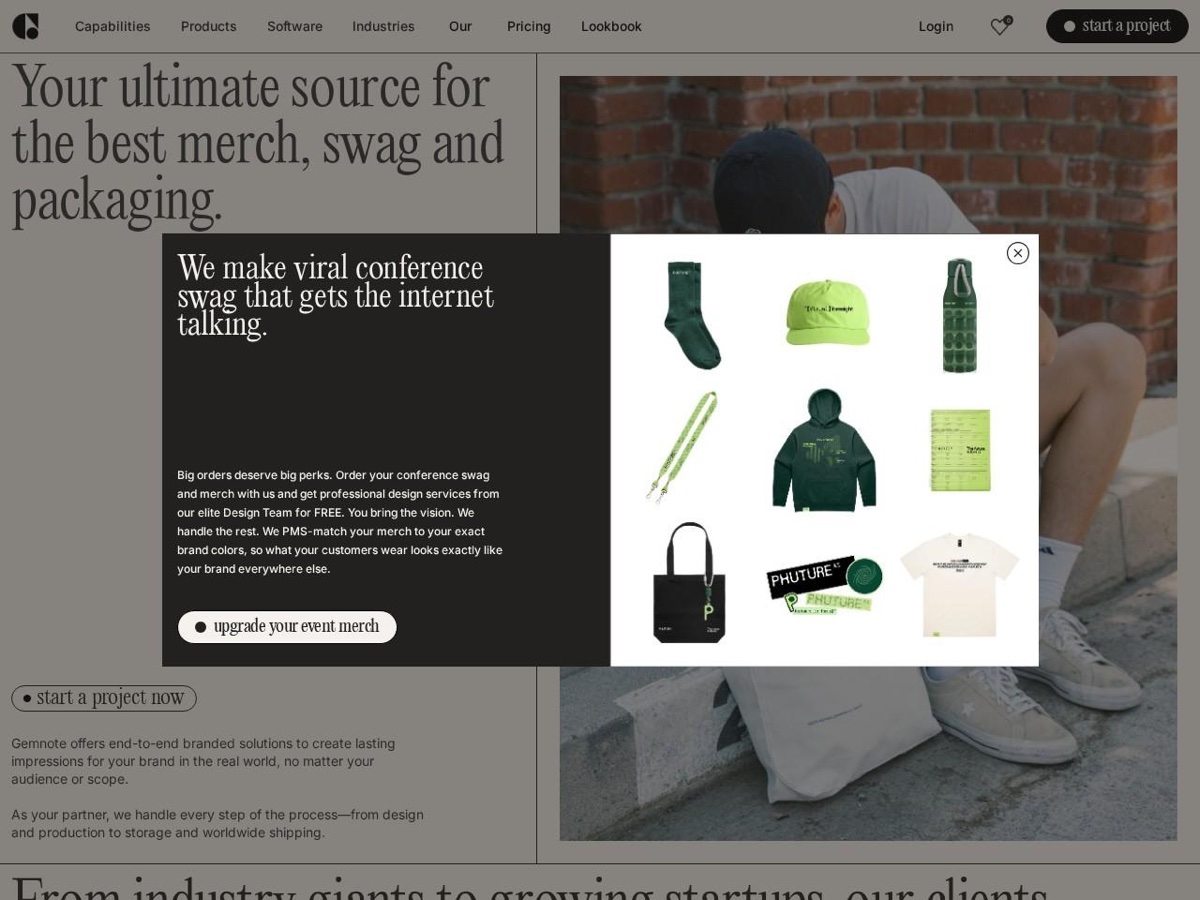
Gemnote is a premium custom merchandise and packaging partner. Its homepage positions the company around branded products that people actually want, trusted by companies like Reddit, Google, and Sephora, with design, sourcing, shipping, and a swag management app.
Gemnote ranks because it is strong when brand expression, product curation, and packaging quality matter more than self-serve speed. It is a serious alternative for executive gifts, premium onboarding, customer moments, and high-touch events.
Key features
- Premium sourcing
- Custom packaging
- Design support
- Corporate gifts
- Event merch
- Swag management app
Pros
- Excellent for design-led brands that want elevated products and curated gift experiences.
Cons
- Less ideal for teams optimizing for fast self-serve company-wide ordering, pricing transparency, and internal brand-store adoption.
Why it wins. Gemnote wins when the unboxing experience is strategically important.
"Gemnote is the premium gift-room option: strong taste, strong sourcing, and strong brand polish."
Custom pricing; third-party listings show entry plans from around $29/mo but verify with Gemnote.
07. Fourthwall
Best for creator-style merch stores · fourthwall.com
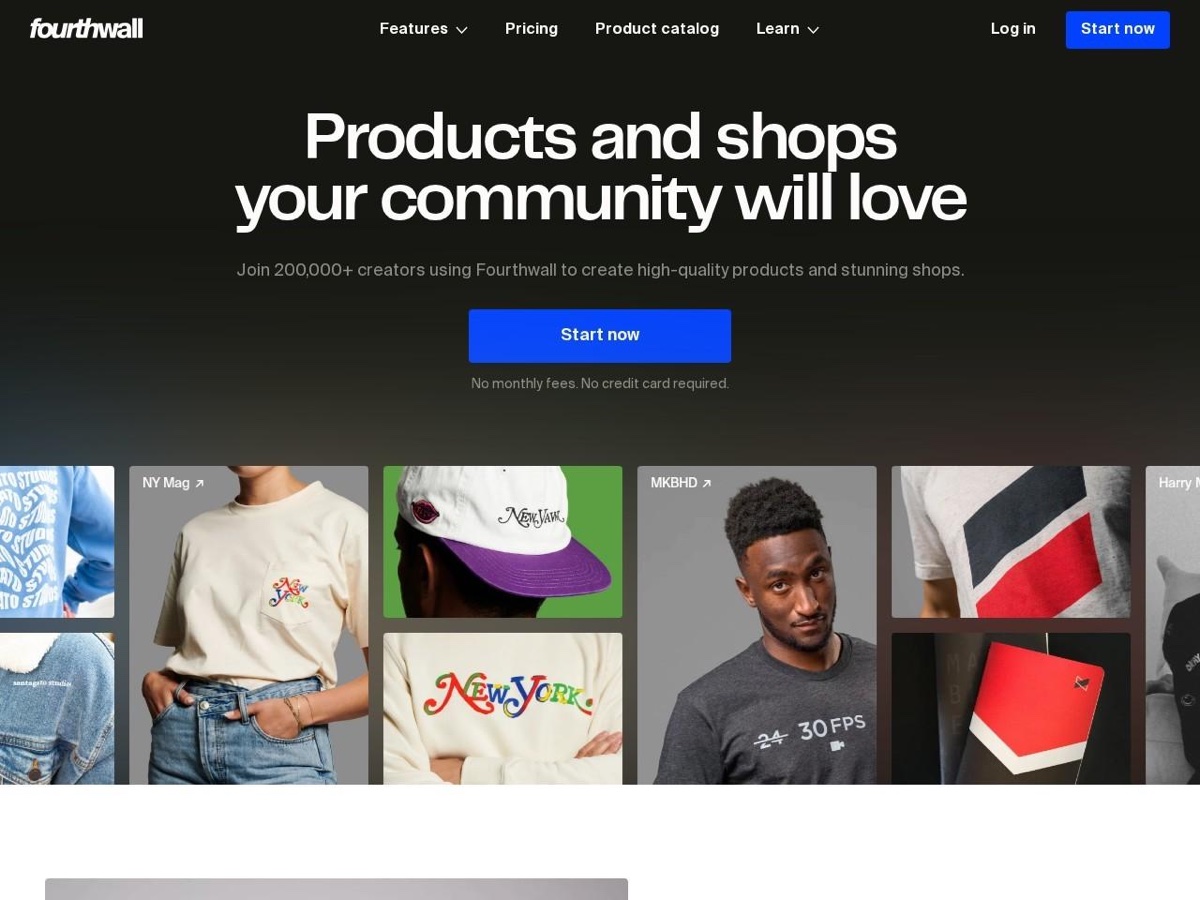
Fourthwall is not a classic corporate swag platform, which is exactly why it can be useful in the right context. It is built around shops, creator storefronts, products, memberships, and commerce; the competitor article itself ranked Fourthwall first for a creator-oriented alternative angle.
It ranks here as the best option when a company wants a public-facing merch shop, community store, or fan-style commerce experience rather than an internal company swag operating system. It is not the strongest fit for multi-team corporate procurement, but it is very relevant for audience-led brands.
Key features
- No-code storefronts
- Creator commerce
- Print-on-demand catalog
- Digital products
- Memberships
- Global fulfilment partners
Pros
- Great for public merch stores, creators, communities, and brands that want to sell merchandise rather than distribute it internally.
Cons
- Not the natural choice for HR onboarding workflows, office stock, multi-department permissions, or enterprise merchandise governance.
Why it wins. Fourthwall wins when the use case is commerce, not internal company swag management.
"Fourthwall is a strong alternative only when your audience is outside the company."
Free to start; transaction and product costs apply.
How to choose your stack
Most companies end up with one to two platforms, not all seven. Here is how to narrow the shortlist.
01. Internal merch store or one-to-one gifting?
If the core problem is multiple teams ordering from one approved brand catalog, lean toward Sunday or Printfection. If the core problem is sending one gift to one recipient with CRM attribution, lean toward Sendoso or Reachdesk. Many companies need both, but you should know which is primary.
02. Self-serve speed or guided service?
Sunday and Fourthwall are built around fast self-serve workflows. SwagUp and Gemnote include more guided service for pack design and curation. Match the model to how your team prefers to operate.
03. Geographic reach
For genuinely global programs across Europe, the Americas, and APAC, prioritize platforms with real international production and customs logic. Sunday positions around global delivery and references distribution across 200+ countries. Reachdesk and Sendoso are strong for international GTM gifting.
04. Pricing model
Free-workspace models (Sunday, SwagUp, Fourthwall) lower the cost of discovery. Flat monthly platform pricing (Printfection) suits established programs with known volume. Custom-quote models (Sendoso, Reachdesk, Gemnote) reward buyers who can negotiate around integrations and regions.
05. Run a real pilot
Pick one platform that matches your primary use case and run a small real campaign. Stock, lead times, design service, and recipient experience are only visible when you ship. Sunday's free workspace and exact pricing before ordering make a low-risk pilot the easiest path to a decision.
Full comparison table
| Name | Best for | Key feature | Ease of use | Agency friendly | Price | Best buyer |
|---|---|---|---|---|---|---|
| Sunday | Global company swag stores | Free brand store + platform workflows | ★★★★★ | ✅ | €0/mo workspace | International marketing, HR, events |
| SwagUp | Fast swag packs | Custom packs and swag shops | ★★★★☆ | ✅ | $0/mo to start; storage/order costs | People teams and event teams |
| Sendoso | Revenue gifting | CRM-connected gifting automation | ★★★★☆ | ⚠️ | Custom | Sales and marketing ops |
| Reachdesk | B2B gifting ROI | Integrated GTM gifting platform | ★★★★☆ | ⚠️ | Custom | Enterprise GTM teams |
| Printfection / Swag Pro | Swag management | Flat monthly platform + fulfilment | ★★★★☆ | ✅ | Monthly platform pricing | Established swag programs |
| Gemnote | Premium merch | High-end sourcing and packaging | ★★★☆☆ | ✅ | Custom | Brand and executive gifting teams |
| Fourthwall | Creator-style stores | No-code public storefronts | ★★★★★ | ⚠️ | Free to start | Creators and community brands |
Build your company swag store before you buy another box of merch.
Start with a free Sunday workspace, see your brand on merchandise, explore pricing, and create a platform your HR, marketing, events, and sales teams can actually use.