
To choose custom aprons for your company, start from the job, not the catalogue. Pick the style for the role (denim, bistro, bib, waist, barista, kitchen, leather or leather-look), then check quality the way buyers actually feel it: the straps. Thick, solid straps and weighty fabric signal a premium apron; thin strings signal a cheap one. Use embroidery or a leather label, not cheap print, because aprons face frequent hot washing. Plan quantity and lead time early, since both are the biggest price levers. And order on native-language product terms so you recognise exactly what you are buying.
There is no single best apron, and that is the honest starting point. The right choice depends on your industry, the wearer's role, your brand style, the protection you need, your budget, and whether the apron is a uniform or a gift. This guide walks through each decision so you land on the right apron rather than the cheapest one.
1. Pick the style for the role
Hospitality aprons are chosen by work environment. A bar, a kitchen, a server, a barista and a retail-demo station all need different lengths, pockets, straps and materials. So the first decision is the style, matched to what the wearer actually does.
| Style | Best for | Why |
|---|---|---|
| Bib apron | Kitchens, chefs, food prep | Full coverage and protection for messy, hands-on work |
| Waist / bistro apron | Servers, bartenders, cafés | Mobility and front pockets for pads, openers and cards |
| Barista apron | Coffee bars, demos | Pockets and a clean, on-brand look at the counter |
| Denim apron | Craft venues, BBQ, premium hospitality | Character, durability and a strong base for leather labels |
| Leather / leather-look apron | Gifting, BBQ, craft, premium campaigns | High-value feel, a genuine gift rather than a uniform |
Beyond function it is mainly aesthetic, and Sunday has good options across every style and price point. Browse them in the catalog or on the custom aprons page.
2. The strap test and fabric weight
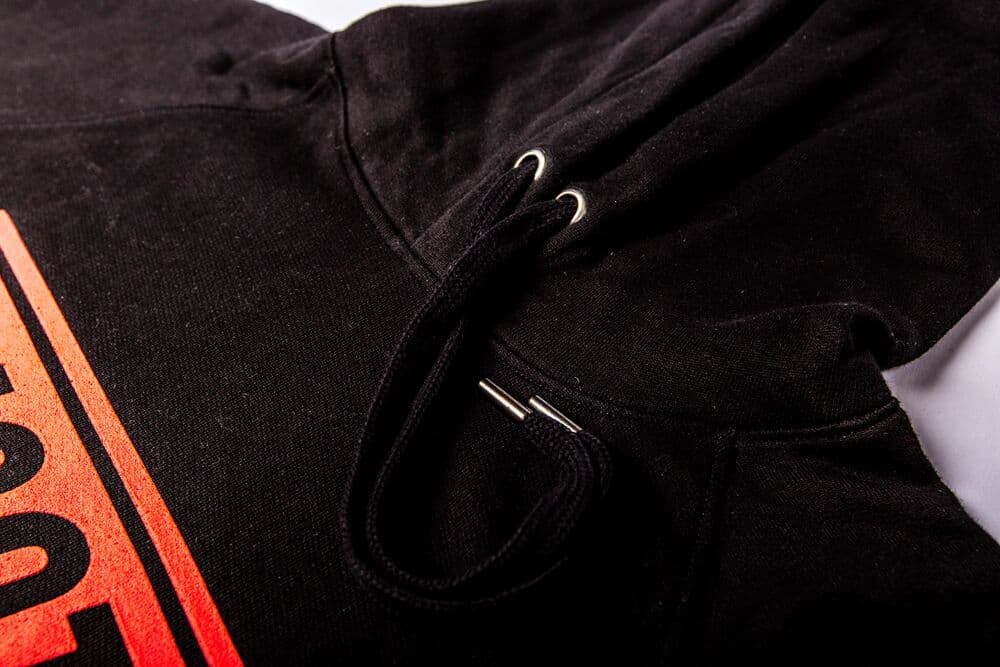
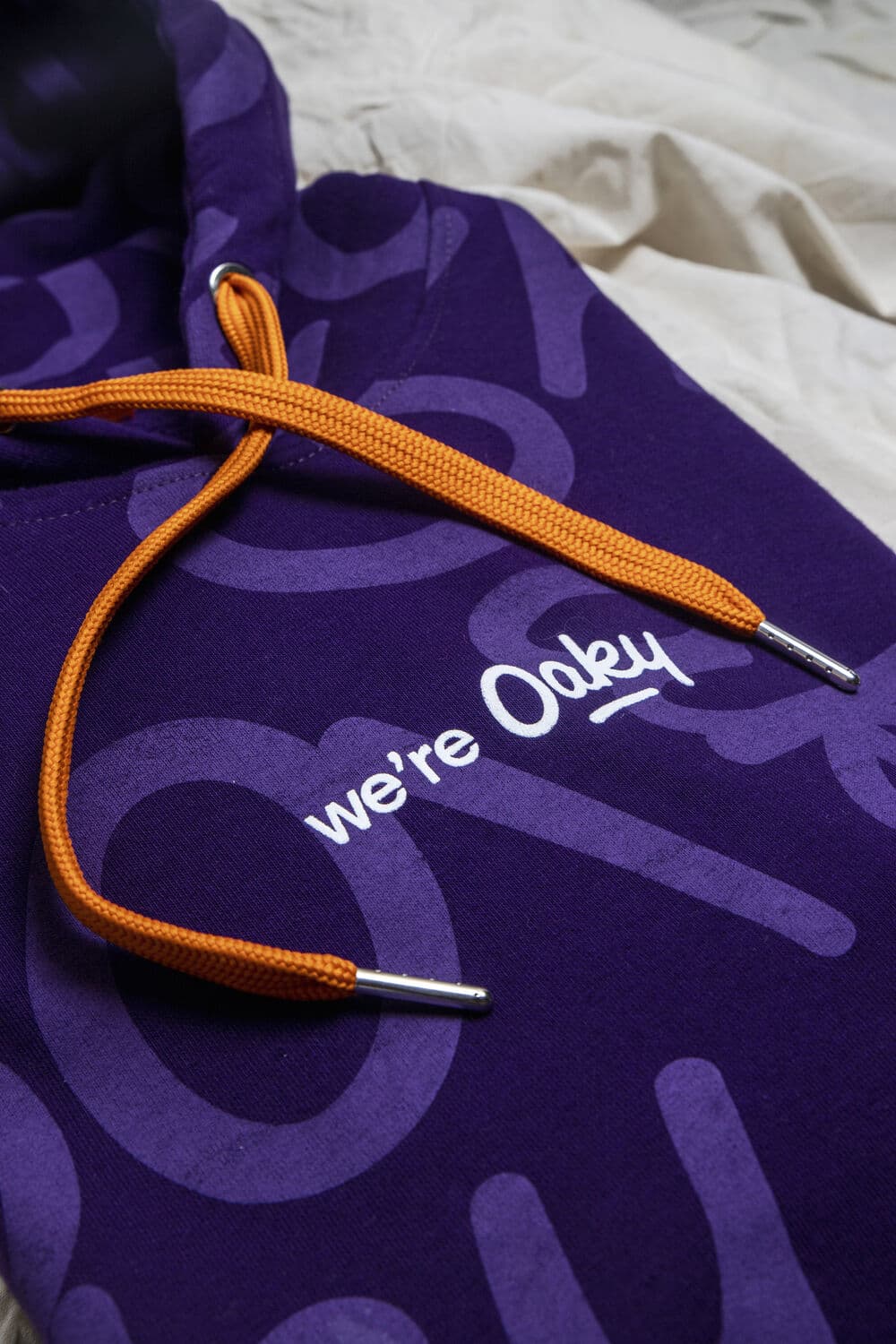
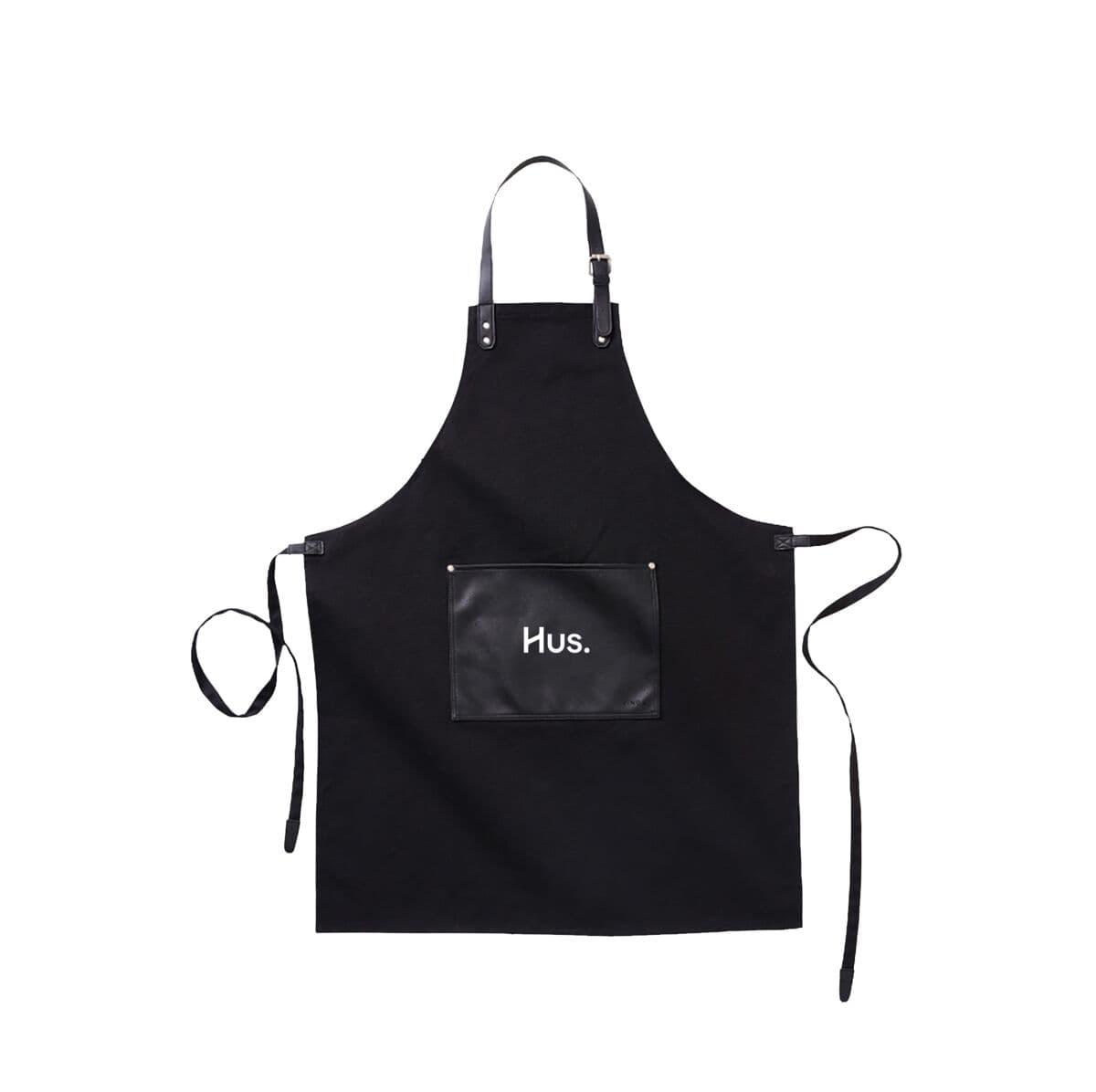
Here is the single fastest quality check: look at the straps. Straps are the clearest quality tell on any apron. Thin, weak strings feel cheap and wear out. Strong aprons use thick, solid, comfortable, durable straps that survive daily tying and frequent washing.
Then check the fabric. It needs enough weight and structure to feel protective and substantial, not flimsy. Beyond those two, look for clean stitching, durable pockets, reliable hardware, and tolerance to frequent hot washing. Those are the marks of an apron that still looks good after a season of service.
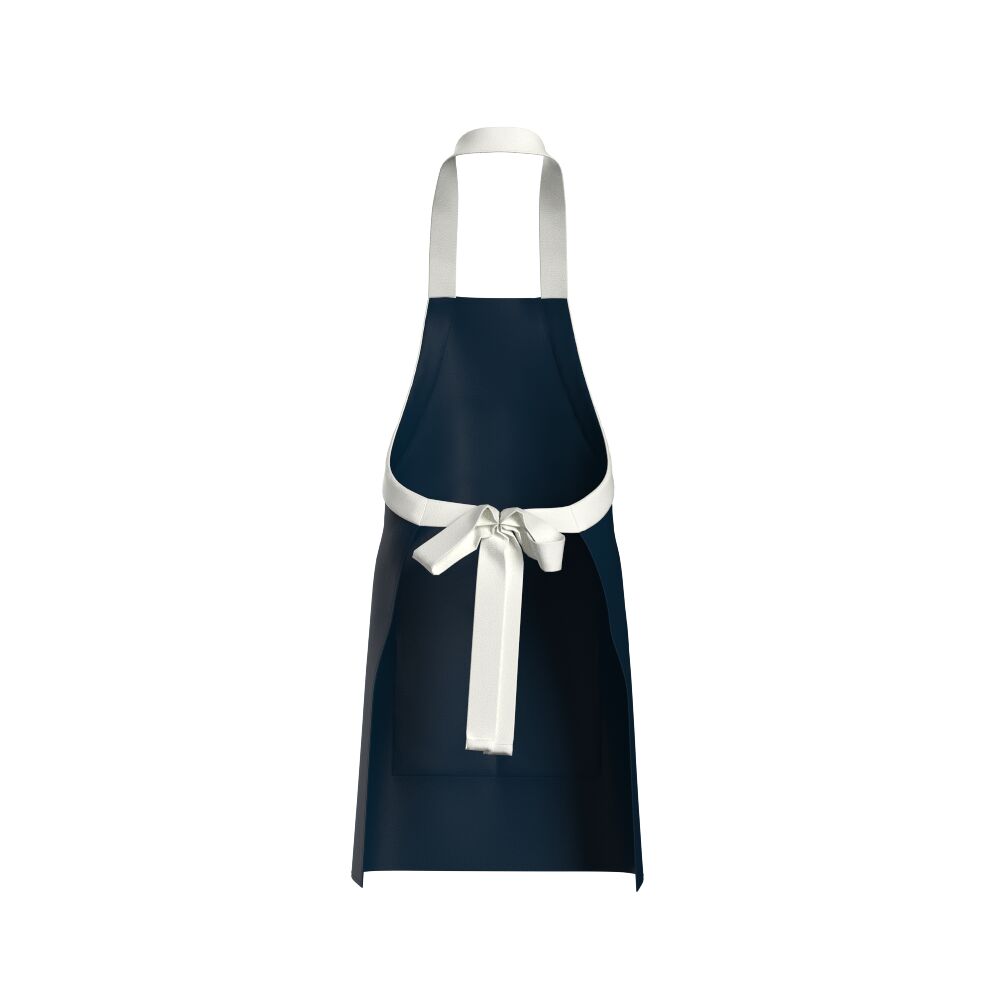
Check the back. Thick, solid straps and clean construction are what separate a premium apron from a cheap one. Fabric weight does the rest.
3. Denim vs leather vs leather-look
Materials matter less than durability, quality and design, but two stand out. Denim is strong, has character, and wears well over time, which makes it a great base for craft, BBQ and premium hospitality aprons, and a strong canvas for a leather label. Recycled PU leather gives a leather look without traditional leather, ideal for a premium gift feel at programme scale.
Organic cotton and recycled fabrics are relevant for some brands, but do not over-index on the sustainability story. A durable apron that gets used and washed repeatedly beats a superficially "sustainable" one that performs poorly or gets replaced quickly. Pick for durability first.
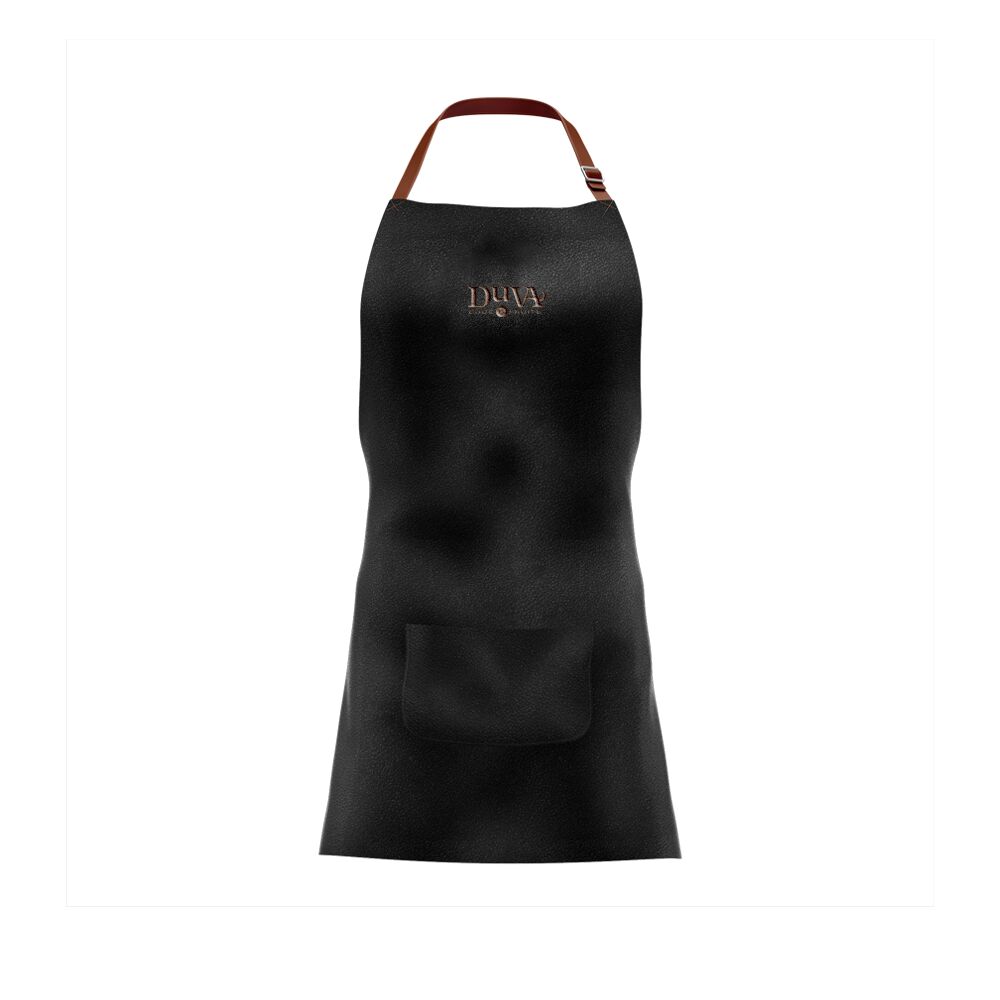
Recycled leather-look gives a premium gift feel without traditional leather. Denim brings character and durability. Both take a leather label beautifully.
4. Embroidery vs leather labels (skip cheap print)
Decoration hugely affects perceived quality. A cheap print undermines a solid apron; clean embroidery, a leather label or a thoughtful detail makes the same product premium. Because aprons face food, drinks, stains and frequent hot washing, the decoration has to survive demanding conditions.
- Embroidery. Durable, visible, professional. It holds up to washing and fits most fabrics. The safe default for hospitality.
- Leather or leather-look labels. A premium craft finish, especially on denim, BBQ, barista, craft and premium gifting aprons.
- Printing. Can work, but execution is critical. A cheap print kills the garment, so only print when the quality is genuinely good.
Want to see how a logo sits before you commit? Preview it in your colours with the free apron mockup generator.
5. Branding placement
The strongest single placement is the centre of the chest: visible, clean and recognisable. But the best branded aprons go further and build the branding into the apron itself: contrast-colour pockets, pockets in your company colours, custom straps, different fabric panels, or a leather patch. A branded palette plus a clean chest logo reads as designed, not as a logo slapped on a generic blank.
6. MOQ, lead time and pricing
Quantity is one of the biggest price drivers. Aprons get cost-effective at volume, which is why hospitality rollouts, food-chain uniforms, large retail campaigns and event activations land at a good unit price. Lead time is the other big lever: ordering early unlocks more efficient production options and a meaningfully lower unit price than rush production.
The strategy is simple: plan early, order enough volume, avoid rush jobs, and choose decoration and materials carefully. Exact MOQ, lead time and price depend on the model, material, decoration and quantity, so design your apron to see live pricing rather than guessing.
7. Order in native language
There is no major EU-versus-US difference in apron demand. The bigger factor is local language. Each market should use the terms buyers actually search, German Schürze bedrucken, plus native Dutch, French and Spanish, not awkward translations. Ordering on native-language product pages means you instantly recognise the product, the decoration and the offer, which avoids costly misunderstandings on a bulk order.
8. Uniform vs gift
The design approach barely changes between a uniform and a gift. In both cases the apron should look good, fit the brand, use durable materials, tolerate frequent washing, and carry strong decoration. The difference is presentation. A gifting apron may add premium packaging, a personalised card, more luxurious materials, an extra product, or a stronger campaign story. Durability is the core requirement either way.
This is the underrated insight: a well-designed apron is a genuinely premium gift, a Father's Day gift, a BBQ gift, a whiskey-brand gift, not a staff-only garment. Match the apron to the recipient and the activity and it lands.
How do I choose the right custom apron for my company?
Start from the job, not the catalogue. Pick the style for the wearer's role: bib for kitchens, waist or bistro for servers and bars, barista for coffee, denim or leather-look for craft and gifting. Then check quality through the straps and fabric weight, choose embroidery or a leather label over cheap print, place a clean logo at the centre of the chest, and plan quantity and lead time early because both are the biggest price levers. Order on native-language terms so you recognise exactly what you are buying.
What makes a custom apron premium?
Straps are the clearest quality tell. Thick, solid, comfortable, durable straps signal a premium apron, while thin weak strings signal a cheap one. Beyond straps, look for enough fabric weight and structure to feel protective, clean stitching, durable pockets, reliable hardware and tolerance to frequent hot washing. Decoration matters just as much: a cheap print undermines a solid apron, while clean embroidery or a leather label makes the same product feel premium.
Should I choose embroidery or printing on aprons?
Embroidery, in most cases. Aprons face food, drinks, stains and frequent hot washing, so the decoration has to survive demanding conditions. Embroidery is durable, visible, professional and holds up to washing across most fabrics. A leather or leather-look label is the premium option, especially on denim, BBQ, barista and gifting aprons. Printing can work, but execution is critical, because a cheap print kills an otherwise solid apron. Only print when the quality is genuinely good.
Is denim or leather better for a custom apron?
It depends on the use. Denim is strong, has character and wears well over time, which makes it ideal for craft, BBQ and premium hospitality aprons, and a great canvas for a leather label. Leather and recycled leather-look aprons are best for gifting and premium campaigns, where the high-value feel turns the apron into a genuine gift rather than a uniform. Recycled PU leather gives the leather look without traditional leather, which suits programme-scale gifting.
What is the minimum order for custom aprons?
It varies by supplier. Some promo suppliers offer no minimums, while others start from around 25 pieces. The bigger point is that quantity is one of the biggest price drivers: aprons get materially cheaper per unit at volume, which is why hospitality rollouts and event activations land at a good price. Ordering early also unlocks more efficient production and a lower unit price. Exact minimums depend on the model, material, decoration and quantity.
Does it matter what language I order aprons in?
Yes, more than most buyers expect. Apron demand is similar across the EU and US, but local language is the bigger factor. Each market should use the terms buyers actually search, like German Schürze bedrucken, plus native Dutch, French and Spanish, rather than awkward translations. Ordering on native-language product pages means you instantly recognise the product, the decoration and the offer, which avoids costly misunderstandings on a bulk order.
Can a custom apron work as a corporate gift?
Absolutely, and it is underused. A well-designed apron is a genuinely premium gift, not a staff-only garment or a disposable giveaway. It can be a Father's Day gift, a BBQ gift, a whiskey-brand gift or a premium food campaign. The design approach barely changes from a uniform: it still needs durable materials, strong decoration and washability. The difference is presentation, premium packaging, a personalised card, more luxurious materials. The key is relevance to the recipient and the activity.
Keep reading: custom aprons
Choose and design your aprons in 30 seconds
Pick a style, drop in your logo, choose embroidery or a leather label, and see live pricing and a real mockup. Bulk pricing and event distribution built in.
Get free designs