Definition
Cashmere is a fine, soft wool fiber combed from the undercoat of cashmere goats. It is lighter and warmer than sheep's wool, which is why it sits at the top end of knitwear and premium merch.
Definition
Cashmere comes from the soft undercoat goats grow to survive cold winters in regions like Mongolia, China, and the Himalayas. The fibers are combed out by hand in spring, then sorted, cleaned, and spun into yarn. A single goat yields only a small amount each year, which is part of why cashmere costs more than standard wool.
How cashmere works
Each cashmere fiber is extremely thin, usually under 19 microns, with a natural crimp that traps air. Trapped air is what makes the fiber insulate so well at such a low weight. The fineness also means the yarn sits softly against skin instead of prickling, which is the complaint people often have with coarser wools.
Quality varies a lot. Longer, finer fibers produce yarn that resists pilling and holds shape, while short fibers blended in to cut cost will pill and thin out fast. Ply matters too. A two-ply knit is more durable than a single-ply one of the same gauge. When you order branded cashmere, the grade of the fiber decides whether the piece survives one season or several.
The trade-off is care and price. Cashmere needs gentle washing, prefers folding over hanging, and reacts badly to rough handling. It costs more per unit than merino wool or acrylic, so it works best as a hero gift rather than a giveaway item.
Cashmere in branded merch
- Executive and VIP gifts. A cashmere scarf or beanie signals that the recipient matters. It is a natural fit for client thank-yous, board gifts, and senior-hire welcome kits where budget is less of a constraint.
- Premium winter capsules. Pair a cashmere accessory with other cold-weather pieces for a seasonal drop that feels curated rather than mass-produced. The fiber raises the perceived value of the whole set.
- Subtle, lasting branding. Cashmere suits quiet decoration like a small woven label or a tonal embroidered monogram. Heavy prints fight the material, so restraint keeps it looking high-end and keeps people wearing it for years.
Cashmere is a luxury natural fiber harvested from cashmere goats, valued for its softness, warmth, and light weight.
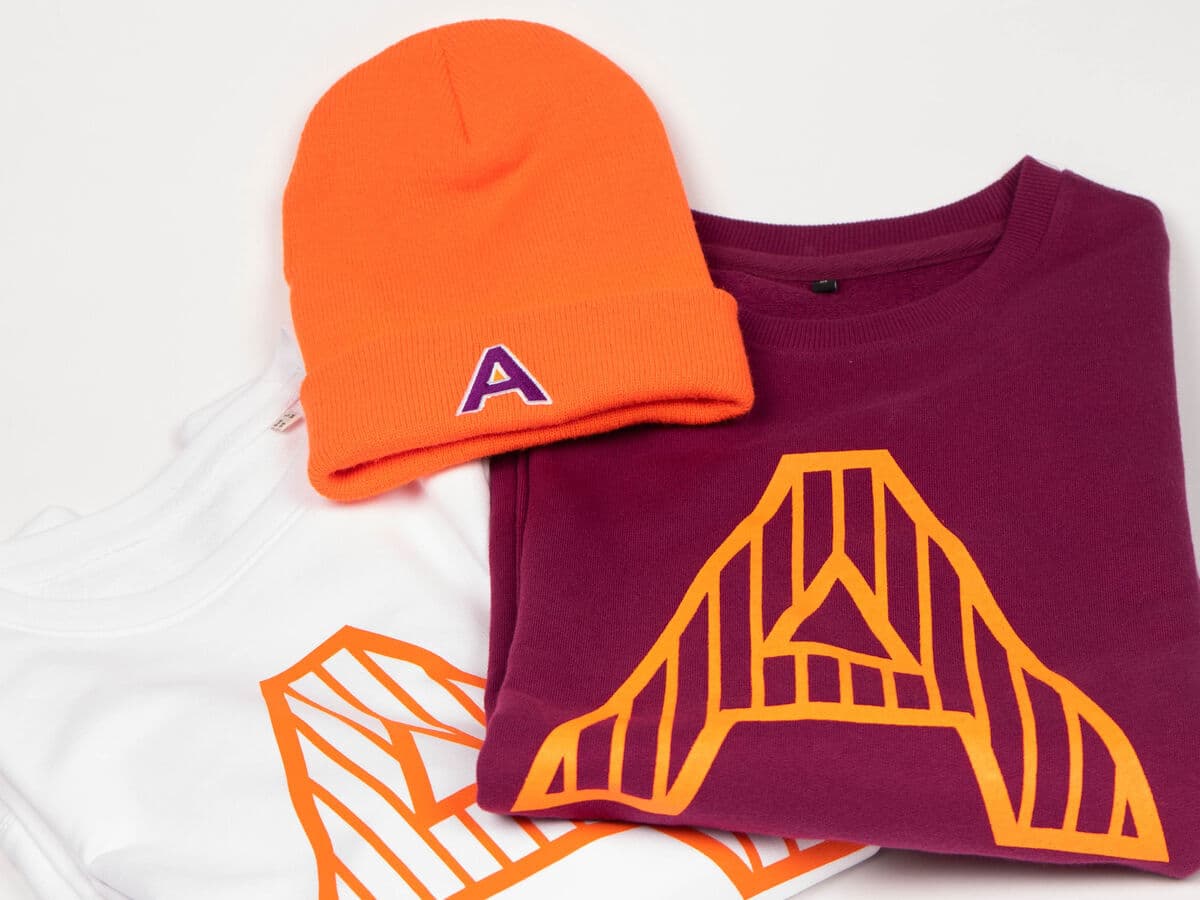
a branded cashmere beanie weighs almost nothing in the hand but keeps its wearer warm in winter. That contrast between weightlessness and warmth is the fiber's signature, and it is why a cashmere gift feels expensive before anyone reads a label.
5 tips to elevate your Cashmere strategy
| Tip | Steps |
|---|---|
| Check the grade | Ask for fiber length and micron count, not just the word cashmere. |
| Mind the ply | Choose two-ply for items meant to last more than one season. |
| Decorate lightly | Use woven labels or fine embroidery, skip large heat prints. |
| Set care expectations | Include a simple wash-cold, dry-flat card with each piece. |
| Reserve the budget | Use cashmere for hero gifts, not high-volume giveaways. |
Key Terminologies
Frequently Asked Questions
Is cashmere warmer than wool?
Yes. Cashmere insulates better than sheep's wool at the same weight, so it keeps you warm without the bulk. That is why a thin cashmere layer can outperform a thicker wool one.
Why is cashmere so expensive?
Each goat produces only a small amount of usable fiber per year, and the best fibers are combed and sorted by hand. Limited supply plus labor-heavy processing drives the price up.
Does cashmere pill?
It can, especially in the first few wears or when short fibers are blended in. Higher-grade, longer-fiber cashmere pills far less, and gentle care reduces it further.
Can you print or embroider on cashmere?
Fine embroidery and woven labels work well. Large heat prints are not recommended because they stiffen the fabric and clash with its soft, premium feel.
How should branded cashmere be cared for?
Wash cold or dry clean, dry flat, and fold rather than hang. Avoid wringing, and store it folded to keep its shape over time.