
Definition
Double knit is fabric knitted on two sets of needles at the same time, producing two layers that are looped together into one cloth. Both faces come out finished, the cut edges lie flat instead of curling, and the fabric keeps its shape through wear and washing. It is the family that interlock, ponte, and scuba all belong to.
Definition
Double knit describes construction, not a single named fabric. A double knit machine has a cylinder and a dial, two needle beds working against each other, and each pass of yarn builds loops on both. Those loops connect the two layers, so the cloth is thicker, denser, and far less stretchy than a single knit of the same yarn.
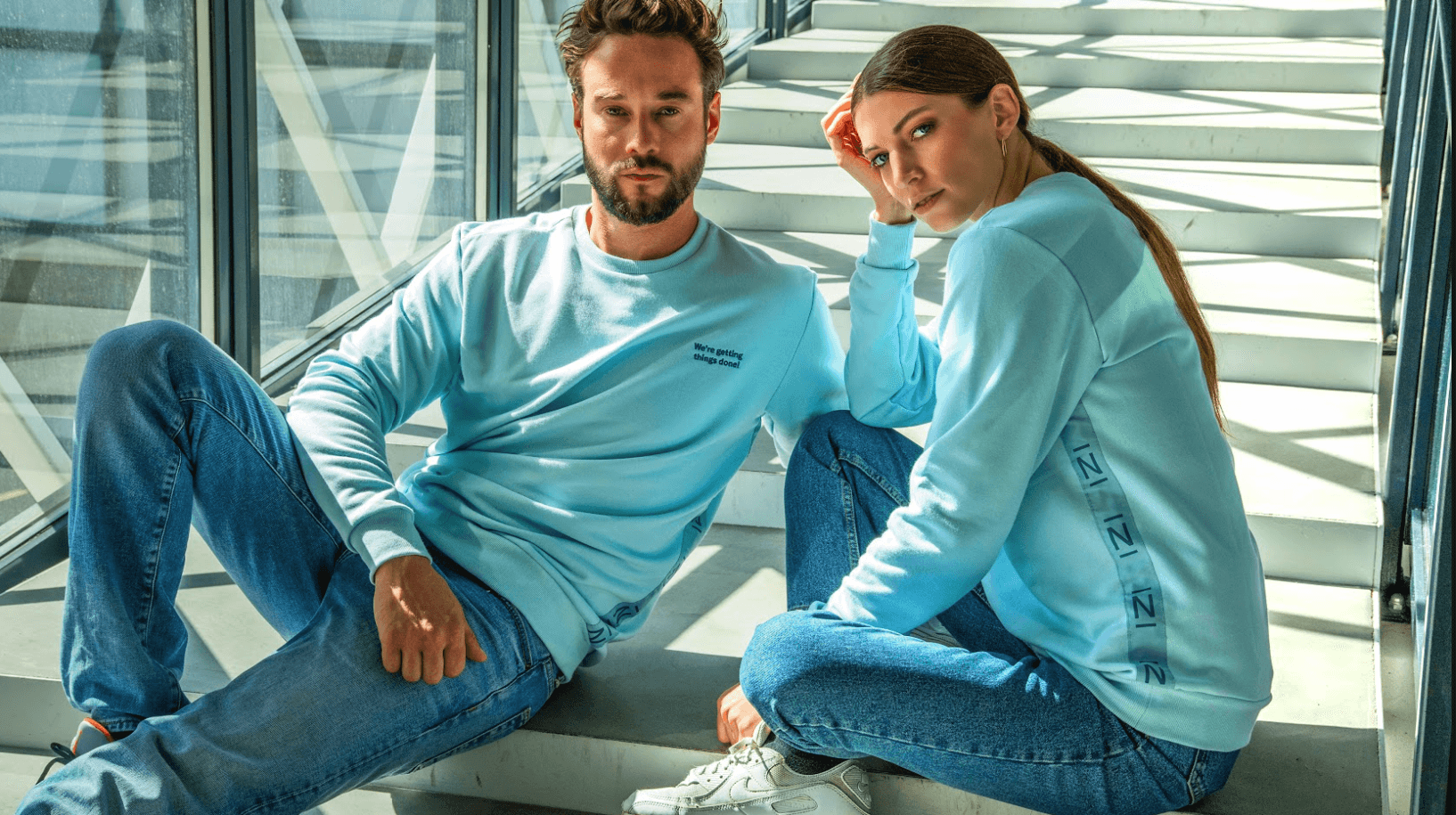
A practical example: a company quarter-zip in 300 gsm poly double knit. It has body without bulk, the zip placket stays flat, the hem does not roll, and an embroidered logo on the chest sits level rather than sinking into the fabric.
How double knit works
On a single knit machine, one needle bed makes one layer. Turn on the second bed and the yarn is knitted onto both, which is why a double knit has no true wrong side. Depending on how the needles are set, the same principle produces interlock (both faces smooth), rib-based double knits, jacquard double knits with patterns knitted in rather than printed on, and bonded-feeling constructions like ponte and scuba.
The properties follow from the structure. Two layers mean more yarn per square meter, so double knits usually land between 220 and 400 gsm. They are opaque, so light colors do not go see-through. They recover instead of sagging, which keeps collars, cuffs, and hems looking new. They also resist curling, so cutting and sewing is cleaner and hems can be left raw on some styles.
The trade-offs are real. More yarn means higher unit cost and slower knitting, so a double knit garment sits above a jersey equivalent on price. The fabric is warmer and less breathable, which rules it out for hot-weather sports pieces. And synthetic double knits can feel plasticky if the yarn quality is low, so the fiber choice matters as much as the construction.
Double knit in branded merch
- Structured polos and quarter-zips: Double knit gives client-facing teams a garment with shape and weight, and its flat surface holds embroidery without puckering.
- Uniform and workwear pieces: Ponte-style double knits behave like tailoring but wash like a t-shirt, which suits hospitality, retail, and events staff who wear the same piece daily.
- Premium gifting apparel: For executive gifts and onboarding kits, the density and opacity read as quality in the hand, before anyone checks a label.
Double knit is a knitted fabric built on two needle beds, where two layers lock together into a single stable cloth with a finished face on both sides.
5 tips to elevate your Double knit strategy
| Tip | Steps |
|---|---|
| Spec the weight | Ask for 250 to 320 gsm for polos and zip tops, 350 gsm and up for structured outerwear. |
| Check the fiber | Poly and poly-viscose double knits hold shape best, cotton versions feel softer but shrink more. |
| Favor embroidery | The stable double-layer surface takes stitches flat, so it beats jersey for logo work. |
| Order a drape sample | Density varies widely between mills, so feel the actual cloth before you sign off on a run. |
| Watch the heat | Double knit is warm, so pick it for autumn and winter drops rather than summer events. |
Key Terminologies
Frequently Asked Questions
What is the difference between double knit and interlock?
Interlock is a type of double knit. Double knit is the wider construction category, and interlock is the specific version where two rib layers interlock so both faces look smooth and identical.
Is double knit stretchy?
It stretches less than jersey and recovers better. Most of the give is across the width, so add elastane if a style needs real four-way stretch.
Does double knit fabric shrink?
Synthetic and poly-blend double knits barely shrink. Cotton-rich versions can shrink a few percent on a hot wash, so cool washing and pre-shrunk yarn are worth specifying.
Is double knit good for printing?
Yes for embroidery and screen printing, since the surface is flat and stable. For DTG, cotton content matters, so check the blend before committing to a print method.
Why does double knit cost more than jersey?
It uses roughly twice the yarn and knits more slowly on two needle beds. That extra material and machine time shows up in the unit price.