

Definition
Grading is how one approved pattern becomes a full size run, from XS to 4XL, by moving specific points on that pattern by measured amounts. It is the reason a size L hoodie reads as the same hoodie as a size S instead of a stretched copy of it. Get it wrong and only the person who tried the sample gets the fit you signed off on.
Definition
Grading takes the base pattern cut in the sample size, usually a medium or a size 40, and expands or reduces it into every other size. It does this with grade rules, which tell each point on the pattern how far to move horizontally and vertically for every size step. Chest points travel further than neck points. Width grows faster than length. The silhouette holds while the measurements change.
A concrete example. A crewneck sweatshirt is drafted in size M with a 108 cm chest. The grade rule adds 5 cm of chest per size, 2 cm of body length and 1 cm of sleeve length. Size L lands at 113 cm chest, XL at 118 cm. The neck opening grows by roughly 0.5 cm per size, because someone two sizes larger does not have a head twice the size. That uneven movement is the entire point. Scaling the same pattern up by five percent in a design tool would produce a 3XL with a collar wide enough to fall off the shoulder.
How grading works
The pattern maker marks grade points, sometimes called cardinal points, at the places that define fit: the shoulder tip, the armhole notch, the side seam at chest and hem, the neck, the sleeve cap and cuff. Each point gets an X and Y value per size step. Apply those values and the pattern piece grows outward in a controlled way. Stack every size on top of each other and you get a nest, the fanned set of outlines that makes it obvious at a glance whether a grade is sane. A nest with lines crossing or bunching at the armhole is a fit problem waiting to arrive in a box of 300 sweatshirts.
Grade rules are not constant across the whole run. Most apparel uses grade breaks, so the increment changes at the ends of the range. A shirt might grow 4 cm in the chest per size from S to L, then 6 cm from XL upward, because larger bodies vary more in girth than in height. This is also why extended sizes often need re-drafting rather than grading. Push a 2XL pattern through two more mechanical steps and the 4XL comes out with a body long enough to be a dress and sleeves that miss the wrist. Women's, men's and unisex garments are graded from separate blocks for the same reason, since the increments differ where the body differs.
On the production side, grading defines nominal measurements and tolerance covers the rest. A typical spec allows around 1 cm of deviation on the chest and body length, so a graded size chart is a target, not a promise of millimetre accuracy. Fabric behaviour interacts with all of it. Heavy cotton fleece shrinks more than a light jersey, so grading is calculated on finished, post-wash measurements and the cutting pattern carries a shrinkage allowance on top. Once the sizes are graded, they are laid into a marker for cutting, and the size mix in that marker decides how much fabric gets wasted.
Grading in branded merch
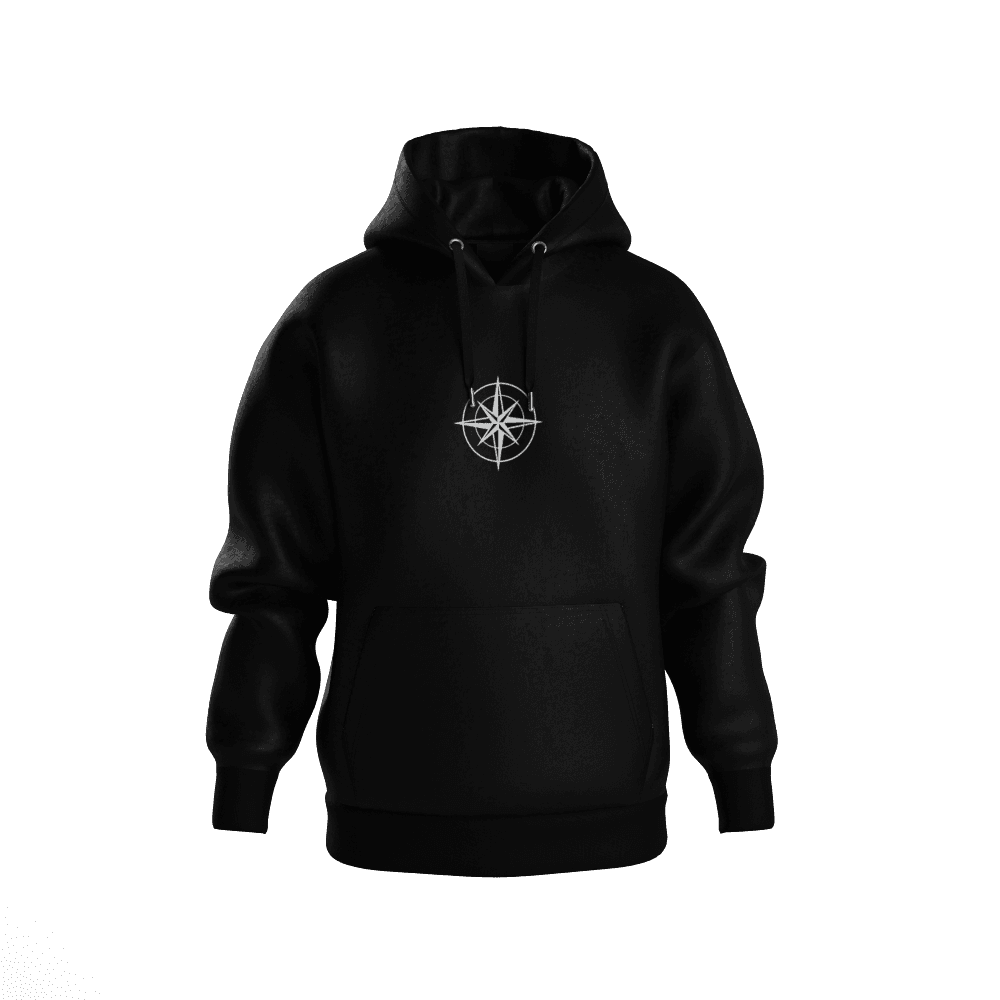
- One garment that fits a whole distributed team. A company hoodie ordered in XS to 4XL only works if the grade holds at the extremes. Good grading means the person in XS is not swimming in the armhole and the person in 4XL is not tugging the hem down all day, and both recognise the item as the same product.
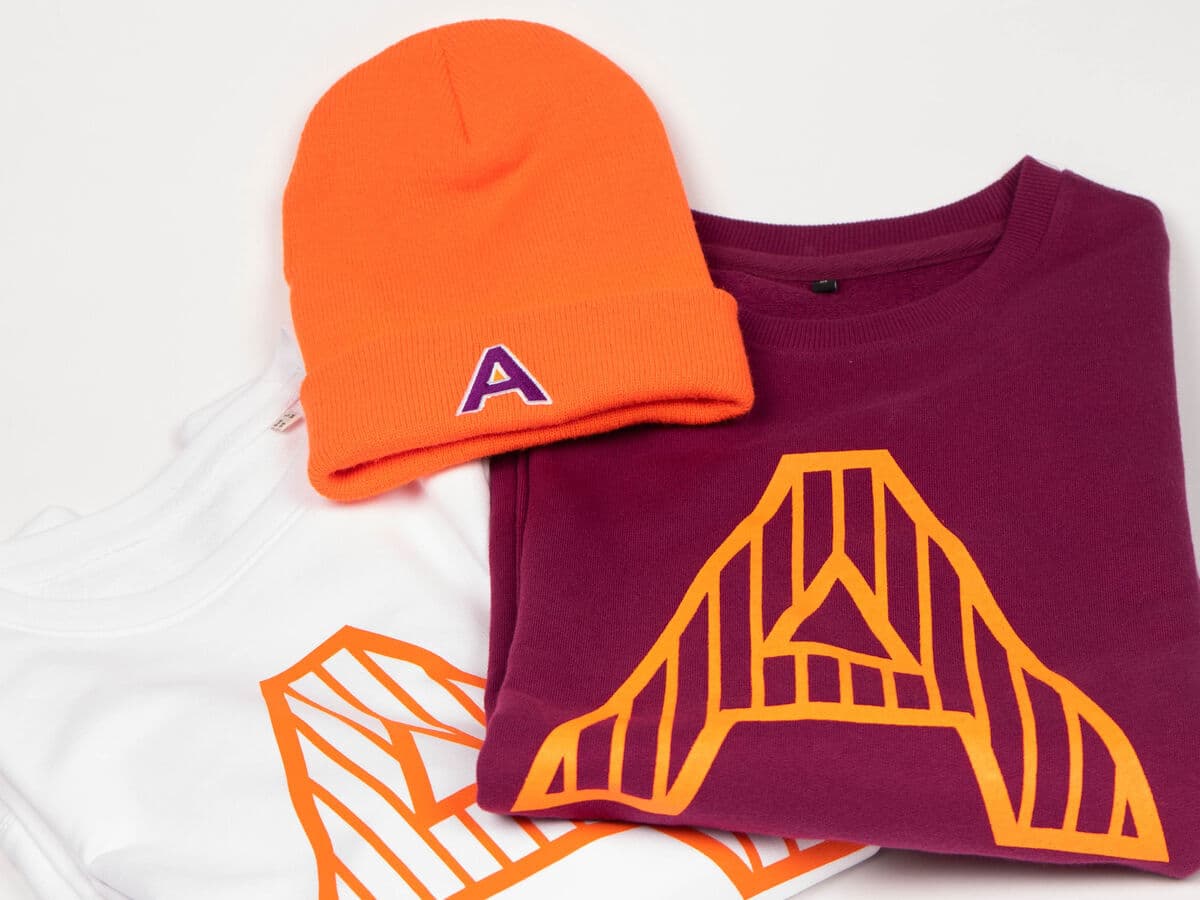
- Print placement across the size run. A logo sitting 7 cm below the collar looks centred on a medium and stranded near the neck on a 3XL. Grading forces a decision: fixed placement, or size-band rules where S to L print at one measurement and XL upward at another. The screen size usually stays the same, only the anchor point moves.
- Size curve and reorder planning. A graded range is what makes a size curve possible. Order against real headcount, hold the middle sizes deeper, and keep the outer sizes available so a new hire in 3XL is not told to take an XL and make do.
Grading is the technique of scaling an apparel pattern from a single sample size into a complete size range using measured, non-uniform increments called grade rules.
5 tips to elevate your Grading strategy
| Tip | Steps |
|---|---|
| Ask for the size chart with tolerances | Nominal measurements alone hide the truth. Request the deviation allowed per measurement point before approving a size run. |
| Fit-test the extremes, not the middle | Order samples in the smallest and largest size you plan to offer. The medium always fits. The 3XL is where the grade breaks. |
| Set print placement per size band | Define one placement for S to L and another for XL and up. A single fixed measurement will look wrong at one end of the run. |
| Check whether extended sizes are graded or drafted | Anything past 2XL should be re-drafted from an extended block. Ask. A mechanically graded 4XL fits like a tent. |
| Grade after shrinkage, not before | Confirm that the size chart shows post-wash measurements. Otherwise every garment lands a size small after the first laundry. |
Key Terminologies
Frequently Asked Questions
What is the difference between grading and scaling a pattern?
Scaling enlarges every part of a pattern by the same percentage. Grading moves each point by its own measured amount, so the chest grows several centimetres per size while the neck grows half a centimetre. Scaling a garment pattern produces sizes that technically exist and nobody can wear.
How much does a garment grow per size?
For adult tops, roughly 4 to 5 cm of chest circumference, 2 cm of body length and 1 to 1.5 cm of sleeve length per size step. Increments usually widen at the top of the range, since larger bodies differ more in girth than in height.
Does grading change the size of the print on a T-shirt?
Usually not. The same screen prints the same artwork on every size, so a logo is identical on S and 3XL. What changes is where it sits, which is why placement is normally defined per size band rather than as one fixed measurement for the whole run.
Why do XS and 3XL often fit worse than a medium?
Because they are furthest from the sample size the pattern was drafted in, so small errors in the grade rule accumulate over each step. Extended sizes also need proportional changes that a linear grade cannot deliver, which is why they are best re-drafted from a dedicated block.
Do I need grading if I order stock blanks?
No, blanks arrive already graded by the manufacturer. Grading still matters to you as a buyer, because it explains why a brand's size chart behaves the way it does and why the same nominal size fits differently between two suppliers.