

Definition
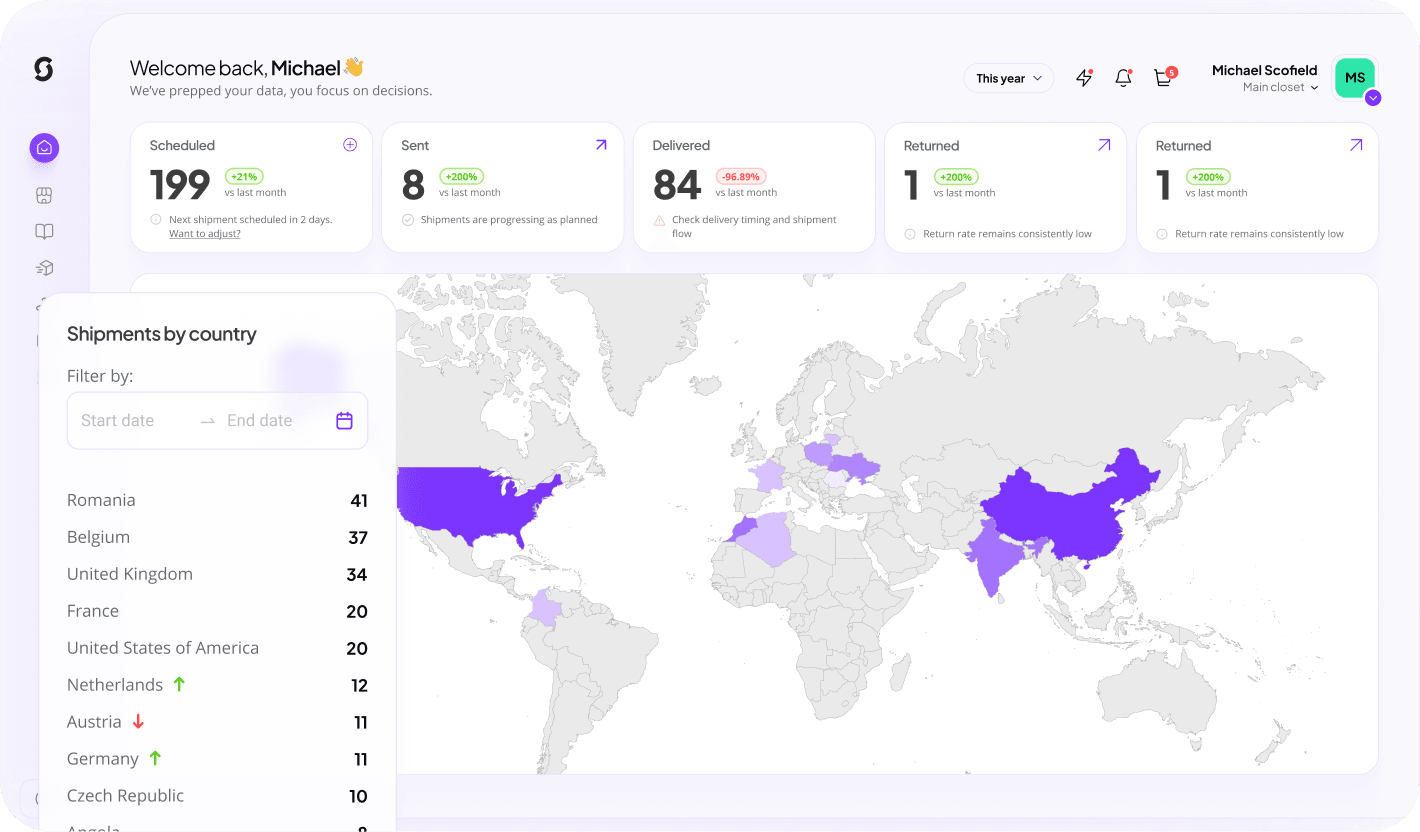
A merchandise dashboard is a dynamic interface that allows you to monitor, analyze, and control various metrics related to your merchandise from production to sales in one centralized location. It provides valuable insights into stock levels, sales trends, and customer preferences, enabling you to make informed decisions that can enhance your business operations.
“A merchandise dashboard is a dynamic interface that centralizes metrics related to your merchandise. It delivers insights into production, sales, stock levels, and trends.”
Imagine being able to check your production’s real-time status right from your workspace. With a merchandise dashboard, you can see which items are running low on stock, identify bestselling products, and recognize shifts in customer demand. This level of transparency and prompt data accessibility empowers you to make strategic decisions, prevent overstock or stockouts, and tailor your offerings to meet market trends.
The Principles of Effective Merchandise Dashboard
A merchandise dashboard is rooted in the need for clarity and efficiency within your production processes. By consolidating critical metrics and KPIs, this powerful tool offers a unified platform to manage inventory and analyze financial performance seamlessly. At its core, a merchandise dashboard is designed to simplify decision-making and improve operational agility.
Delving deeper into the principles of a merchandise dashboard, you’ll find that data integration is fundamental. The dashboard pulls information from various sources, whether it’s inventory management systems, sales channels, or customer feedback platforms. This interconnected data ecosystem provides a bird’s-eye view of your business’s health. Moreover, a merchandise dashboard emphasizes real-time updates, ensuring that you can respond immediately to opportunities and challenges. It prioritizes user-friendly interfaces, allowing you to customize the display of information to highlight the KPIs most relevant to your strategies. Predictive analytics is another critical feature, enabling projections and trend analysis which alleviate risks and capitalize on emerging markets. Lastly, the dashboard supports seamless collaboration, ensuring every team member stays informed and aligned with organizational goals.
The amalgam of these principles translates into a dynamic tool that not only streamlines daily operations but also fortifies long-term strategic initiatives. It fosters an environment where informed decisions become second nature, thus setting your organization on a path to sustained success.
Embrace data-driven decisions and the power of insights to elevate your business with an effective merchandise dashboard, staying ahead of the curve.
4 examples of powerful Merchandise Dashboard strategies
Real-Time Inventory Management
: Continuously track stock levels via real-time updates, enabling you to address gaps in inventory without delay. This feature helps you avoid costly overstock scenarios and minimizes the risk of stockouts, thus maintaining a seamless supply chain flow.
Comprehensive Sales Analytics
: By accessing in-depth sales metrics, identify top-selling products, seasonal trends, and customer preferences, shaping strategies and marketing efforts that resonate with your target audience and enhance customer satisfaction.
Customizable Reporting Tools
: Tailor reports to suit unique business needs, presenting essential data in formats that facilitate quick analysis. Customizable dashboards enhance decision-making efficiency by focusing on critical metrics that drive your business direction.
Predictive Forecasting Capabilities
: Leverage advanced analytical tools to anticipate future market demands, equipping your business with the insights necessary to innovate and adapt proactively.
6 tips to elevate your Merchandise Dashboard strategy
| Tip | Steps |
|---|---|
| Deep Dive into Data Sources | Identify key data feeds such as POS, CRM, or supplier data to integrate into your dashboard. |
| Prioritize User Training | Organize workshops to familiarize your team with dashboard functionalities and effective usage. |
| Set SMART Goals | Define Specific, Measurable, Achievable, Relevant, and Time-bound objectives for your dashboard projects. |
| Incorporate Visual Aids | Use charts, graphs, and heatmaps to present data visually for instant comprehension. |
| Schedule Regular Audits | Conduct periodic reviews of your dashboard’s performance and alignment with objectives. |
| Foster Collaborative Culture | Encourage cross-departmental collaboration to leverage diverse insights and perspectives. |
Key Terminologies
Frequently Asked Questions
How secure is the merchandise dashboard?
The merchandise dashboard employs robust security measures, ensuring that your data is protected with advanced encryption protocols and regular security audits.
Can the dashboard integrate with existing systems?
Yes, merchandise dashboards are designed with integration capabilities that allow seamless data transfer across your existing systems, enhancing data cohesiveness.
Is the dashboard user-friendly for non-technical staff?
Absolutely, the user interface is intuitively designed to facilitate easy navigation, making it accessible even for users with minimal technical experience.
How often does the data get updated?
Data within the merchandise dashboard is updated in real-time, providing you with the most current insights for accurate decision-making and improving sales performance.
Are there customization options available?
The dashboard offers extensive customization options to tailor metrics, reports, and visual elements that align with your specific business needs.
How does the merchandise dashboard contribute to business growth?
By presenting clear, actionable insights and fostering collaboration, the dashboard drives informed strategies that support measurable business growth.