


Definition
Swag management is the practice of running branded merchandise as one controlled program instead of a stream of one-off orders. It covers what gets made, who signs it off, where it is stored, how it reaches people, and what it all costs. Most companies realise they need it the moment a second team starts ordering hoodies without telling the first.
Definition
Swag management is the operating system behind company merch. It pulls sourcing, brand control, stock, fulfilment, budget and reporting into a single workflow with a single owner, so merch behaves like a business process instead of a favour someone squeezes in between meetings.
A concrete example: a 600-person software company had four teams buying separately. Marketing bought conference tees, HR bought onboarding kits, sales bought client gifts, and every office ordered its own bottles. Five logo versions were in circulation, three pallets sat in a storage unit nobody had visited in a year, and nobody could say what merch had cost last quarter. Moving everything into one merch store with one approved brand kit, one stock pool and one budget line cut spend by roughly a fifth and closed the storage unit for good.
How swag management works
It starts with the range. Instead of picking products from scratch each time, you fix a short catalogue that suits the brand: a heavyweight tee, a hoodie, a bottle, a notebook, a bag. Each item is set up once with the right print method, artwork placement and colour codes. That one decision kills the most common failure in merch, which is drift. Drift is when the logo shrinks, the green shifts a shade, the hoodie quietly changes supplier, and nothing in the cupboard matches anything else.
Then comes stock strategy, and the choice here drives everything downstream. Hold stock and you get same-week delivery and better unit prices, at the cost of cash tied up in boxes and the risk of dead sizes. Produce on demand and you carry no inventory and no waste, at the cost of a longer lead time. Most mature programs run a hybrid: a small buffer of the items you need immediately, such as onboarding kits, and on-demand production for everything unpredictable. Live stock visibility is what makes the hybrid work, because you can only reorder what you can actually see.
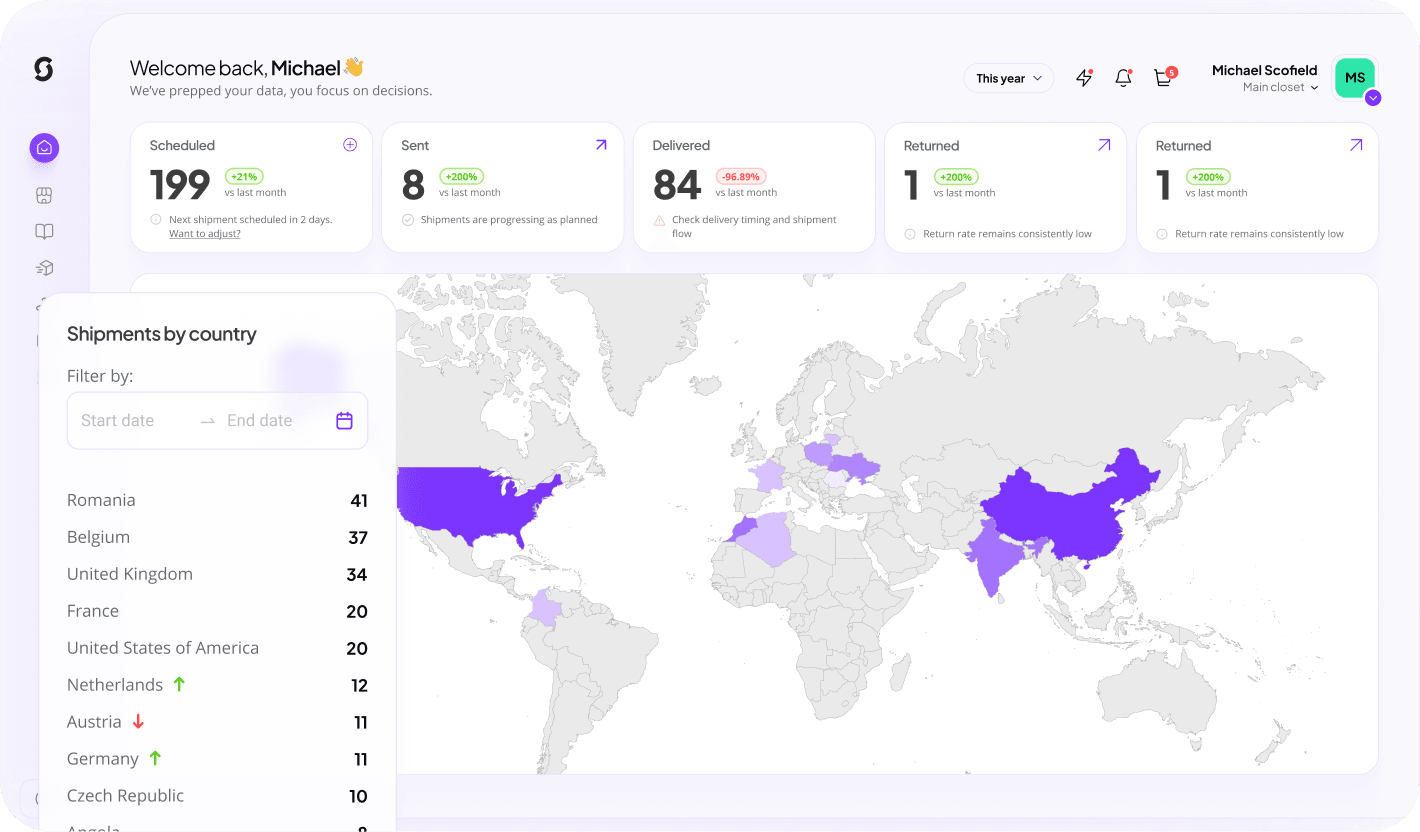
Distribution is where programs quietly break. Bulk shipping to an office made sense when everyone was in that office. With hybrid and remote teams you need individual addresses, size choices, customs paperwork for cross-border sends, and a way for the recipient to pick rather than an admin to guess. A self-serve swag store solves this: the person chooses item and size, the address is captured at checkout, and the parcel ships without a spreadsheet. Reporting then closes the loop. Spend per team, per item and per country. Redemption rate on the links you sent. Stock ageing, so slow items get retired before they turn into waste.
Swag management in branded merch
- Onboarding kits on autopilot. A new hire is added to the HR system, a kit link goes out, the employee picks their size, and the box arrives before day one. Nobody keeps a stack of medium tees under a desk.
- Global campaigns without global chaos. One approved range, several regional warehouses, local pricing. A campaign in Madrid and a campaign in Berlin pull from the same brand kit but ship from the nearest hub, so freight cost and delivery time stay sensible.
- Client gifting with a paper trail. Sales sends a redemption link instead of shipping a physical box on spec. The recipient chooses, the gift is produced or picked, and every send is logged against a budget and an account name.
Swag management is the end-to-end control of branded merchandise, from design and sourcing through storage, distribution and reporting.
5 tips to elevate your Swag management strategy
| Tip | Steps |
|---|---|
| Give the program one owner | Merch fails when it is everyone's side project. Name one person accountable for range, budget and brand. |
| Fix the range before the volume | Approve eight to twelve products and produce nothing outside them. Variety costs more than it earns. |
| Set spend rules, not approval queues | Give teams a budget and a catalogue, then let them order without asking. Control the inputs, not each request. |
| Measure redemption, not units shipped | A claimed and worn item is a brand impression. A shipped and binned one is a cost. Track the first. |
| Retire slow stock on a schedule | Review stock ageing every quarter and clear anything untouched for six months into internal use. |
Key Terminologies
Frequently Asked Questions
What does swag management actually involve?
It involves choosing and approving a product range, controlling artwork and colours, deciding what to stock versus produce on demand, shipping to individual recipients, and reporting on spend and usage. One owner, one catalogue, one set of numbers.
How do you keep swag on brand across different teams?
Lock the artwork, colours and print placements into a single approved brand kit, then let teams order only from that catalogue. Teams get freedom on what to order and none on how it looks, which is the right split.
Should you hold swag in stock or produce on demand?
Hold stock only for items you need within days, such as onboarding kits and event essentials. Produce everything else on demand, because unsold stock is the largest hidden cost in most merch budgets.
How do you send swag to remote employees?
Use a store or redemption link so each person chooses their item, size and delivery address at checkout. Shipping from a regional warehouse keeps cost and customs paperwork manageable across borders.
What is the most common swag management mistake?
Overordering. Bulk buying looks cheap per unit, then sizes go dead, designs date, and the surplus becomes a storage bill. Order to demand and buy fewer, better items.