Definition
Applique is a decoration technique where pieces of fabric are cut into shapes and stitched onto a base garment to form a logo or design. It builds a layered, textured look with real depth, since the design sits raised above the surface. Applique is a favourite for varsity jackets, caps, and sweatshirts, where bold letters and shapes need to read from a distance.
Definition
Applique adds fabric to a product rather than ink or dense thread. A shape is cut from a contrasting material, positioned on the garment, and stitched down around its edges, usually with a satin or zig-zag stitch that seals the fabric and frames the design. The result is dimensional and tactile, closer to a patch that lives inside the garment than a flat print. A classic example is a large chenille letter on a college jacket, where the soft raised fabric gives the piece its recognisable, premium feel.
How applique works
The process starts with cutting. Each shape is cut from fabric, often by laser or die so the edges are clean and repeatable. Tackle twill, felt, and chenille are common applique materials because they hold a crisp edge and do not fray easily. The pieces are then placed on the garment, tacked in position, and stitched down. A satin stitch runs around every edge to lock the fabric and give a finished border. Designs can layer several fabrics on top of each other for multi-colour effects.
Applique earns its place on large designs. Because it fills big areas with fabric instead of thousands of embroidery stitches, it covers a lot of surface quickly and keeps a soft hand where dense embroidery would feel stiff and heavy. It reads well from a distance, which is why sports teams and colleges have used it for decades on names, numbers, and mascots. The contrast between the applique fabric and the base garment adds a second colour with no extra printing.
The trade-offs are detail and setup. Fine lines, small text, and intricate artwork do not translate well, since every shape has to be cut and stitched, so bold, simple designs work best. Each colour means another fabric layer and more stitching, which adds time. There is digitising and cutting work upfront. For large logos and lettering in meaningful quantities, applique often costs less than a fully embroidered fill while looking more premium.
Applique in branded merch
- Varsity and bomber jackets. Applique letters and crests give team jackets, club kit, and anniversary gifts a heritage, high-end look that flat printing cannot match.
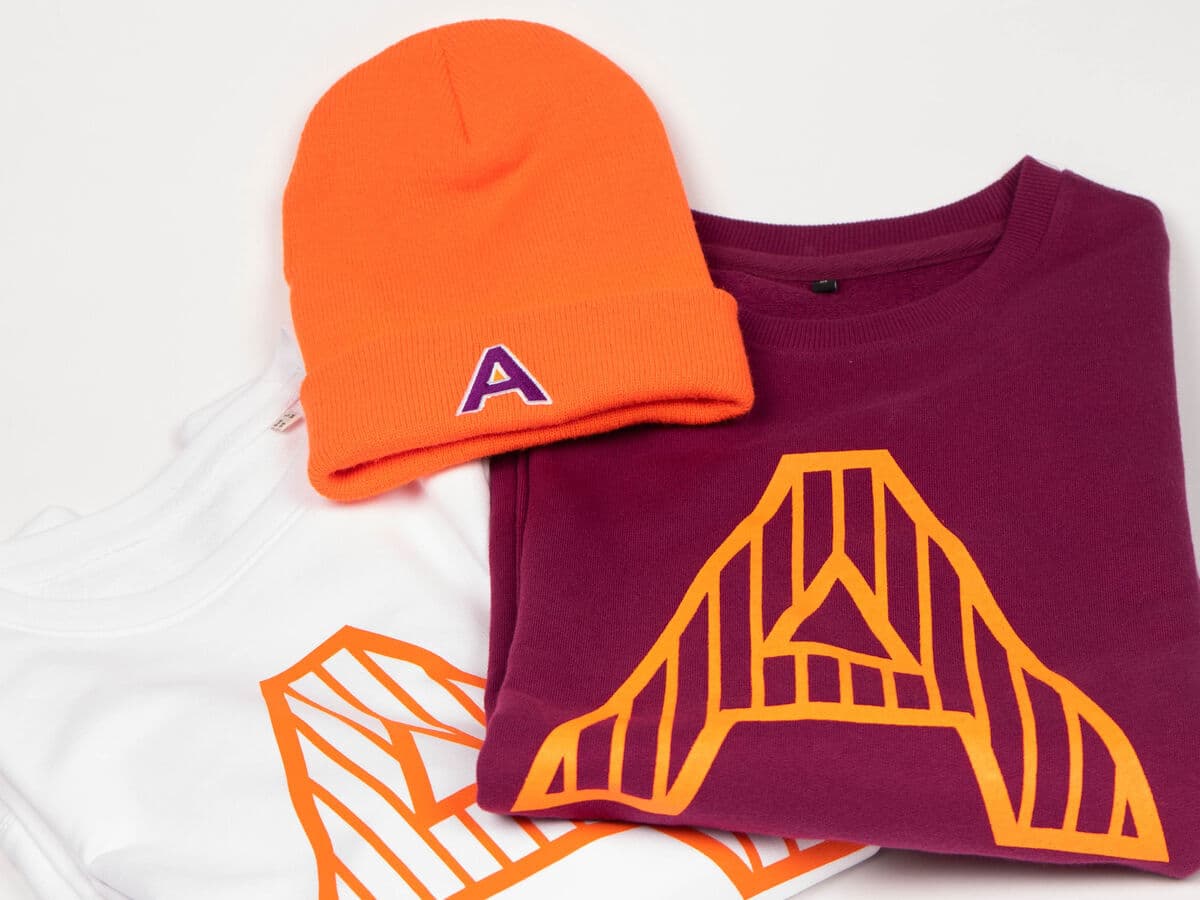
- Caps and beanies. A stitched fabric shape on the front panel adds texture and a bold brand mark that stands out on headwear at events and in retail.
- Sweatshirts and hoodies. Large applique logos across the chest suit premium fashion-led merch and staff uniforms, keeping a soft, wearable feel at scale.
Applique is a decoration method that stitches cut pieces of fabric onto a garment to create a raised, layered design.
5 tips to elevate your Applique strategy
| Tip | Steps |
|---|---|
| Go big and bold | Use applique for large shapes and lettering; leave fine detail to embroidery or print. |
| Choose contrast | Pick an applique fabric that contrasts the garment so the design reads clearly. |
| Match the fabric | Select tackle twill or felt for a clean edge and long-lasting durability. |
| Limit the layers | Keep colours to two or three; each fabric layer adds cost and stitching time. |
| Plan the placement | Position large applique flat across the chest or back where it lies smoothly. |
Key Terminologies
Frequently Asked Questions
What is the difference between applique and embroidery?
Applique stitches a piece of cut fabric onto the garment to fill an area, while embroidery builds the design directly from thread. Applique covers large shapes faster and keeps a softer hand, and the two are often combined.
What fabrics are used for applique?
Tackle twill, felt, and chenille are the most common, because they cut cleanly and resist fraying. The base garment can be almost any fabric that takes stitching, from fleece to woven cotton.
Is applique durable?
Yes. The fabric is stitched down around every edge, so a well-made applique holds up to regular wear and washing. Using a stable material like tackle twill keeps the edges crisp over time.
Is applique cheaper than embroidery?
For large designs it often is. Filling a big area with fabric uses far less thread and stitching than a solid embroidered fill, so applique can be more cost-effective at size while looking premium.
Can applique reproduce small logos?
Not well. Every shape has to be cut and stitched, so fine lines and small text lose definition. Bold, simple designs work best, and small detail is better handled by embroidery or print.