


Definition
An online company store is a private webshop where employees, partners, or clients order pre-approved branded items on their own, without a request landing in someone's inbox. It replaces the spreadsheet, the group order, and the cupboard full of the wrong sizes. The store holds the catalogue, the branding, the prices, and the rules. People pick, and the order ships.
Definition
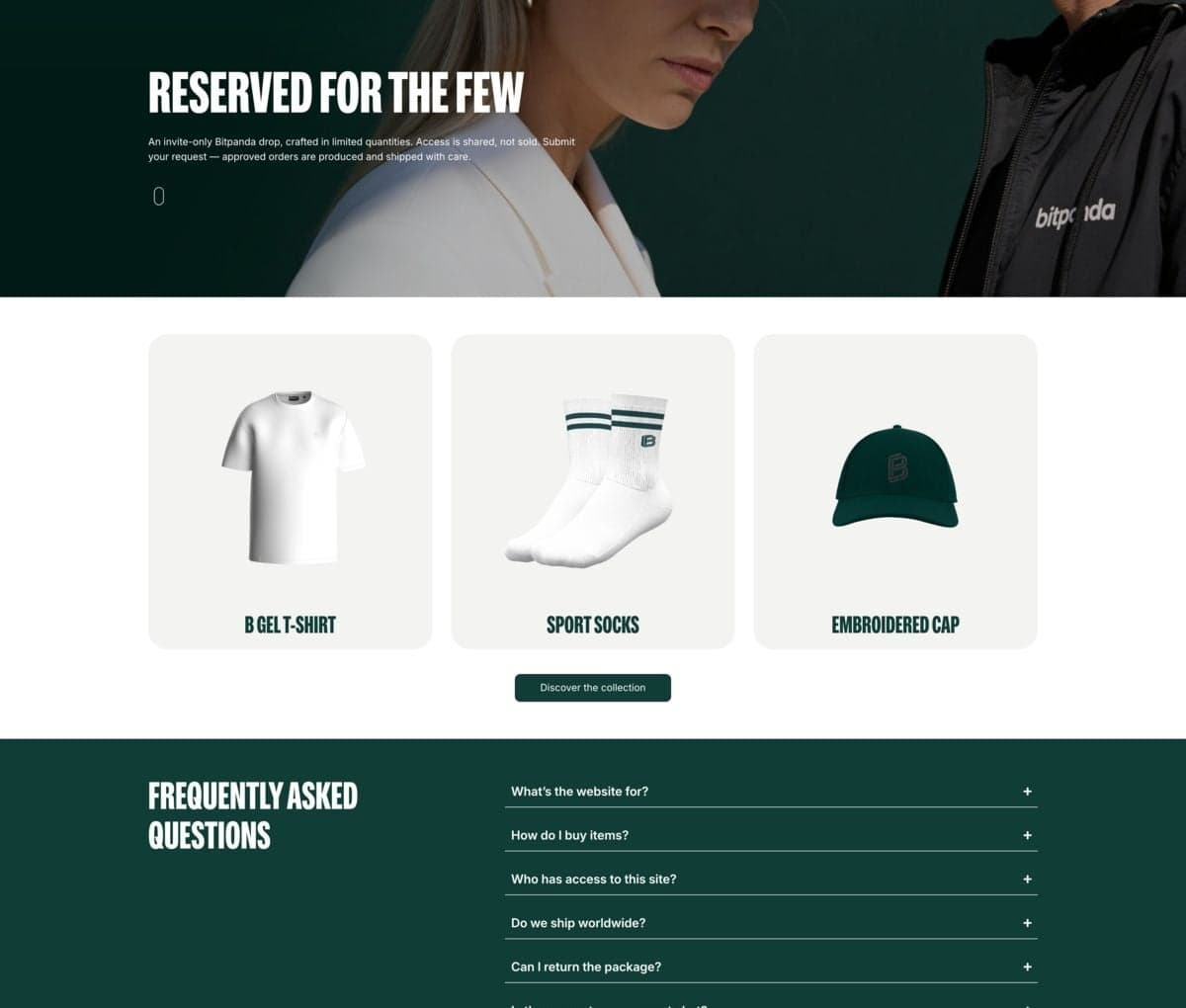
An online company store, also called a company webshop or employee store, is a dedicated storefront that holds one company's approved merch range. Access is restricted, usually behind a login, a domain check, or an invite link. The brand team decides what appears in it. Everyone else orders from what is there. Payment can run on a personal card, a departmental budget, a credit allowance, or a central invoice, depending on who the store is for.
A concrete example. A 400-person scale-up runs one store with three doors into it. New hires get an invite the week before they start and pick their own size in a hoodie, a bottle, and a notebook, all charged to a people budget. Sales reps buy extra polos on their team's cost centre. Customers who won a competition redeem a one-time code. Same catalogue, same branding, three different sets of rules.
How an online company store works
The catalogue comes first. A brand team fixes a range, applies the logo to each item once, and sets the sizes and colourways that are allowed. That range is the whole store. Nobody uploads a new logo file, nobody picks a print position, nobody argues about which shade of the brand colour was correct. Everything behind the login has already been approved, which is where most of the internal work disappears.
Then the stock model, which quietly decides everything about cost and lead time. A pre-branded stock store holds decorated goods in a warehouse, so an order ships in days and a single hoodie costs the same as the fiftieth. An on-demand store decorates only after an order comes in, so nothing sits in a warehouse and nothing gets written off, though lead times are longer. Most stores run a hybrid: core items like employee onboarding kits sit in stock because they ship weekly, while seasonal or campaign items are made to order. Buying a season's worth of merch and storing it yourself is the version of this that ends with a cupboard of size XS in last year's logo.
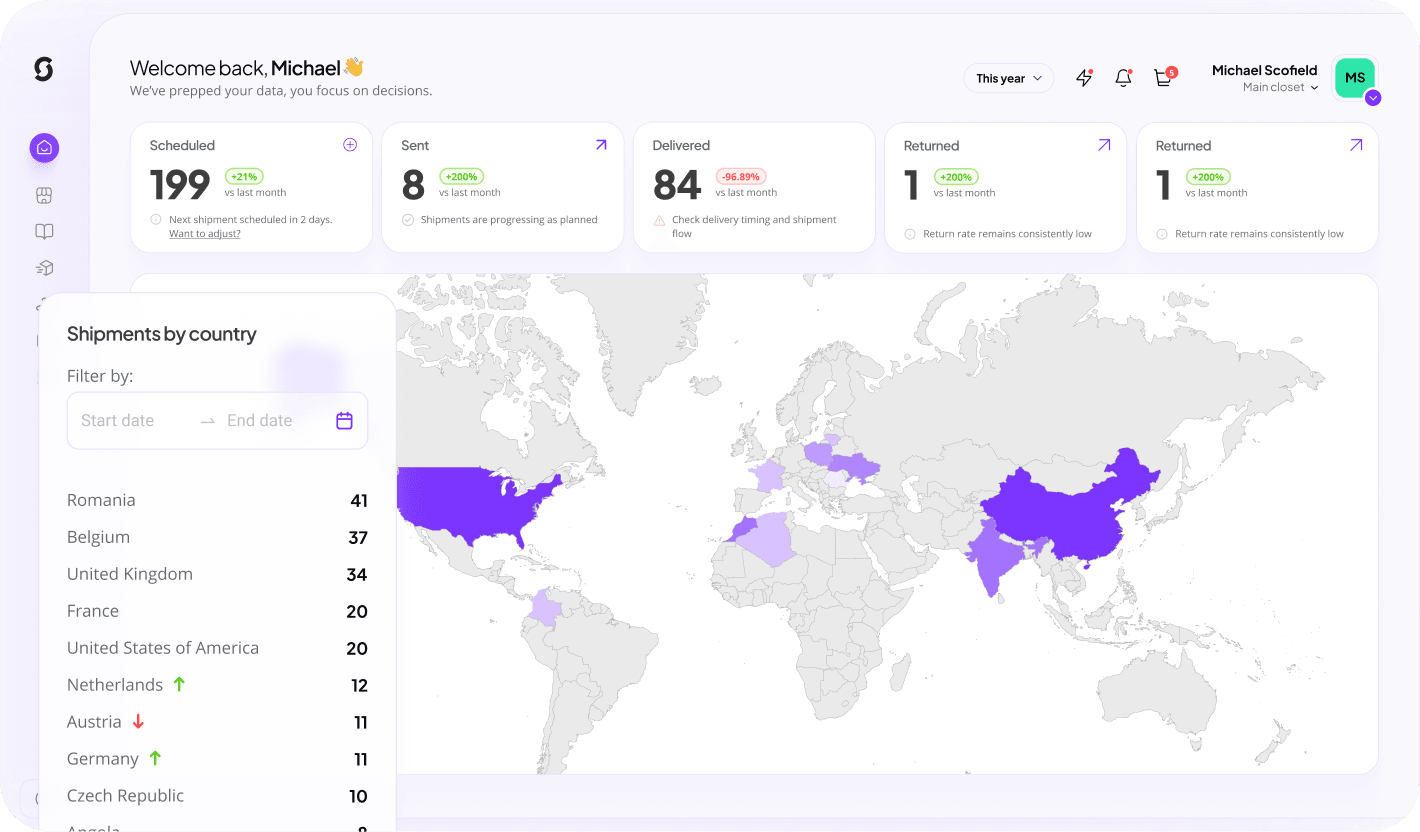
Payment and permissions are where a company store stops being a shop and starts being infrastructure. Budgets can be set per person, per team, or per cost centre, with a credit balance that resets each year. Approval rules can hold anything above a threshold. Address handling matters more than people expect: shipping to 400 home addresses across twelve countries is a different operation from shipping one pallet to one office, and duties, returns, and local carriers all sit in that difference. Good stores also report back, so finance sees spend by department and the brand team sees which items actually move rather than which ones looked good in the mockup.
An online company store in branded merch
- Employee and onboarding store: New hires pick their own sizes before day one, so nobody guesses. Kit ships to the home address for remote staff, and the people team never touches a size chart again.
- Sales, reseller, and franchise store: Distributed teams buy branded apparel and event stock on their own budget, at agreed prices. The brand stays consistent across markets because the store is the only source of approved items.
- Client, campaign, and reward store: Customers, community members, or competition winners redeem a code for a gift and enter their own address, which turns a fulfilment job into a link and saves the manual chase for delivery details, whether the item is apparel or one of your branded gift sets.
An online company store is a closed branded webshop where a company's people order approved merch themselves, with the catalogue, budgets, and shipping controlled centrally.
5 tips to elevate your Online company store strategy
| Tip | Steps |
|---|---|
| Keep the range tight | Ten items people want beat forty nobody orders. Cut anything that has not moved in two quarters. |
| Stock only what repeats | Hold pre-branded stock for onboarding and core apparel, make campaign items on demand. |
| Set budgets, not requests | Give each person or team a credit balance so ordering never needs approval by email. |
| Plan for home addresses | Check shipping costs, duties, and returns per country before you open the store to remote staff. |
| Watch the size curve | Review size splits after the first 100 orders and rebalance stock, since XS and XXL rarely match the forecast. |
Key Terminologies
Frequently Asked Questions
What is an online company store used for?
An online company store is used to let employees, partners, and clients order approved branded merch themselves, with the catalogue, budgets, and shipping set centrally. It removes group orders, manual size collection, and one-off requests.
How is a company store different from a normal webshop?
A company store is closed rather than public. Access sits behind a login or invite, prices can be internal or budget-based, and the catalogue only holds items the brand team has already approved.
Do you need to buy stock upfront for a company store?
No. Items can be produced on demand after each order, which means no stock and no write-offs. Holding pre-branded stock is worth it for items that ship every week, such as onboarding kits, because it cuts lead time to days.
Can a company store ship to employees at home?
Yes. Most stores ship to individual home addresses, which is why remote teams use them. Check duties, carrier coverage, and return handling per country before opening the store in a new market.
How do budgets work in a company store?
Each person, team, or cost centre can be given a credit balance or a spend limit that resets on a set schedule. Orders draw down that balance, so finance sees the spend by department without approving each request.