


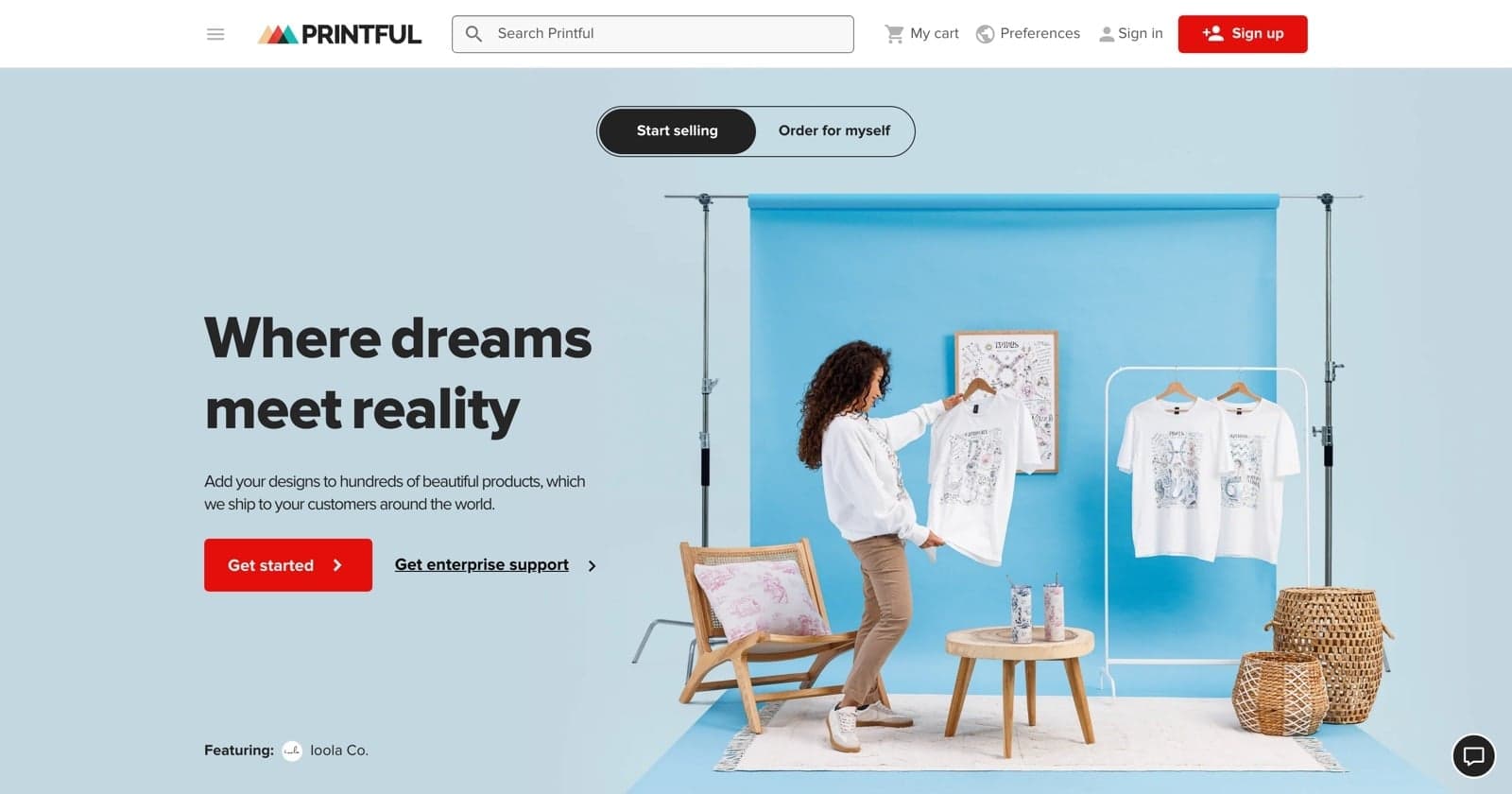
Printful's pitch is control. It describes itself as "a completely in-house partner" that works "under one roof" (as listed on printful.com in October 2026). That is why sellers trust its quality. It is also why Printful is rarely the cheapest option, carries 577 products on its free plan rather than thousands, and charges separately for extras like labels. The right Printful alternative depends on what you would trade some of that control for: a lower base price, a bigger catalogue, faster local delivery or less work.
What you give up when you leave Printful's in-house model
Every alternative on this list sits on one side of a simple line: who prints the product.
- Move to a network (Printify, Gelato, Gooten) and you gain range, price choice and local production. You give up some consistency, because a different partner may print each order.
- Move to another single producer (SPOD, Podbase) and you keep the "one company prints it" model. You usually gain speed or specialism and give up catalogue size.
- Move to a hosted shop or marketplace (Fourthwall, Spreadshop, Redbubble, Zazzle) and you stop running a store. You give up the customer relationship and some margin.
So start with your reason for leaving. Price and range point to a network. Speed points to another producer. Workload points to a hosted shop.
The 10 Printful alternatives at a glance
| Service | Main reason to pick it over Printful | Production model | Where it prints | Pricing model |
|---|---|---|---|---|
| Printify | Price and range (2,000+ products) | Network: 70+ providers, 140+ facilities | Not listed by country | Free; Premium $39/mo |
| Gelato | Local production worldwide | Network: 250+ partners | 32 countries | Free; Gelato+ $29.99/mo |
| Gooten | Routing managed for you | Managed network | Global, countries not listed | Not published |
| SPOD (Spreadconnect) | 48-hour dispatch, no fees | Own facilities | Las Vegas; Leipzig, Legnica, Krupka | Free |
| Podbase | Phone cases and tech, 24-hour dispatch | Own facility | Not listed | Free |
| CustomCat | Volume discount plan | Not stated | Not listed | Free Lite; PRO $30/mo |
| Fourthwall | Creator shop with tax and support handled | Partner network | US, UK, EU, Australia | Free; Pro $15/mo |
| Spreadshop | Free shop with customer service | Own facilities | Facilities worldwide | Free |
| Redbubble | Built-in marketplace traffic | Marketplace | Not listed | Free shop; account tiers |
| Zazzle | Personalised products, zero operations | Marketplace | Not listed | Free store; you set royalty |
All facts as listed on each vendor's own site in October 2026. "Not listed" means the vendor does not publish it.
For reference: what Printful offers today
Printful's free plan includes 577 products, unlimited stores and a mockup generator. Printful Growth costs $24.99 a month, gives up to 33% off products, and is free once you pass $12K a year in sales. The base price covers the blank, one print placement and fulfilment. Extras cost more: inside labels $0.99, outside labels $2.49, embroidery digitisation $2.95 to $6.50 per design. Printful says 86% of orders are fulfilled in the customer's region, and it connects to 20+ platforms including Shopify, Etsy, WooCommerce, Amazon, eBay and TikTok Shop (all as listed on printful.com in October 2026). That is the bar each alternative has to clear.
1. Printify: the cheaper, bigger network
- Who it's for: margin-focused sellers who want to choose a provider per product.
- Production model: Printify prints nothing itself. It connects you to 70+ print providers across 140+ facilities (as listed on printify.com in October 2026).
- Where it prints: a global partner network. Printify shows a map but does not list countries.
- Integrations: Etsy, Shopify, TikTok Shop, Amazon, eBay, WooCommerce, Wix, Squarespace, BigCommerce, PrestaShop and an API.
- Pricing: free plan with 5 stores. Premium costs $39 a month, or $24.99 a month billed yearly, with up to 20% off all products.
- What it does well: 2,000+ products and the freedom to switch provider when one gets expensive or slow.
- Watch-outs: quality and packaging vary by provider. Read provider reviews and order samples from the one you pick.
We go deeper on Printify's network model in our Printify alternatives guide.
2. Gelato: local production in 32 countries
- Who it's for: sellers with buyers in many countries who are tired of cross-border delivery times.
- Production model: network of 250+ production partners. Each order goes to the partner nearest the customer (as listed on gelato.com in October 2026).
- Where it prints: 32 countries in Europe, the Middle East and Africa, Asia Pacific and the Americas.
- Integrations: Shopify, Etsy, WooCommerce, Wix, Squarespace, BigCommerce, TikTok Shop, Amazon and an API.
- Pricing: free plan with 2 stores. Gelato+ costs $29.99 a month, or $19.99 billed yearly, with up to 33% off products and unlimited stores. Gelato says it charges no commission.
- What it does well: production reach. Printful fulfils in a handful of regions; Gelato produces in 32 countries.
- Watch-outs: you trade Printful's in-house control for partners, so test samples in your top markets. Two stores only on the free plan.
3. Gooten: a managed network for growing stores
- Who it's for: merchants scaling past a few hundred orders who want a network without managing providers.
- Production model: vetted decorators in a managed network that "will route, process, produce and ship orders" (as listed on gooten.com in October 2026).
- Where it prints: a global network with localized production. Countries are not named.
- Integrations: Shopify (free app), Etsy, WooCommerce, TikTok Shop, BigCommerce, OrderDesk and an API.
- Pricing: not published. Sign up or contact sales.
- What it does well: 500+ products, with Gooten doing the routing rather than you.
- Watch-outs: no public pricing page to compare against Printful's, and less visibility into who made each item.
4. SPOD (now Spreadconnect): same model, faster and free
SPOD is the closest match to Printful's model on this list: one group, its own facilities. Its help centre confirms SPOD is rebranding to Spreadconnect.
- Who it's for: sellers who like single-producer control but want faster dispatch and no plan fees.
- Production model: Spread Group's own production facilities.
- Where it prints: Las Vegas for North America; Leipzig (Germany), Legnica (Poland) and Krupka (Czech Republic) for Europe (as listed on Spreadconnect's help centre in October 2026).
- Integrations: Shopify, WooCommerce, TikTok, Squarespace, Shopware, Magento, OrderDesk and an API. Etsy is not listed.
- Pricing: free, "zero costs or fees" to run a shop. You pay product and shipping per order.
- What it does well: production and dispatch within 48 hours for 95% of orders.
- Watch-outs: around 250 products. Each account covers one region, so US and EU sales need two accounts. No Etsy integration.
5. Podbase: a specialist producer for tech accessories
- Who it's for: sellers whose bestsellers are phone cases, laptop sleeves, desk mats and similar.
- Production model: "printed on demand in our own facility", with most orders printed and shipped within 24 hours (as listed on podbase.com in October 2026).
- Where it prints: not named on the site.
- Integrations: Shopify, Etsy, WooCommerce, Order Desk and an API.
- Pricing: free, no subscription. Base products from €6.11 in its calculator.
- What it does well: depth in one category: tough, MagSafe, clear and snap cases plus sleeves and desk mats.
- Watch-outs: not an apparel replacement. Many sellers run Podbase for tech next to another service for clothing.
6. CustomCat: lower unit prices for a monthly fee
- Who it's for: high-volume sellers for whom a few dollars per unit adds up.
- Production model: not stated on the site. CustomCat cites 40K+ units produced and shipped daily (as listed on customcat.com in October 2026).
- Integrations: Shopify, WooCommerce, Etsy, BigCommerce, an API and CSV upload.
- Pricing: CustomCat Lite is free. PRO costs $30 a month or $300 a year, with 20 to 40% off standard pricing.
- What it does well: a simple trade: a flat monthly fee for a large discount.
- Watch-outs: no public detail on where products are made. Sample before moving bestsellers off Printful.
7. Fourthwall: a creator shop that handles tax and support
- Who it's for: YouTubers and other creators who use Printful only because they needed a shop.
- Production model: partners in the US, UK, EU and Australia (as listed on fourthwall.com in October 2026).
- Integrations: YouTube Merch Shelf, Instagram and Facebook Shopping, TikTok Shopping. Shopify is not an integration.
- Pricing: free plan or Pro at $15 a month. US card payments carry 2.9% + 30¢. A flat fee is deducted on catalogue products.
- What it does well: Fourthwall acts as Merchant of Record, collecting and remitting sales tax, and handles customer support on catalogue products.
- Watch-outs: most items take 7 to 10 days to arrive.
8. Spreadshop: a free store with service included
- Who it's for: small brands and creators who want a shop with no setup cost and no support inbox.
- Production model: Spread Group prints when an order comes in and ships to your customer, from "facilities across the globe" (as listed on spreadshop.com in October 2026).
- Integrations: none. It is a hosted storefront.
- Pricing: free. You set your price above the base price and keep the difference.
- What it does well: full customer service for your buyers, which Printful leaves to you.
- Watch-outs: your shop lives on Spreadshop, not your own store. Our Spreadshirt alternatives post covers the wider Spread Group family.
9. Redbubble: traffic instead of a store
- Who it's for: artists who want buyers without paying for ads.
- Production model: Redbubble arranges printing "on over 60 quality products" and shipping "to almost anywhere on earth" (as listed on redbubble.com in October 2026).
- Pricing: opening a shop is free. Standard, Premium and Pro account tiers exist; "no account fees" is listed as a Pro benefit, so read the fee rules for your tier.
- What it does well: existing demand, with 700,000+ artists selling to its shoppers.
- Watch-outs: Redbubble owns the customer and you compete for visibility.
10. Zazzle: royalties on personalised products
- Who it's for: designers selling gifts and personalised items to marketplace shoppers.
- Production model: Zazzle "handles all of the product fulfillment and customer service" (as listed on zazzle.com in October 2026).
- Pricing: free store. You set your royalty rate per design.
- What it does well: no store, no integrations and no support work.
- Watch-outs: a royalty is not a retail margin, and Zazzle owns the customer.
When Printful is still the right call
No need to switch if Printful already fits. Its in-house model, quality checks, branding options (inside and outside labels, packaging) and 20+ integrations are hard to match with a network. Growth is free once you pass $12K a year in sales, which removes the subscription cost for established stores. If customers complain about price rather than quality, try moving only your lowest-margin products to Printify or Gelato and keep the rest where they are.
How to choose in four questions
- Is your margin too thin? Price the same products on Printify and CustomCat PRO, shipping included.
- Are delivery times hurting you abroad? Test Gelato in your top three countries.
- Do you want single-producer control, only faster? SPOD for apparel, Podbase for tech.
- Do you want to stop running a store? Fourthwall, Spreadshop, Redbubble or Zazzle.
How we compared
We picked the services print-on-demand sellers compare most often against Printful. For each, we checked the vendor's own website in October 2026: pricing pages, network maps, help centres and integration pages. We recorded who it is for, the production model, where it prints, store integrations, the pricing model, strengths and watch-outs. Where a vendor did not confirm a fact, we left it out or marked it "not listed". We did not use third-party ratings. Plans change often, so check before you commit.
Sunday is not a print-on-demand service and does not compete for sellers. We sell merch to companies for their own people, which is why we sit in the last section.
Sources: printful.com, printify.com, gelato.com, gooten.com, spreadshop.com/spreadconnect, podbase.com, customcat.com, fourthwall.com, redbubble.com, zazzle.com.
Not selling merch? Buying it for your company
If you landed here because your company needs merch for staff, events or clients, print-on-demand is the wrong shape. POD optimises for one item to one stranger with zero inventory. A company programme needs consistent branding for hundreds of people, budgets and approvals, and stock that reaches every office and home address.
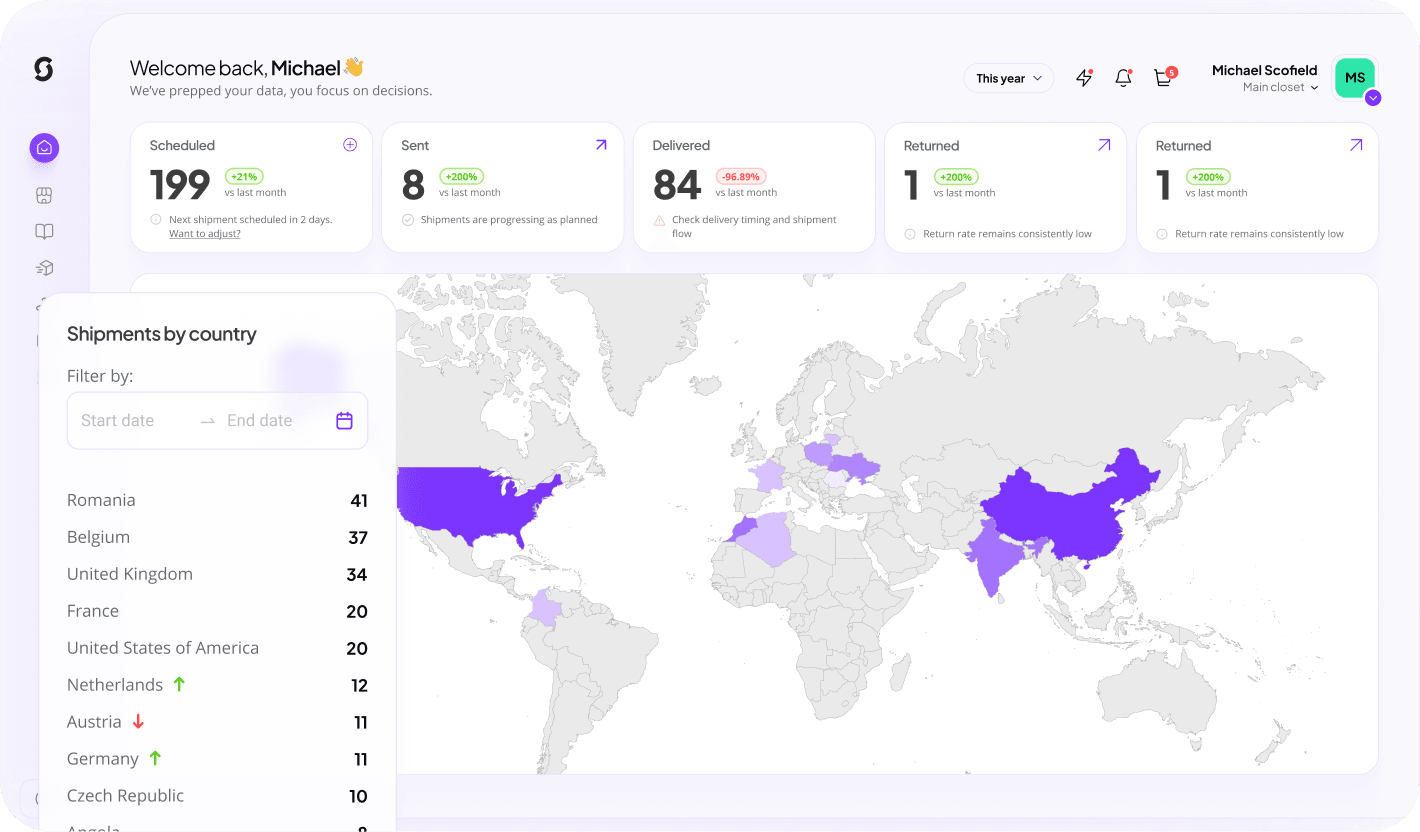
Sunday is a Belgium-based platform built for that job, used by 4,000+ brands shipping to 200+ countries. It offers 490+ products and 2,700+ templates, a minimum of 10 pieces per item and flexible global production. 70% of Sunday orders go through automatic design templates, with no designer and no proof cycle. Sunday handles customs and duties, so recipients never pay to receive. The most-ordered product is sports socks, then t-shirts and hoodies.
Product choice decides whether merch gets used. In a 258-person study with Sapience and VUB, branded merch lifted engagement by 19% and ambassadorship by 26%, but 31% of plain socks were never worn.
See our branded merch platform comparison, the honest Sunday vs Printful breakdown, or how the platform works.
About this article
Keep reading
- Printify alternatives for print-on-demand sellers
- Print-on-demand vs warehouse stock for a swag store
- Sunday vs Printful: an honest comparison
- Sunday vs Gooten
Frequently asked questions
What is a cheaper alternative to Printful?
Printify is usually the cheaper option, because you choose from 70+ providers and can pick the lowest price per product. CustomCat PRO is worth pricing at volume: $30 a month for 20 to 40% off. Always compare base price plus shipping to your top markets, and order samples, since quality varies by provider.
What are the top print-on-demand sites?
For your own store: Printful, Printify, Gelato, Gooten, SPOD (Spreadconnect), Podbase and CustomCat. For a hosted shop: Fourthwall and Spreadshop. For marketplaces with built-in traffic: Redbubble and Zazzle. Choose by production model first: one company's own facilities, a partner network, or a hosted shop that runs the store for you.
Printify or Printful in 2026?
Printful if you want one company in control of production and consistent quality. Printify if you want 2,000+ products and to choose providers on price. Both have free plans. Printful Growth costs $24.99 a month and is free above $12K yearly sales; Printify Premium costs $39 a month or $24.99 billed yearly.
Is Gelato better than Printful?
Gelato is better if your buyers are spread across many countries: it routes orders to 250+ partners in 32 countries, so items are made close to the customer. Printful is better if you want production under one company's control, with in-house quality checks and branding extras. Test both with samples in your main markets.
Should I leave Printful at all?
Only for a specific reason. If margins are too thin, move your lowest-margin products to Printify or Gelato. If you want faster dispatch, test SPOD. If quality and reliability are what your customers love, staying is reasonable. Moving product by product is safer than switching the whole store in one go.
What if I need company merch, not a store?
Use a corporate merch platform instead of print-on-demand. Sunday designs, produces, stores and ships merch for staff and clients, with 490+ products and a minimum of 10 pieces per item. 70% of Sunday orders go through automatic design templates, so there is no designer and no proof cycle.
Buying merch for your team, not selling it?
Create a free Sunday account, add your logo and see branded merch in your colours in about 30 seconds. From 10 pieces per item, shipped to 200+ countries.
Get free designs