
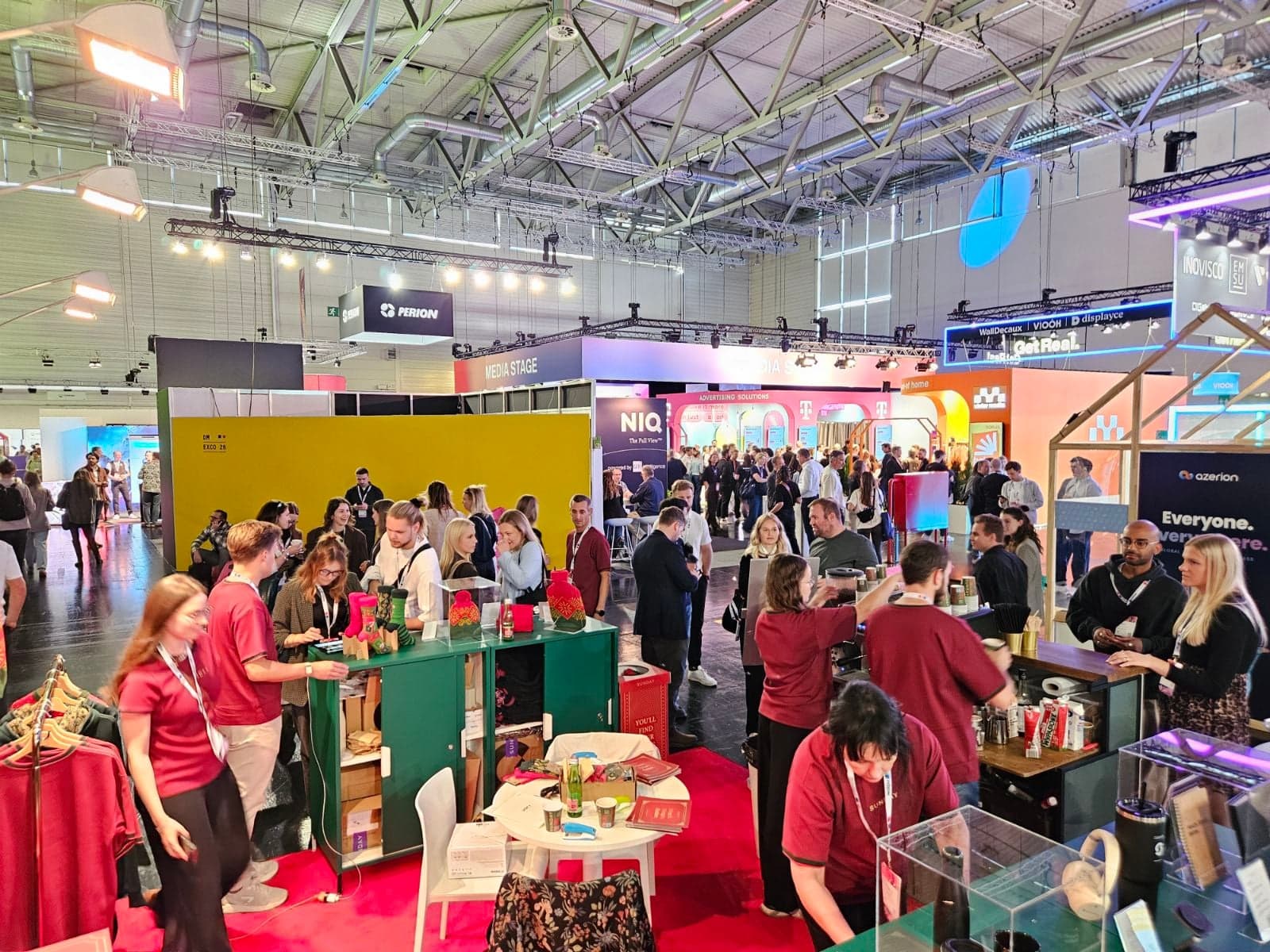
At every event we pull around 400 leads per event day. Roughly 30% of them match our ICP. That's about 120 qualified conversations a day, from a booth with a fraction of the budget of the big stands around us. The difference isn't size. It's experience: a physical product worth queueing for, a booth people can walk into, and a follow-up rhythm that never lets a lead go cold.
We've refined this over a full season of trade shows and conferences across Europe. Some of it we planned. A lot of it we learned the hard way, by watching which booths stayed empty while ours had a line, and by tracking which leads turned into customers months later.
People don't remember your booth size. They remember what happened there. Here's what we learned, why we think it works, and what you can steal for your 2027 events.
What's in this article
- Experience beats exhibition
- AI fatigue is real. Go physical.
- Merch builds the queue
- Your brand should leave the booth
- Pick a corner. Open the sides.
- Hide special boxes for super leads
- The event starts two weeks before the event
- Follow up the same evening
- Follow up on Monday. Then never let go.
- Small budget is not the bottleneck
- What to take into 2027
1. Experience beats exhibition
Most booths are built to be looked at. A screen, a banner, a pitch deck on loop. Visitors walk past them by the hundreds, because there is nothing to do there except be pitched.
Walk any big hall and you'll see the pattern. The stands with the largest construction budgets often have staff standing alone behind a counter, scanning the aisle for eye contact. The busy stands are the ones where something is happening: people trying something on, picking something up, laughing with someone in the line next to them.
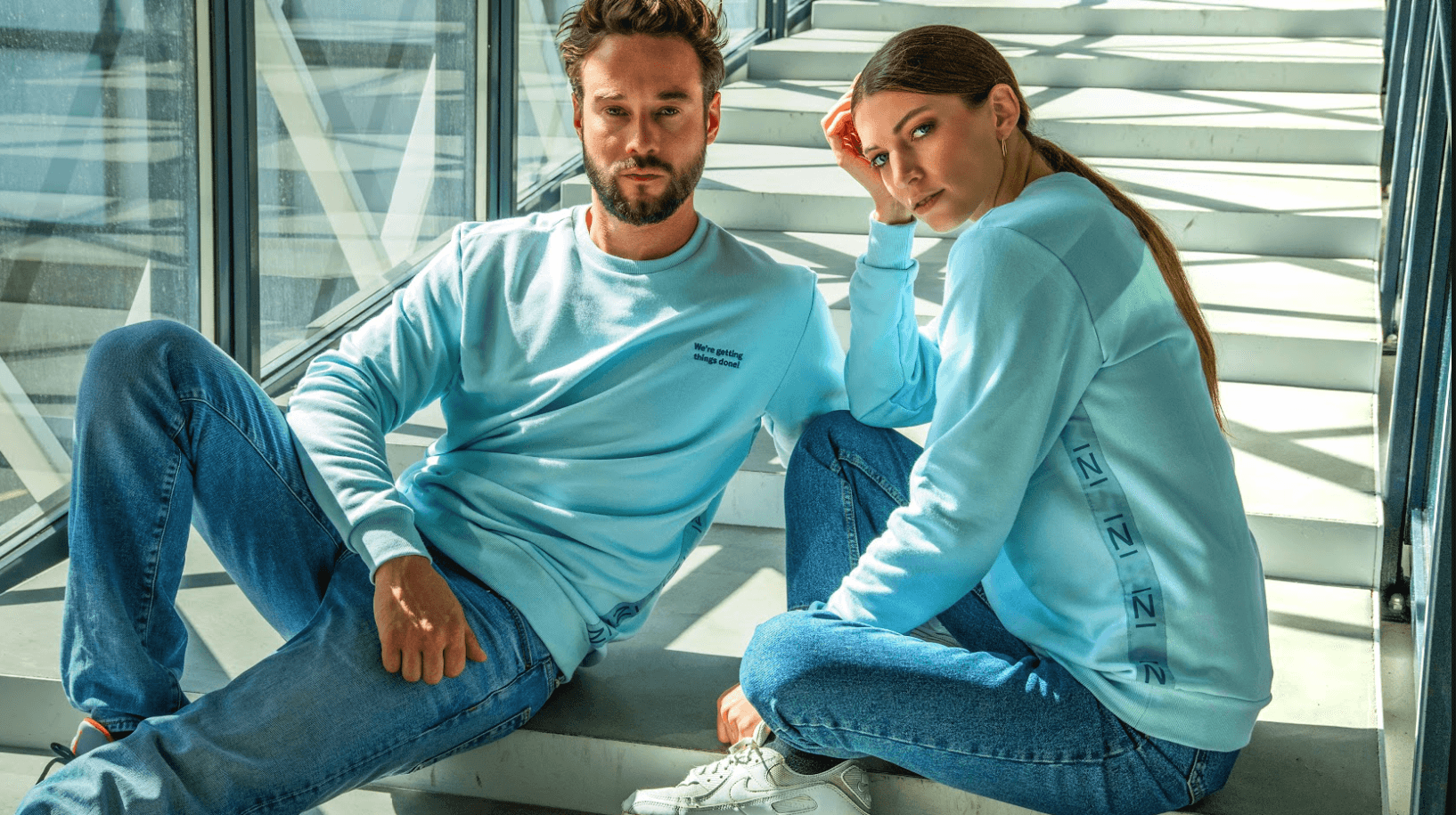
The booths that win give people something to do, something to hold and something to talk about. Design your stand around one question: what will someone experience in the 60 seconds they spend here? For us, the answer is simple. Visitors can touch the products, try on a jacket from the rack, feel the difference between a cheap tee and a good one, and leave with something they actually like.
It pays off beyond the event floor too. In Freeman's 2025 Trust Report, 95% of attendees said they trusted brands more after meeting them at an in-person event. That trust is built through experience, not through square metres. Our event merchandise guide covers how to build that experience around products people keep.
2. AI fatigue is real. Go physical.
AI matters. We use it every day, in our own product and in how we work. But at events, it no longer grabs attention. Every second booth promises an AI feature, an AI demo or an AI-powered something. When every banner says the same thing, visitors stop reading banners.
There's research behind the feeling. A Washington State University study of more than 1,000 US adults found that simply adding the term "artificial intelligence" to a product description lowered purchase intention. The researchers traced it to lower emotional trust. AI as a feature is valuable. AI as a slogan has stopped doing its job.
People now want the opposite. Something they can touch. Something real, made well, that they actually want to take home. In a hall full of screens, a physical product is the pattern break. You don't have to hide your AI story. Just don't make it the only thing at your booth.
3. Merch builds the queue
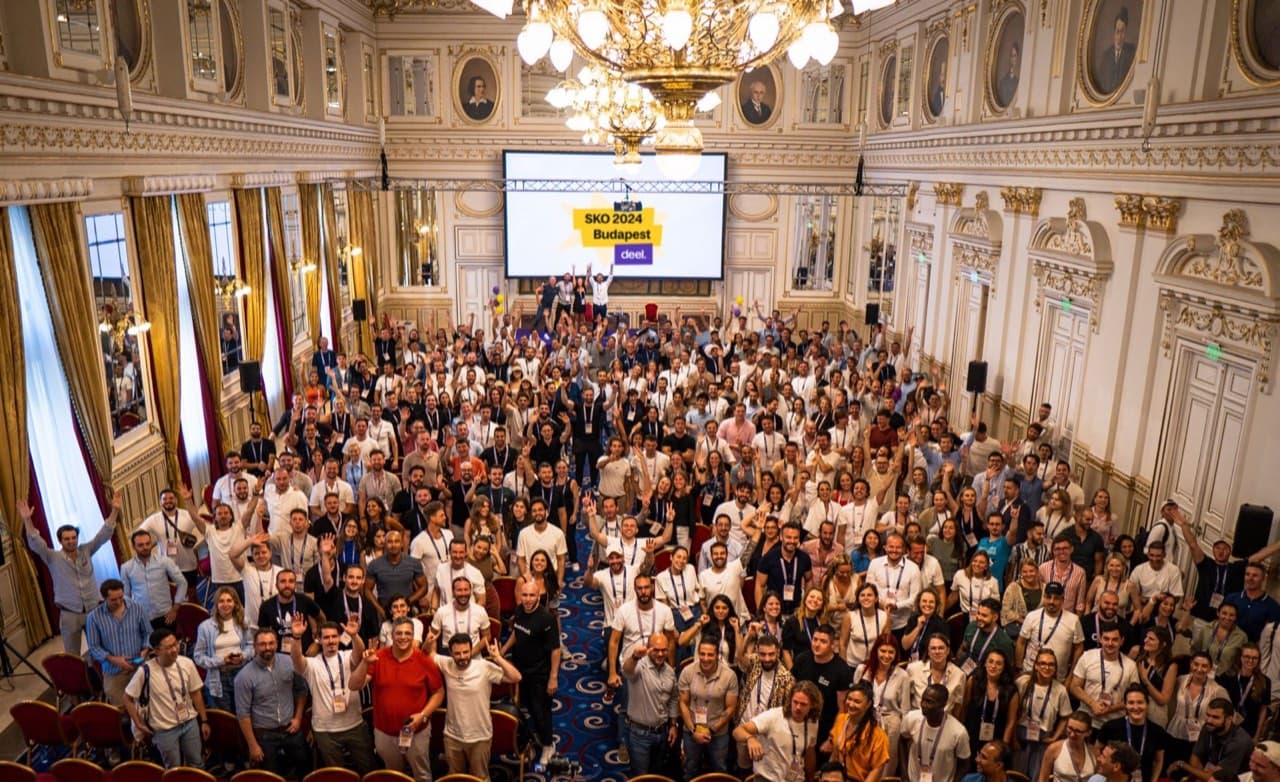
Put a great physical product on the counter and something happens. A line forms. At our booth, we constantly have around 50 people waiting.
That line works on two levels:
- Short term: buzz. A queue attracts more people, because a queue signals value. It's classic social proof: if 50 people are waiting, there must be something worth waiting for. And every person in that line is a conversation and a lead. We use the waiting time to talk, ask a few qualifying questions and scan badges, so nobody leaves the line unregistered.
- Long term: brand recognition. The product goes home, goes to the office and stays in use for months after the badge is thrown away. In PPAI's 2025 research, 38% of people still remembered the brand behind a promotional product months or even years later. ASI's 2026 ad impressions study found 85% of consumers recall the advertiser that gave them a promotional item.
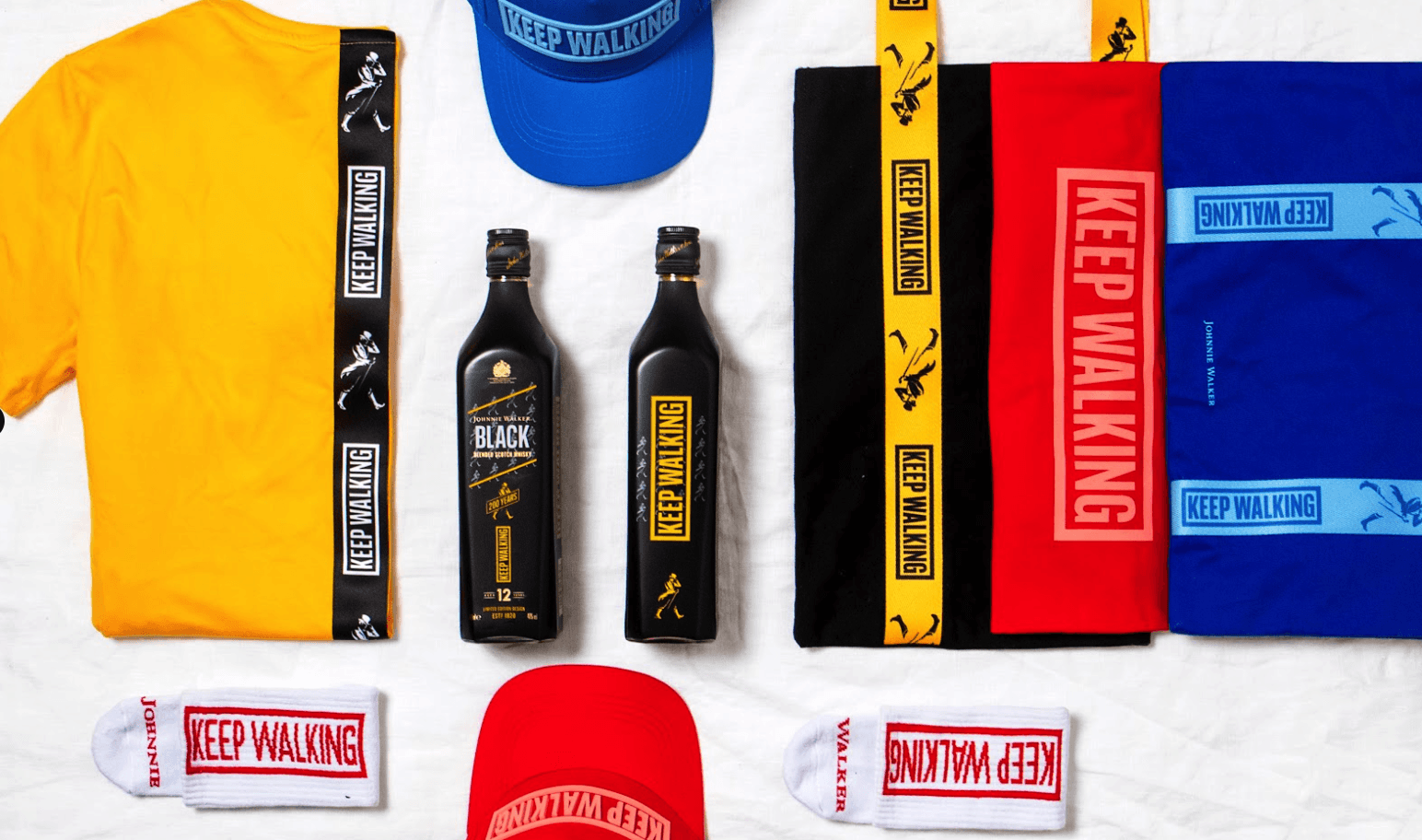
One warning. The queue only works if the product is good. A cheap pen doesn't make anyone wait. A well-made hoodie, a knitted beanie or a sweater people would buy themselves does. The giveaway is your lead engine. Treat it with the same care as your demo. For specific picks, see the best products for event merchandise.
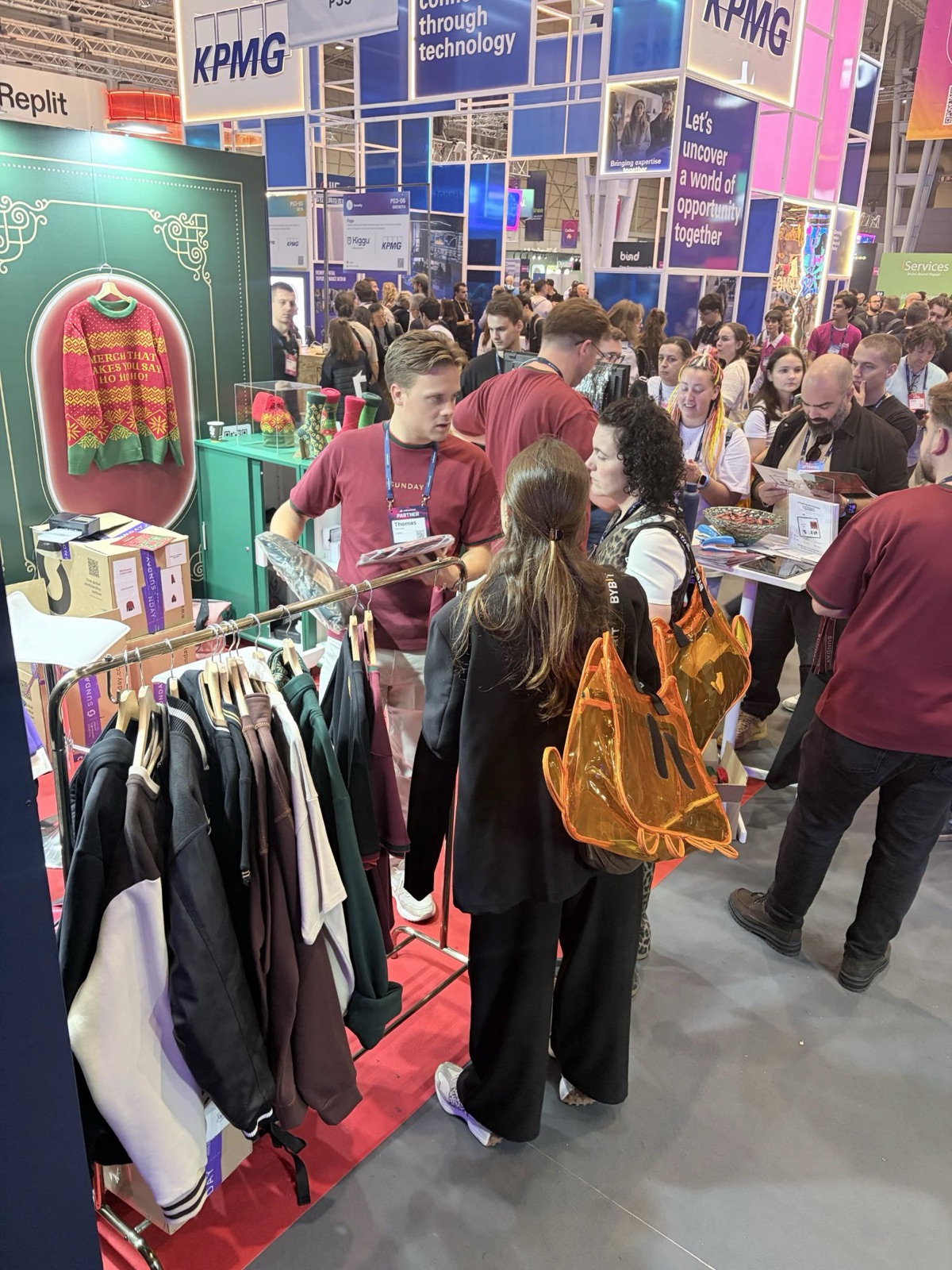
The line at our booth. Visitors try on jackets from the rack while we chat, qualify and scan badges.
4. Your brand should leave the booth
Your booth is a few square metres. The event hall is enormous. Use it.
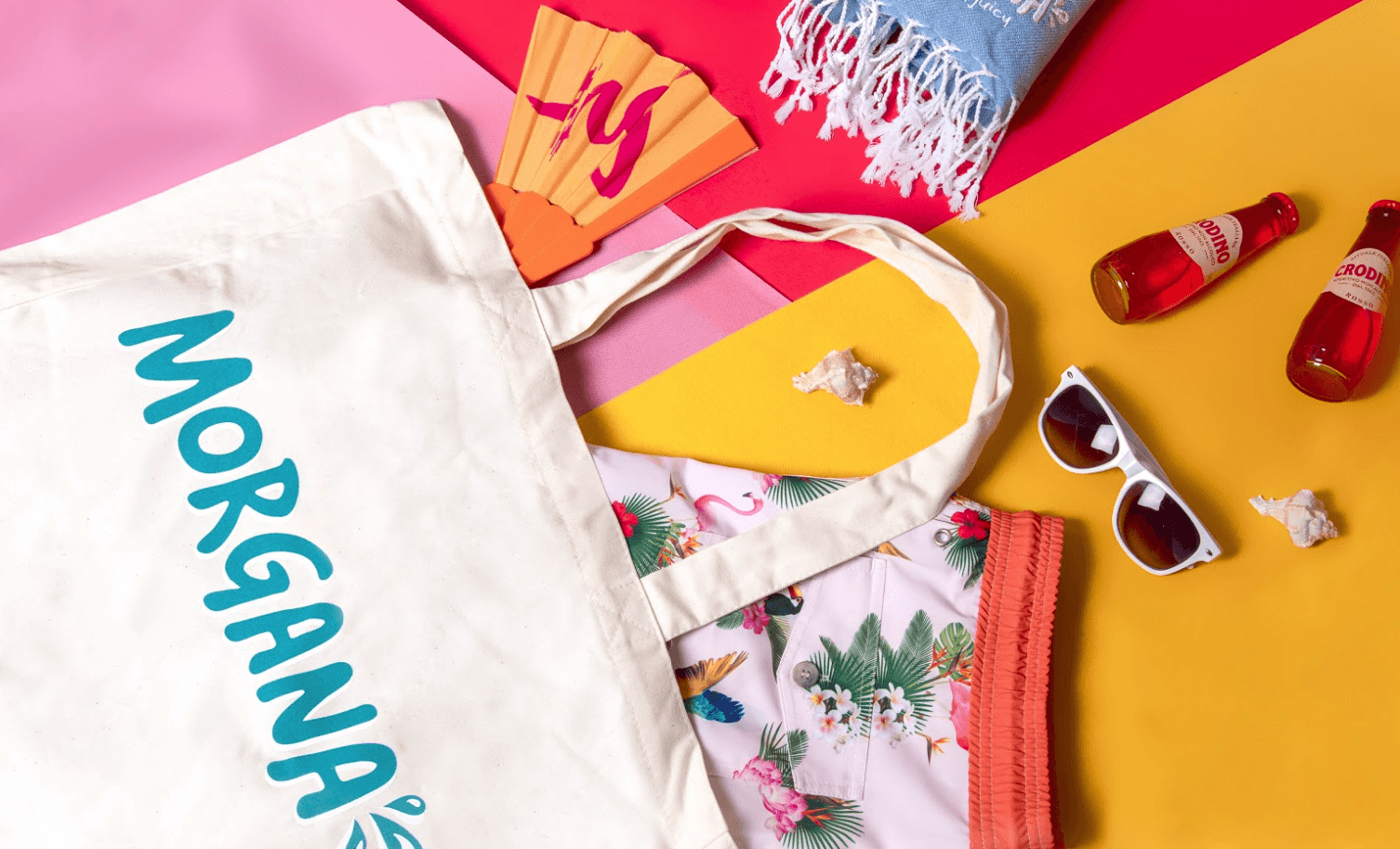
Tote bags are our favourite example. Hand out a good-looking tote early in the day and your logo walks through every hall, every talk and every coffee line. People fill it with everyone else's flyers, so your brand carries the competition around for you. By the afternoon, visitors are walking up to our booth because they've seen the bag twenty times and want one.
The numbers outlast the event, too. ASI's 2026 ad impressions study estimates that a tote bag generates around 5,000 impressions over its lifetime, at roughly a tenth of a cent per impression. That's hard to beat with any paid channel. We collected more examples in 9 ways companies use custom tote bags.
Pick items people use during the event itself. A bag, a bottle, a cap. Hand them out in the morning, not at the end of the day. They turn visitors into moving billboards for the whole event, not just on the train home.
5. Pick a corner. Open the sides.
A corner booth gives you two walkways instead of one. Double the foot traffic passes you by default. When we book a stand, a corner spot is the first thing we ask for, even if it means a slightly smaller footprint.
But a corner only helps if people can walk in. Keep the sides open. No closed walls, no tables blocking the entrance, no staff standing in a row along the front like a barrier. Open sides create flow: people step in from one aisle, join the line and leave through the other.
That flow matters more than it seems. A booth with one narrow entrance feels like a room you have to commit to. People hesitate, glance in and keep walking. An open booth feels like a shortcut through the hall. People drift in, see the line, see the products, and stay. Put your products and your counter towards the back so visitors have a reason to come all the way inside.
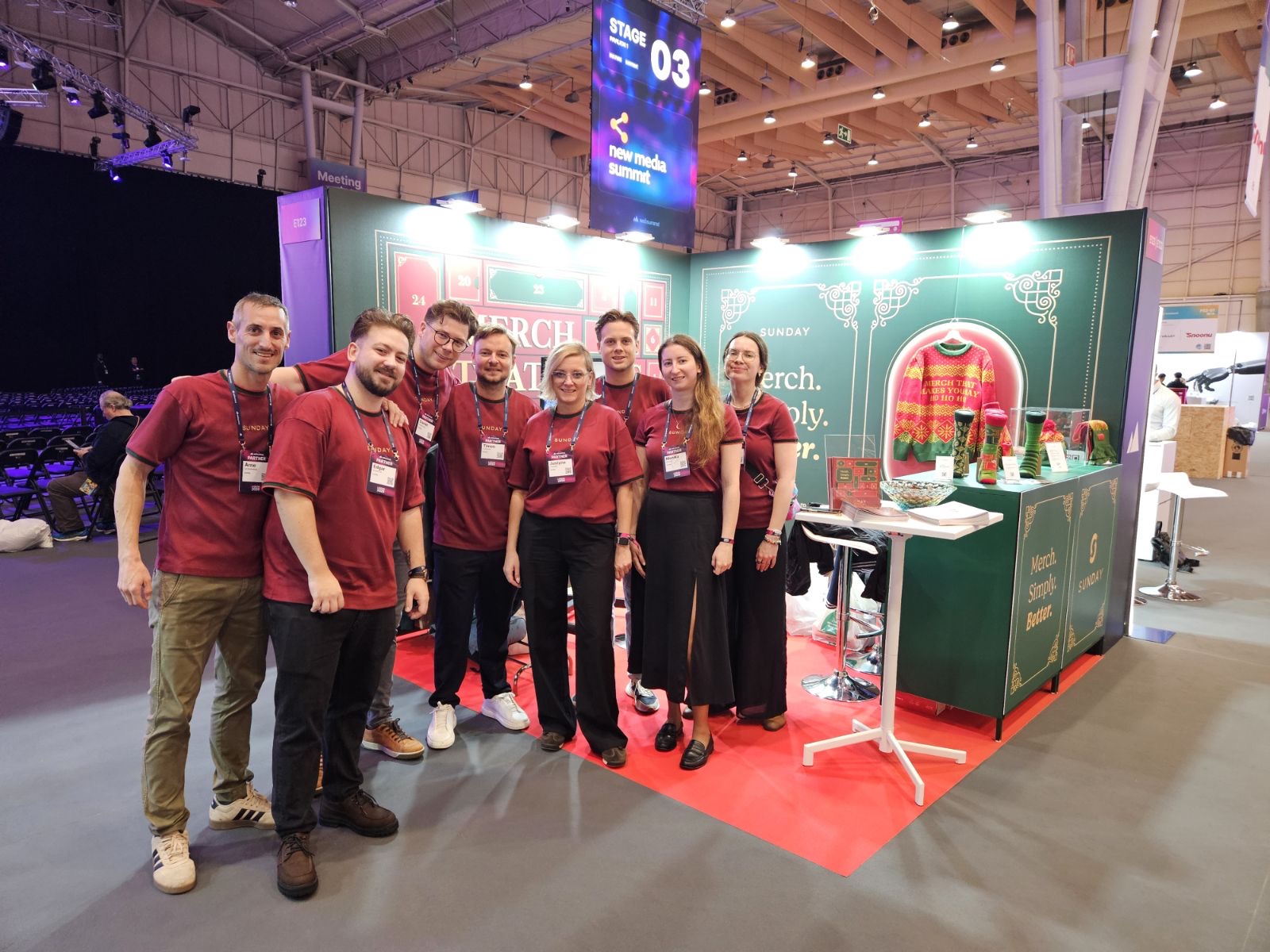
Our corner booth: two open sides, no table blocking the way in, and the products at the back.
6. Hide special boxes for super leads
Not every lead is equal. Some visitors are exactly the people you came for: the decision maker at a target account, the team that's planning a merch programme right now, the prospect your sales team has been chasing for months.
We keep special boxes out of sight, behind the counter. They never go on display, and nobody can ask for one. When a conversation turns out to be a perfect ICP match, a decision maker or an active project, that person gets a box. It's a more premium set of products, packed with care.
It does two things. The lead feels genuinely valued, not processed. They've just been singled out in a hall where everyone else got a flyer. And your team gets an easy signal for who to prioritise in follow-up. We tag every box recipient in the CRM the moment it's handed over. Whoever got a box goes to the top of the list on day one.
Keep the number small. If everybody gets a special box, it isn't special. We plan for a handful per event day. You'll find more ideas for held-back gifts in 9 event merchandise ideas that actually land.
7. The event starts two weeks before the event
The best leads don't stumble onto your booth. They planned to come.
Most attendees build at least part of their schedule before they arrive. If your booth isn't on that list, you're competing for whatever attention is left between sessions. So we invite people through outbound email and in-app messages to our existing users, on a fixed rhythm:
- Two weeks before: the invite. Where we are, why they should come by and what's waiting for them. This is when people plan their days.
- One week before: the reminder, with a concrete reason to visit. A product preview, a meeting slot with someone from the team, a gift reserved in their name.
- One day before: the nudge. Booth number, hall, a map pin and how to find us. Short and practical.
Each touch is short. Nobody reads a long email the week of a big event. By the time doors open, a good share of your line already knows your name, and some of your most valuable conversations are already in the calendar.
8. Follow up the same evening
Not next week. Not after the team recovers. That evening.
The conversation is still fresh. They still have your product in their bag. A short personal email that references what you talked about lands completely differently on day zero than on day ten. By then, they've met dozens of other vendors and your conversation has blurred into all the others.
Speed is one of the best-documented effects in sales. In a Harvard Business Review study of lead response times, companies that contacted a lead within an hour were nearly seven times as likely to qualify that lead as companies that waited even one hour longer. That research looked at online leads, but the logic carries straight over to the event floor: interest is highest right after contact and fades fast.
Make it possible to move this fast. Write the templates before the event. Split the lead list between team members during the day. Then everyone spends 30 minutes after the hall closes sending personal notes, each with one specific detail from the conversation.
9. Follow up on Monday. Then never let go.
The second follow-up goes out the Monday after the event, once everyone is back at their desk and sorting through what they collected. A short note, a useful resource or a meeting link. It lands exactly when they're deciding which conversations were worth pursuing.
After that, the lead doesn't go cold. It goes into a sequence. Newsletters, relevant content, check-ins, the next event invite. An event lead is the start of a relationship, not the end of a campaign. The deals from an event often close months later, when a budget opens up or a new project starts.
This is where most exhibitors lose. You'll often hear that 80% of trade show leads are never followed up. Even the industry press has struggled to trace that number back to a solid study, so treat it with care. But anyone who has worked a booth knows the pattern behind it: badge scans pile up in a spreadsheet, the team gets busy, and the leads quietly expire. Following up consistently is a competitive advantage simply because so few do it.
10. Small budget is not the bottleneck
We do this with a fraction of the budget of the big booths around us. What we save on construction, we spend on the things that actually move people: products worth queueing for, a layout that pulls people in, and a follow-up process that doesn't drop anyone.
Count qualified leads, not badge scans. 400 scans with 30% ICP is 120 qualified conversations a day. Over a three-day event, that's more than 350 people you actually want to talk to. That beats 1,000 scans you never follow up on.
The metric we use internally is cost per qualified lead: total event cost, booth and travel and merch included, divided by the leads that match the ICP. Measured that way, the big build-out almost never wins. The money that moves the number is the money spent on what people take home and on what happens after the event. We explain the full calculation in how to measure event merchandise ROI, and you can see it applied in our Money20/20 booth ROI teardown.
What to take into 2027
Event budgets are under pressure and every booth is competing for the same tired attention. Here's the playbook we'd use if we were planning your 2027 calendar today:
- Budget for experience, not square metres. Shift spend from booth construction to products people want and moments they remember.
- Be the offline booth in an AI hall. Let your product page talk about AI. Let your booth be physical, tactile and real.
- Plan merch in two tiers. A crowd item everyone gets, like a tote or a bottle, and a premium hidden box for your best-fit leads.
- Order early. Custom products take time. Lock your event merch at least six weeks out so it isn't the thing that goes wrong. Here's how to run an event merchandise programme across a full calendar.
- Write your follow-up before you fly. Invites, the same-evening email and the Monday email should be drafted and scheduled before the event starts.
Events still work. They just reward the brands that give people a reason to stop. Browse the catalog for crowd items and premium pieces.
Frequently asked questions
How many leads can you get from a trade show booth?
It depends on the event, but at Sunday we pull around 400 leads per event day, of which roughly 30% match our ICP. The main drivers are a physical giveaway that creates a queue, an open corner booth and pre-event invitations.
What is the best giveaway for a trade show?
The best giveaways are products people actually want and use during the event itself, such as tote bags, bottles or caps. They create a queue at the booth and carry your brand through the halls. ASI estimates a tote bag delivers around 5,000 impressions over its lifetime. Keep a separate, more premium item for your best-fit leads.
When should you follow up with event leads?
Send a short personal follow-up the same evening, a second one the Monday after the event, and then keep the lead in an ongoing sequence. Research on lead response times shows that contacting a lead within an hour makes it far more likely to qualify. Event deals often close months later.
Do you need a big budget to get leads at events?
No. Sunday pulls around 400 leads per event day with a booth budget far below the large stands around it. Spending on experience, merch and follow-up beats spending on booth construction.
Sources
- Sunday's own event data from our 2026 trade show and conference season: leads per event day, ICP match rate and queue length.
- Freeman, 2025 Trust Report.
- Washington State University, Using the term "artificial intelligence" in product descriptions reduces purchase intentions, 2024.
- PPAI, The 5-Second Impact, 2025.
- ASI, 2026 Ad Impressions Study and results for bags.
- Oldroyd, McElheran and Elkington, The Short Life of Online Sales Leads, Harvard Business Review, 2011.
- PFFC, Why do salespeople only follow up on 20% of trade show leads?
About this article
Plan your 2027 event merch
From crowd-pulling totes to premium boxes for your top leads, Sunday handles design, production and delivery to the venue. Create a free account and get designs in your branding.
Get free designs