



Part of our complete company swag store guide. See also swag store funding models and swag store integrations.
A swag store launches in roughly three to four weeks, running in parallel with merchandise production so the store is ready when goods reach the warehouse. The process has seven steps: onboard the programme, decide the experience, design the homepage, approve it, build and configure, test the full journey, then seed value and launch.
The reason this is a three to four week project and not a six month one is that almost nothing is being invented. A store is configured on a proven framework by people who have done it many times. Treat it as an open-ended software project and it becomes one.
What's in this guide
Why a swag store launch takes three to four weeks
Merchandise production has its own clock. Samples, approvals, production, quality control and inbound transport take weeks regardless of what the storefront is doing. That waiting period is where the store gets built.
Run sequentially, a programme waits for goods, then waits again for a store. Run in parallel, the store is finished, tested and stocked with product photography by the time the first pallet arrives. The launch date is then set by production, not by software, which is the correct constraint.
This is also why the store rarely becomes the bottleneck people expect. Building it is configuration through expert guidance on a framework that already handles identity, permissions, funding, fulfilment and reporting. The parts that take real time are the decisions, and those are covered below.
The products are not invented from scratch either. Sunday's catalog holds 490+ products and 2,700+ ready design templates, and 70% of Sunday orders go through automatic design templates with no designer and no proof cycle. That is why the first collection can be in production while the store is still in Figma.
Who is in the room
Three Sunday roles work with the client through the implementation, and each covers a different failure mode.
| Role | What they own |
|---|---|
| Customer success | The programme itself: audience, objective, launch plan, the decisions that need answers |
| Account manager | Products, collection, production timing and the commercial frame |
| E-commerce developer | The build: design implementation, integrations, roles, fulfilment rules, testing |
Sunday designs the store in roughly 95% of implementations. The client can bring its own design, and some brand teams do, but the default is that Sunday produces the design on a framework that has already been proven across many live stores. That is usually faster and produces fewer surprises at the testing stage.
The seven steps to launch a swag store
1. Onboard the programme
Before anything is designed, five things get written down: the audience, the objective, the internal owner, the type of store, and what success will look like. Employees, partners, customers and managers need different stores, and a store with no named owner drifts within a quarter. Ownership commonly sits with marketing, HR or workplace, depending on who the audience belongs to.
2. Decide the experience
This is the longest conversation and it is worth the time. The assortment, how it is funded, who pays shipping, how people get access, what security is required, which payment methods appear, what each role can see and do, and how much customisation the store allows. Most of these are policy decisions rather than technical ones, which is why they belong to the client and why the implementation stalls when they are left open.
3. Design the homepage in Figma
Sunday designs the homepage in Figma on its proven store framework. Starting from a framework rather than a blank canvas means the layout, navigation and product presentation are already resolved, and the design work goes into brand expression rather than into rediscovering how a store should behave.
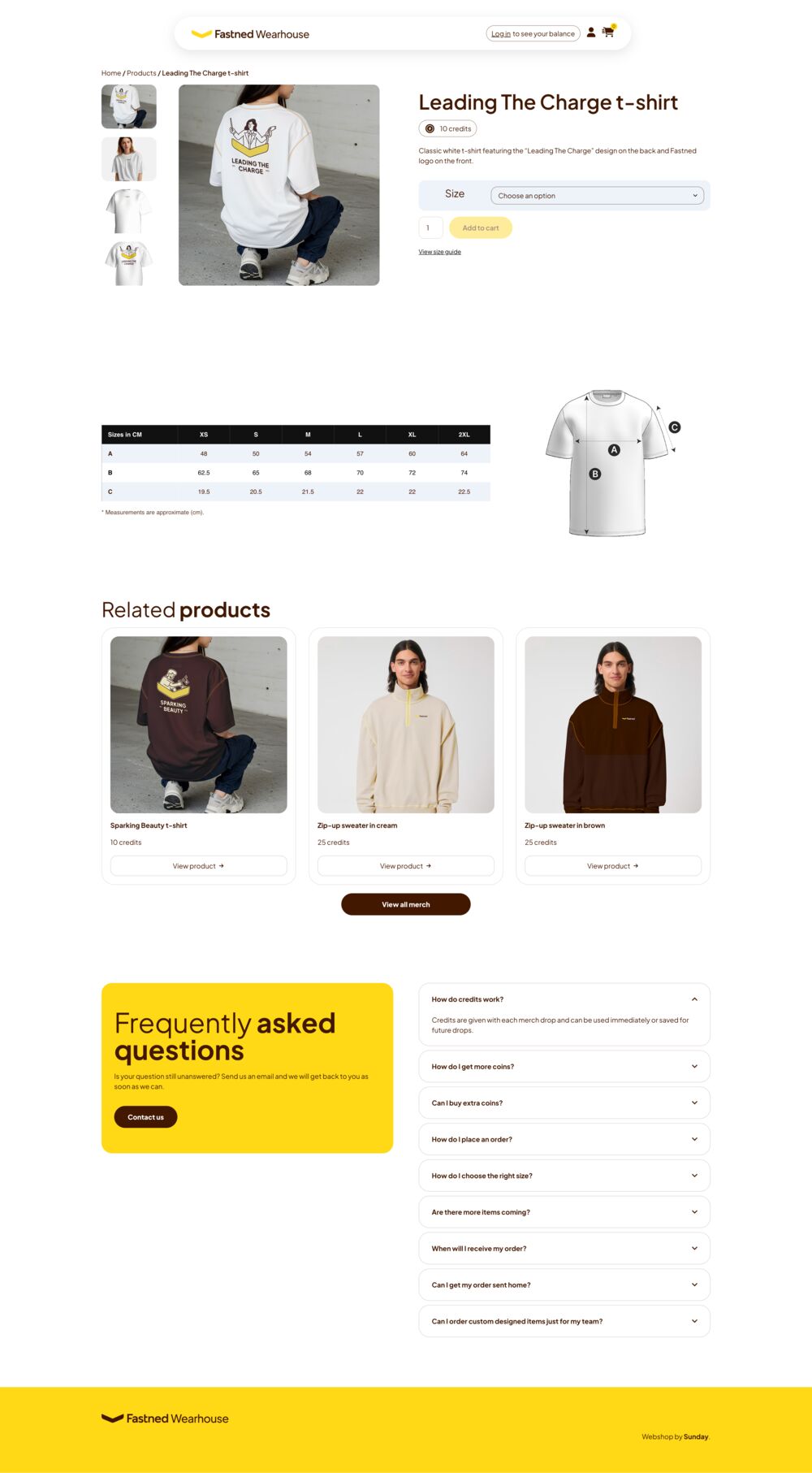
Fastned's store prices products in credits and explains the mechanic in the FAQ. Balance display, size guidance and the FAQ are experience decisions taken at step two, not afterthoughts.
4. Client feedback and design approval
One structured feedback round, then approval. The design being approved is not a mood board. It is what gets built, so the brand team, the programme owner and anyone with an opinion about the homepage should be in this round rather than the next one.
5. Build and configure
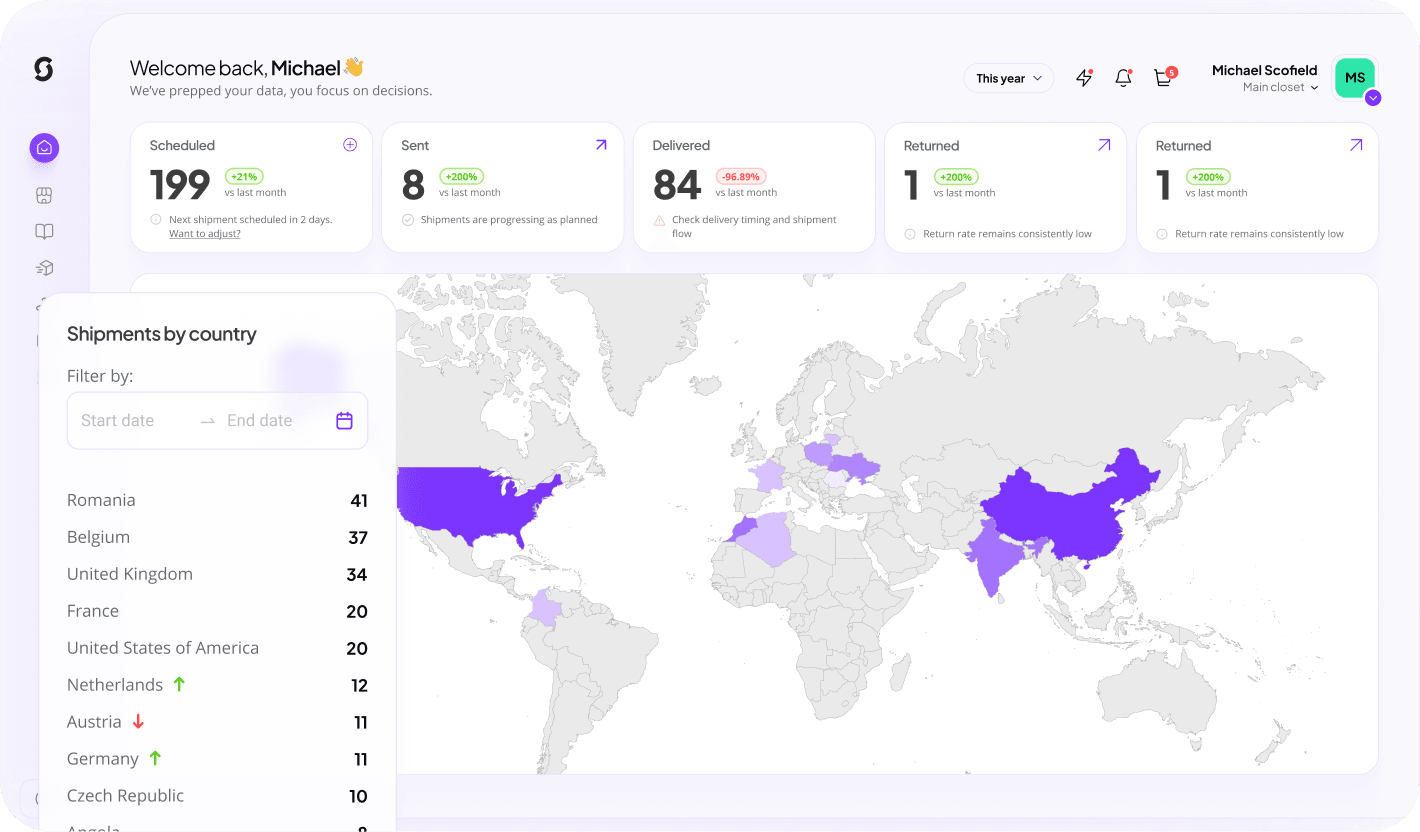
The developer builds the approved design and configures everything behind it: integrations, user roles and permissions, fulfilment rules, and the communications the store sends. Identity is usually the first integration, with single sign-on for enterprise audiences, followed by an HR system where credits are automated and finance or procurement systems where orders run against a purchase order. Detail on each of those is in swag store integrations.
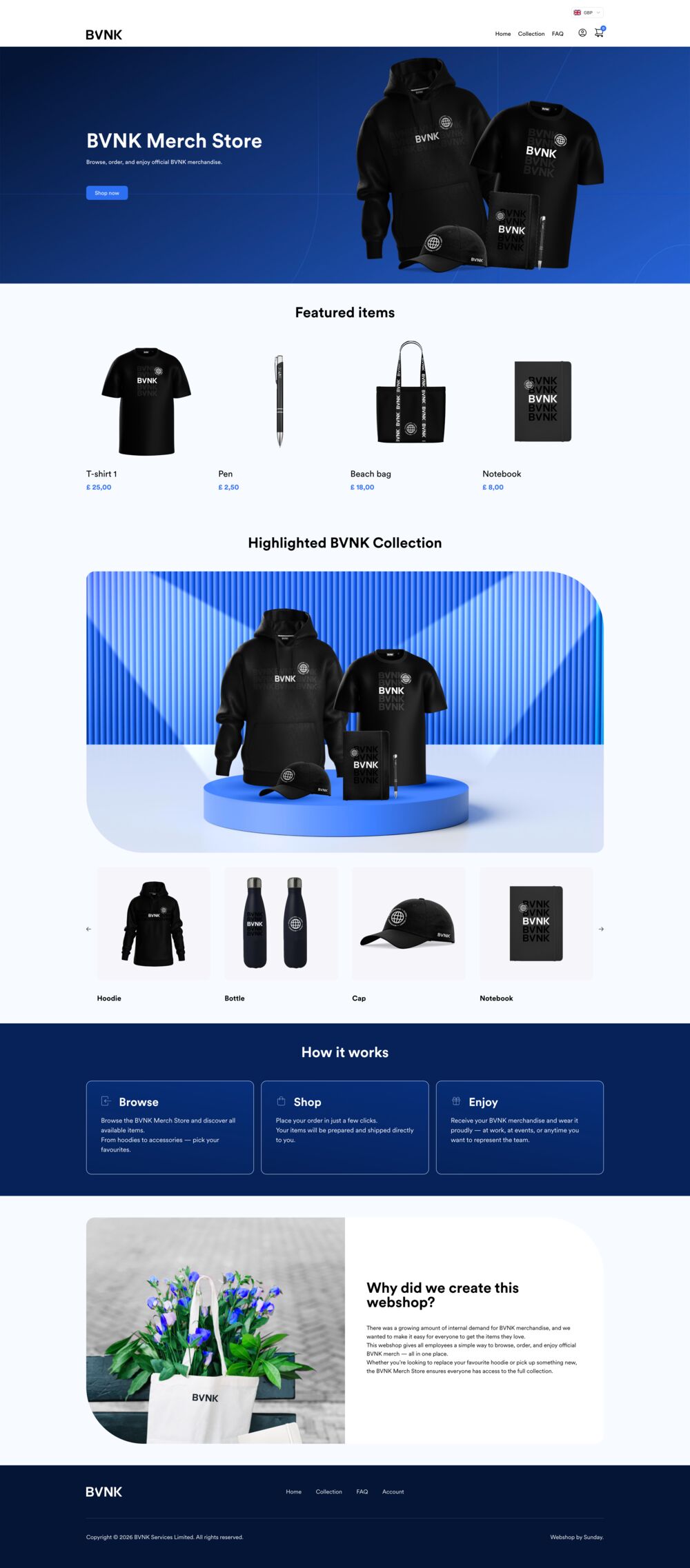
BVNK's store runs real payments across multiple currencies. Currency, tax and refund handling are configured during the build, because they are day-one decisions rather than later settings.
6. Test the full journey
Not a click-through. An actual end-to-end run from login to delivery, including the parts that only fail in production. The checklist is in the next section.
7. Seed value, communicate, release the first collection
The store opens with something already given. An item, a credit balance, coins on first login. Fastned allocates coins automatically when an employee first signs in, so the first visit is a gift rather than a shop. Then the launch is communicated properly, and the first collection is released as an event rather than quietly appearing.
Opening a store where every balance is zero and everything costs money is the fastest way to teach an audience that the store is not for them. The reasoning behind that sits in the employee swag store guide.

The first collection sets expectations for everything after it. Produce it as a batch, photograph it properly, and release it as a moment.
The sign-off decision list
Eight decisions have to be settled before go-live. None of them are technical questions, which is exactly why they get postponed. Answer them at step two and the rest of the implementation is mechanical.
| Decision | What has to be agreed |
|---|---|
| Audience and access | Who can enter the store, and how they are recognised. Open, invite-only, or gated by identity |
| Cybersecurity and SSO | Which identity provider, what IT requires, and who signs off the security review |
| Product and page permissions | Which roles see which products, prices and pages. Hidden products and hidden pages are common |
| Funding method | Company-funded, coins or credits, employee-paid, real payments, invoice or purchase order, or a hybrid by role |
| Shipping charges and destinations | Who pays, where you ship, and how duties are handled. Recipients should never pay to collect company swag |
| Returns and refunds | The policy first, the technology second. A low-value item can cost more to return internationally than to replace |
| Content ownership | Who edits store content after launch. Thule's store is client-editable, which keeps it alive without a ticket |
| Reporting and integrations | What gets measured, who receives it, and which systems the store has to talk to |
Returns deserve a note. It is a policy question before it is a technology question, and the options include keep-and-replace, local donation, a size exchange without a physical return, and a standard return for higher-value items. Technology should enforce whichever policy you choose, not decide the economics for you. The global side of this is in global swag store.
What full-journey testing has to cover
Testing is where an implementation either finds its problems or postpones them into the first week of live traffic. Run the whole path, not the happy path.
- Login. Every route in. Single sign-on, invitation links, and whatever happens when someone is not recognised.
- Balance. Credits or coins appear correctly, deduct correctly, and display in the right currency or unit.
- Visibility. Each role sees the right products, prices and pages, and cannot see the others.
- Checkout. The correct payment method appears automatically for the role. Nobody should have to choose a checkout type.
- Warehouse order. The order transfers to the warehouse, is picked, and creates a shipment with a label.
- Tracking. Status updates and tracking reach the recipient without anyone sending them manually.
- Edge cases. Out of stock, insufficient balance, a blocked destination, a failed address, a cancelled order, an approval that gets rejected.
The edge cases are the point. A store that only works on the ideal path generates support tickets from day one, and support volume is one of the clearest early signals that something in the configuration is wrong.
Launch is the start of the programme, not the end of the project
Treating go-live as completion is one of the most common ways a store fails. A store that never changes gets visited once. What keeps it alive is a rhythm: rotating collections, credits attached to moments that already matter, drops that give people a reason to return, and stock decisions that follow real demand rather than the original forecast. That loop is in swag inventory management.
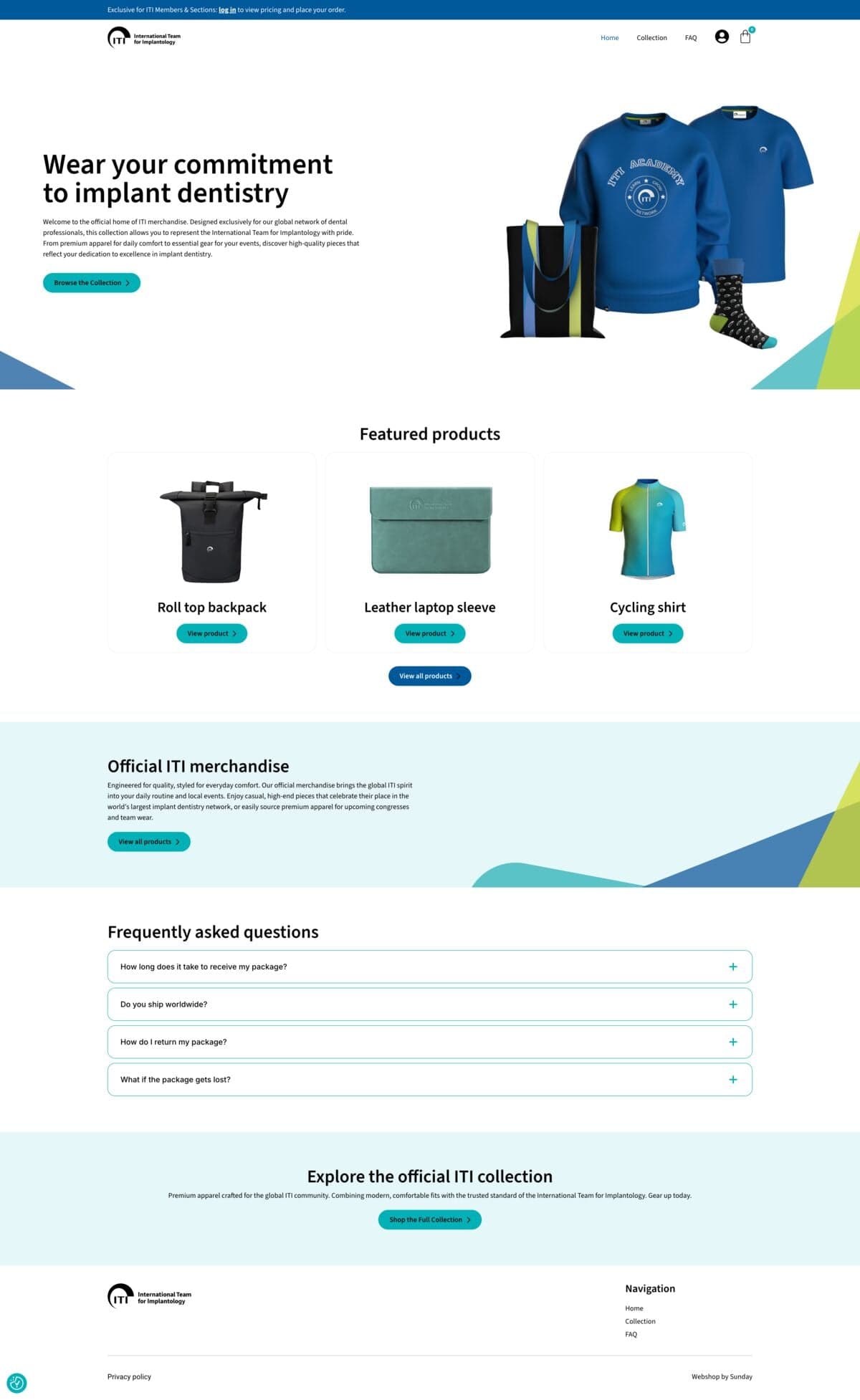
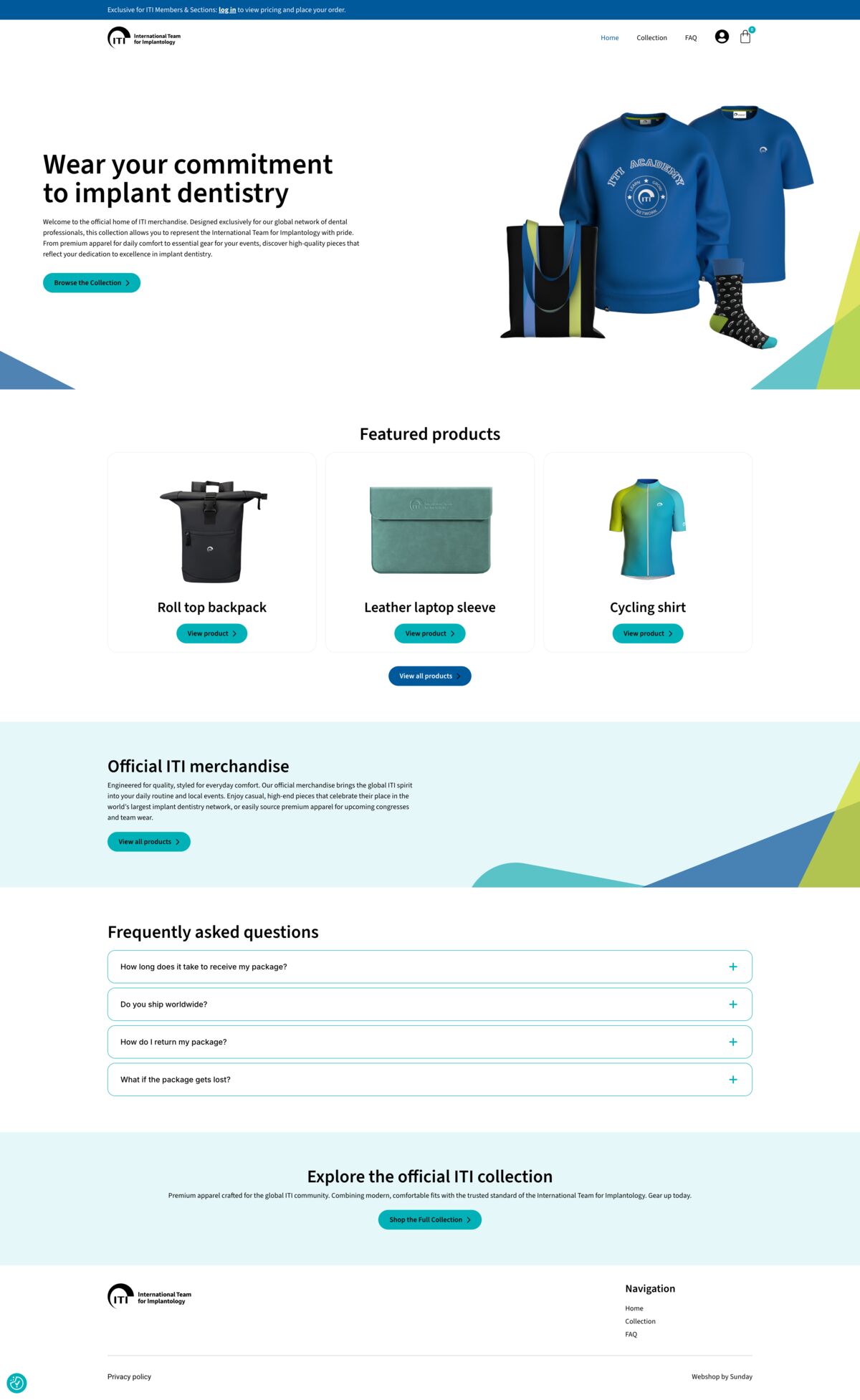
Scale is not the hard part. ITI's store is built for an expected 35,000 to 40,000 users a year, which is a design target rather than a reported result, with role-based payment routing, hidden products and pages, and a custom single sign-on experience. All of that was configuration, decided during implementation and tested before launch.
Judge the result on the outcome the store was built for rather than on orders alone. Employee programmes are measured on engagement, retention and advocacy. Customer stores are measured on loyalty and commercial movement. Manager and department stores are measured on self-service rate, purchase-order accuracy, approval time and support volume. The full framework is in swag store metrics, and the comparison of doing this with one partner versus assembling vendors is in best swag platform.
Ready to scope one? Start from the products, not the software. Browse the catalog, look at an anchor product such as custom backpacks, preview your artwork in the free backpack mockup generator, and see how the storefront, warehousing and fulfilment sit together on the platform and in how it works.
Frequently asked questions
How long does it take to launch a swag store?
About three to four weeks. The store is built while merchandise is in production, so design, configuration and testing finish as goods reach the warehouse. The launch date is set by production, not software. Once stock is in, Sunday dispatches orders in roughly 24 hours.
Who designs a company swag store?
In about 95% of Sunday implementations, Sunday does. The homepage is designed in Figma on a proven store framework, reviewed once by the client and then built. Brand teams can bring their own design, but starting from a framework is usually faster and surfaces fewer problems in testing.
What do you need to decide before launching a swag store?
Eight things: audience and access, security and SSO, product and page permissions, funding method, shipping charges and destinations, returns policy, who edits content after launch, and reporting and integrations. None are technical, which is why they get postponed. Settle them early and the build is mechanical.
What should you test before a swag store goes live?
The whole journey, not the happy path. Test every login route, balances and deductions, what each role can see, that checkout picks the right payment method, that orders reach the warehouse and create a shipment, that tracking arrives automatically, and edge cases like out of stock.
How do you get employees to use a new swag store?
Open with something already given. Seed coins on first login, a free launch item or a funded baseline, then announce the first collection as an event. Fastned allocates coins automatically on first sign-in. A store where every balance is zero teaches people it is not for them.
About this article
Ready when the goods are
Three to four weeks, run in parallel with production, guided by customer success, an account manager and an e-commerce developer. Create a free account to start.
Build your swag store